BSD
Brochos – 15a-b
Mar Cheshvan 30, 5787. 11/11/2026
Short notes on some of the topics.
1- We encountered a rather complicated גמרא, and suggested a sheet to allow one to be able to follow. The topic is saying קריאת שמע very quietly that his voice cannot be heard.
הַקּוֹרֵא אֶת שְׁמַע וְלֹא הִשְׁמִיעַ לְאָזְנוֹ, יָצָא. רִבִּי יוֹסֵי אוֹמֵר: לֹא יָצָא.
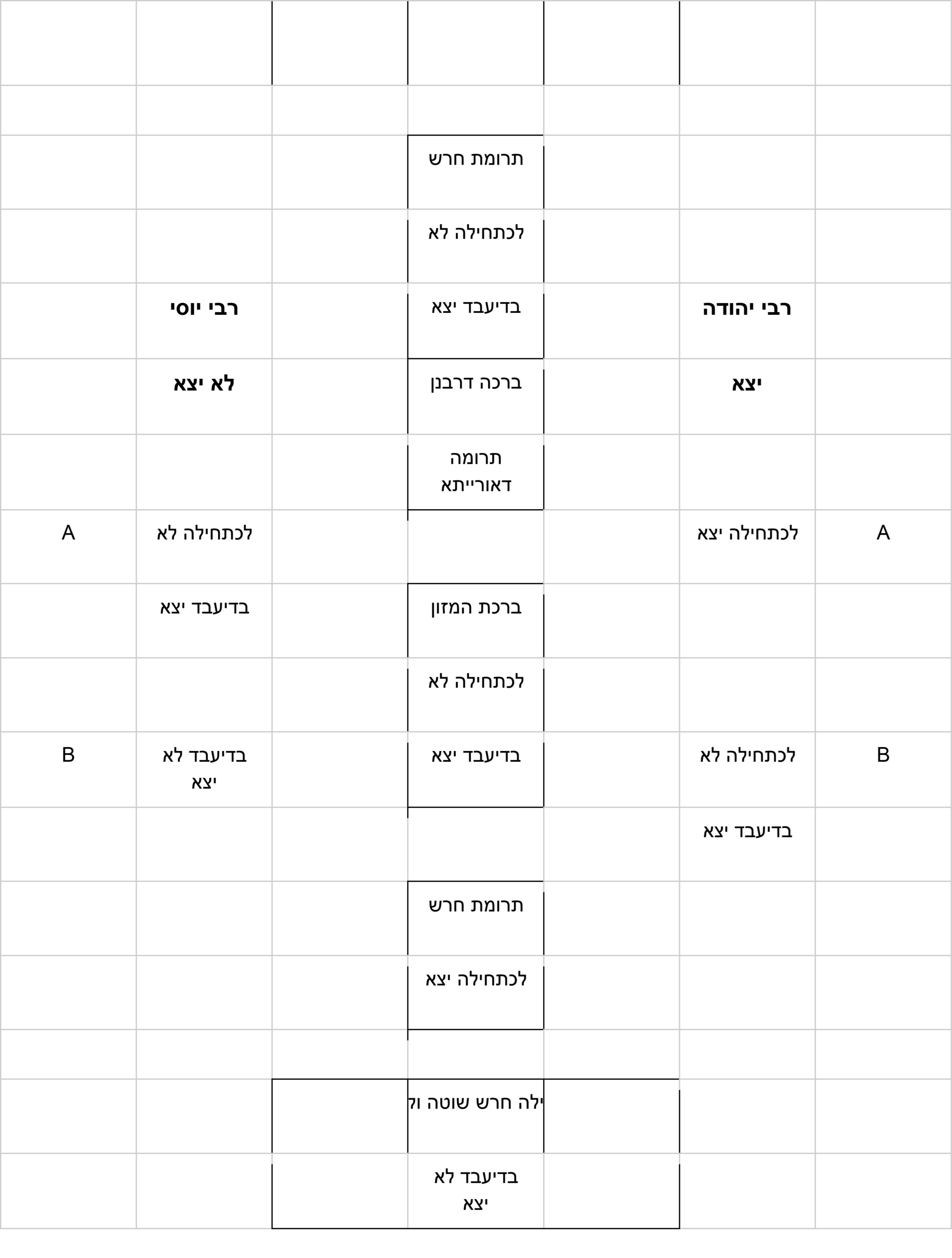
Here is the bottom line: AR OC 62, 3.

2 – Our גמרא discusses מצוות and their ברכות. Even if the מצווה is דאורייתא , the ברכה requirement is דרבנן. [A big topic is whether there are exceptions to this general rule].
In general, if one performs a מצווה and does not say a ברכה, for whatever reason, he is יוצא.
Like eating מצה without saying על אכילת מצה.

Now, this rule applies also to the מצווה of שחיטה as you can see below. YD 19.
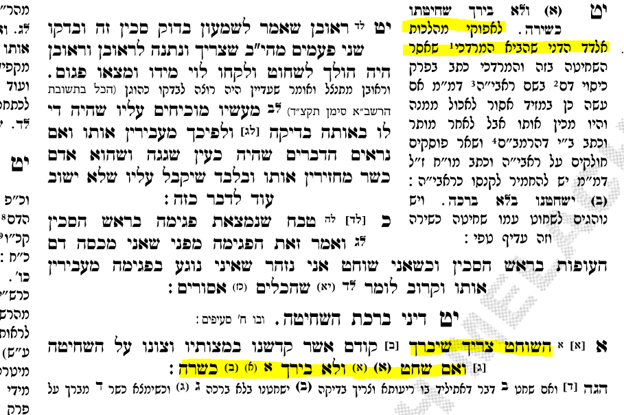
This הלכה is quite obvious since the general rule is that the ברכה is not מעכב.
So why would the Shulchan Aruch need to tell us here in הלכות שחיטה?
The answer, as one can see from the highlighted ט”ז , is related to the story we began to speak (again) about this mysterious fellow, אלדד הדני, that arrived in North Africa about 1,200 years ago. See the links in last week’s Shiur Points.
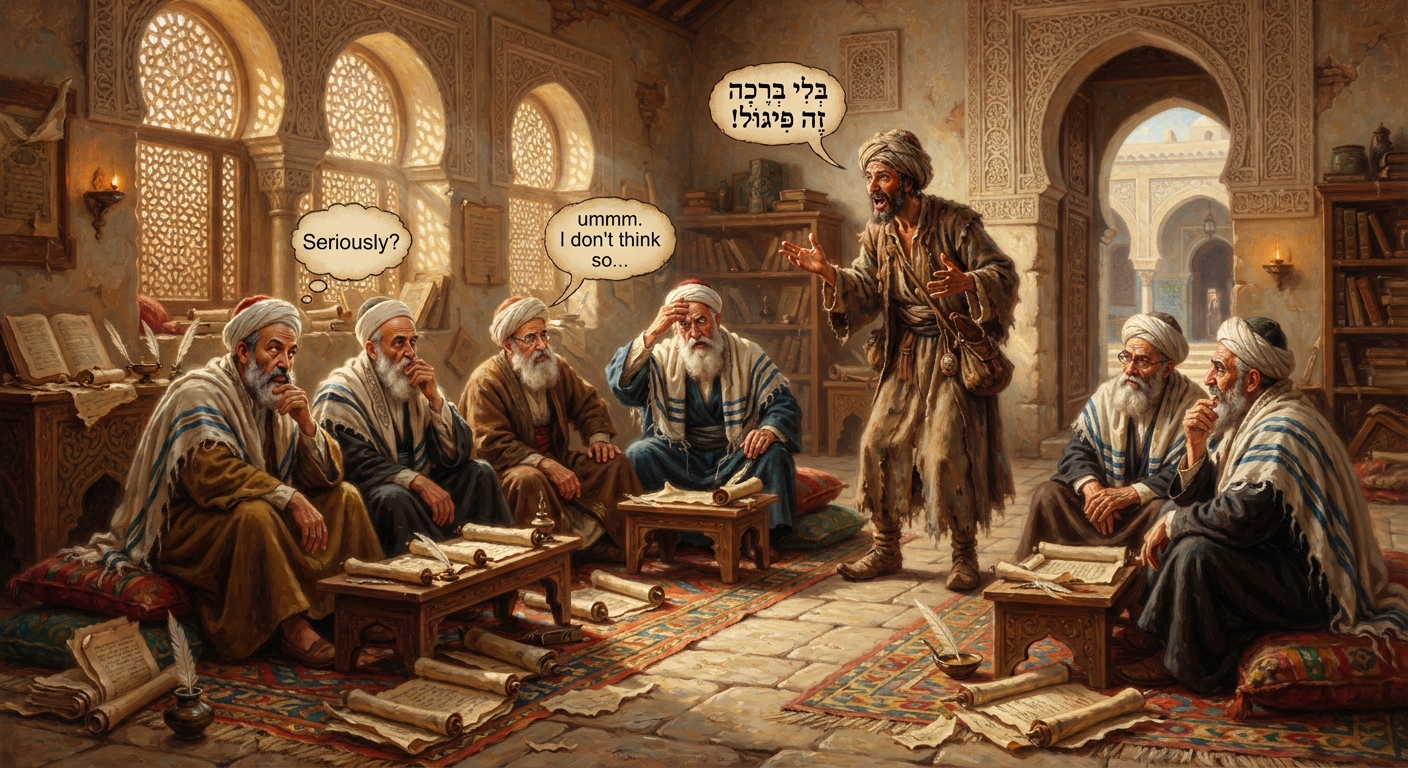
One of the הלכות Eldad said, was if someone does שחיטה without a ברכה, the meat is פיגול meaning טריף.
See here from the מרדכי at the beginning of מסכת חולין.
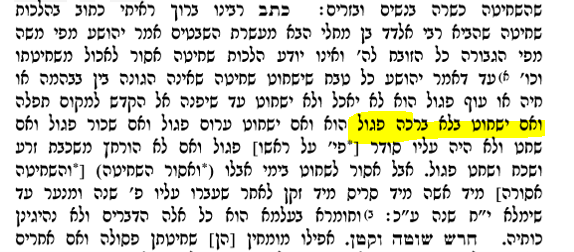
As we see from the מרדכי’s comments, this הלכה runs contrary our מסורה and we do not follow it at all.
This is why the שלחן ערוך needed to say:

3 – Now, how does this connect to our גמרא?
In the משנה it says that one must verbalize קריאת שמע. ‘Saying’ it במחשבה is insufficient.
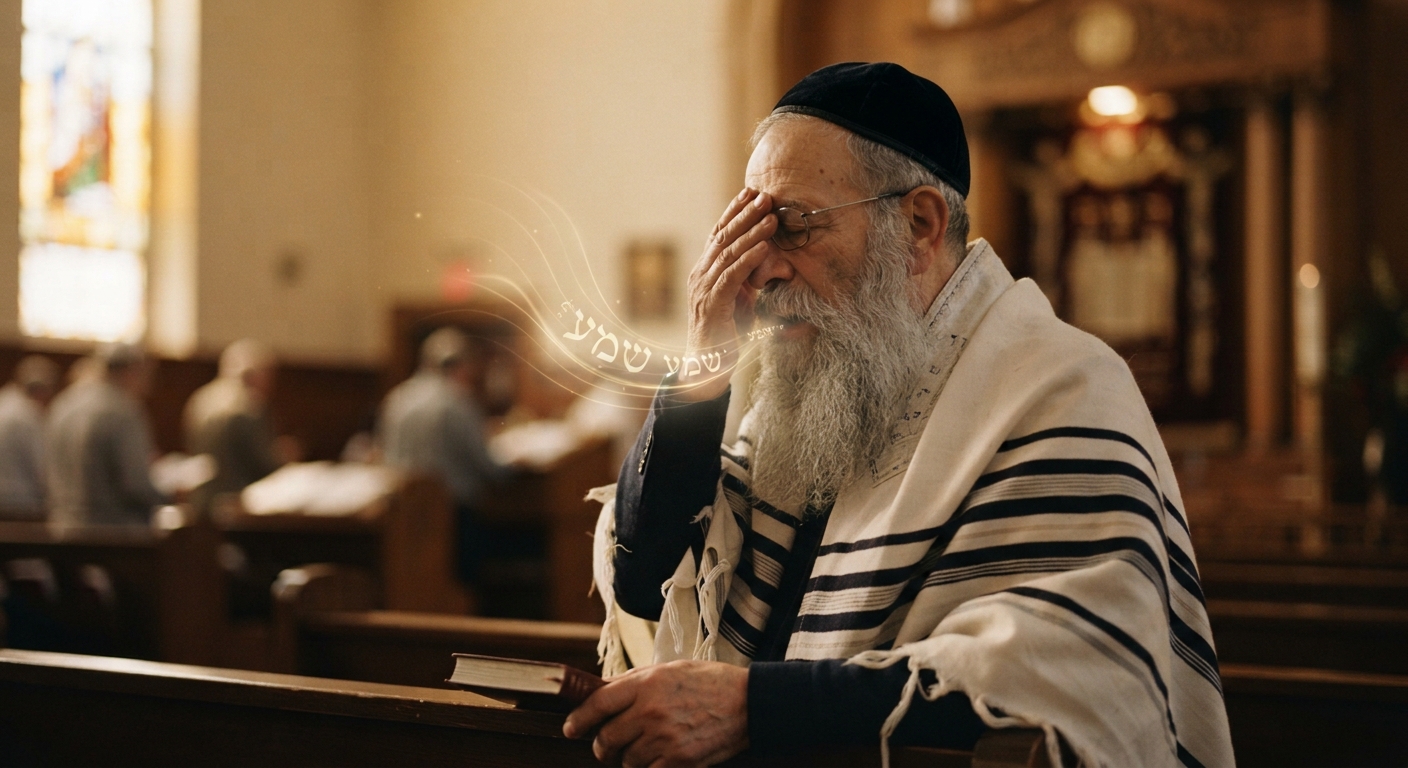
There is a מחלוקת if it is said with such a low voice that it was ‘unheard’, and as above, the הלכה is that one is indeed יוצא.
The Gemara then continues to quote some Mishnayos and Beraisis about a case where somebody that’s mute did the mitzvah of תרומה, which requires a bracha. Being that he is mute and cannot make a bracha, the question is if his actions are valid and the תרומה that he gave is effective.
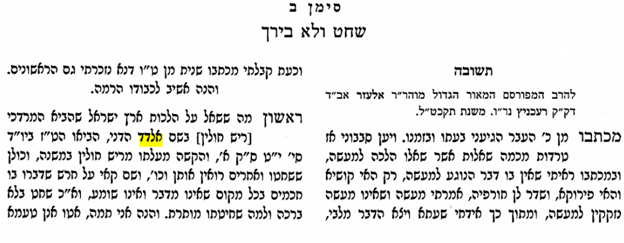
4 – In the year תקכ”ט – 1768 someone asked the נודע ביהודה, the Rov of Prague , a question.
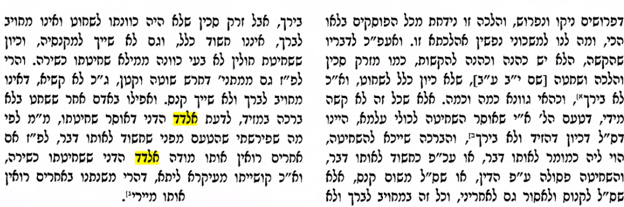
How could the הלכות of אלדד הדני say that שחיטה without a ברכה causes the שחיטה to be invalid, meaning that the animal is טריף?
The הלכה is that a mute who can’t speak can shecht as long as there is an adult watching him shecht the animal. Now if he can’t speak, he cannot make a bracha, so how can the שחיטה be kosher?
The נודע ביהודה responds by saying: I don’t know why you’re asking me questions on halachos of אלדד הדני , when in reality all the poskim said that we should discount them and not take them seriously.
Now as to the actual question itself, he answers very simply.
When it says in the Mishnah that someone that is mute can shecht, even though he’s unable to make a bracha, that is because he is not capable of saying it. It’s beyond him. On the other hand, someone that can make the bracha and doesn’t make it, it shows that he is a מומר לאותו דבר. He is a suspect on that thing, which is הלכות שחיטה, and therefore it would disqualify him and his שחיטה according to the הלכות of Eldad Adoni.
5 – In conclusion we discussed a case as follows:
The Mishnah also says that a person should read קריאת שמע, uttering the words very clearly.
Say someone is a Lubavicher who I was brought up to daven in נוסח ארי with our type of הברה (what we call the Lubavitch way to pronounce words). Boruch, not Burich.
He comes into a shul and they tell him that he cannot daven for the עמוד unless he pronounces the words as they pronounce them. Is he allowed to do Daven using a different type of pronunciation?
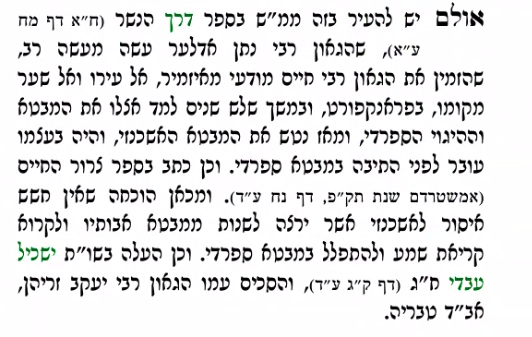
6 – We spoke about the famous חתם סופר, the Rav of Pressburg. He had two teachers that he quoted often. One was Reb Pinchas Horowitz, a student of the Magid, who wrote the famous ספרים ,the הפלאה and פנים יפות. The other one was a great מקובל by the name of Reb Noson Adler.
We quoted from a sefer that writes that Rabbi Noson Adler, who was the Rav of Frankfurt and davened in their Yekkish pronunciation, wanted to know the Sephardic pronunciation. He invited the Rav of Izmir, Rabbi Chaim, to Frankfurt, where Rabbi Noson Adler studied with him for three years until he was able to pronounce words exactly the way ספרדים pronounce it. Afterwards, even when he went to the Amud (the rest of the crowd not pronouncing the words in that fashion), he davened with the Sefardic pronunciation!