BSD
Brochos – 15b
Kislev 8, 5787. 11/17/2026
Short notes.
Our גמרא is the source of a very large topic, so we spent time on segmenting the issues. The starting point is the Mishnah on 15a: הקורא את שמע ולא השמיע לאזנו יצא, while רבי יוסי says לא יצא. Items 1–5 all grow out of this machlokes.
Item # 1 – Prior to learning one needs to recite ברכת התורה. Can one ‘think’ דברי תורה prior to making this ברכה?
This is seemingly a simple הלכה, as it is brought down in the Mechaber and the Rama, and also the Alter Rebbe, that one can think in divrei Torah, להרהר בדיברי תורה , prior to making the ברכת התורה.

The reason given is הרהור לאו כדיבור דמי. The source for the question of whether הרהור כדיבור דמי is the machlokes on Brochos 20b.
שולחן ערוך אורח חיים מז, ד: “המהרהר בדברי תורה אינו צריך לברך”
רמ”א שם: “והוא הדין דיכול לפסוק דין בלא נתינת טעם לדבריו
Alter Rebbe:
מז ב צריך לברך בין למקרא לבד בין למשנה לבדה בין לתלמוד לבדו בין למדרשיג לבדויד שהכל תורה היאטו ונתנה למשה מסיניטז והמהרהר בדברי תורה א“צ לברךיז וה“ה שיכול לפסוק דין בלא נתינת טעם לדבריויח שזהו ג”כ אינו אלא הרהוריט והרהור לאו כדיבור הואכ כמו ש[י]תבאר בסימן ס”בכא:
Item # 2- The famous question of the גר”א who disagrees with all the above.
“How can you not make a ברכה on thinking Torah? The definition of learning means thinking, understanding. That is the mitzvah, so how can one not make a ברכה?”
אבל כ״ז צריך עיון דכאן מברך על המצוה, וכי ליכא מצוה בהרהור? והלא נאמר והגית בו כו׳ ר״ל
בלב כמ״ש והגיון לבי וכ״ש לפסוק דין כו׳ והלא למקרא צריך לברך וכן כשקורא בתורה בציבור:
Item #3 – Let’s talk about תלמוד תורה itself. Is the mitzvah to speak תורה or can one fulfill its obligation just by thinking תורה?
Now that opens up a totally new topic. To start, let’s see what Alter Rebbe writes in Hilchos Talmud Torah.
ת”ת אדה”ז ב, יב. בדיבור דווקא
ת”ת ב יב יב וכל אדם צריך ליזהר להוציא בשפתיוקעד ולהשמיע לאזניוקעה כל מה שלומד בין במקרא משנה ותלמודקעו אלא אם כן בשעת עיון להבין דבר מתוך דברקעז וכל מה שלומד בהרהור לבדקעח ואפשר לו להוציא בשפתיוקעט ואינו מוציא אינו יוצא בלימוד זהקפ ידי חובת מצות ולמדתם אותםקפא וכמ“שקפב לא ימוש ספר התורה הזה מפיך והגית בו וגו‘ וכמו בכל המצות התלויות בדבור שאינו יוצא בהן ידי חובתו בהרהורקפג אלא אם כן שומע מפי המדבר שהשומע כעונה בפיוקפד.
On the surface it seems that, as the Alter Rebbe writes, someone that learns Torah just with thinking (even deep thought in Torah) when it’s possible for him to verbalize the words, is not יוצא the obligation of Talmud Torah. Note the Alter Rebbe’s exception, אלא אם כן בשעת עיון להבין דבר מתוך דבר: during deep עיון one need not verbalize, which bears directly on the גר”א’s question.
So that would answer the גר”א’s question since, with תלמוד תורה, you only fulfill your obligation when you verbalize it, when you talk the words. In the morning, before saying ברכת התורה, you can think דברי תורה since you are not being מקיים, with just being מהרהר, at that time on the mitzvah of תלמוד תורה.
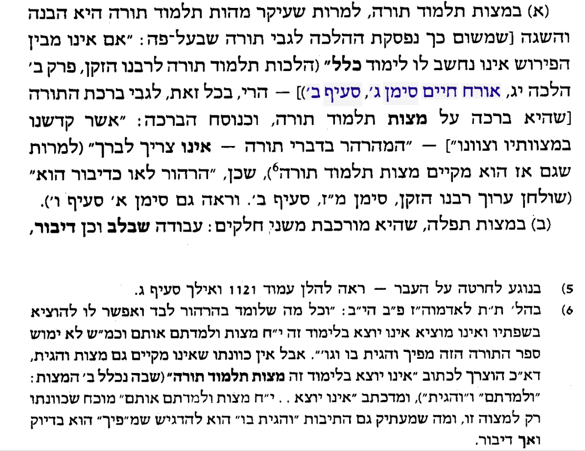
Item # 4 – But despite what we quoted above from the Alter Rebbe (that the mitzvah of Talmud Torah is only when you verbalize it, when you’re speaking), the Rebbe writes that’s not what it seems on the surface. See below from שיעורים בספר התניא ח”ג עמ’ 1120.
In short, what the Rebbe writes is that there are two things in Limud HaTorah: one is the mitzvah of והגית and one is ולמדתם אותם, as he writes, “לא ימושו מפיך.”
If someone just thinks about Divre Torah, he is only mekayim the mitzvah of the והגית but he is not מקיים the mitzvah of ולמדתם אותם which requires the saying of the words.
Based on this, we’re back to the question: if a person who only thinks about Torah actually fulfills the obligation of the mitzvah of והגית, how can he do it without saying ברכת התורה?
Item #5 – We mentioned an original idea of Rabbi Yisroel Rubin, עליו השלום, the Shliach of Albany, who passed away on סוכות.

Briefly his point is as follows: ברכת התורה is, in a certain sense, like ברכת הנהנין, like making a ברכה on food. Now in ברכת הנהנין the halacha is that the food must be in front of you and available. You cannot make a brachah in anticipation that food will arrive.

Similarly ברכת התורה can only be made on Torah that is in front of you; it’s defined.
And that is the difference between speaking Torah and thinking Torah. When you speak it’s defined. You have it in front of you because you are using your lips and your mouth to verbalize it.
On the other hand when you think, since thought is fleeting, it moves away quickly and not (to use his words) מסויים, you cannot make a brachah on it. A question to consider: the ברכת התורה said once in the morning covers the whole day’s learning, which is not yet in front of you. Perhaps the פסוקים, משנה and גמרא said right after the ברכה are what make it מסויים. It is also notable that ברכת התורה is usually classed as a ברכת המצות, not a ברכת הנהנין.
Item #6 – We spoke about whether, in halacha, it recognizes the language of thought. Is there a specific thought language? Of course people think in their language but does halacha recognize it as a difference between one thought in one language versus thought in another?
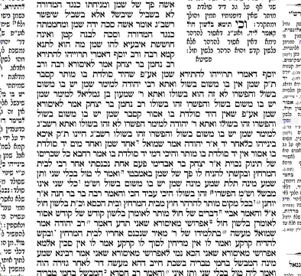
See Tosfos here, Shabbos 40b:
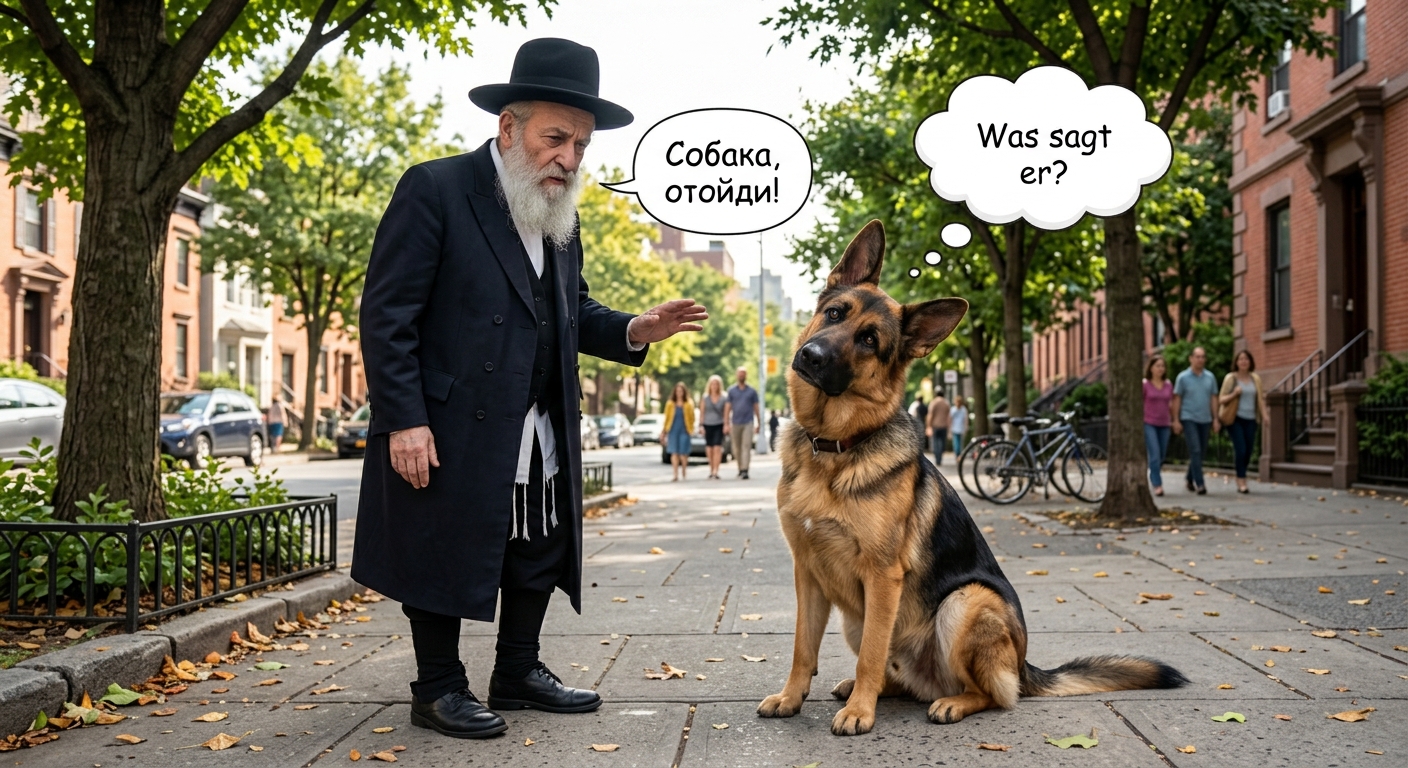
[Parenthetically we joked about foreigners that come to America and when chased by a dog, they tell the dog in English with their heavy accents, “Go avay.” Why not tell the dog to go away in French or Russian? Does the dog really think in English?]
Item #7 – We spoke a bit about the tone of voice that some of the Karliner Stoliner חסידים use when they daven. Well they get wrapped up in their Davening and actually scream the entire davening.
We related the story of the Ruzhiner’s grandson, Reb Dovid of Chortkov, when he lived in Vienna.
When the Stoliner Chassid told him that he wants to come to daven in his shul on Shabbos, Reb Dovid told him, “You can come but under the condition that you don’t scream in my shul since my crowd will not tolerate it.”
He took upon himself not to Daven loudly and he came to the shul on Shabbos he began to Daven in a low tone. As he drew energy from his davening, he went back to his usual custom and screamed out the rest of the davening.
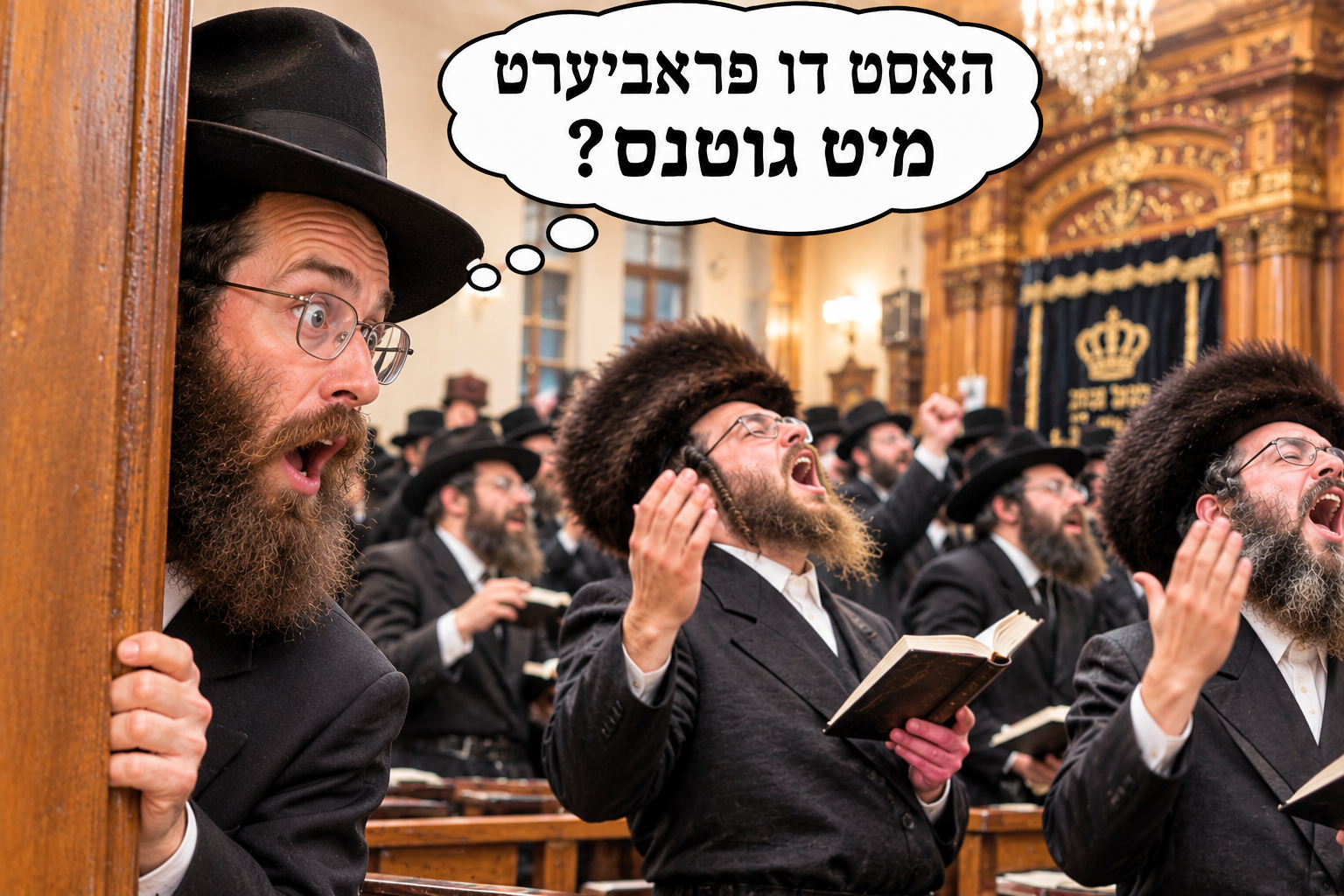
After Shabbos this Chassid came to Reb Dovid and apologized to him for not keeping his promise.
Reb Dovid told him it’s not a problem. It’s fine. I actually enjoyed it. When the Chassid asked him, “If you enjoyed it why did you tell me before Shabbos that I should not come?”
Reb Dovid responded to him that it was not his screaming that he was concerned with.
“What bothered me was the following: How did you know on Tuesday that on Shabbos you are going to scream during davening? If one screams, okay, that is his enthusiasm and his method of Davening. But to know in advance that in a few days you are going to Daven loud בהתלהבות…”
It’s a nice story and ties it back to the topic: davening aloud versus quietly connects to the question of השמיע לאזנו.