All posts by daf

Makos 12a (2) Shiur 01/13/15

Makos 12a (2)

Thanks to Eli Chitrik

Points from the Shiur 1/13/15

We re-mentioned briefly the Sicha of the Rebbe of why a person cannot leave the Arei Miklat even if the entire Jewish nation needs him; this is because once he leaves he becomes a “Dead Man Walking” (gavra bar k’tala) therefore the Torah cannot command a person, so to speak, to become a dead man.

(See Shiur 12/23/14, item #2 here)

We consistently throughout our Mesechta mentioned the concept of the Goel Hadam. Loosely translated as a relative to the victim. However we never specified as who is eligible to become the Goel Hadam. Can any relative  be a Goel Hadam?


  1. The Rambam (1:2) maintains that the person next in line to inherit the dead man becomes the Goel Hadam. It follows the Din of Yerusha. If he can’t, it passes to the next closest inheritor. We discussed the illusive source for his ruling.

Bad Heir Day_Layout 1

The Gemara raises the question about whether or not a son can become the Goel Hadam against his father. For example: if a father inadvertently kills his son, (Oy vey…), and the victim has a brother. Does this other son (the brother) become the Goel Hadam and thus have a right or obligation to pursue his father or not? The Gemara goes back and forth and concludes that there is a special provision that categorically prohibits a son to harm a parent in any way.


  1. We learned the Rabbi Akiva Eiger who asks a very simple question based on the Rambam’s order of the Goel Hadam: Why do we need this special provision? How can a son ever become a Goel Hadam against his father?


If the next person in line to inherit the dead becomes the Goel Hadam then it is obvious (in the example of the father killing his son) that the second son cannot kill his father. This is because this brother is not the next person in line to inherit the dead brother. The next person in line to inherit a son is the father! (i.e. the killer himself)?!

So why the entire the discussion and this special provision in the Gemara?


  1. R’ Akiva Eiger comes up with a scenario (not of a father who killed his own son, but) where the son can in theory indeed become the Goel Hadam towards the father.


How is that?


A man marries a woman and they have a child. They subsequently get divorced. After their divorce the father inadvertently kills his ex-wife.


In such a case the next person in line to inherit the mother is the son. Therefore it is possible that the son can become the Goel Hadam towards his father.


It is in such a case that the Gemara states due to the special provision that a son cannot harm his father. Were it not for this provision, he would become the Goel Hadam – for he inherits his mother.

7- We spoke about a Shogeg living in a tunnel that extends from the Orei Miklot to the outside world. Is this bunker a refuge for him?


Makos, 12a. Shiur 1/6/15

Makos, 12a.

1- An interesting scenario examined by the Gemara: The Shogeg fellow, holed up in the Arei Miklot needs to patiently wait until the Kohen Gadol passes away.

But what happens if the Kohen Gadol is disqualified?  How?

Kohanim are not allowed to marry divorcees. If they do, then their children are categorized as chalolim – meaning blemished Kohanim and are prohibited to do any Avoda in the Beis Hamikdash and needless to say are disqualified from becoming a Kohen Gadol.

If we have an established Kohen Gadol and unfortunately it was ascertained that his mother, prior to marrying his father, had married and divorced, the Kohain is now thus forced to resign.

So we now have a situation where the Kohen Gadol (has not died, but) is removed from his post. He was obviously not fit to become a Kohen Gadol to begin with!

Does the disqualification retroactively void his entire career?  If we assume that it is indeed the case,  then that would mean that when the Shogeg was originally convicted there was no valid Kohen Gadol in place. And the rule in such cases (conviction with no KG in place) is that he stays in the Arei Miklot forever- the death of a KG who is elected after his conviction does nothing for him.

On the other hand one may say,  a disqualification does trigger a release for the Shogeg fellow. We discussed the rationale behind this school of thought; perhaps the disqualification of the KG is in a way as painful as his death. Etc.

Minchas Chinuch_14092_page_283

2- We mentioned the Minchas Chinuch’s (410) pondering if a Kohen Gadol is removed by the king or by his fellow Kohanim….Yes, that can happen as he quotes the Tosfos in Yuma 12b.

Minchas Chinuch_14092_page_282

Minchas Chinuch_14092_page_283


3- We briefly mention an overview of the first generation of Amoroyim – primarily Reb Yochanan in Israel and Rav and Shmuel in Bavel. Story of Reb Yochanan who had great respect for Rav but was unaware of Shmuel’s greatness.

4- Fascinating Tanach story with diverse explanations by the scholars of Israel versus the scholars of Bavel.

Briefly- the Tanach relates the story of Yoav being pursued by Shlomo Hamelech’s soldiers to execute him (as per Dovid Hamelech’s last wishes) for two murders (Avner ben Ner – David’s general, and Amasa, another of David’s officers and a nephew) Yoav committed years back.

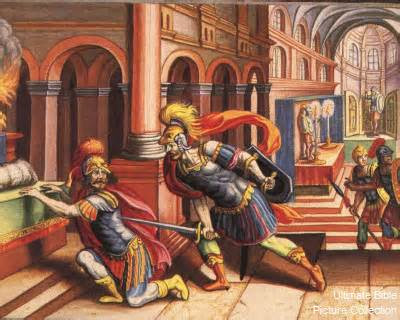
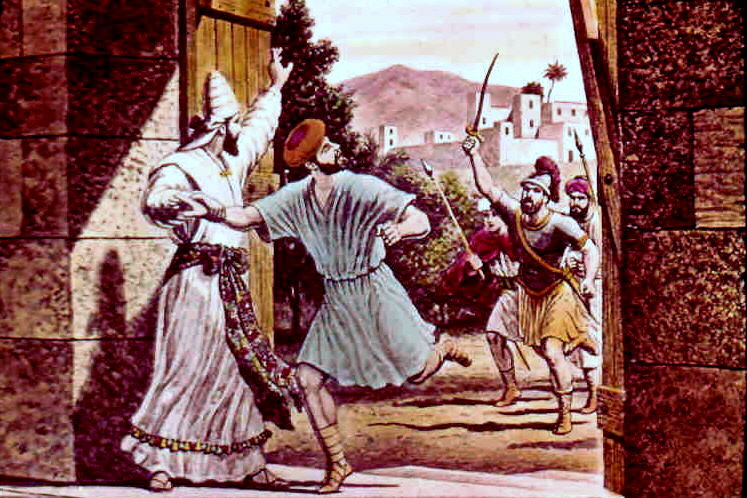
Yoav runs into the Beis Hamikdash and hangs on to the corners of the Mizbeach thinking that this will save him. It does not help him and he is taken away and executed by Shlomo.

What was Yoav thinking?  Our Gemara, written in Bavel says that Yoav erred in three points. The Torah says that a Kohen who is accused of murder should be taken away even if standing next to the Mizbeach. This implies that if he is standing on the Mizbeach no one can touch him.

So what was Yoav’s mistake?

One is that the Mizbeach offers sanctuary only when one is on the Mizbeach. Holding the horns is worthless. Two, it only applies to a Kohen while he is doing Avoda. Point three is that it is effective only in the Beis Hamikdash that was only built after this story. None of these condition were met by Yoav as he was not on the Mizbeach, he was not a Kohen and this was not the Beis Hamikdash.

But I’m on base!

We read the Rabbeinu Chanan’el who quotes Reb Yochanan (who compiled the Talmud Yerushalmi) who writes to the Babylonians that they have it all wrong on all points. For even a Kohen standing on top of the Mizbeach in the Beis Hamikdash gains nothing….

And even if the three points were valid it is unlikely that Yoav who was the head of the Sanhedrin would err on these points.

So what was Yoav thinking?

Reb Yochanan says that Israeli’s take on this story is that Yoav’s running into the Beis Hamikdash was (not connected with the Mizbeach at all but rather) an attempt to be judged by the Sanhedrin as opposed to the court of the monarchy. What was Yoav to gain?

Simple. If found guilty by the Sanhedrin his estate would be inherited by his children as opposed to the estate of one judged by Shlomo Hamelech that would be confiscated!

Makos 11b (3) Shiur 12/30/2014

Makos 11b (3)

Thanks to Eli Chitrik

1- Our Gemara on 11b notes that the Shogeg exile would need to wait until the death of the Kohen Godol in order for him to leave the Orei Miklot.

Now if the poor Shogeg fellow passes away before  the Kohen Gadol, he is buried there until the Kohen Gadol dies and only then are his remains moved to his family plot in his city of origin.

There are stories making the rounds about the encounter of the Rebbe with Reb Yechiel Yaakov Weinberg.

Yechiel Yaakov Weinberg,

the Seridei Aish

Background: When the Rebbe arrived in Berlin in December of 1928 – Tevev 5686 he visited the Berlin Rabbinical Seminary that was under the direction of Rabbi Azriel Hildesheimer.


The dean at the time was Reb Yechiel Yaakov Weinberg who was a prolific author. Reb Yechiel survived the war and settled for the rest of his life in Montreux, Switzerland.

See here.

We previously discussed the story of the Ragatchover’s daughter and the chalitza from the apostate (see ​here Shiur 10/28/14) – this story was with this Reb Yechiel!  

The Seminary issued a letter certifying that the Rebbe has been accepted as a visiting student. If Rabbi Weinberg gave the Rebbe an actual ‘Smicha’ is an unresolved historical tidbit.

Please see here

In short, Reb Yechiel gave the Rebbe one of his pamphlets (Kuntres Pinui Atzomos Maysim) that dealt with the Halochos in regard to  moving Jewish remains to another cemetery. One of the issues discussed there, is that by moving a grave to a different location is embarrassing to the remaining people that remain buried there.

The Rebbe compiled a group of notes and comments that were found in the Rebbe’s room and printed in the Reshimos series, # 127.

For example one the proofs quoted by Reb Yichiel permitting the relocation of a grave is from the fact that the remains of Yosef Hatzadik were removed from Mitzrayim at the times of the Exodus by no less that Moshe Rebeinu himself!

The Rebbe writes that the Posuk at the end of Vayechi (Chazak) states that Yosef was buried  in Mitzrayim. Perhaps it means to emphasize that it was in Mitzrayim proper as opposed to the land of Goshen where the Jews resided. Thus the removal of Yosef was not from a Jewish cemetery thus not causing any embarrassment to the remaining ‘tenants’……

Additionally, Chazal tell us that Yosef’s casket was sunk in the Nile and not in a cemetery.

Now to our Gemara – Can one bring proof allowing the relocation of a grave from the fact that, as mentioned above, the Shogeg who was buried in the Orei Miklot is eventually (upon the passing of a Kohen Gadol) relocated to his ancestral plot?

The Rebbe writes that since the burial of the Shogeg is to begin with only a temporary ‘kevurah’, then one cannot bring this as proof to allow the move a grave of someone that was interred without a conditional stipulation.

2- We related 3 stories of the great Tzadik Reb Yisroel of Vilednik. His Yortzeit is this month on the 21st of Teves.

1- Kol Ha/meharer Acherei Rabo

2- Ve’ilein Mily’hu and his brocho for a boy:

V’ilein milaya,- and these  silk

y’hon lir’ki-aya – should be over it as heaven

v’saman, man sharya?  within, who will rest?

halo hahu shimsha. Why it is that boy!

3- Reb Hillel of Paritcher’s take on him.

See here.

https://groups.google.com/forum/#!msg/beermayimchaim/RdRqOtquriY/_2P3yU19ARQJ


http://www.geschichtswerkstatt-europa.org/ansicht/items/667.html?pid=83


Makos 11b. (2)  Shiur 12/23/14

Makos 11b (2)

Thanks to Eli Chitrik.

1- We continue our explanation of the novel idea of the Rogatchover pertaining to our Gemara about the conditional self-excommunication of Yehudah if he were not to return Binyomin to his father Yaakov:

His explanation is broad and encompasses the entire saga of the tug-of-war between Yosef and Yehudah in regard to Binyomin as the Torah relates in detail in Parshas Mikeitz and Vayigash.

Yehuda pleads for Binyomin

Briefly, these two giants, Yosef and Yehudah were fighting not just for the custody of Binyomin, but also and primarily for setting the stage for the future of the Jewish people.

The Gemara in Zevachim explains that the Mizbe’ach,  the one in Shiloh and  in the Beis Hamikdash, was located in the land of Binyomin. Whereas the Sanhedrin was in the land of Yosef at Shiloh and in the portion of Yehuda when in Yerushalayim.


If the Mizbe’ach were indeed to have been located in the portion of Yehuda in the Beis Hamikdash, the Gemara says, it would have never been destroyed.

The Rogatchover explains that the Sanhedrin symbolizes Torah and the Mizbe’ach the ‘Avoda’. Had both the Sanhedrin and the Mizbe’ach been located in the portion of one of the Shevotim (as opposed to being split in two – symbolizing division) there would not have been any Golus. Jews would have lived forever in Eretz Yisroel never having to suffer the tribulations and suffering of exile.

The two brothers, Yosef and Yehudah were struggling to ‘control’ Binyomin. It was their will to unite what they symbolized, Torah, with what Binyomin symbolized, Avodah. It was to be a perfect and eternal union.

In the Rogatchover’s words “it would have been Torah u’Gedula b’mokom echad. However the Cause of All Causes made it so that this unity should not occur until Moshiach may he arrive speedily.”

It was therefore ordained that Binyomin should refuse to subjugate himself to either Yosef or Yehudah. He declared his independence and his unwillingness to bond with either.

He manifested this independence by returning to Eretz Yisroel not with Yehuda as his chaperon, but as an independent son of Yaakov.  He returned on his own. 

So ultimately Yehudah did not return Binyomin. He didn’t fulfill his obligation and therefore Yaakov could not nullify the excommunication self imposed by Yehuda. 

יח ויגש אליו יהודה עמ”ש בזה בהך דזבחים דף קי”ח ע”ב א עיקר הדבר דיוסף רצה שהוא יהי’ עיקר לבנימין, דגם בזמן שילה הוי עיקרבחלקו של בנימין.

ואז אם הי’ תורה עם עבודה במקום אחד הוי קיים.

וכן יהודה רצה זה. אך שניהם לא הועילו כי בנימין לא הסכים רצון הבורא כן שיהי’ גלות אחר גלות עד משיח במהרה ואז יתגבר מבני יהודה משיח בן דוד אי”ה

2- We continued learning about the “imprisonment” of the Shogeg killer in the Arei Miklot. The Mishna states that unless the Kohen Gadol dies,  he may not leave under any circumstance.  Not for any Mitzvah and “even if the entire Jewish nation needs him he may not leave”. Meaning that even if he is warrior whose capabilities would save Klal Yisroel still he would not be permitted to leave.

The questions asked by many commentators is that there is a general rule that to save a single life one must transgress all but three Mitzvos. (a”z, g”a, and s”d) and So why is this imprisonment so strict that would go against this principal? He should be obligated to leave his city and fight the necessary battles to save lives!

Many and various answers are given. For example: His leaving the Orei Miklot puts his life at risk by exposing himself to the Goel Hadam. One is not obligated to put his life at risk for saving another. Others say that no salvation can come from such a person to begin with.

The Rebbe addresses the various answers and comes up with an original explanation basing himself on the Rambam who states this rule of the Shogeg never being allowed to leave his city of refuge. Interestingly the Rambam adds a few perplexing words: By leaving, he (the Shogeg killer) allows himself to be killed. 

The Rambam, says the Rebbe, is saying that a person is such a situation, should he step out of the Arei Miklot with a Goel Hadam waiting for this to happen, is technically considered a dead man!

Likkutei Sichos v38 p130

Thus the Torah cannot obligate him to leave as the Torah does not give instruction  to humans (even in a case of national Pikuach Nefesh) that will cause them to become technically dead….


Gut Shabbos.

LIK”S 38, 130. 


Makos 11b Shiur 12/16/14

Makos 11b

Our Gemara relates the tragic story of Yehudah and his guarantee to return Binyomin safely to his father.

In general, a Beis  Din can excommunicate an individual as a result of his wrongful conduct to coerce him to amend or retract his actions. When he does retract, the Beis Din needs to nullify the ban.

Similarly  a  person may conditionally excommunicate  himself  to ensure that he performs a certain desirable act. Similar to the Halocha  that ‘one is permitted to swear that he will  perform a Mitzvah’.

But here is the perplexing part:  In a conditional excommunication even if the condition was satisfied an active nullification must take place. If not – the ban and its consequences remain.

Let us use an example: A Lubavitcher decides mid- winter that on the next Yom Tov he will go on Tahalucha to the East Side…… In order to solidify his resolve, he adds “if I don’t go I will be excommunicated” ……

Now Pesach comes and ….. afraid his wife will stop communicating with him because of the impending excommunication…. he does his Chasidic duty and trudges to an East Side shul.

Nevertheless, this fellow needs to have this excommunication nullified. If not, it remains in place.

The source for this perplexing Halacha is found in our Gemara, Makos 11b.

Wanting to convince his father Yaakov to allow him to take Binyomin to Mitzraim he utters a conditional ‘self-excommunication; If he, Yehudah, were not to bring Binyomin back safely, the excommunication would take effect.

Although Binyomin did survive the trip to Mitzraim and was united with his father, the excommunication of Yehudah took effect. It was never nullified. Thus, even after Yehudah’s death, this excommunication had its effect on Yehudah. It manifested itself in the ‘rattling’ of his coffin; his bones which disconnected from the spine causing them to juggle for forty years while in transit to Eretz Yisroel.

It was only after Moshe Rebeinu prayed for the excommunication of Yehudah to be nullified that his bones were reconnected and his suffering and rattling ceased.

The Gemara derives from this fascinating story that all excommunications even if it conditional must be nullified regardless of  whether or not the condition was met.

The glaringly obvious question is of course as to why was this excommunication not nullified by Yehudah himself or by Yaakov his father?

The Rambam and Raavad discuss the question as to why Yehudah did not annul the ban himself, as is the Halacha in regard to a Talmid Chacham. The Raavad concludes his remarks by saying “the question I remain with, is why Yaakov didn’t annul and relieve Yehudah of his obligations”. Rabeinu Eliyahu Mizrachi also asks this question.

Some answer the question by saying that Binyomin didn’t return with all his brothers to Eretz Yisroel to pick up Yaakov and the rest of the family. He remained in Mitzrayim and only met his father there. Thus Yehudah never did bring Binyomin back.

In other words Yehudah never fulfilled his vow and the excommunication could not be lifted.

So here we come to a most brilliant idea from the Rogatchover:

He suggests that Yehuda’s obligation was specifically “I will bring back Binyomin to you”.

And Binyomin did indeed return to Yaakov…

But it was not Yehudah’s doing. Binyomin returned on his own.

Neither Yaakov nor Yehudah could therefore annul the excommunication.

What is the meaning of this? And what is the difference on how he returned? And why is Yehudah still punished for this if all ended well?

To be continued…


Makos 11a. Shiur 12/9/14

Makos 11a.

  1. The Gemara states that the Arei Miklot need to be populated by ‘normal’ working people. Only a minority of the inhabitants can be *Shogeg refugees. (Amnesty, as we are now witnessing in the USA is not an option….. Only the passing away of the Kohen Godol cleans the slate and sets them free.)

Shogeg Refugee = inadvertent manslaughter.

If the majority of the inhabitants are Shogeg refugees then the city loses its status as in Ir Miklat.

​​The reason is that the Posuk says “And the killer who has fled to the city of refuge shall speak his matters to the ears of the elders of that city” (Joshua, 20:4)

Quiet Retreat of Jewish Elders

This seems to imply that the purpose of the killer speaking to the elders is to convince them to take him in although he has killed. Now, this would be unnecessary if a majority of the populace were killers, for they would certainly have no reason to turn him away in such a case! Therefore, the verse establishing the parameters for the Arei Miklot states that the Arei Miklot need to be a cities where the populace are not mostly killers.

2- We mentioned the Minchas Chinuch who has a funny query: Say the current inhabitants are split exactly 50/50. Half are native non-refugees and half are Shogeg aliens.

Now, when this fellow stands at the gate and pleads for asylum – if they grant him his request……then with him joining half the population of refugees (making them the majority) he is basically entering a city that is now disqualified as an Ir Miklat! (Because the new majority are now Shogeg aliens).

He does say that he thinks that it still has the status of refuge if they take him in. This is because there was no majority before he got there.

3-  Our Gemara mentioned briefly about the last 8 Pesukim in Devorim.

We mentioned that the Gemara (BB 15a, Menachos 30a) has two opinions as to who wrote them –  Moshe Rabbeinu or Yehoshua. In any case, the Gemara concludes there, that these 8 Pesukim “only one person should read them”.

What does that mean?

Rabbeinu Meshulem explains that one person must read them unassisted, unlike other verses, where the official reader reads together with the person called to the Torah.

Rabbeinu Tam however, rejects this explanation.  The entire Torah reading, as opposed to Megilla, can only be read by one person. Either the receiver of the Aliya or the Baal Koreh.

Rather, Rabeinu Tam asserts, we must explain the Gemara as Rashi does, which is you cannot split them into two separate Alios.

The Rambam has a different approach ”The eight verses at the conclusion of the Torah may be read in a synagogue when fewer than ten people are present. They are indeed all [integral parts] Torah and were related by Moses from the Almighty. However, since, on the surface, they appear to have been recited after Moses death, the [rules governing them] are different. Therefore, it is permissible for an individual to read them.”

Reacting the Ramabam’s view that a person can read it without a Minyan, the Ravad asks: “I never heard of such a thing. …..and where did the Minyan go exactly?”

Meaning to say “how did it happen that all of a sudden you don’t have a Minyan”. Therefore he explains the Gemra similarly to Rabeinu Tam.

4- Discussed the  Tzemach Tzedek to refrain to add on Shabbos more than seven Alios. O”C 35.

5-  The Gemara mentions that the reason the accidental killers stay in the Arei Miklat until the death of the Kohen Gadol is because the Torah is punishing the Kohen Gadol that he did not Daven for his people that no murder should occur during his tenure.

[kohen+gadol.jpg]


We asked in Shiur- what exactly is the punishment? How are you punishing the Kohen Gadol by making his death conditional for all unintentional murderers to go free? ​


Makos 10a (2)  Shiur Points 12 2 14

Makos 10a (2)

Thanks to Eli Chitrik

  1. The Gemara mentions the Passuk from Kohelet “A lover of silver shall not be satiated with silver, and whoever loves a multitude has no produce”. (5:10)

In simple English it means that people that “need much” are never satisfied.

We mentioned a famous contradiction between two Mamarei Chazal:

One Medrash says: .”Mi she’yesh lo mone rotze mo’sayim.  Whoever has a hundred wants two hundred…”

On the other hand it says: “A person passes on from this world, without even appeasing half of what his heart desires.” That means that no one ever accumulates even half of their goals!

These two sayings seem contradictory. Why?

Say for example a person accumulates ‘100’; at the end his life he has achieved – despite always wanting 200, only half of his goal. Thus one does indeed pass away with half of his goal.

One answer we mentioned is that the meaning of that “he wants two hundred” is, that he wants two hundred more, in addition to the one hundred he already has. He really wants 300 in total. Meaning that when his life is over he only obtained a third!

The Maharam Shif explains: the second hundred is a lot more important in his eyes than the first hundred. Meaning, the yearning and desire to get the second hundred is double or triple the yearning of the first hundred, therefore the first hundred is not considered half!

  1. The Gemara mentions how eventually everyone  gets what one deserves:

Act one:  “As the proverb of the ancient one says, ‘From the wicked comes forth wickedness, etc.’ What is this verse talking about?

About two people each of whom killed a person. One killed inadvertently – shogeg, and one killed intentionally- meizid. Neither case was seen by witnesses.

Both move on with their lives as if nothing has occurred.

Act two: The Holy One Blessed is He, arranges that they both come to the same inn. Witnesses are watching the unfolding drama. The one who killed inadvertently (in Act One) descends down a ladder. The one who killed intentionally (in Act One) sits under a ladder. The man on the top falls upon him and kills him.

Since witnesses see all this, the result is that the one who had killed intentionally (in Act One) is killed, and the one who killed inadvertently (in Act One) is finally exiled.

Now in Act One the meizid killer did something unthinkable. He’s a plain murderer. What about the shogeg guy? He killed unintentionally. Nevertheless it is implied from this story that both people have committed (another) wrong by walking away from the crime scene.

The Maharsha mentions two points here:

  1. Although the Gemara does not discuss this, the first pair of victims must have also committed some sins that caused them to be liable to Heaven retribution. For otherwise why would they be killed?
  2. He then asks why does the person who killed unintentionally (in Act One) have to go to galus? Is not galus merely for the protection from the Goel Ha’dam? But in our story no one witnessed the inadvertent accidental killing. So why does he need to go to galus?

The Maharsha suggest some answers.

We asked in Shiur, that this is very puzzling. The Gemara on Daf Beis clearly mentions that going to Galus is also for “kaparah” – atonement for the sin of killing a person even if it was b’shogeg.

This atonement applies whether there is a Goel Hadam or not?!

Hit up the comments for the some answers!


Makos 10b. Shiur 11/25/14

Makos 10b.

Points from the Shiur 11/25/14

1. An interesting point by the Rebbe about O’rai Miklot- “cities of refuge”.

The Chinuch, (a fundamental book in Yiddishkeit, first published in Venice, 1523 – and yet we are unsure of its author!) writes that there are groups of Mitzvos that are limited to a particular time (i.e. Pesach) while others are limited to particular places (i.e. in Israel).


But there are 6 Mitzvos that have no time or place constraint; they are applicable at all times and everywhere. He then enumerates them (e.g. belief in G-D) and concludes by giving them a ‘siman’ – a clue to remember the number 6!


As we learned in our Gemara, there are 6 O’rai Miklot. Thus the clue for these unique 6 Mitzvos are the 6 O’rai Miklot.

At the famous Purim 5718 Farbreingen the Rebbe asked a simple question- why choose 6 O’rai Miklot, a concept associated with death! (albeit inadvertent) as a ‘siman’? There are other happier “six’es”.


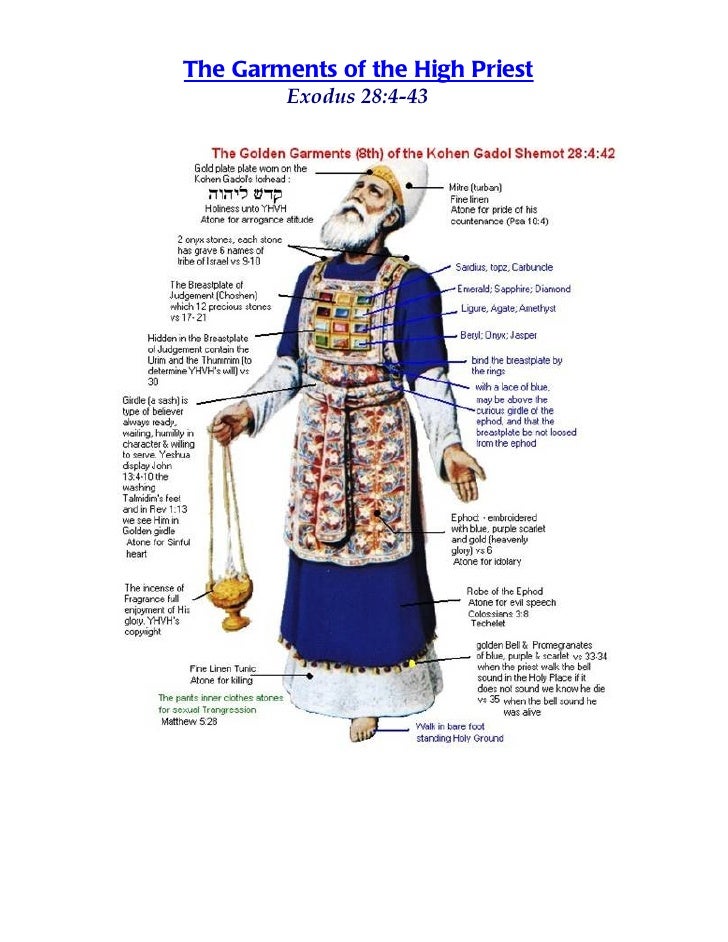
Such as the 6 names engraved on each stone worn on the shoulder of the Kohen Godol.The garments of the high priestThe Rebbe has an interesting answer.

Briefly – every Mitzvah has a counter balance that opposes it. The Mitzvah confronts this negative force and neutralizes it. “Tikun ha’Pegam”.

The 6 unique constant and universal Mitzvos enumerated by the Chinuch are countering the corresponding klipos/evil that are equally constant and universal .


What type of klipos/evil is indeed constant and universal? What force is so embedded in nature that it cannot be completely conquered?

That, the Rebbe explains, is the original sin of the Eitz Ha’Das and its eternal consequences – namely death. Even the 100% pure and righteous can not escape death.

All Mitzvos in a sense are a counter balance to this force of evil and ultimate death. [Therefore all Mitzvos are eternal until after the revival of the dead, Techiyas Ha’maisim] But they are limited in their force to negate this eternal evil because of their “locality” and time for their performance. As a ‘limited’ mitzvah, they can confront only a limited klipa.

The above six unique Mitzvos (being unconstrained by time and place) are symbolic of the eternity and the generality of this struggle, namely to purify the world of the result of the Etz Ha’das.

The Chinuch emphasizes this concept by choosing the ‘sign’ of 6 Orei Miklot. Why?

Killing be’Shogeg, the Goe’l Hadom, and the escape to Orei Miklot is similar to the general phenomenon of sinning. For a person only sins when he is in state of “not being cognizant of his actions” – i.e. Ru’ach Shtus.

The goe’l Hadom is like the yetzer hora……and a Jew’s only refuge is in Orei Miklot- Torah and Mitzvos.

http://beta.hebrewbooks.org/pdfpager.aspx?req=14927&st=&pgnum=329

2. The Gemara asks: Why does someone need to go to Orie Miklat? Let him just sit and learn Torah and Torah provides refuge…?

The Gemara’s second answer that the meaning of providing refuge is that it protects one from the Malach Hamaves, but Torah does not provide refuge from the vengeance of a Goel Hadam.


The obvious question is, when the Goel Hadam takes vengeance and kills the murderer, ultimately the Malach Hamaves is the one who takes his life, therefore ultimately it should protect him?

3- We mentioned the Ohr HaChaim In Parshas Vayeshev:
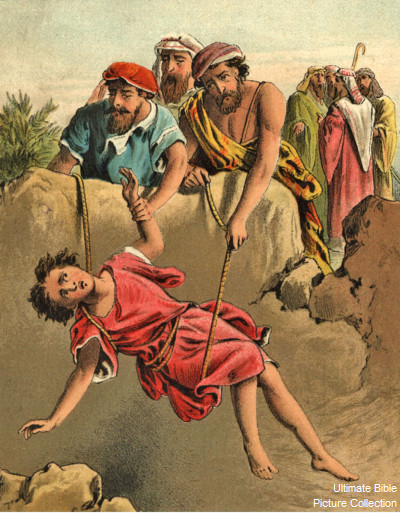
When Reuven saved Yosef from his brothers who wanted to kill him by lowering him into the pit; the Ohr HaChaim Hakodosh asks what kind of salvation was the pit – it was full of deadly snakes and scorpions, so lowering Yosef into there meant certain death anyway?

He answers that snakes and scorpions only kill someone when Hashem tells them to, so if Yosef is lowered into the pit he will only die if it is G-d’s will, and since Yosef was a total Tzadik, Reuven knew that is would live. But if would be left to the mercies of his brothers, he could be killed even against G-d’s will, since humans are ba’alei bechirah and they can kill even against the will of G-d.


That is the meaning that the Malach Hamves cannot kill someone who is learning Torah in a natural way.
But ultimately a person, in our case, the Goel Hadam, has the Bechirah which cannot be taken away even if his victim is learning Torah.


4- The Ohr HaChaim also has an interesting explanation on the attempt of Yoseif’s brothers to kill him. Briefly – they concluded that he should be judged as an ‘eid zomem’ due to his false testimony about their alleged shortcomings to their father Ya’akov.

Mendel Nemanov asked a good question that Yoseif was more in the category of ‘hak’chosho’ than ‘hazoma’.

Please comment.

Makos 10a Shiur Points 11/18/14

Special thanks to Eli Chitrik:

Makos 10a

1. In general we mentioned that the topic of the “Cities of Refuge” – Arei Miklot is something one find many ideas of the Rebbe. As we move along we will try to discuss them.

The Gemara asks: is it reasonable to designate three Arei Miklat in the Trans-Jordan to serve only two and a half tribes and to designate three in Eretz Yisrael proper to serve all of the rest of the tribes?

The Gemara answers that in Jordan murders are common.

The Rishonim raise an obvious difficulty with this answer: These cities provided refuge only for those who had killed inadvertently. How then can the Gemara state that because intentional murdered were common in Jordan, more cities of refuge were necessary?

There are many answers to this question. We mentioned Tosfos.

The Gemara below teaches that premeditated and inadvertent killers who escaped punishment by the courts, due to lack of witlessness, would be punished by Hashem. He would bring them together to a place where witnesses were present; the inadvertent killer would then fall off a ladder carelessly, killing the intentional murderer so that the murderer would be dead and the one who caused his death would be exiled. Thus, both people would be punished as they deserved to be. Because of the presence of many unpunished intentional murdered in Trans-Jordan, Hashem caused numerous inadvertent killers who had avoided being exiled to come from other places to Jordan. Mishaps would then occur in Jordan in which the exiled killers would inadvertently kill intentional murderess. Owing to the unusual number of intentional murderers in Jordan.

2. We mentioned the famous Rambam:

Hilchos Melochim Cahpter 11.

Halacha 1
In the future, the Messianic king will arise and renew the Davidic dynasty, restoring it to its initial sovereignty. He will build the Temple and gather the dispersed of Israel.
Then, in his days, the observance of all the statutes will return to their previous state. We will offer sacrifices, observe the Sabbatical and Jubilee years according to all their particulars as described by the Torah.
Anyone who does not believe in him or does not await his coming, denies not only the statements of the other prophets, but those of the Torah and Moses, our teacher. The Torah testified to his coming, continued.

Halacha 2
Similarly, with regard to the cities of refuge, Deuteronomy 19:8-9 states: ‘When God will expand your borders… you must add three more cities.’ This command was never fulfilled. Surely, God did not give this command in vain.
There is no need to cite proofs from the works of the prophets for all their books are filled with mention of this matter.

Question 1:

One of the main proofs of the Rambam is that “God did not give this command in vain” and so therefore it must be that Hashem will add these three cities.

The Rebbe asks, we see there are other commandments that Hashem said which never happened, for example Ir Hanidachas and Ben Sorer Umore?
In footnote 4 the Rebbe says” “V’ulie yesh lechalek” – meaning that perhaps we can differentiate. But he does not elaborate!

People in the Shiur offered some explanations.

Question 2:
Why do we have to say that the three cities will occur only once Moshiach has come?

The Rambam is of the opinion that we can create a Sanhedrin even in our times -prior to the coming of Moshiach!

It may be far-fetched but not impossible to imagine that when they established the state of Israel they could have conquered more land and designated more cities, establish a Sanhedrin and thereby creating the need for Arei Miklot and as a result of the expansion of the borders the need to add an additional 3 cities!

What is the hechrach or necessity to say that adding more cities is only once Moshicah comes?

Hit up the comments for some answers!

4. We mentioned the beautiful vort from the Rebbe about why the Rambam adds the proof from Arei Miklot even though in the previous Halacha he brings many proofs from Moshe Rabeinu talking about Moshicah. He also cites the prophecy of Bilam. What is gained by adding another proof?

The Rebbe explains (this is only in a nutshell) that in regard to the prophecy of Neviim are sometimes subject change. As we see by Ninvey and many other stories. (Although prophecy for good thing can never be reversed.)

However Halacha does not change. A Halacha is eternal.

Therefore the fact that there is a Halacha that only Moshiach can perform is the ultimate proof of the coming of Moshicah.

As to why the Torah chooses Arei Miklot for this purpose is because (again in a nutshell) the true “refuge” of a Jew is the time of Moshiach.

May he come speedily!

Makos 9b. Shiur 11/11/14

Thanks to Eli Chitrik

Makos 9b

  1. In continuation of last weeks discussion of the Perosahs Derochim, we continued with an interesting Vort that he mentions.

D-P-CAMPS-Parashat-Drachim-R-Judah-b-Samuel-Rozanes

See here where the Rebbe discusses the Peroshas Derochim about this topic.

http://beta.hebrewbooks.org/pdfpager.aspx?req=14928&st=&pgnum=155

The Medrash at the end of Parsahs Mikeitz states the following:

When they found Yosef’s goblet in the bag of Binyomin, the Shvotim started to hit Binyomin on his shoulder and proclaimed “Thief the son of a thief” (They referred to his mother Rachel who stole from Lavan).

Binyomin answered them back, “you are calling me a thief?! You were the ones who stole and sold Yosef as a slave!”


The Parashas Derochim asks what is the significance of hitting him on the shoulder?

It is explained that the reason why the Beis Hamikdash was built on the portion of Binyamin is because all of the Shevatim were guilty of selling Yosef their brother.


Binyomin having no part of therefore merited to have the Beis Hamikdosh built on his land.

This is indicated by the Berochos that Moshe gave Binyomin “And of Benjamin he said, “The Lord’s beloved one shall dwell securely beside Him; He protects him all day long, and He dwells between his shoulders.” And as Rashi explains “He dwells between his shoulders” means that the Beis Hamikdash was built in his portion.


This is why they were hitting him on his shoulder. They were indicating that the whole reason they Beis Hamikosh will be built in Binyomin’s portion is because he is the only with clean hands among them. But now “you seem to be a thief as well, since you were one who stole Yosef’s goblet”.  Hence the punches to his shoulder symbolizing the Beais Hamikdosh.


zzz

We also discussed his brilliant explanation of the dialog of the brothers pertaining to what should be done to Binyomin as a result of the alleged theft.

  1. It says in “Medrash Pliah” that from the fact that Avraham told Sara to tell the Plishtim that you are my sister, we can arrive at the Halocho that you are allowed to Shecht for a sick person on Shabbos?!

What is the connection?

The Rebbe’s explanation is: Avraham tells Sara to say that “you are my sister. They will therefore not kill me”.

The obvious question is- if the Plishtim were not hesitant to kill Avraham (had Sarah said that she was his wife), why were they so worried about not committing adultery? Murder is harsher that adultery!

The answer is that their logic was if they kill him they would only be committing an Aveirah- murder, albeit a harsh one at that, but only once. However if they kept Avraham alive and snatched Sara, every time they lived with her they would be committing another (lesser) Aveirah.

So Avraham tells Sara that unless she lies they will most definitely kill him and then take her.

From here we see the concept that it is better, when necessary, to transgress one strict Aveirah once than to perpetually commit several lesser ones.

Therefore we can deduct from this that it is better to Shect for a sick person on Shabbos and commit one harsher Aveirah (Shchita on Shabbos which is Skila), than to give him non Kosher where every bite he would be committing another Aveirah (A ‘lav’) repeatedly.

  1. We spoke about the circumstances of when a person goes to Golus. As the Torah clearly states it is only when one kills unintentionally then for the sake of protecting him from the victim’s family (Goel Hadam), he is directed to escape to Orei Miklot .

The Misnah (Makos 9b) states: If one kills a person whom he is known to have hated (so’ne -a hater) and then claims that his action was unintentional the rule is that we don’t believe him. Beis Din does not accept his plea – they deem it to have been done Bemaizid- intentionally.

[He is not executed since there were no witnesses and warning. But neither does he go to Golus, for Golus is not an atonement for intentional murder.]

We mentioned the logical question of the Chidushei H”arim the first Rebbe of Ger who established the dynasty of Ger.

The Gemara in Sanhedrin states even a person who is in a fight with someone else (‘sone’) can still be a witness in his enemy’s case. This is because Jews are not accused of lying falsely just because he is an enemy.

So asks the Chidushei H”arim: How we can accept the testimony of a hater-enemy because we assume that he will not lie when this same enemy-hater is under suspicion to kill!

(Hit up the comments for some answers!)

testimony of an enemy: