BSD
Brochos 4a-b
Tishrei 28, 5786 – 10/22/2025
Short notes.
1 – Our גמרא touches on the topic of a נבואה לטובה, a ‘promise’ by an established נביא , that something beneficial will occur in the future.
The גמרא relates that דוד המלך , despite declaring himself a חסיד, was unsure about his עולם הבא. How is that? How can he not be merited with עולם הבא? The answer given is that he worried שמא יגרום החטא. Perhaps he will transgress in the future thus forfeiting his portion in עוה”ב.
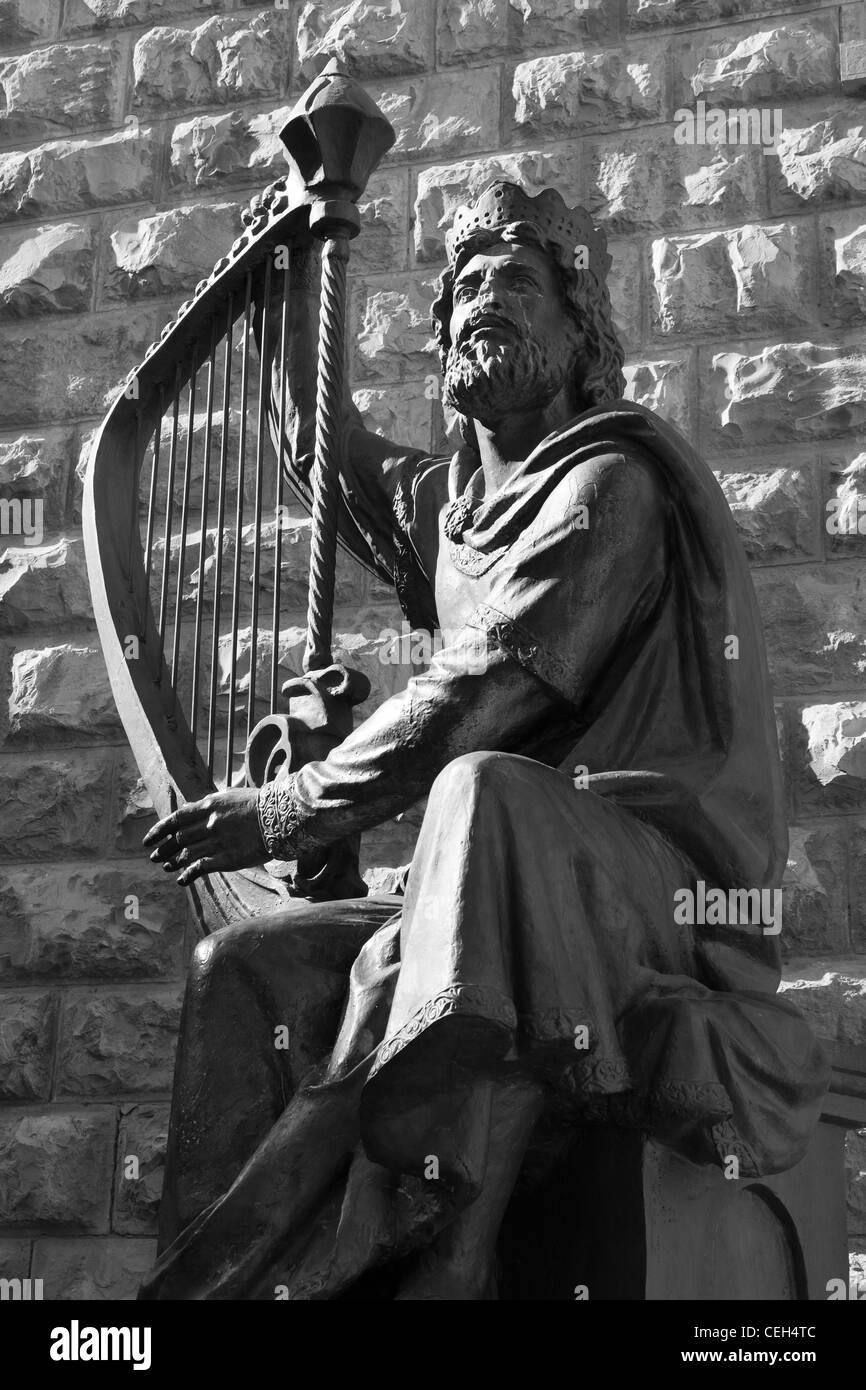
2- The גמרא then cites 2 examples of this idea. One was the fear of יעקב אבינו – despite the promise of ‘ה to protect him, due to the idea of שמא יגרום ,החטא this ‘protective shield’ will not be effective.
The second one, one that actually occurred, was when Jews returned to ארץ ישראל after גלות בבל, it lacked the miracles that occurred when they conquered ארץ ישראל with יהושע בן נון. Although משה רבינו prophecized that both entries to ארץ ישראל will be in the same manner, שמא יגרום החטא caused that when returning from בבל Jews were subjected to the whims of the Persian Kings.
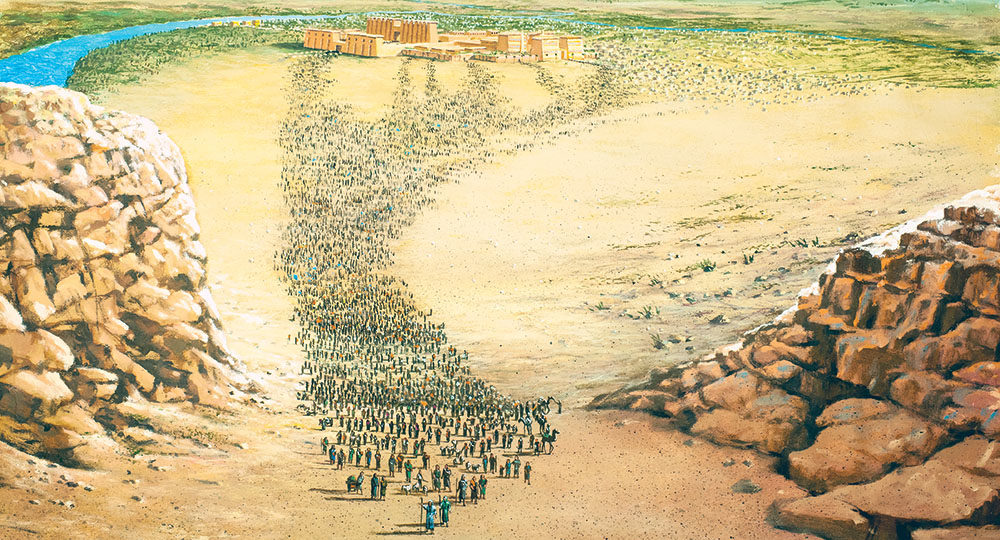
Jews leaving Bavel for Eretz Yisroel
The two examples above seem to say that a prophecy may not actually materialize.
3- In passing we discussed the nature the חטא that caused that the return from בבל and the rebuilding of the second בית המקדש to be on a much smaller scale that the first conquest and בית ראשון. It was much smaller, both quantitatively and qualitatively.
Rashi Sota 36a writes that this חטא was the remnants of the sins that caused the destruction of בית ראשון. Others write that it was the rate of intermarriage amongst the returnees.
ליעשות להם נס – לעלות בזרוע ולא יהיו משתעבדים למלכות אלא שגרם חטאם של ישראל בימי בית ראשון ונגזר עליהם שלא יעלו אלא ברשות כדכתיב מי בכם מכל עמו
(עזרא א).
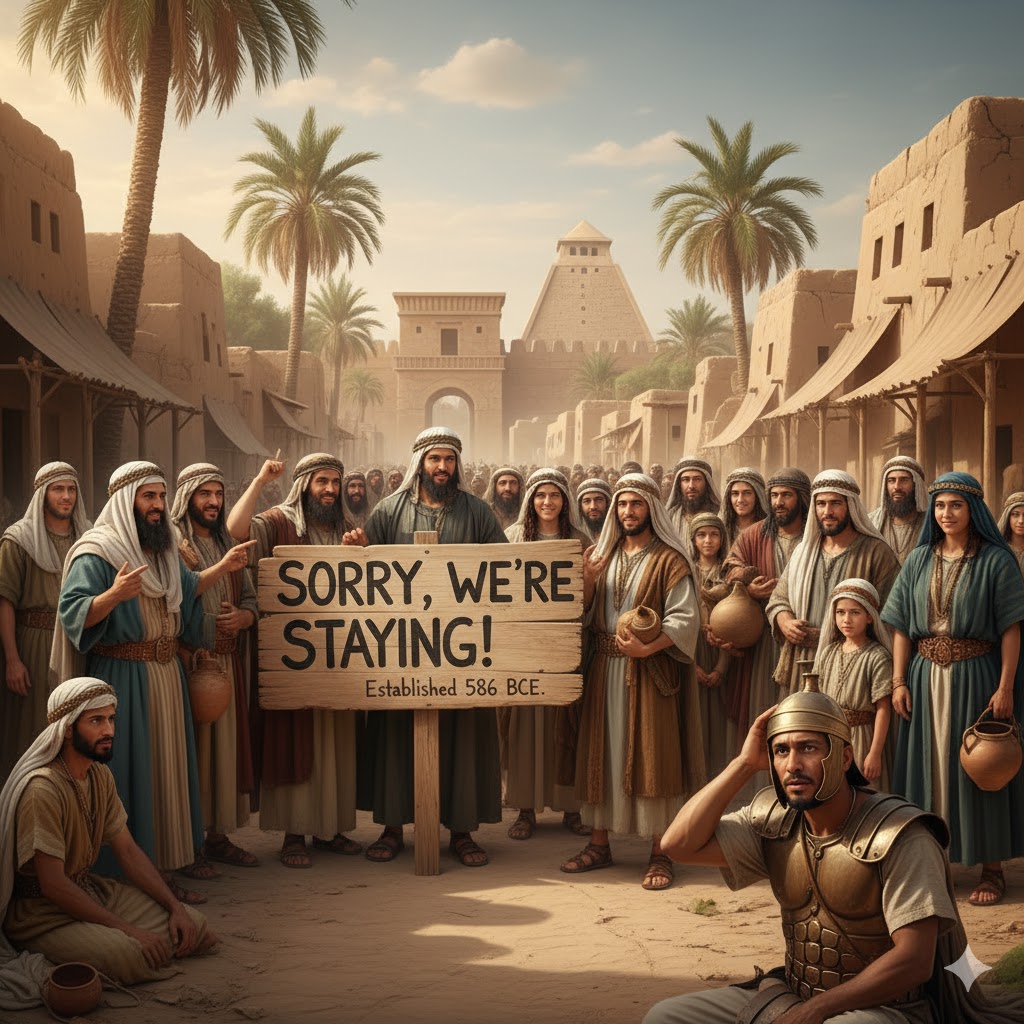
We mentioned often quoted מהרש”א Yoma 9b that the חטא was the fact that most people decided to stay in בבל!!!
…עכשיו שלא עליתם כולכם וצריכים חומה להשמר מפני האויבים והמיעוט שעלו עשיתם עצמכם כדלתות דהיינו לשמור רק פתחי העיר נמשלתם כארז כו׳ שהנבואה נסתלקה מכם וע״ז אמרו בפרק חלק ופרק א״נ עד יעבור עמך ה׳ זו ביאה ראשונה עד יעבור עם זו קנית זו ביאה שניה מכאן שהיו ראוים ישראל ליעשות להם נס בימי עזרא אלא שגרם החטא היינו נס שיהיו נשמרים בלא חומה אלא שגרם כו׳ היינו שלא עלו כולם:
4 – Back to the issue of the fulfillment of a נבואה. Does it always have to happen? What if the נבואה had a condition attached to it?
[A prophecy to the contrary, something calamitous will occur ח”ו, does not necessarily need to happen, as we know from the story of יונה and נינוה.
Half in jest we suggested the reason יונה was reluctant to go to נינוה was that he foresaw that if did go to נינוה, a certain מפטיר will be named after him, causing outrageous bidding wars…]

Yona, where you running?
5 – The basis for this discussion, based on our ,גמרא is the famous Rambam who states the following: יסודי התורה י, ד.
דברי הפורענות שהנביא אומר, כגון שיאמר, פלוני ימות, או שנה פלונית שנת רעב או מלחמה, וכיוצא בדברים אלו, אם לא עמדו דבריו, אין בזה הכחשה לנבואתו, ואין אומרין, הנה דבר ולא בא, שהקב״ה ארך אפים ורב חסד וניחם על הרעה, ואפשר שעשו תשובה ונסלח להם, כאנשי נינוה, או שתלת להם, כחזקיה:
The above principles do not apply to prophecies of retribution (something bad) which a prophet will utter – such as: “So and so will die,” “This or that year will be a year of famine or a year of war,” and the like.
If his words do not come true, this does not nullify the validity of his prophecy…This is because the Holy One, Blessed be He, is slow to anger, abundant in kindness, and forgiving of evil. Thus, it is possible that they will repent and their sin will be forgiven, as in the case of the people of Nineveh…
אבל אם הבטיח על טובה, ואמר שיהיה כך וכך, ולא באה הטובה שאמר, בידוע שהוא נביא שקר, שכל דבר טובה שיגזור האל, אפילו על תנאי, אינו חוזר. הא למדת שבדברי הטובה בלבד יבחן הנביא: הוא שירמיהו אומר בתשובתו לחנניה בן עזור, כשהיה ירמיה מתנבא לרעה וחנניה לטובה, אמר לו, חנניה, אם לא יעמדו דברי, אין בזה ראיה שאני נביא שקר, אבל אם לא יעמדו דבריך, יודע שאתה נביא שקר, שנאמר ״אך שמע נא את הדבר הזה״ וכו׳ (ירמיהו כ״ח:ז׳):
However, this rule does not apply regarding prophecies for the good. If a prophet promised that good would come and such and such will occur, and the good about which he prophesied did not materialize, he is surely a false prophet. The reason: Any good which God decrees – even if the decree is provisional (with a condition) – will always materialize.
The immediate question, raised by the Rambam himself, is the story of יעקב mentioned above. Why was he afraid of עשיו when he was promised
וְהִנֵּה אָנֹכִי עִמָּךְ וּשְׁמַרְתִּיךָ בְּכֹל אֲשֶׁר תֵּלֵךְ וַהֲשִׁבֹתִיךָ אֶל הָאֲדָמָה הַזֹּאת כִּי לֹא אֶעֱזָבְךָ עַד אֲשֶׁר אִם עָשִׂיתִי אֵת אֲשֶׁר דִּבַּרְתִּי לָךְ.
His answer is that the above rule (prophecies for good things must happen) applies only to prophecies concerning the masses. Like a נביא promising all a prosperous year to come.
If a promise is made by ה’ to the prophet himself (like the story of יעקב, where ‘ה promised protection to יעקב personally) then indeed a sin (by יעקב) can indeed cause it not to materialize.
However, this answer leaves the story of the promise by משה רבינו (that both entries to ארץ ישראל will be in the same manner) – unanswered, As history shows – it never happened, due to a חטא as discussed above.
We suggested a few answers on this issue.
6 – The גמרא continues with the opinion of the חכמים about the חצות time for saying שמע.
In essence, the תורה allows one to say שמע all night, because the word ובשכבך means ‘while people sleep’.
However the חכמים , concerned that when a person comes home from work, if he postpones the saying of שמע until after he eats and drinks, inevitably he will fall asleep and not say קריאת שמע. So they moved the time slot to חצות.
The גמרא has very harsh words on someone who does not say שמע as soon as night begins.
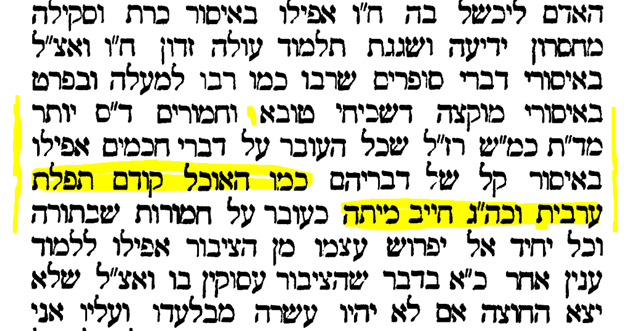
חֲכָמִים עָשׂוּ סְיָיג לְדִבְרֵיהֶם, כְּדֵי שֶׁלֹּא יְהֶא אָדָם בָּא מִן הַשָּׂדֶה בָּעֶרֶב וְאוֹמֵר: אֵלֵךְ לְבֵיתִי וְאוֹכַל קִימְעָא וְאֶשְׁתֶּה קִימְעָא וְאִישַׁן קִימְעָא, וְאַחַר כָּךְ אֶקְרָא קְרִיאַת שְׁמַע, וְאֶתְפַּלֵּל, וְחוֹטַפְתּוֹ שֵׁינָה, וְנִמְצָא יָשֵׁן כָּל הַלַּיְלָה. אֲבָל אָדָם בָּא מִן הַשָּׂדֶה בָּעֶרֶב, נִכְנָס לְבֵית הַכְּנֶסֶת. אִם רָגִיל לִקְרוֹת, קוֹרֵא, וְאִם רָגִיל לִשְׁנוֹת, שׁוֹנֶה, וְקוֹרֵא קְרִיאַת שְׁמַע וּמִתְפַּלֵּל, וְאוֹכֵל פִּתּוֹ וּמְבָרֵךְ.
וְכָל הָעוֹבֵר עַל דִּבְרֵי חֲכָמִים חַיָּיב מִיתָה.
The Alter Rebbe quotes this גמרא in אגרת הקודש סימן כג.
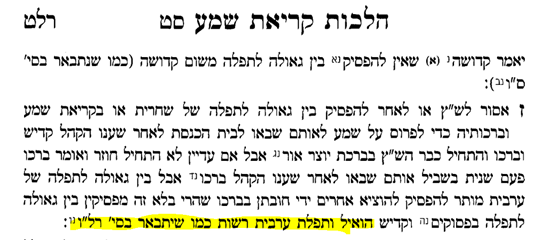
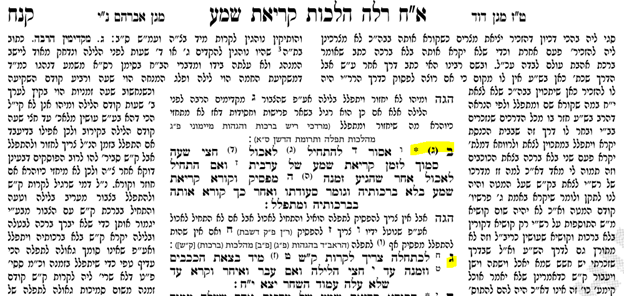
7 – We mentioned that the הלכה in Shulchan Aruch O”C 235, 2 is quite clear that one should not eat 30 minutes before צאת הכוכבים!
אסור להתחיל לאכול חצי שעה סמוך לזמן קריאת שמע של ערבית ואם התחיל לאכול אחר שהגיע זמנה מפסיק וקורא קריאת שמע בלא ברכותיה וגומר סעודתו ואחר כך קורא אותה בברכותיה ומתפלל: הגה: אבל אין צריך להפסיק לתפלה הואיל והתחיל לאכול אבל אם לא התחיל לאכול אע”פ שנוטל ידיו צריך להפסיק (ר”ן פ”ק דשבת) ואם אין שהות להתפלל מפסיק אף לתפלה (הראב”ד בהגהות פ”ג מהלכות ברכות):
Additionally-
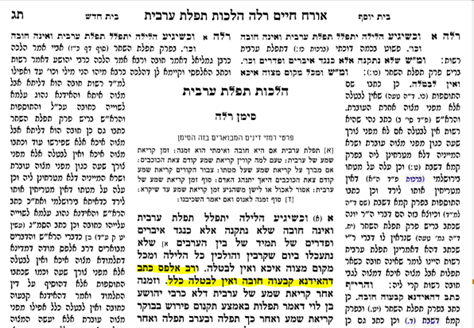
קריאת שמע לכתחילה should be said right after צאת הכוכבים.

Although we do not have הלכות of קריאת שמע של ערבית in the Alter Rebbe’s Shulchan Aruch, he mentioned this הלכה in הלכות פסח.
431, 5 (see also שו”ע הרב, ע:ה)
We spoke about the תשובה of the חוות יאיר (see this Shiur) where he enumerates many מצוות and מנהגים that simple disappeared from practice.
More on this next week.
8 – There is somewhat of a היתר to eat if others are asked to remind you not to forget to Daven מעריב. (see there, משנה ברורה י”ח)
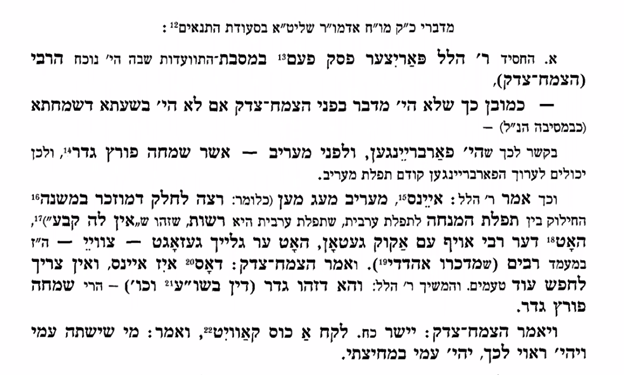
9 – In relation to eating before מעריב, we spoke about the story told by the Previous Rebbe at the engagement of his daughter שיינא
הי”ד

See below.
Note the sharp quip by the Tzemach Tzedek.
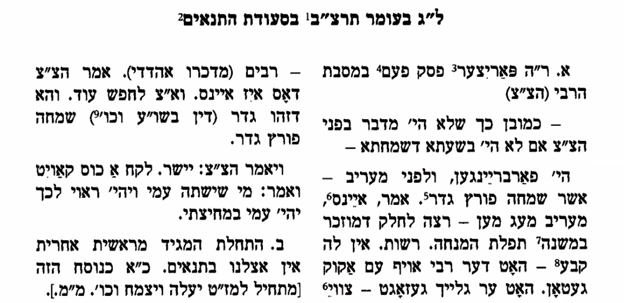
רשימת היומן ע’ רלב.