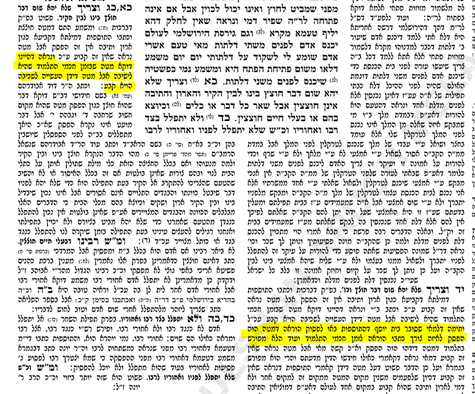
BSD
Brochos 6a
Kislev 19, 5786. 12/9/2025
Gut Yom Tov.
1 – Our גמרא discusses מזיקין and שדים. Ghosts, demons and spirits.
As we mentioned, these are topics beyond our comprehension. It seems that we don’t have the merit today to intellectually grasp these ‘objects’ and how they interact with humans.

שלמה המלך ואשמדאי
Or, as some say, these demons have been banished from mingling amongst humans. It’s not that they don’t exist any more for there are multiple הלכות that are still practiced today that take them into account.
Here is one from the Alter Rebbe’s Shulchan Aruch.
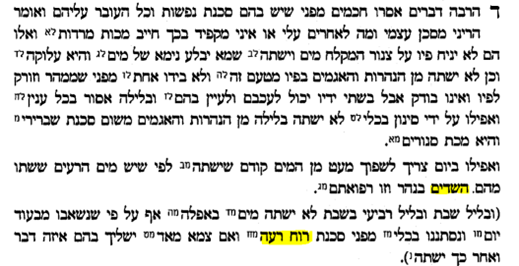
[The spilling out of a bit of water is not common today. The Rebbe did do it!]

The גמרא however talks about these creatures as if they are literally all around us (a ratio of 11,000 מזיקים for every human), squeeze us, cause our clothing to wear out, make our knees fatigued etc.
The גמרא even suggests a verified recipe to produce an ointment that once applied to the eyes will cause a human to ‘see’ them.

2 – The גמרא continues on the topic of the importance of Davening in a שול.
We mentioned the הלכה that even if there is no Minyan in the שול, it is important to go there to Daven. See the Alter Rebbe here. 90, 10
We mentioned the person who came very late to shul for Minchah, thinking he missed it, but was overjoyed to hear ” אשרי! ” from the back of the Shul.
He quickly joined in, only to discover that they were starting סליחות!
ומי שהוא בעיר ונאנס ולא התפלל עם הצבורצג והוא מתפלל ביחיד לאחר שכבר גמרו כל הצבור תפלתם בבית הכנסת אעפ”כ יש לו להתפלל בבית הכנסת מפני שהוא מקום קבוע ומיוחד לתפלת צבורצד ותפלתו של אדם נשמעת שם כמו שנתבאר לעיל וגם מפני שהקב”ה מצוי בבית הכנסתצה שנאמרצו אלהים נצב בעדת אל כלומר בבית מועד שלו שנועדים שם לפניו:
3 – It was Yud Tes Kislev so we mentioned an interesting historical tidbit.
On Yud Tes Kislev 1965 תשכ”ה the Rebbe spoke about an עיר הנדחת.
The Rebbe addressed the apparent paradox in the laws of an Ir HaNidachas)
- Individual Sin: An individual who commits idolatry (with witnesses and warning, בעדים והתראה ) is liable for Sekilah (stoning)—the most severe of the four court-administered death penalties. ארבע מיתות בית דין
- Communal Sin Paradox: The Torah, surprisingly, mandates a less severe punishment, Hereg (killing by the sword/beheading, the third most severe penalty), for all the idol-worshipers of an עיר הנדחת
- The Question: Why does the punishment become more lenient when the sin is committed by a large group (a majority of a city), even though every individual within that group is technically liable for the harsher סקילה?
The Central Answer: The Loss of Individuality in a Group
The core point of the Rebbe’s discourse is that when many individuals gather to form a group:
- A New Entity Emerges: The collective ceases to be merely a sum of its parts. A new, single entity—the Ir HaNidachas is created.
- The Law Changes: The law is then applied to this new communal entity, not to the individual citizens.
- Conclusion: The established law for the Ir HaNidachat is Hereg. Because the individual is now viewed as part of this collective, the original individual penalty of Sekilah disappears, replaced entirely by the new communal penalty. The harsher individual law gives way to the specific, collective law a ציבור, when the city unites in transgression.
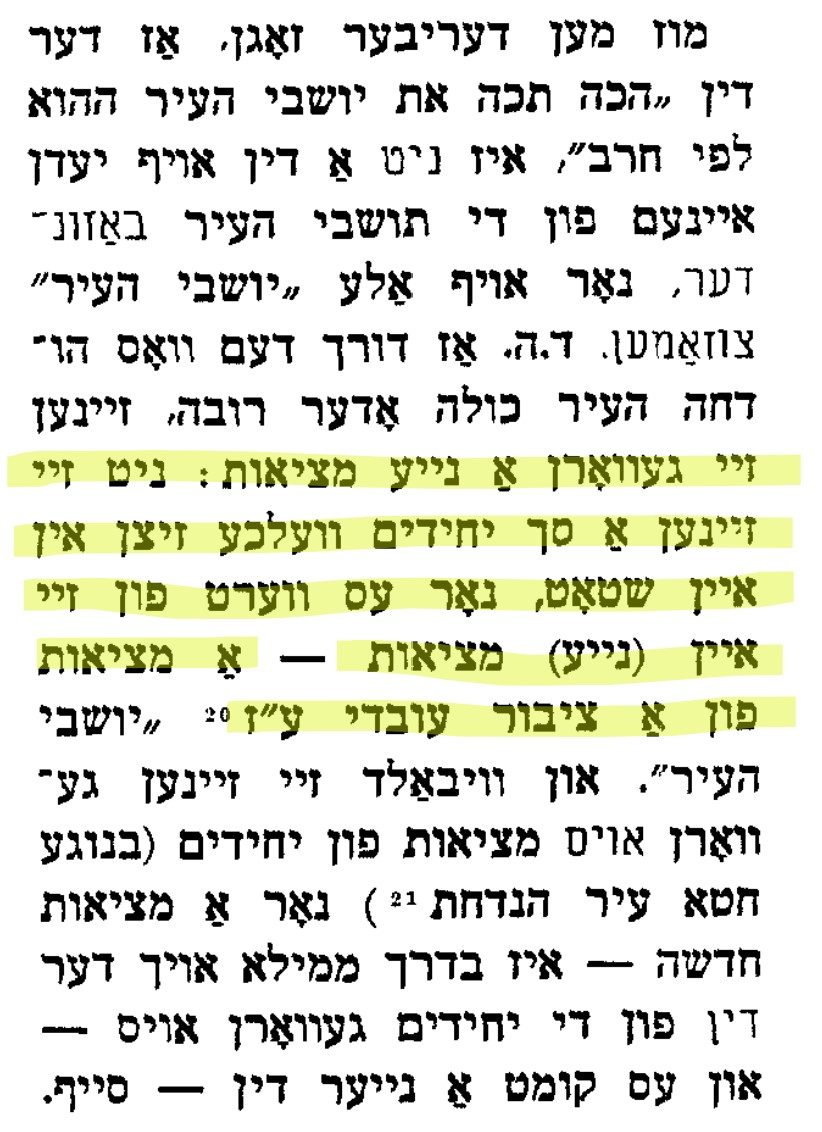
In 1971 this שיחה was printed in Likutei Sichos. Vol 9. Page 106 and on.
4 – The Rebbe then receives a letter from someone who writes that there is an alternative explanation to the above paradox purportedly from the Vilna Gaon (GR”A) הגר”א.
Namely, the גר”א writes that when a group of individual are all עובד עבודה זרה they halachically become גויים!!! And the rule of a בן נח is indeed הרג and not סקילה.
5 – The Rebbe responded (רשימות קפט) with a handwritten note categorically disputing that the גר”א ever wrote such a idea. How can one even think that the גר”א would say that a Yid becomes a goy???
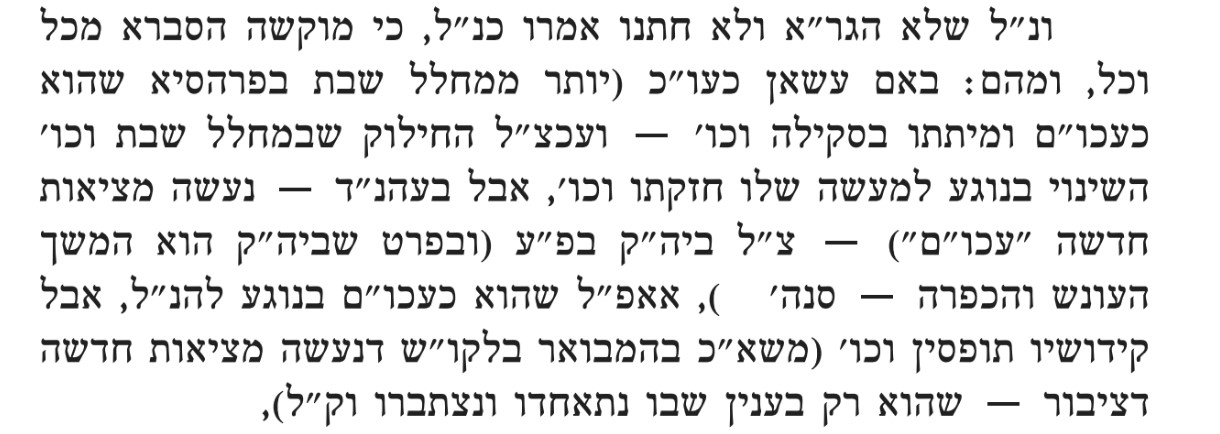
He points to a known historical issue regarding the publications attributed to the GR”A after his passing. People were publishing books with Torah ideas attributing it to the גר”א to the extent that the Kehilah in Vilna was alarmed. It seems that many of these ideas were not from the גר”א at all. (sounds familiar?…).
So they established a committee of Rabbis and elders to vet all of the works of the גר”א and published a proclamation: Any book published with out their approbation ‘is suspect’.
And this passage, concludes the Rebbe, does not have their stamp and cannot be attributed to the גר”א for many reasons. One is that if these individuals are considered גויים now, it would follow that if they are מקדש a בת ישראל she would not be מקודשת! And to say that, is far-fetched and very awkward indeed. Another perplexing result is that these sinners would need to be buried not in a Jewish cemetery – and surely the גמרא would make a mention of this odd phenomena.
In conclusion, the Rebbe ends off, is that

6 – Now interestingly enough, the proclamation of the Vilna Kehilla, as the Rebbe writes is….. Yud Tes Kislev תקנ”ח!
Exactly one year before the release of the Alter Rebbe in the year תקנ”ט!
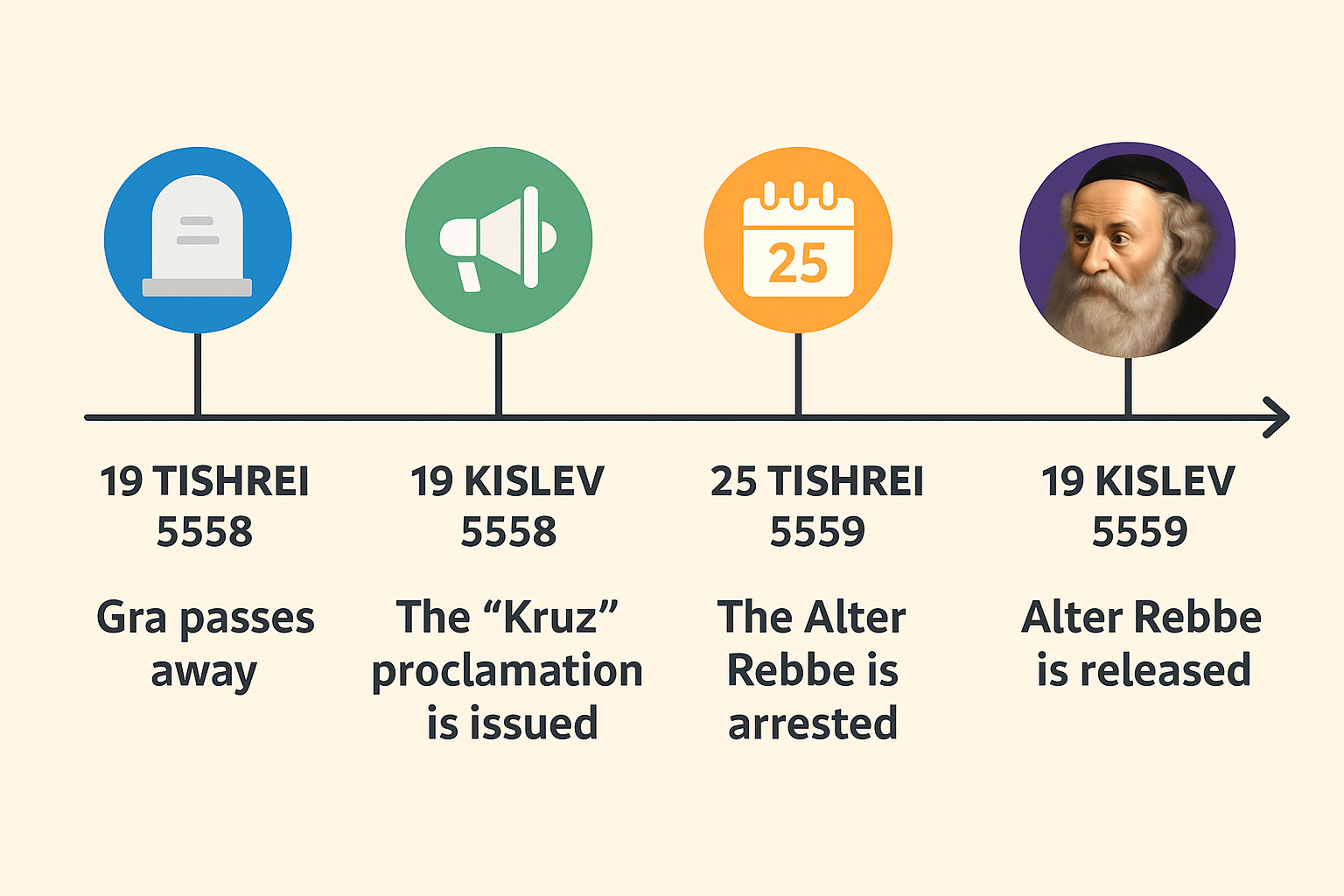
In chronological order:
The Gro passes away יט תשרי תקנ”ח.
The proclamation is dated יט כסלו תקנ”ח.
The Alter Rebbe is arrested on איסרו חג סוכות תקנ”ט.
He is released יט כסלו תקנ”ט.
7- We suggested that perhaps this was a מרים בת בילגה story.
Was the Rebbe suggesting that he is ‘erasing’ a fraudulent and very foreign idea attributed to the גר”א….. on Yud Tes Kislev!
8 – We discussed taking 3 steps backward and forwards after עושה שלום in שמונה עשרה, and the fellow who wanted to write a book (no less) about this henceforth unexplored area, but was told that 3 steps back was already written about, but he could still write about 3 steps forward…



![George Washington's Revolutionary War Folding Camp Bed, 1775-1780 [4096x1481] : r/ArtefactPorn](https://i.redd.it/hu65x63gv72f1.jpeg)