Shiur Shkolim 21b – Iyar 28, 5785 – 05/27/25

BSD

Shkolim 21b

Iyar 28, 5785 – 05/27/25


Brief notes.

1 –  We discussed the general interaction between the ‘learned’ or חברים and the עמי הארץ at the time when the laws of טומאה and טהרה were practiced.

If an עם הארץ would become טמא  by touching a מת, then obviously his טומאה (like anyone else) would be at the דאורייתא level.

The חכמים , seeing that lack of strictness by these people (in addition to lack of knowledge  of טומאה וטהרה),  took this to another level by ruling that  all עמי הארץ by default,  were considered to be not טהור. This טומאה designation was a דרבנן enactment.

[This obviously caused much friction and didn’t add to camaraderie]
Even if an  עם הארץ would claim that he kept the laws of טהרה, he would not be believed, since they were clueless as to all the Halachic details of טומאה וטהרה.


Obviously, for those that kept a lifestyle of טהרה , coming into contact with others that did not, was very problematic.

Can they shake hands? Can they do business together? Can food be  purchased from them?
 

2 – There were certain times and interactions where the חכמים were lenient and allowed the עמי הארץ to be considered טהור. Each case for a different reason.


For example: An עם הארץ bringing wine or flour to the בית המקדש would be accepted and presumed טהור because we assume the holiness of the בית המקדש would cause them to prepare and keep any נדבה  as טהור. Alternatively, the reason is not to cause strife by not accepting it,  which would cause them to bring קרבנות on a self made במה.


Another example: During the harvesting season of wine and olives. The חכמים assumed that all producers ensured that they were טהור so that their products would be sold and consumed by all, ie merchandising/marketing. Once the season was over, they would revert back to a non טהרה state.


3 – The topic we discussed was another time frame when all the   עמי הארץ
would be considered טהור – during the שלוש רגלים. This lenient time frame had an interesting post script. Any product that was touched by an עם הארץ during יום טוב was טהור and was allowed to be consumed by all.

However, and here is the paradox: As soon as יום טוב was over, any left over was considered טמא!

So if an עם הארץ placed, say a loaf of bread on the table, anyone could eat it because it was deemed טהור. However, after הבדלה, if there was a piece of the loaf left uneaten, it would be considered טמא.

How does that make sense?

See here the Rambam’s words. מטמאי משכב ומושב ט, יא

טומאת ע”ה ברגל כטהורה היא חשובה שכל ישראל חברים הן ברגלים וכליהם כולם ואוכליהם ומשקיהן טהורים ברגל מפני שהכל מטהרין עצמן ועולים לרגל. לפיכך הן נאמנים כל ימות הרגל בין על הקודש בין על התרומה. משעבר הרגל חוזרין לטומאתן:

During the pilgrimage festivals, the impurity decreed upon the unlearned is suspended and they are considered as pure. For the entire Jewish people are considered as חברים during the pilgrimage festivals. All of their utensils, their food, and their liquids are considered as pure during the festivals, for everyone purifies themselves and ascends to Jerusalem on the festivals. Therefore their word is accepted – whether with regard to sacrificial foods or with regard to terumah – throughout the festivals.
After the festival passes, they are considered as impure again.

4- The Rambam, by offering an interesting reason for this  הלכה  – because  ‘everyone purifies themselves and ascends to Jerusalem on the festivals makes it even more perplexing.

If everyone goes thru the process of becoming טהור [with מי חטאת etc] why does their food automatically become טמא right after הבדלה?
5 – We discussed  various explanation of the Rambam and the Rebbe’s unique idea on this.

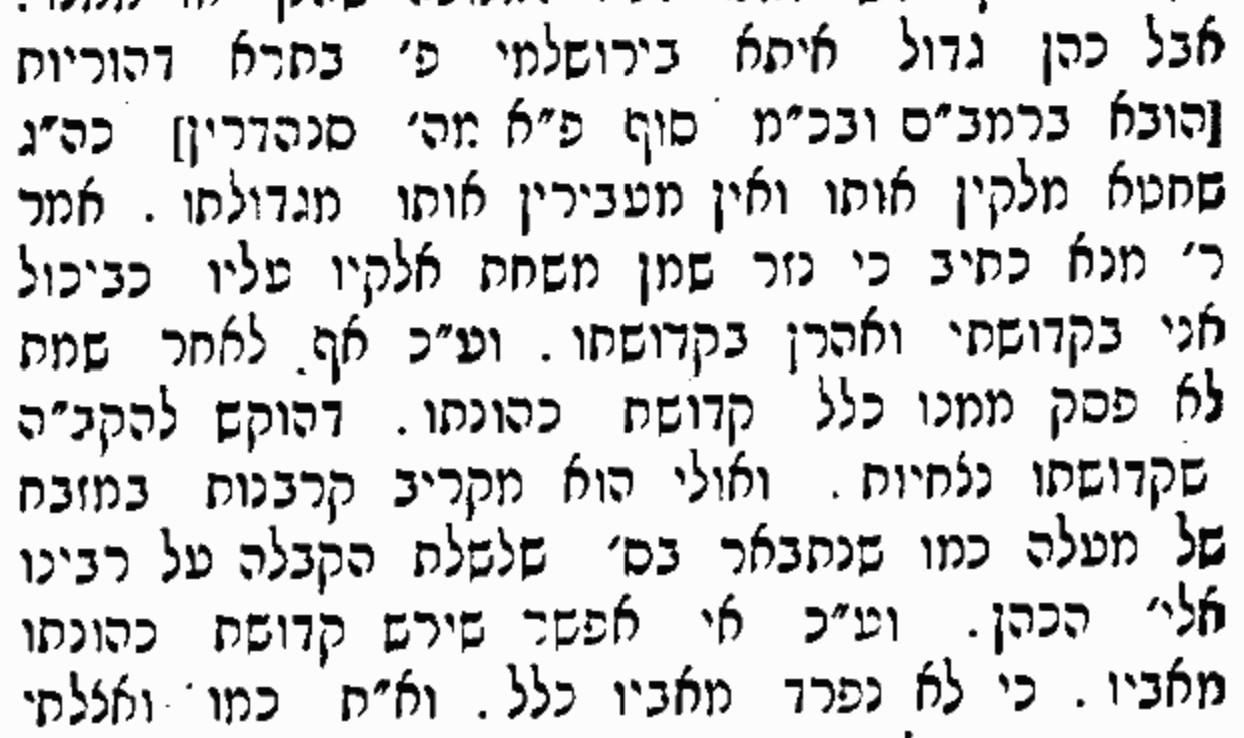
Synopsys in Hebrew.   .לקוטי שיחות לז, ע‘ 20

Briefly, the Rebbe says that the fact that all עם ישראל come together in one place, during שלוש רגלים , created a ‘new entity’. The individuals lose their identity and jointly create a new כלל. [Not unlike טומאה דחוי’ בציבור]
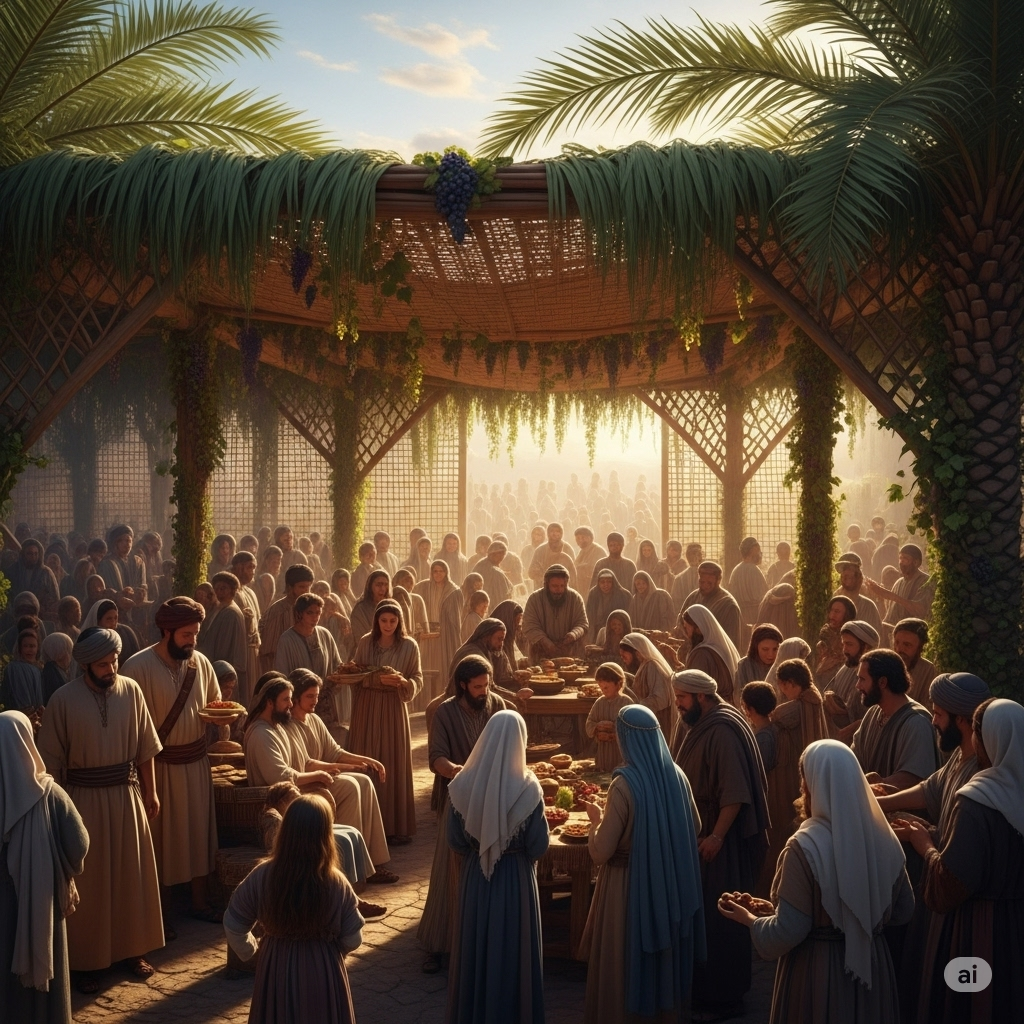
So in a sense, there are no עמי הארץ during that period when all become חברים and everything is deemed טהור. But this phenomenon lasts only during יום טוב.

For when יום טוב ends each person becomes unique and an individual יחיד.

In regards to שבת:

רמב”ם, הלכות מעשר, פרק ט’, הלכה ט”ז

“ולמה האמינוהו בשבת? מפני כבוד השבת, שאם לא תאמינהו ימנע מלאכול – ונמצא יושב בתענית, ולפיכך הקילו עליו. ועוד אמרו: עם הארץ אינו משקר בשבת.


6 – The next משנה has an interesting line relating to the פרוכת  that separated the היכל and the קודש הקדשים.

רַבָּן שִׁמְעוֹן בֶּן גַּמְלִיאֵל אוֹמֵר מִשֵּׁם רַבִּי שִׁמְעוֹן בֶּן הַסְּגַן פָּרוֹכֶת עוֹבְיָהּ טֶפַח עַל שִׁבְעִים וּשְׁתַּיִם נִימִים נֶאֱרֶגֶת עַל כָּל נִימָה וְנִימָה עֶשְׂרִים וְאַרְבָּעָה חוּטִין. אָרְכָּהּ אַרְבָּעִים אַמָּה וְרָחְבָּהּ עֶשְׂרִים וּמִשְּׁמוֹנִים וּשְׁתֵּי רִבּוֹא הָיְתָה נַעֲשֵׂית. וּשְׁתַּיִם עוֹשִׂין בְּכָל שָׁנָה וּשְׁלֹשׁ מֵאוֹת כֹּהֲנִים מַטְבִּילִין אוֹתָהּ.

Rabban Simeon ben Gamliel says in the name of Rebbi Simeon, the son of the Executive Officer of the Temple: The thickness of the  פרוכת  was טפח. It was woven on 72 strings and each string was composed of 24 threads. Its length 40 cubits and its width 20 cubits; it was made for 820’000 {denar}. Two were made every year and 300 Cohanim were involved immersing it in the מקוה.
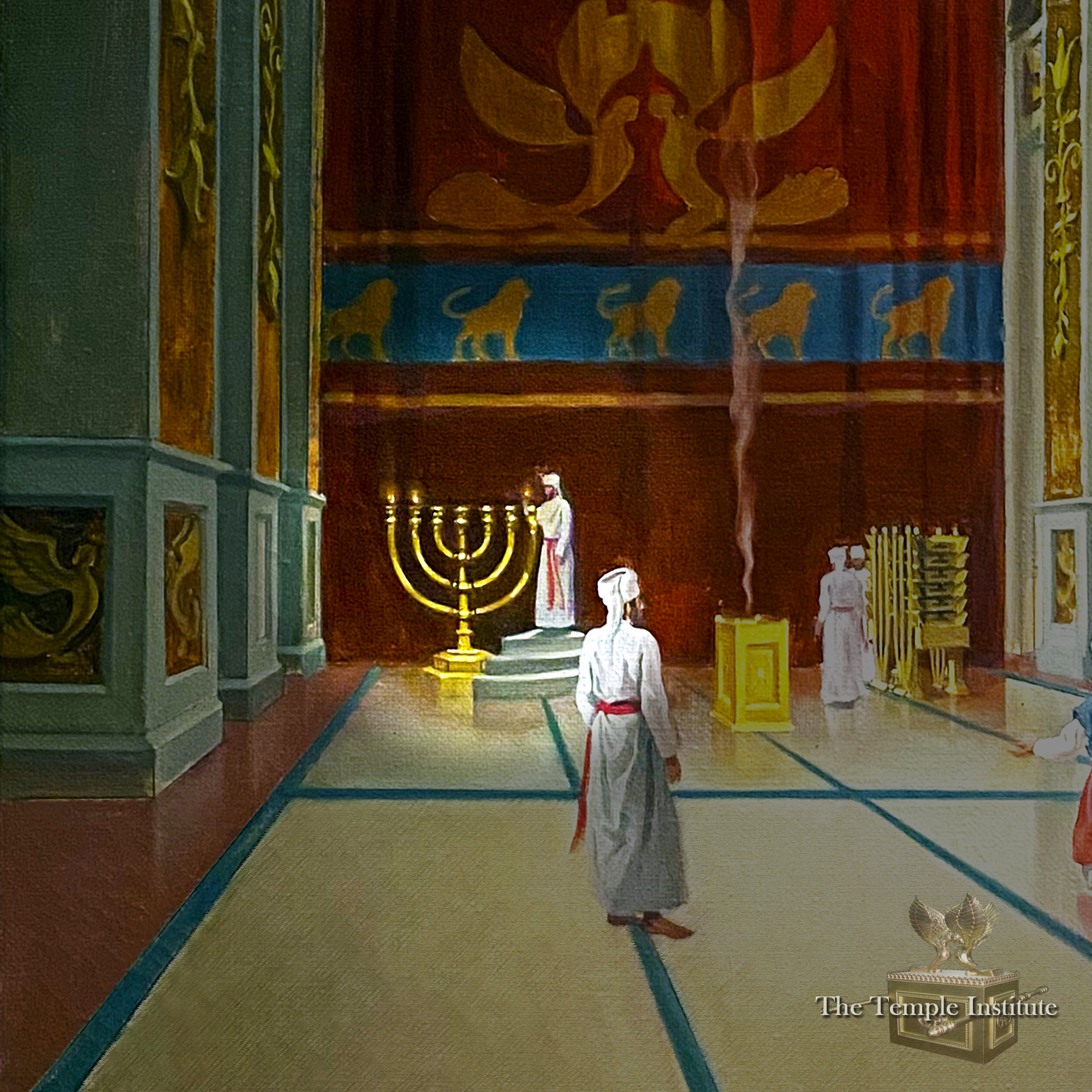
 

300 כהנים holding the פרוכת? The גמרא says in תמיד that the number 300 is an exaggeration.

There is a brilliant explanation of the number 300 attributed to the גר”א.

As we learned earlier (16a) in our מסכתא there is an opinion that there were 2 types of אמות.

One used for the כלים which was 5 טפחים and another of  6 טפחים which was used for measuring the building of the structure of the בית המקדש.

Now, as the משנה states  the size of the פרוכת was 40 x 20 amos. Since the פרוכת  was a כלי it means that these אמות  were of 5 טפחים.

That means that the length and width of the פרוכת was 200 x 100 טפחים and the entire perimeter  600 טפחים.

So 300 כהנים using both hands to move and dip the פרוכת equals 600 טפחים…..

7 – However, as many have pointed out there is an issue with this calculation.

Critical Math” Doesn't Add Up: Policy Report – Independent Institute

True, כלים were measured with an  אמה of 5 טפחים. But the measurement of the  פרוכת was given to correspond to the width and length of the opening of the door way that separated the היכל from the קודש הקדשים which was also 40 x 20.  מדות פ”ד.

And that space, since it was part of the building was measured with an אמה of 6 טפחים!

So the actual perimeter of the פרוכת was 720 טפחים.


————————-

Here are some brief notes of the שיחה above.


לז, שמיני א.

כל ישראל חברים.

רמבם מטמאי משכב ומושב יא, ט : טומאת ע”ה ברגל כטהורה היא חשובה שכל ישראל חברים הן ברגלים וכליהם כולם ואוכליהם ומשקיהן טהורים ברגל מפני שהכל מטהרין עצמן ועולים לרגל. לפיכך הן נאמנים כל ימות הרגל בין על הקודש בין על התרומה. משעבר הרגל חוזרין לטומאתן:

וצ”ע, אם מטהרין עצמן למה חוזרין לטומאתם?

ורש”י פי’ שלא לבייש.

במלמ פי’ עיקר הטעם הוא משום איבה (כמו שנאמנין ע”ה על הקודש) שלא יבנה כ”א במה לעצמו.  אבל לפי”ז העיקר חסר מן הספר. ועוד, שם כתב הרמב”ם הטעם (לא כמ”ש בש”ס חגיגה כב, א משום איבה, אלא) מפני חומרתו.

ובפר”ח פי’ שיש טומאת מת, דאורייתא, וטומאת ע”ה, מדרבנן. וע”ז כתב הרמב”ם שמטומאת מת- מטהרין עצמן, וטמאת ע”ה לא גזרו מפני שמחת יו”ט, ורק טומאה זו נשארת אחרי החג. אבל ג”ז צ”ע – וכנ”ל העיקר חסר מן הספר.

וההסבר הוא: מהפסוק כל ישראל חברים כשנאספים במ”א, מתבטלת מציאות היחיד.  כלומר אין כוונתו (רק מפני) שכל אחד וא’ טיהר עצמו. רק שעי”ז הציבור נעשה טהור. ע”ד טומאה דחוי’ בציבור.

הע’  48 – לפי”ז גם אלו שלא עלו טהורים. ולכן לא הזכיר הרמב”ם שזה רק בירושלים כמו בהקדש.


Shiur Shkolim 21a – Iyar 22, 5785 – 05/20/25

BSD

Shkolim 21a

Iyar 22, 5785 – 05/20/25

Short notes of the topics discussed.

1 – אוכלי חולין בטהרה. See here.

חולין

תרומה

קודש

חולין על טהרת הקודש – eating חולין at the level of קודש  .

Oholei Torah Bar Mitzvah Meeting 5782 - YouTube

כהנים needed to live their lives with such טהרה, since they would be eating  קדשים ותרומה, so it made life simpler by keeping all their חולין  in טהרה.

This way of life was rare even at the time when there was a בית המקדש. Those that kept up with this practice were called פרושים.

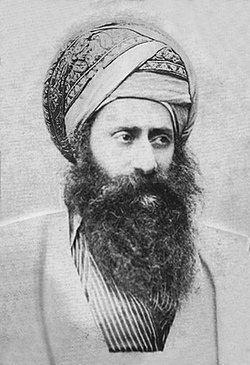
רבי יוסף חיים

Some say the בן איש חי  (perhaps) lived with such pureness. Although it was not 100%, since we do not have מי חטאת, nevertheless practicing to the extent possible, is a sign of  קדושה.

2 –  Our משנה discusses the pedestrian traffic patterns in ירושלים. During the times of  יום טוב, when the majority of the people in the city were  טהור, they would walk in the middle of the street. The minority, that were not  טהור,  would walk on the side.

The opposite would be true throughout the rest of the year.

3 – The interesting feature of the  מקוה in  ירושלים in that it had two staircases – one for entering and the other for exiting. This architectural feature enabled to ascertain the status of a כלי that would be found in the area of this unique  מקוה whether it was  טהור or not.

4 – A knife that was found on  ערב פסח.

Animal Jewish Slaughter Chalef Knife Black and Silver 22-1/4 x 2-3/16 inch | eBay

We diverted to a general topic related to cases and various circumstances discussed in  גמרא that are only in theory. Meaning that in practice, the גמרא knew such occurrences would never happen, but would nevertheless spend time tackling the Halachic ramifications.

5 – The classic example is the definition of a דופק and a גולל . What is a דופק  and a גולל? (See here, Shiur Sukkah 23a)

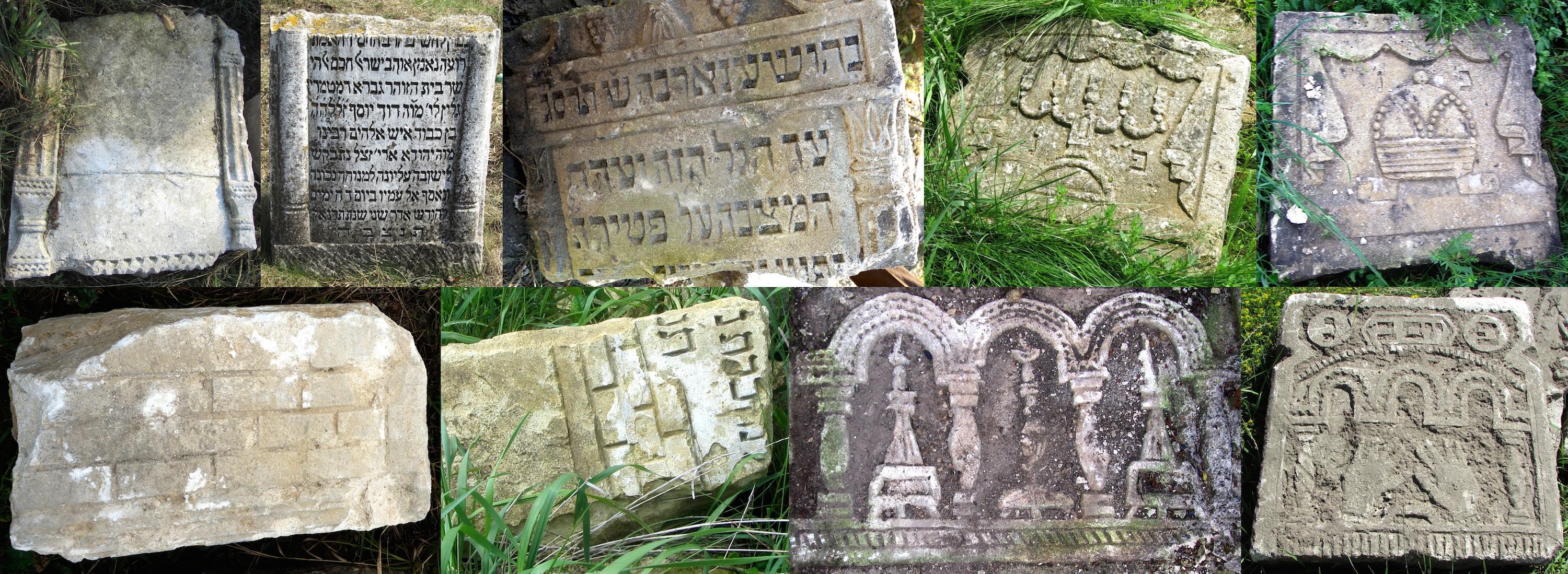
Rashi explains that a גולל  is  the stone that is placed on top of the grave to cover the deceased person, and  דופק is the side stone(s).

Written in Stone: The Art and Meaning of Rohatyn's Jewish Grave Markers – Rohatyn Jewish Heritage

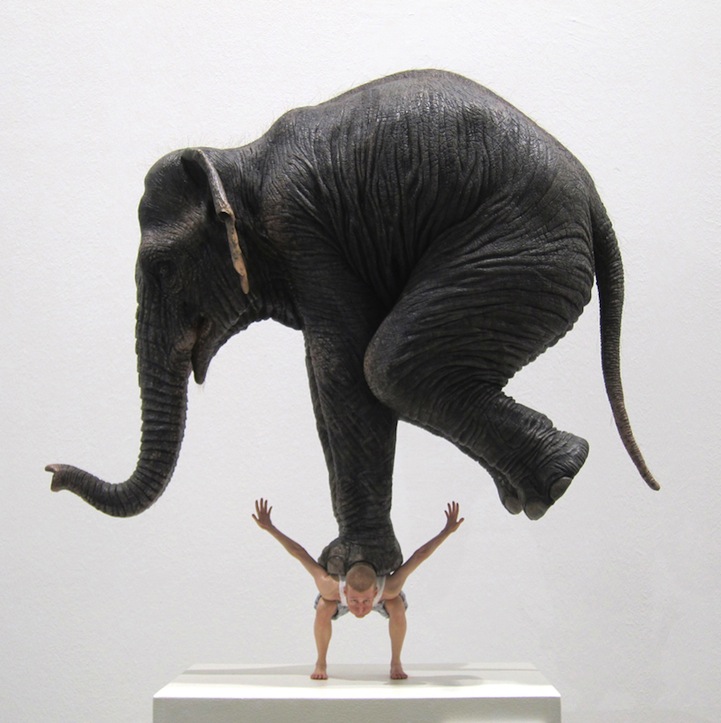
Rabbeinu Tam has an issue with this for we find in many places that this translation does not make any sense. For example: ‘One cannot use an animal as a דופק  or a  גולל’.

Now who would place an animal on top of a  מת?

Tiny Man Precariously Balances an Elephant on His Back

Another example: ‘Standing on a  דופק and a גולל  does not make someone טמא’.

Now, if according to Rashi, these are stones that are on top or the side on the  מת, how  is that possible?

Tosfos however, defends Rashi and says that the גמרא is only discussing in abstract and not to say it can actually happen in real life.

דאע״פ שאין רגילות לעשות כסוי ארון מבעלי חיים כמה דברים אשכחן דלא שכיחי ומיירי בהו הש״ס להראות לנו הדין ודרוש וקבל שכר.

They quote other very abstract scenarios where topics that have no relation to real life are discussed in גמרא. See Chullin 70a and here.

כמה דברים אשכחן דלא שכיחי ומיירי בהו הש״ס להראות לנו הדין ודרוש וקבל שכר

More on this next week and the Alter Rebbe in תניא and   קונטרס אחרון.

ולהבין פרטי ההלכות דלא שכיחי כלל ואפשר שלא היו מעולם במציאות מכש”כ שלא יהיו לע”ל כמו פרטי דיני פיגול וכה”ג.

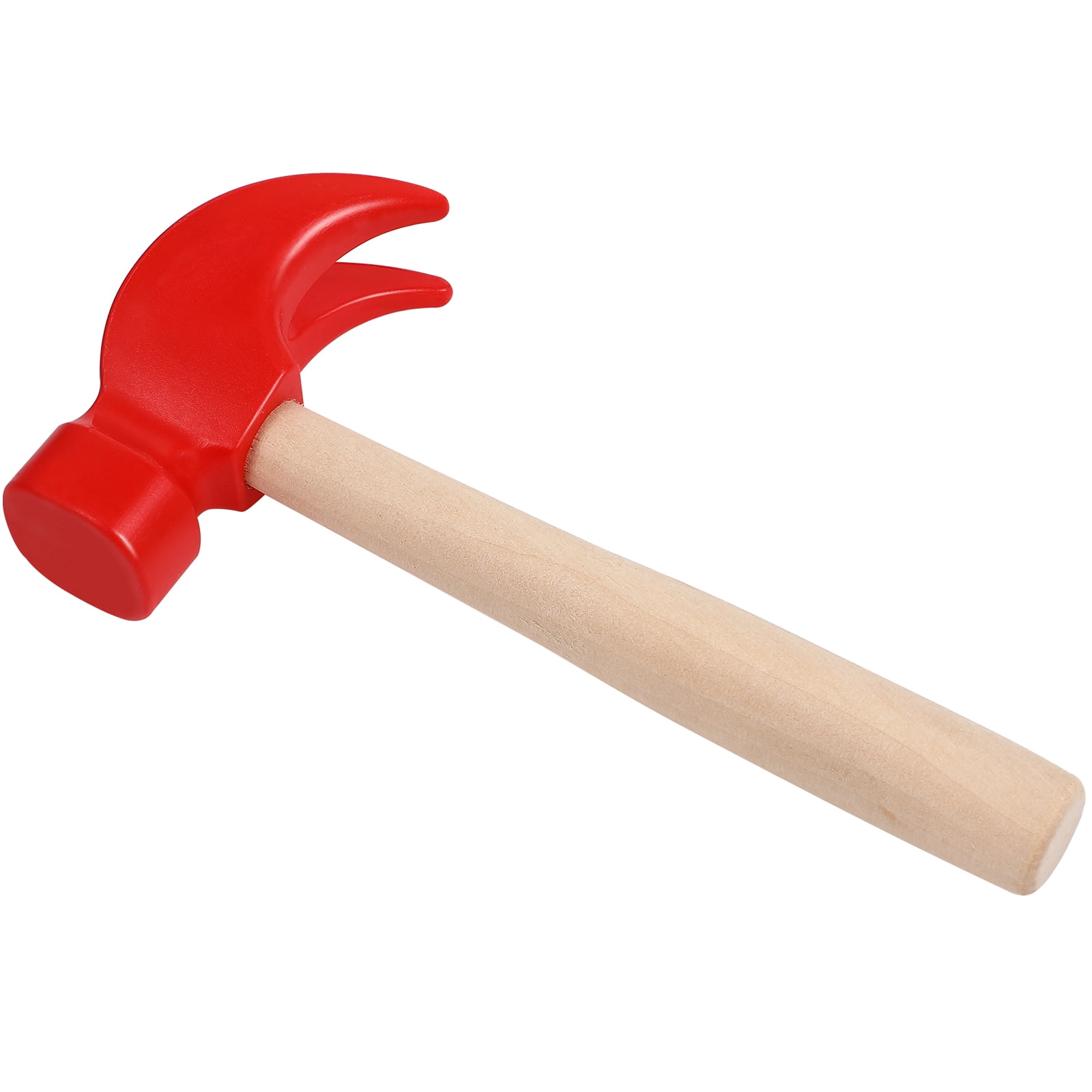
6 – Our משנה  mentions a tool called הַמְּרִצָּה.

The Rambam translates it as a hammer used to breaks up bones when one needs to transport them!

Children Hammer Toy Wooden Handled Hammer Simulation Hammer Toy Maintenance Hammers Tool Educational Plaything - Walmart.com

Now how is that permitted? We discussed the Radvaz and others.

פינוי עצמות רדב”ז ב תרי”א. מתיר. חת”ס יו”ד שנא. מחמיר.

7 – We mentioned the שרידי אש of Rabbi Yechiel Yaakov Weinberg and his essay on the קובץ פינוי עצמות – ‘Moving of remnants of bones’ in הלכה.

Image

Spoke of the notes the Rebbe wrote, when he lived in Berlin, on this easy.

Printed in רשימות.

https://he.chabad.org/library/article_cdo/aid/2988774

8 – Our Mishna discusses a cleaver that was tied to a סכין  that is טהור. Does this allow us to say that the cleaver is טהור  as well?

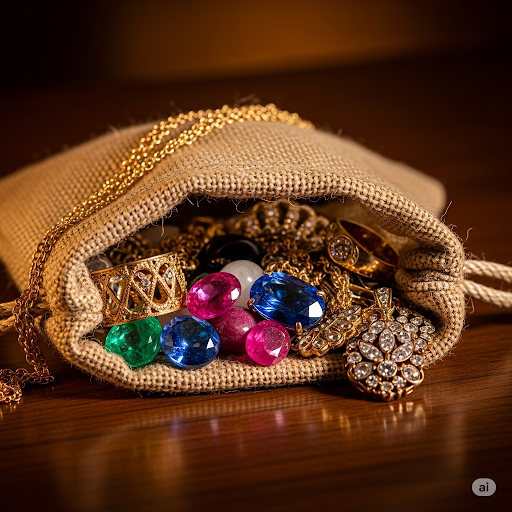
Mentioned the שואל ומשיב that uses this logic to rule in a case of a disputed bag of stones and jewelry.

וראיה נראה לפע”ד מהא דאמרו בשקלים פ”ח משנה”ג ואם נמצאת קשורה לסכין הרי היא כסכין…

קופיץ קשורה לסכין.

שו”מ מהדורא קמא  , ב קפה. מרגליות ואבנים טובות הקשורים או מונחים ביחד עם תכשיט של האשה שניתן לה בכתובתה.


Shiur Shkolim 20b (2) – Iyar 15, 5785 – 05/13/25

BSD

Shkolim 20b (2)

Iyar 15, 5785 – 05/13/25

Short notes.

1 – We continued on the topic of the מנחת חביתין brought daily by the כהן גדול.

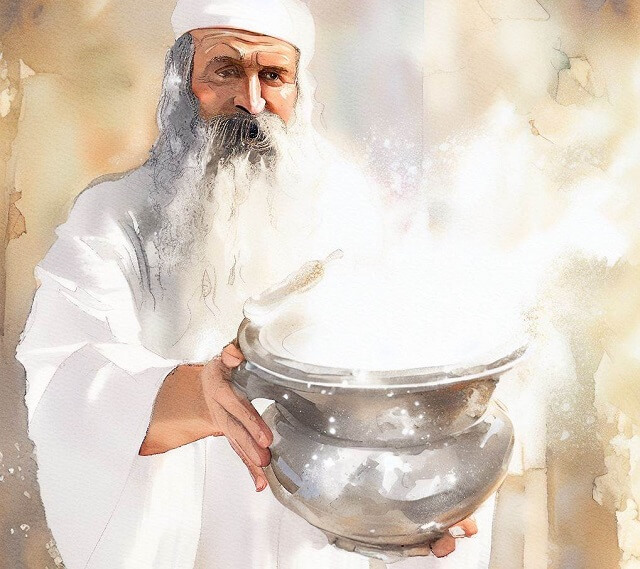
The procedure is that the כה״ג  brings a full עשירית האיפה, splits it in two equal parts and processes it half in the morning and the other half in the afternoon .

Garments of Forgiveness - Breslov.org

2 – If, after bringing the ‘morning half’ of his Mincha, this כהן גדול passes away, his successor, the next כהן גדול, brings a full מנחה , splits it in two but only process one half in the afternoon.

3 – This מנחת חביתין is very unique. How?

What happens if the כהנים didn’t appoint a successor? The משנה states that a full מנחה is brought daily until a כהן גדול is appointed. There are 2 opinions as to who pays for this מנחה, either from a communal fund or from the estate of the deceased כהן גדול.


4 – It’s unique because since this מנחת חביתין is a מצוה on the כהן גדול, why does it continue to be brought daily when he is not around?? It’s a קרבן יחיד.

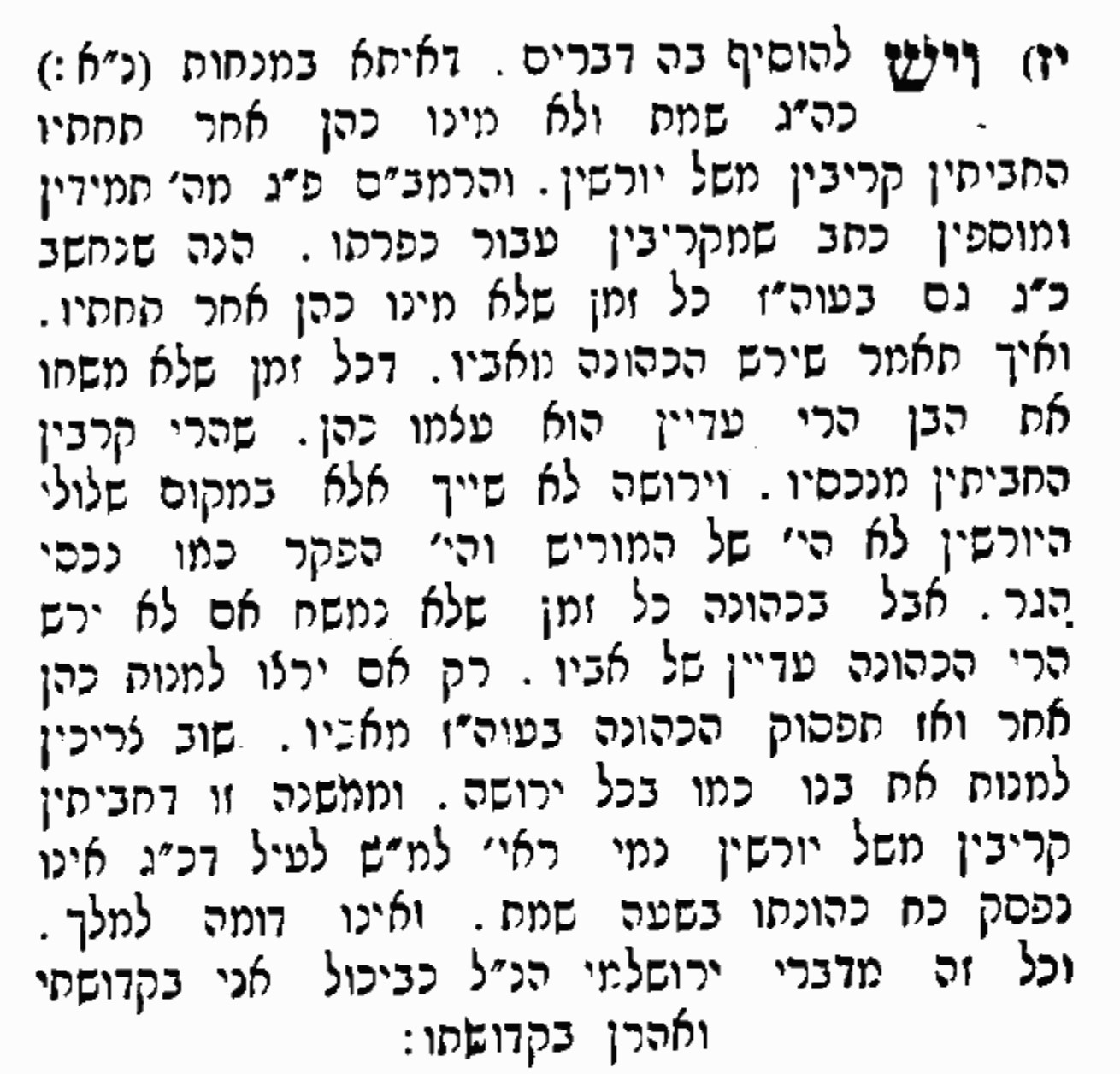
We mentioned the phenomenal אבני נזר, that explains this as follows:

The ירושלמי equates קדושה of the כה״ג to the קדושה כביכול of הקב״ה, both being eternal. Therefore, even if a כה״ג is חייב and given מלקות, he resumes his position!

This קדושה remains even upon his passing and in a sense, he remains the כה״ג until his successor is appointed. This explains as to why even if he is succeeded by his son, this son will need משיחה, which will ‘close out’ his father’s reign and קדושה. It’s not an automatic transition, due to his father’s eternal קדושה.

So as long as it takes to find, appoint or anoint a new כה״ג, the previous כה״ג is still ‘alive’ in a sense and thus needs to bring a מנחת חביתין.

This explains why there is an opinion that his estate needs to pay for the מנחה.

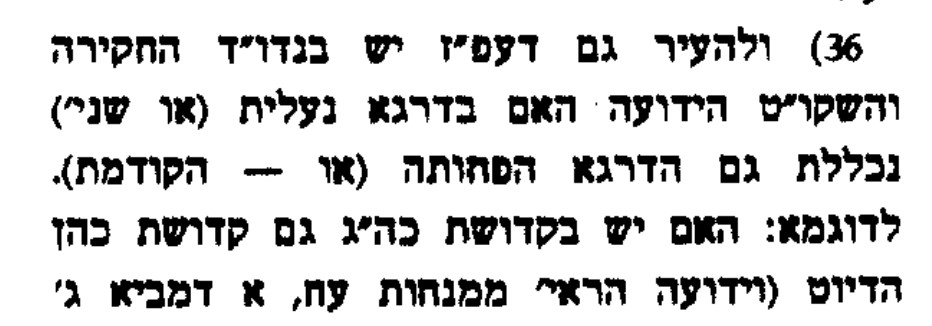
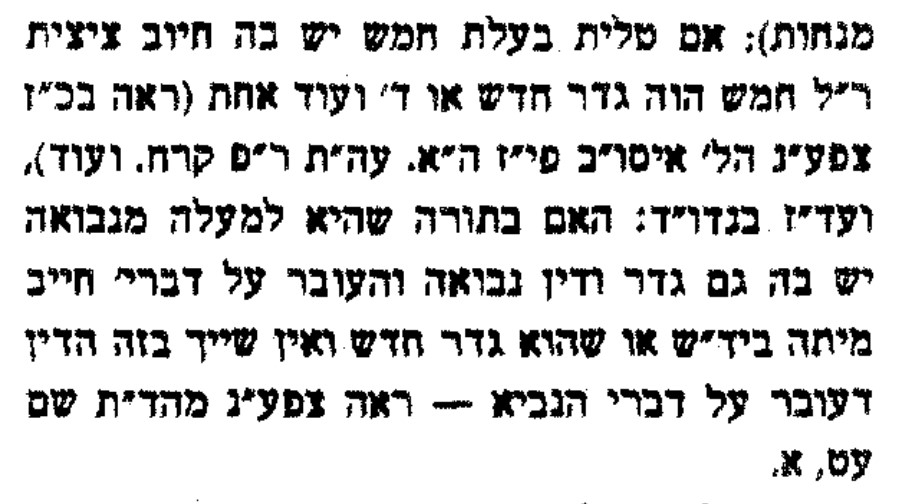
5 – We mentioned, as a follow up to last week discussion if a כהן גדול is also a כהן הדיוט, the Rebbe’s note on this topic. See here.

 36 לקוטי שיחות חלק י”ט ע’ 181,הערה

As another example of such a query the Rebbe mentions the opinion, concerning a בגד that has 5 corners, that one would need to tie ציצית to all 5 corners.

tzitzit – david g vogel

A similar question (to the כה״ג- כהן הדיוט) can be asked here. Is the 5 cornered בגד a 4 cornered one plus 1, or perhaps it’s a new type of בגד.

Another example: משה רבינו transmitted the תורה to us. Additionally, he was also a נביא. The תורה, despite it being far above the level of נבואה, does it also have the validity of it being a נבואה?

6. We discussed the movement to bring a  Korban Pesach –  קרבן פסח , and R’ Reb Zvi Hirsch Kalischer See this shiur where we discussed it.

As well as הרב יחיאל מיכל טוקצינסקי – Yechiel Michel Tucazinsky. who wrote a sefer on the Halachos of the Beis Hamikdosh today.

And the question of R’ Tzvi Pesach Frank, Rov of ירושלים from our Gemara 20b :

Aside from all the other Halachic challenges , which were overcome – what about

…עַד שֶׁלֹּא הֵבִיאוּ עֲשִׂירִית הָאֵיפָה שֶׁלָּהֶם עֲבוֹדָתָם …פסולה

If the Kohen had not yet brought his Mincha, then any Korban he brings  is Posul? So although the קרבן פסח which is a קרבן ציבור can be brought בטומאה, a כהן cannot bring his מנחת חינוך as it is a קרבן יחיד. So how were they thinking to bring the קרבן פסח when it would become פסול?

Answer:

Different Girsa – like our Gemara, should be עֲבוֹדָתָם כְּשֵׁירָה – not like the Gra’s girsa (משנת אליהו).

7- Another topic touched: Assuming the correct גירסא is כשרה, would the כהן need to bring a מנחת חינוך? Or perhaps one could say that the bringing of the Korban itself is the Chinuch.

Shiur Shkolim 20b – Iyar 8, 5785 – 05/06/25

BSD

Shkolim 20b

Iyar 8, 5785 – 05/06/25

Short notes.

1- General topic was the daily מנחת חביתין that the כהן גדול was obligated to bring daily.

We mentioned an original idea of the מנחת חינוך.

The Rambam writes that the כה”ג lived in a house in ירושלים and he never left the city. What is the source for this הלכה?

Says the מנחת חינוך , that he heard the source for this הלכה from his students: There is a הלכה that every person bringing a Korban cannot leave back home that same day. One must stay overnight and leave only the next morning.

No drive-by Korban

דברים ז, טז

וּבִשַּׁלְתָּ֙ וְאָ֣כַלְתָּ֔ בַּמָּק֕וֹם אֲשֶׁ֥ר יִבְחַ֛ר יְהֹוָ֥ה אֱלֹהֶ֖יךָ בּ֑וֹ וּפָנִ֣יתָ בַבֹּ֔קֶר וְהָלַכְתָּ֖ לְאֹהָלֶֽיךָ׃

Now, since the כהן גדול is the only one that is obligated to bring a קרבן every single day, he must always stay overnight in ירושלים!

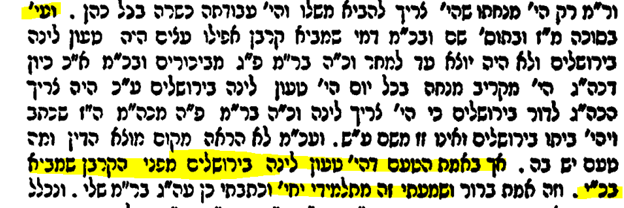
מנחת חינוך מצוה קלו חידש שכה”ג טעון לינה כל לילה על מנחת חביתין שלו.


2 – We discussed a case of a כהן גדול that became טמא, What happens to his  מנחת חביתין? The answer is that the מצוה on the כהן גדול is for him to bring the מנחה to the בית המקדש. The actual frying, baking and the הקרבה can be performed by others.

3 – This answers the question on how could the כהן גדול have a relationship with his wife when by doing so he becomes טמא until the next nightfall? So how could he bring his daily מנחה?

Another answer we mentioned (from Tosfos ישנים in יומא) is that it would occur in the afternoon (before nightfall) after he was מקריב the afternoon portion of his מנחה.

4 -The גמרא discussed the process of this unique מנחה that it was both deep fried and also baked.

Leviticus Chapter 2 – The Grain Offering

5- We continued on the topic mentioned last week by the אור שמח.

הלכות כלי המקדש ה, יז.

Briefly – is a כהן גדול also a כהן הדיוט?

Seems trivial but actually it can be a difference in הלכה.


A כהן הדיוט wears 4 בגדים. A כהן גדול 8.

Are the basic 4 בגדים they share the same?

That depends if the Gartel אבנט of both are of the same material.

[That is a מחלוקת in יומא ו א]

If they are indeed the same, then they have much in common, and one can say that a כהן גדול is a first a כהן הדיוט (by wearing the same 4 basic בגדים) and on top of that, he has the extra unique 4 בגדים of the כהן גדול.

However, if in even the 4 בגדים they are different, by having a different אבנט, one can say that the כהן גדול is not a כהן הדיוט at all! He has a unique status.

Now, before a כהן does any עבודה for the first time, he needs to bring an initiation מנחת חינוך. Once that is done, he can proceed to work in the בית המקדש.

A כהן that is appointed to be the next כהן גדול, also needs to bring a מנחה for his elevation, and then another one, for his daily obligation.

What happens if כהן who has never done any עבודה is nominated to become (not a כהן הדיוט, but a) כהן גדול?

המחשה בקצרה למסכת יומא -3- דף ו' אבנט של כהן גדול אבנט של כהן הדיוט מאת הרב אליהו מונק

How  many מנחות does he need to bring? 2 or 3?

In our גמרא ירושלמית we learnt that he brings 2. In בבלי is says that he brings 3.

What is the basis of their opinions? Says the אור שמח:

If a כהן גדול is also a  כהן הדיוט then the number is 3. One for his initiation as a כהן הדיוט, a second one for his elevation to a כהן גדול, then a 3rd for the daily כהן גדול obligation.

However if a כהן גדול is just a כהן גדול and not a כהן הדיוט, logic would say that he brings only 2. One for his initiation/elevation directly as a כהן גדול, a second one for the daily כהן גדול obligation.

וראה לקו”ש כב, ע’ 28 הערה 54.

חלק יט, ע’ 181

Shiur Shkolim 20a (2) – Iyar 1, 5785 – 4/29/25

BSD

Shkolim 20a (2)

Iyar 1, 5785 – 4/29/25

Short notes.

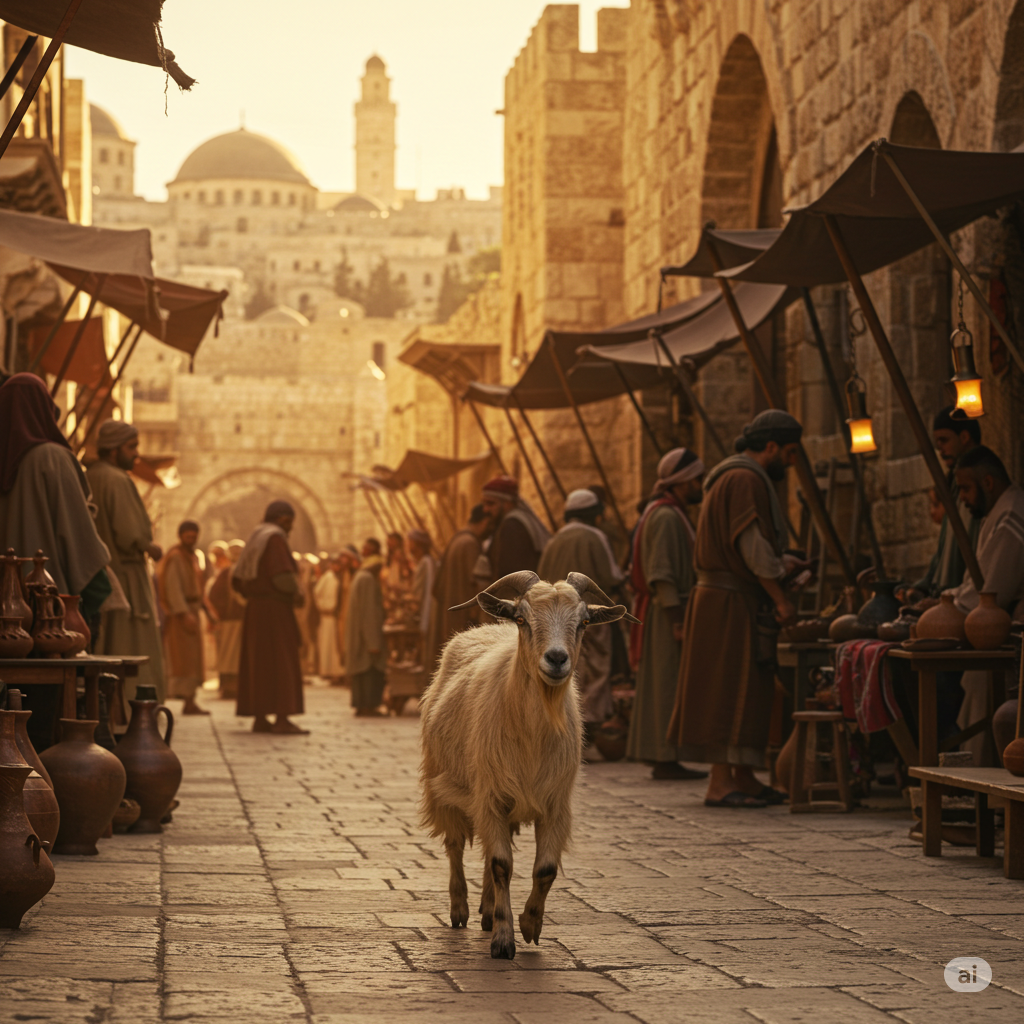
1- The next הלכה discusses what to do if one finds a stray animal (that can be bought as a קרבן)  around Yerushalayim. Should we assume that they are קדשים that managed to escape from their owners or they are חולין.

2- Interesting historical fact: When the חכמים ruled that whoever finds these stray animals must not only bring it to the  בית המקדש but also assume the costs of the נסכים associated with the animal (flour and wine), it triggered that people would just drop off the animal and run away!

This caused the חכמים to change their ruling and proclaim that the נסכים will be paid from the general  קופה.

flour_offering

nesachim, – נסכים

בְּהֵמָה שֶׁנִּמְצֵאת מִירוּשָׁלִַם וְעַד מִגְדַּל עֵדֶר וּכְמִידָּתָהּ לְכָל רוּחַ זְכָרִים עוֹלוֹת. נְקֵבוֹת זִבְחֵי שְׁלָמִים. רִבִּי יְהוּדָה אוֹמֵר הָרָאוּי לִפְסָחִים לִפְסָחִים קוֹדֶם לָרֶגֶל שְׁלֹשִׁים יוֹם. בָּרִאשׁוֹנָה הָיוּ מְמַשְׁכְּנִין אֶת מוֹצְאֶיהָ עַד שֶׁהוּא מֵבִיא נְסָכֶיהָ. חָזְרוּ לִהְיוֹת מַנִּיחִין אוֹתָהּ וּבוֹרְחִין. הִתְקִינוּ בֵּית דִּין שֶׁיְּהוּ נְסָכֶיהָ בָּאִין מִשֶּׁל צִבּוּר. אָמַר רִבִּי שִׁמְעוֹן שִׁבְעָה דְּבָרִים הִתְקִינוּ בֵּית דִּין וְזֶה אֶחָד מֵהֶן. גּוֹי שֶׁשִּׁילַּח עוֹלָתוֹ מִמְּדִינַת הַיָּם וְשִׁילַּח עִמָּהּ נְסָכֶיהָ קְרֵיבִין מִשֶׁלּוֹ וְאִם לָאו קְרֵיבִין משֶּׁל צִיבּוּר. וְכֵן גֵּר שֶׁמֵּת וְהִנִּיחַ זְבָחִים אִם יֵשׁ לוֹ נְסָכִים קְרֵיבִין מִשֶּׁלוֹ וְאִם לָאו קְרֵיבִין מִשֶּׁל צִבּוּר. תְּנַיי בֵּית דִּין הוּא עַל כֹּהֵן גָּדוֹל שֶׁמֵּת שֶׁתְּהֵא מִנְחָתוֹ קְרֵיבָה מִשֶּׁל צִבּוּר. רִבִּי יְהוּדָה אוֹמֵר מִשֶּׁל יוֹרְשִׁין. וּשְׁלֵימָה הָיְתָה קְרֵבָה. עַל הַמֶּלַח וְעַל הָעֵצִים שֶׁיְּהוּ הַכֹּהֲנִים נֵיאוֹתִין בָּהֶן וְעַל הַפָּרָה שֶׁלֹּא יְהוּ מוֹעֲלִין בְּאֶפְרָהּ. עַל הַקִּינִּין הַפְּסוּלוֹת שֶׁיְּהוּ בָאוֹת מִשֶּׁל צִיבּוּר רִבִּי יוֹסֵה אוֹמֵר הַמְסַפֵּק אֶת הַקִּינִּין הוא מְסַפֵּק אֶת הַפְּסוּלוֹת.

3- The Mishna continues to say that the above תקנה was one of 7 rulings that were enacted by the בית דין. They are all תנאי בית דין , meaning that when the שקלים were collected,  בית דין stipulated that although the collection was made for קרבנות ציבור, occasionally, the funds would be used for ‘other’, non public purposes.

4 – One of the 7 תקנות pertains to the מנחת חביתין which was  brought daily by the כהן גדול (and also by every כהן on the day he began to do עבודה).

Thus, if a כהן turned בר מצוה and was lucky to do any עבודה, he would need first to bring this מנחה.

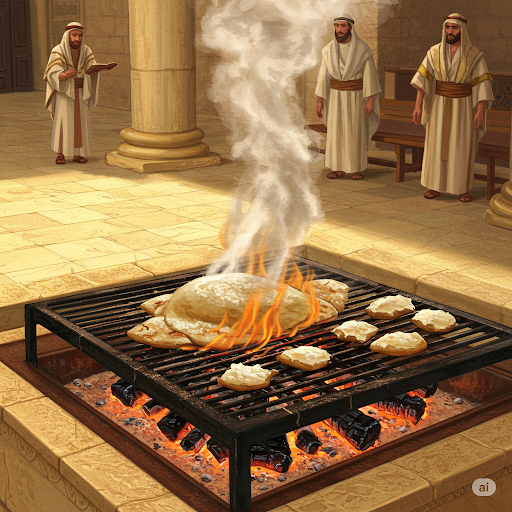
5- The כהן גדול’s מנחה is something brought daily. He would bring every morning a 10th of an איפה of flour, split it in two and create an unique ‘pancake bread’. First he would mix the flour with oil, then then boil it in water and finally bake the dough into 6 חלות which would be totally burned on the מזבח.

In the afternoon he would repeat this process with the other half of the

10th of an איפה.

One of the תקנות is that in a tragic case where the כהן גדול would pass away prior to him bringing the מנחה, until a replacement would be announced, a full  מנחת חביתין would be brought, twice a day (12 חלות each) from the לשכה.

6 – We discussed the interesting query if a כהן גדול is also a regular כהן.

Seems like a trivial and theoretical question but it has Halachik consequences. More on this topic and other details of this unique מנחה at the next Shiur BL”N.

7- Mentioned briefly if a כהן גדול can be removed and replaced democratically – meaning if the כהנים all vote to remove him.

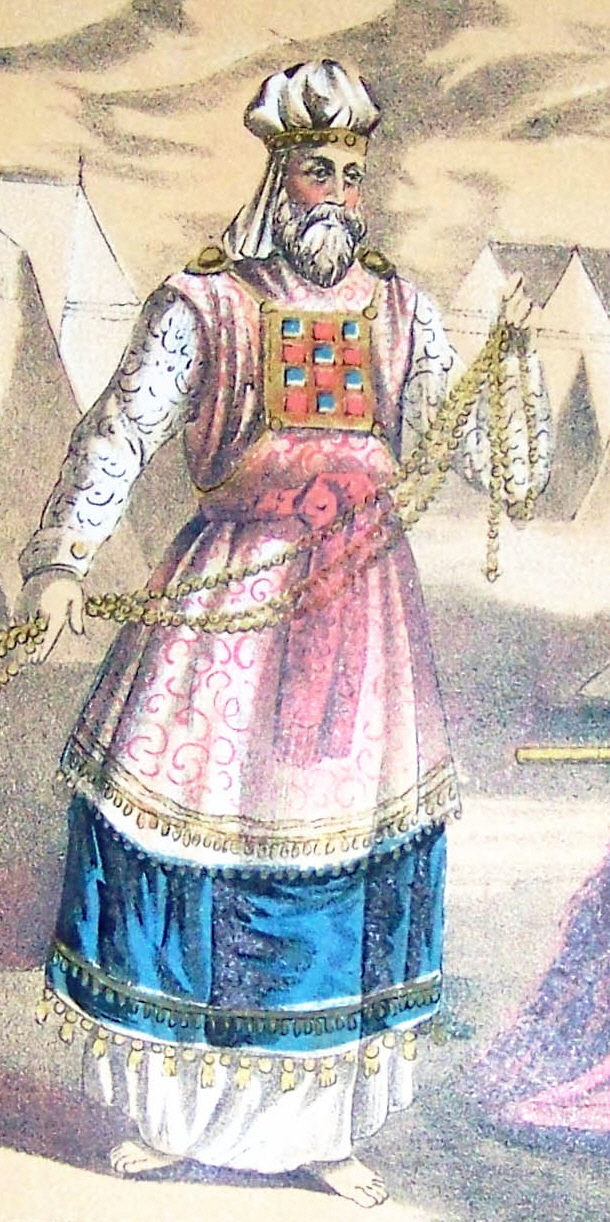
File:Holman Kohen Gadol.jpg - Wikimedia Commons

8- We mentioned the מהרש”ג, Reb Shimon Greenfeld who was a famous פוסק before the war.

רבי שמעון גרינפלדמהרש”ג

Despite him being a Rov in קהילות that followed רבינו תם’s opinion of a later שקיעה he ruled like the Alter Rebbe, as is our מנהג.

מהרש”ג

נצר מטעי סימן לב

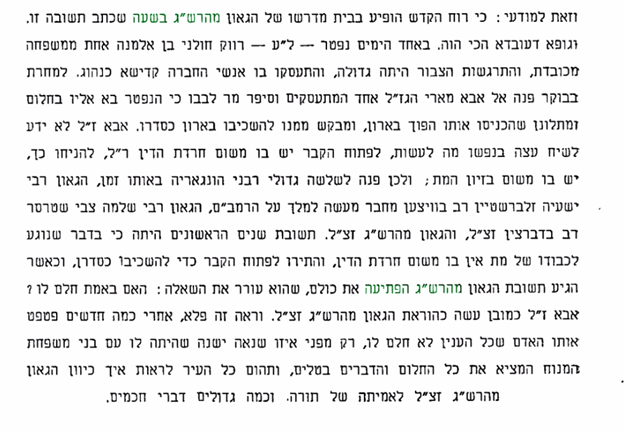
The story we told is about someone (part of a חברה קדישא) who claimed to have a dream about a person he buried. The deceased complained that he was buried ‘backwards’ and is requesting for them to dig up the grave and ‘straighten him out’.

Reb Shimon, as opposed to two other great רבנים, ruled that they should definitely not reopen the grave.

Read the interesting end.


ומסיימין בטוב!

A healthy summer to all.