BSD
Shkolim 15b (2)
Cheshvan 11, 5785. 11/12/2024
A few short notes.
השתחווה בבית המקדש.
השתחויות – 13 או 14.
ביחוד – בבירור- היום יום – יחידות.
מקום גניזת הארון. לקו”ש כא
השביל ב770….
1 – Our משנה states that when entering the בית המקדש through any of the 13 gates one would do a full השתחווה.
We mentioned the גמרא in שבועות טז, ב that explains the difference between קידה, כריעה and השתחואה.
The Sages taught:
The term Kidda indicates falling upon one’s face, and so the verse states: “Then Bathsheba bowed [vatikkod] with her face to the ground” (I Kings 1:31).
Keria means descending upon one’s knees, and so the verse states with regard to Solomon: “He rose from before the altar of the Lord, from kneeling [mikero’a] upon his knees” (I Kings 8:54).

Hishtaḥava’a, this is prostrating oneself while spreading one’s arms and legs in total submission, and so the verse states that Jacob asked, in response to Joseph’s relating of his dream: “Shall I and your mother and your brothers indeed come to bow down [lehishtaḥavot] to you to the ground” (Genesis 37:10), i.e., spread out completely on the ground.

2 – The משנה continues that the family of Rabban Gamliel and of Rebbi חנינה the סגן הכהנים would add a fourteenth time. Not at a gate but right in the עזרה. Where exactly?
In front of the room known as the wood storage – דיר העצים, since they had a tradition from their forefathers that the ארון was hidden under the floor of that chamber.

How did they know? It happened that a Cohen was working in the דיר העצים when he saw that a floor tile was different from the others. [He realized that that is where the ארון was hidden] He went to tell it to a another כהן but did not finish speaking before he passed away; then they knew with certainty the the Ark was hidden there.

שֶׁל בֵּית רַבָּן גַּמְלִיאֵל וְשֶׁל בֵּית רַבִּי חֲנַנְיָה סְגַן הַכֹּהֲנִים הָיוּ מִשְׁתַּחֲוִים בְּאַרְבַּע עֶשְׂרֵה. וְהֵיכָן הָיְתָה יְתֵרָה כְּנֶגֶד דִּיר הָעֵצִים שֶׁכֵּן מָסוֹרֶת בְּיָדָן מֵאֲבוֹתֵיהֶן שֶׁשָּׁם הָאָרוֹן גָּנוּז. מַעֲשֶׂה בְּכֹהֵן אֶחָד שֶׁהָיָה מִתְעַסֵּק וְרָאָה הָרִיצְפָּה שֶׁהִיא מְשׁוּנָּה מֵחֲבֵרוֹתֶיהָ. בָּא וְאָמַר לַחֲיבֵרוֹ. לֹא הִסְפִּיק לִגְמֹר אֶת הַדָּבָר עַד שֶׁיָּצְתָה נִשְׁמָתוֹ, וְיָדְעוּ בְיִיחוּד שֶׁשָּׁם הָאָרוֹן גָּנוּז.
3 – We mentioned that the Hebrew word for ‘certainty/clarity’ (for the location of the ארון) in the משנה is ביחוד – b’yichud.
In היום יום of י’ אלול, when explaining one of the definitions of יחידות by a Rebbe, our משנה is mentioned – יחידות means ‘clearly’. To clarify one’s own status
גדולי זקני חסידי רבינו הזקן היו אומרים, אשר “יחידות” פירושו: קלאר, אפגעשטעלט, פאראיינציגט – מקור ג’ פירושים אלו הוא בדברי רבותינו זכרונם לברכה: שקלים פרק ו’ משנה ב’, יבמות ס”ב. א, בראשית רבה פרק כ
זאת אומרת כי ענין היחידות הוא לברר את מצבו, ולקבוע אופן עבודתו בסור מרע ולקרב את המדות הטובות, ולהתקשר בהתאחדות גמורה ולמסור עצמו, איבערגעבען זיך מיט אלע רצונות.
Translation: Great elders of the Alter Rebbe’s chassidim used to say that yechidus (private audience with the Rebbe) means: “clear,” “designated,” “united.” The sources of these three interpretations are in Shekalim 6:2, Yevamot 62a, and Bereishit Raba 20.
This means that the idea of Yechidus is:
1- To clarify one’s own status; 2- To designate a mode of avoda for him in “turning away from evil” and in the acquisition of fine character traits;3- And that he should bind himself in total oneness, and utterly dedicate himself with all his desires.

4 – The גמרא starts with the 3 opinions as to the whereabouts of the ארון at or before the חורבן בית המקדש.
1- It was exiled to בבל – and never returned.
2- It was hidden under the קודש הקדשים.
3- It was hidden under the דיר העצים.

5 – We spoke about the שיחה of the Rebbe in regards to the subterranean tunnels where the ארון was hidden. (#2 or #3 above) based on the phrasing of the Rambam. בית הבחירה 4, 1.
לקוטי שיחות כא, 156
א) אבן היתה בקודש הקדשים במערבו, ועליה היה הארון מונח, לפניוא צנצנת המן ומטה אהרן. ובעת שבנה שלמה את הבית וידע שסופו ליחרב, בנה מקום לגנוז בו הארון למטה במטמוניות עמוקות ועקלקלות, ויאשיהו המלך ציוה וגנזו במקום שבנה שלמה, שנאמר ״ויאמר ללוים המבינים לכל ישראל הקדושים לי״י תנו את ארון הקודש בבית אשר בנה שלמה בן דויד מלך ישראל אין לכם משא בכתף עתה עבדו את י״י אלהיכם״:
The Ark was placed on a stone in the western portion of the קודש הקדשים. The vial of manna and Aharon’s staff were placed before it.
When Solomon built the Temple, he was aware that it would ultimately be destroyed. [Therefore,] he constructed a chamber, in which the ark could be entombed below [the Temple building] in deep, maze-like vaults.

King Josiah commanded that [the Ark] be entombed in the chamber built by Solomon, as it is said : “And he said to the Levites who would teach wisdom to all of Israel: ‘Place the Holy Ark in the chamber built by Solomon, the son of David, King of Israel. You will no [longer] carry it on your shoulders. Now, serve the Lord, your God.’

The Rebbe’s point in short – the subterranean chamber, built by שלמה המלך, to hide the ארון was not just a random location/refuge for the ארון. Rather it is the proper location for the ארון for the time of גלות.
In other words – just as when there is a בית המקדש, the proper location for the ארון is in the קודש הקדשים, for the time of גלות, the designated place for the ארון is in the subterranean chambers built originally by שלמה המלך for that particular era.
So in a sense, even at the time of בית שני there was indeed an ארון in the בית המקדש.
For despite it not being seen in the קודש הקדשים, it was in the place it was meant to be – in subterranean chamber.
See the Sicha for the full idea behind this explanation.
6 – Half in jest….. we concluded on note #2 above about the descendants of רבן גמליאל and רַבִּי חֲנַנְיָה סְגַן הַכֹּהֲנִים that would pause at the front of the דיר העצים and do a full extra השתחווה.
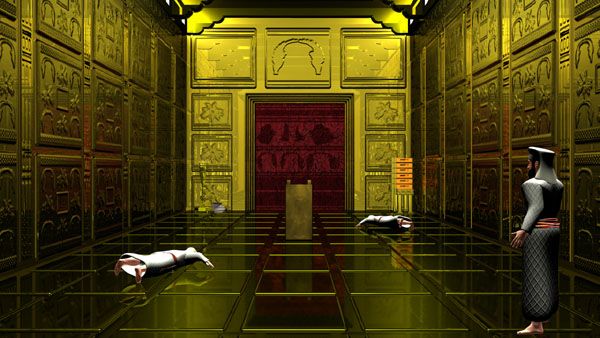
What follows is not meant to be a position on the topic. Just an idea.
All the other כהנים and visitors would not perform this extra השתחואה. Why? Because they didn’t have this family tradition that the ארון was hidden in the דיר העצים.
They believed that it was either exiled to בבל or it was under the קודש הקדשים.
So, imagine hundreds of people walking daily by the דיר העצים and observing that only a few that would ‘block the traffic’ by falling on the floor and performing an extra השתחווה.
It seems that this contrarian מנהג was tolerated by all! No one shouted at them:
‘Move on. Get lost with your beliefs – you are in the minority’.

Should this attitude of tolerance also apply to the ones that believe that the Rebbe walks into 770 daily and thus feel that they need to make a שביל…….?
ומסיימין בטוב….