Shiur Sukkah 54a-b 08/29/23

BSD

 Suka 54a-b

Elul 12, 5783. August 29, 2023

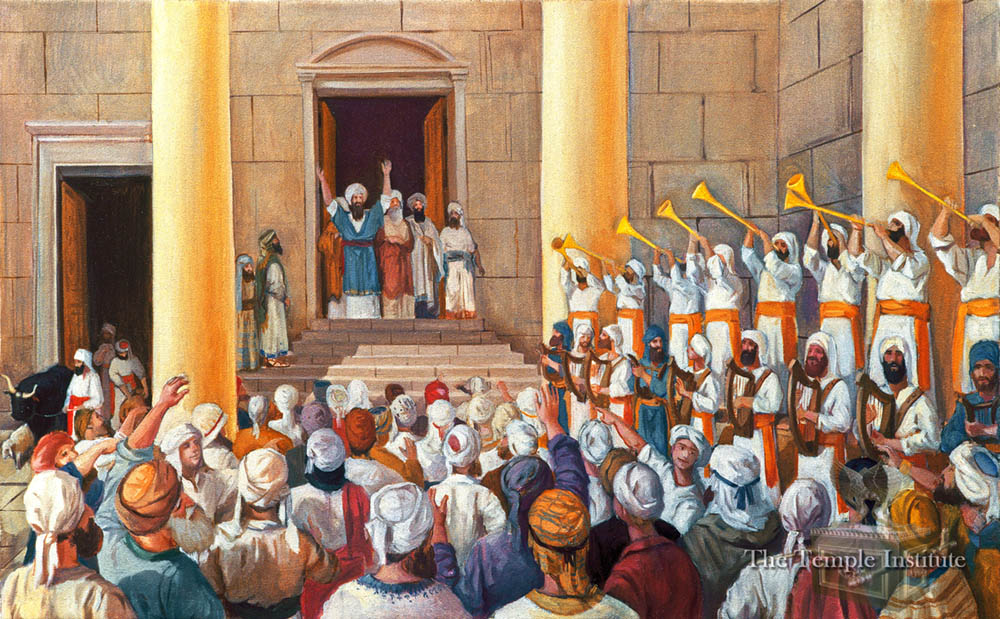
1 – We continued with the chart of the various scenarios of the תקיעות במקדש.

See below.

הבלוג של קובי לידרמן: שתי חצוצרות שנתביישו

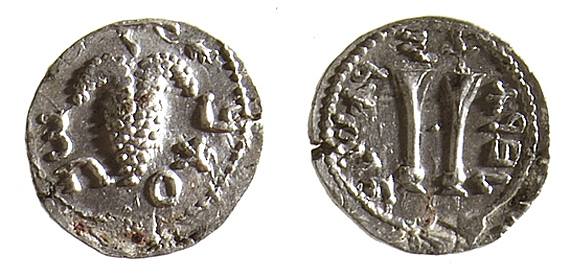
Coin from the era of Bar Kochba, with the two Trumpets

מטבע מתקופת בר כוכבא עליו חרוטות שתי חצוצרות. צילום: פרץ הכהן

2 – In general – These sounds were made with (2 or more) חצוצרות – trumpets, as it says:

וּבְיוֹם שִׂמְחַתְכֶם וּבְמוֹעֲדֵיכֶם וּבְרָאשֵׁי חָדְשֵׁיכֶם וּתְקַעְתֶּם בַּחֲצֹצְרֹת עַל עֹלֹתֵיכֶם

וְעַל זִבְחֵי שַׁלְמֵיכֶם וְהָיוּ לָכֶם לְזִכָּרוֹן לִפְנֵי אֱלֹהֵיכֶם אֲנִי ה’ אֱלֹהֵיכֶם:  (במדבר פרק י פסוק י)

Additionally, they were accompanied with the sound of the שופר as is says:

בַּחֲצֹצְרוֹת וְקוֹל שׁוֹפָר הָרִיעוּ לִפְנֵי׀ הַמֶּלֶךְ ה’: (תהלים פרק צח פסוק ו)


3 – In addition to these תקיעות on a daily basis, Shabbos and Yom Tov, there were two more occasions when תקיעות would be blown:

Beha'alotcha, with shofar & trumpets… צלילי חצוצרה ושופר אל החולות של המדבר היה שולח… | Torah & more… תורה ועוד

a-  On ראש השנה, as there is a separate Mitzvah of תקיעת שופר. The שופר would be accompanied by trumpets as well, but the emphasis would be on the שופר. They would both be blown at the same time but the shoar’s sound would continue after the trumpets stopped.

שׁוֹפָר שֶׁל רֹאשׁ הַשָּׁנָה שֶׁל יָעֵל, פָּשׁוּט, וּפִיו מְצֻפֶּה זָהָב, וּשְׁתֵּי חֲצוֹצְרוֹת מִן הַצְּדָדִין. שׁוֹפָר מַאֲרִיךְ וַחֲצוֹצְרוֹת מְקַצְּרוֹת, שֶׁמִּצְוַת הַיּוֹם בַּשּׁוֹפָר.

b – On fast days the emphasis would be on the trumpets.

בַּתַּעֲנִיּוֹת, בְּשֶׁל זְכָרִים, כְּפוּפִין, וּפִיהֶן מְצֻפֶּה כֶסֶף, וּשְׁתֵּי חֲצוֹצְרוֹת בָּאֶמְצַע. שׁוֹפָר מְקַצֵּר וַחֲצוֹצְרוֹת מַאֲרִיכוֹת, שֶׁמִּצְוַת הַיּוֹם בַּחֲצוֹצְרוֹת.

Mishna RH 26b.

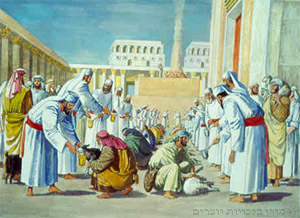
4 – Our גמרא discusses the masses that came to the בית המקדש on ערב פסח to bring their קרבן פסח. They were divided into 3 groups/shifts  –  כתות ,  and recited הלל during the time the כהנים would bring their personal קרבן פסח.

קרבן פסח במקדש

The length of each shift allowed the saying of הלל three times. The 3rd shift would be the smallest and הלל would not be finished the full 3 times.

הר הבית חדשות - קרבן פסח בימינו / הרב עידו פכטר

5- We began to discuss what the Rebbe wrote in his הגדה של פסח that it was the לויים that recited the הלל and not, as it seems, the ישראלים that made up the majority of participants of each shift.

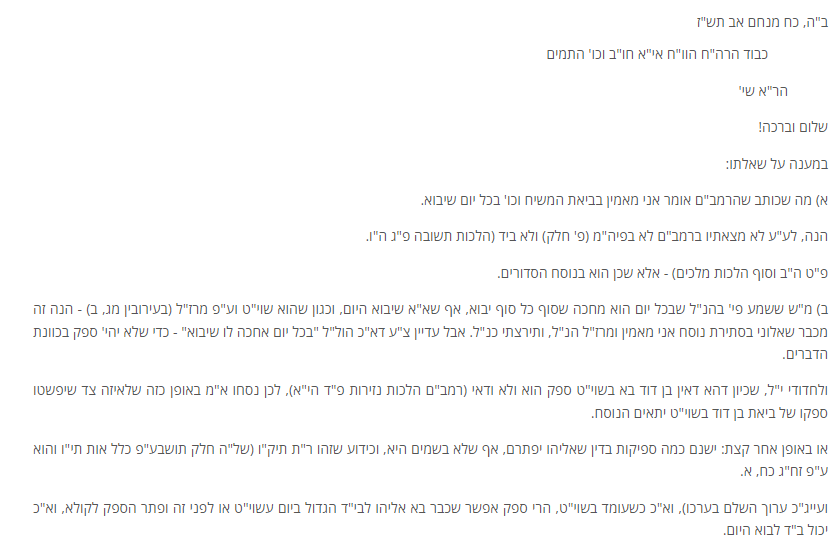
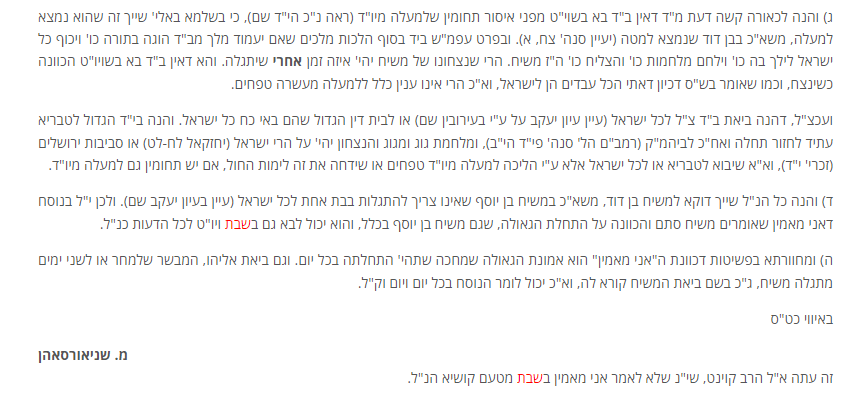
Will continue next week with the correspondence between the Rebbe and Rav Shlomo Yosef Zevin on this topic.


In the preparation of this article, we were greatly assisted by the extensive profile of Rabbi Zevin in Shemen Sasson Mechaverec
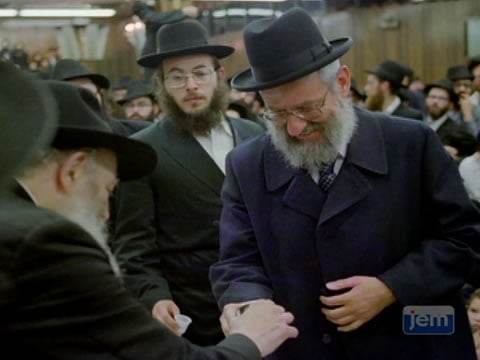
RABBI ZEVIN ADDRESSES A SPECIAL EVENT MARKING 15 YEARS SINCE THE FOUNDING OF KFAR CHABAD, YUD-BEIS TAMMUZ 5724


A B C D E F G H I
Daily W/ Musaf Friday Friday Chol Hamoed Sukkos Reb Acha Reb Zeira’s Rovo’s question Rovo’s
Reb Eliezer 53b Mishna 48a Shabbos answer Shabbos Yom Tov answer if Shabbos
1 פתיחת שערים Opening the gates 3 3 3 3 3 3 Shabbos Shabbos 3
2 תמיד של שחר Morning Tomid 9 9 9 9 9 9 9 9 9
3 תמיד בין הערבים Evening Tomid 9 9 9 9 9 9 9 9 9
4 מוסף Musaf 9 9 9 9 9 9 9
5 מוסף שבת Musaf Shabbos 9 9 9 9
6 מוסף ר״ה Musaf Rosh Hashana
7 ערב שבת Friday afternoon 6 6 6
8 שער העליון Upper gate 3 3 3 3 3 0
9 מעלה עשירית 10th step 3 3 3 0
10 שער התחתון Lower gate 3 3 3 3 3 0
11 מילוי המים Entering w/ the water 3 3 3 3 3 0
12 ערבה ע״ג המזבח Arovos/ Mizbe’ach 3 3 0
13 הלל Hallel
21 30 27 48 48 51 48 48 39


J K L M N O P
Rosh Hashana שייר רבי יהודה ערב פסח ערב פסח ערב פסח יום א סוכות
Shabbos ערב פסח הלל ערב פסח הלל ערב שבת הלל שבת ר״י הלל שבת רבנן הלל ערב שבת
1 פתיחת שערים Opening the gates 3 3 3 3 3 3 3
2 תמיד של שחר Morning Tomid 9 9 9 9 9 9 9
3 תמיד בין הערבים Evening Tomid 9 9 9 9 9 9 9
4 מוסף Musaf 9
5 מוסף שבת Musaf Shabbos 9 9 9 9
6 מוסף ר״ה Musaf Rosh Hashana 9
7 ערב שבת Friday afternoon 6 6
8 שער העליון Upper gate
9 מעלה עשירית 10th step
10 שער התחתון Lower gate
11 מילוי המים Entering w/ the water 0
12 ערבה ע״ג המזבח Arovos/ Mizbe’ach 0
13 הלל Hallel 0 27 21 21 21 27 0
48 48 42 48 51 57 36


Shiur Sukkah 54a – 8/22/23

BSD

 Suka 54a

Elul 5, 5783. August 22, 2023

1- Shiur was on the line in our Mishna that  ‘48 is the maximum number of תקיעות’ there were sounded on one day in the בית המקדש.

Rosh Hashana 2 - Temple Institute

That occurred once a year on a Friday חול המועד Sukos.


Opening the gates 3
Morning Tomid 9
Evening Tomid 9
Musaf Sukkos 9
Friday afternoon – stop working 6
 Water – Upper gate 3
Water – Lower gate 3
Entering w/ the water 3
Arovos/ Mizbe’ach 3
Total 48


2- The גמרא discusses the possibility of reaching a number above 48.

Gold Number 48 Isolated On White Background Stock Photo, Picture And Royalty Free Image. Image 118719995.

We went over a chart of the various days where the number of 48 can perhaps be exceeded.


A B C D E F G H I
Daily W/ Musaf Friday Friday Chol Hamoed Sukkos Reb Acha Reb Zeira’s Rovo’s question Rovo’s
Reb Eliezer 53b Mishna 48a Shabbos answer Shabbos Yom Tov answer if Shabbos
1 פתיחת שערים Opening the gates 3 3 3 3 3 3 Shabbos Shabbos 3
2 תמיד של שחר Morning Tomid 9 9 9 9 9 9 9 9 9
3 תמיד בין הערבים Evening Tomid 9 9 9 9 9 9 9 9 9
4 מוסף Musaf 9 9 9 9 9 9 9
5 מוסף שבת Musaf Shabbos 9 9 9 9
6 מוסף ר״ה Musaf Rosh Hashana
7 ערב שבת Friday afternoon 6 6 6
8 שער העליון Upper gate 3 3 3 3 3 0
9 מעלה עשירית 10th step 3 3 3 0
10 שער התחתון Lower gate 3 3 3 3 3 0
11 מילוי המים Entering w/ the water 3 3 3 3 3 0
12 ערבה ע״ג המזבח Arovos/ Mizbe’ach 3 3 0
13 הלל Hallel
21 30 27 48 48 51 48 48 39

To be continued next week.

3- We mentioned Reb Yosef Engel’s question. At the beginning of every month, upon announcing that ‘today is ראש חודש’, a תקיעה was blown.

So why does the גמרא not take into account the  תקיעה on ראש השנה which was sounded due to fact that it is also ראש חודש!

Shofar - The Horn Blown on Rosh Hashanah - Chabad.org

4- Discussed briefly the הלכה if one is Davening שמונה עשרה of מנחה  while the ציבור is Davening שמונה עשרה of  מעריב.  Or Shacharis while the מנין is up to מוסף.

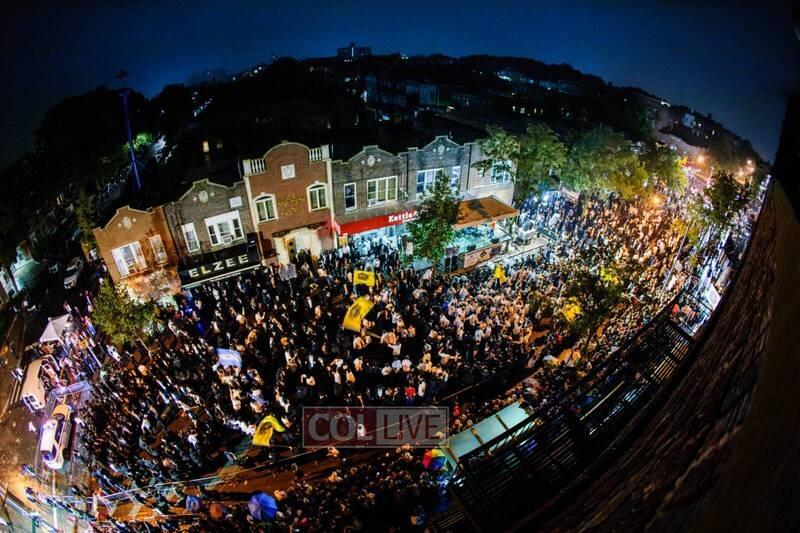
770 Gabboim Enforce Order

Is that considered תפילה בציבור?

Definitely not says the Alter Rebbe here. OC 90, 10

ואם מתפלל מוסף בשעה שהצבור מתפללין שחרית או להיפך אינו נקרא בשעה שהצבור מתפללין

See also מגן אברהם and ט”ז. Here. OC 236

To be continued.


Shiur Sukkah 53b (2) 7/25/23

BS”D

Sukkah 53b (2)

Menachem Av 7, 5783. July 25. 2023

Short notes.

1- We began with a quip about the בני גד ובני ראובן volunteering, not only fight the כנעניים for 7 years, but also to remain on the West Bank an additional 7 years until ארץ ישראל  would be divided the the 10 שבטים.

See below in Hebrew.

2- The Mishna about the various amounts of תקיעות blown in the בית  המקדש on a daily basis.

Trumpets Archives · Page 2 of 2 · Mini Manna Moments

A minimum of 21 and a maximum of 48.

For example: 6 Tekios on Erev Shabbos. One of the 6 was to alert people to remove their תפילין.

9 for תמיד של שחר and 9 for תמיד של בין הערבים.

The Mishna then continues to illustrate days when a maximum of 48 תקיעות  were blown – on a Friday in middle of Chol Hamoed Sukos.

See here a helpful chart.

https://docs.google.com/spreadsheets/d/1-GRqapDVe4LgjyKdnFKi8XT6ys9a13EP22tKfLsWQzY/edit?gid=0#gid=0


No photo description available.

A fragment of rock “לבית התקיעה”  from where they would blow the trumpet…

Now 6 of the 48 were for the regular Erev Shabbos תקיעות. We discussed the obvious question – does this not prove that תפילין should be donned on חול המועד?

Unless we apply the לא פלוג rule. Meaning that they followed a steady schedule of 6 תקיעות every  ערב שבת  year round even if on a particular week it was redundant.

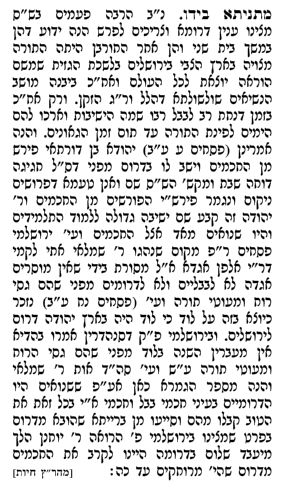
3- We spoke about the fascinating מהר”ץ חיות take on רבי יהודה דורתאי who ‘left the חכמים and moved South’, out of ארץ ישראל .

פסחים ע,ב

Despite his bold move of setting up a ‘tish’ or Yeshiva on his own, a very rebellious move indeed, the גמרא would quote ברייתות and other sayings from that Yeshiva.

Reb Yochanan even went there to try to bring them back.

Arab People Camels, arab, camel, people, world, HD wallpaper | Peakpx


Thus we find places in ש”ס that quotes from people from that area are prefaced that ‘he is from the South’.

One is on our Daf: כי אתא ר’ אחא בר חנינא מדרומא

The idea is to show that despite the dislike of the חכמים towards them, they would not refrain from mentioning them and attempting to be מקרב them.


More on this topic BL”N at the next Shiur.

TheYeshiva.net - Seeing the Third Bais Hamikdash | Chassidus: Likkutei Sichos Shabbos Chazon #1

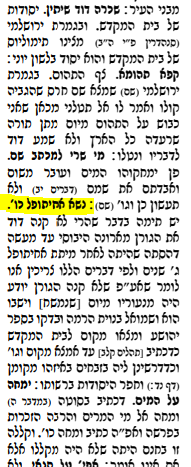
Food for thought. Tomorrow at Minchah we will say נחם.

Why is the בית המקדש not mentioned explicitly?

נחם ה’ אלהינו את אבלי ציון ואת אבלי ירושלים, ואת העיר האבלה והחֳרבה והבזויה והשוממה. האבלה מבלי בניה, והחריבה ממעונותיה, והבזויה מכבודה, והשוממה מאין יושב. והיא יושבת וראשה חפוי כאישה עקרה שלא ילדה. ויבלעוה לגיונות, ויירשוה עובדי זרים, ויטילו את עמך ישראל לחרב, ויהרגו בזדון חסידי עליון. על כן ציון בְּמַר תבכה וירושלים תתן קולה. לבי לבי על חלליהם, מעי מעי על חלליהם, כי אתה ה’ באש הצתה ובאש אתה עתיד לבנותה. כאמור: ואני אהיה לה נאם ה’ חומת אש סביב ולכבוד אהיה בתוכה. ברוך אתה ה’, מנחם ציון ובונה ירושלים.

Have an easy fast.

יהי רצון מלפניך ה’ אלוקינו ואלוקי אבותינו שיבנה בית המקדש במהרה בימינו ותן חלקנו בתורתך

———–

להפיג קצת את הצער של ימים אלו…..

אולי אפ”ל בהלצה….

בפרשיות מטות ודברים סופר על בני גד ובני ראובן שהציעו למשרע”ה שיקחו חלקם בעבר הירדן.

משה הסכים בתנאי שיחלצו למלחמה נגד הכנענים, עם שאר השבטים, עד סוף הכיבוש.

בני גד ובני ראובן, לא רק שהסכימו, אלא גם לקחו על עצמם להישאר עד אחרי ה’שבע שחלקו’.


מאיפה באה כזו מס”נ, לא להתאחד עם משפחתם לעוד שבע שנים! והעיקר, לכאורה מה יוסיף נוכחותם בעידן חלוקת הארץ?

ידועה הסיפור על הגבאי שאמר לעגונה ר”ל, אחרי שיצאה מהרבי’לה הקדוש עם ברכה ממנו שבעלה יחזור אלי’-  ‘גבירתי, בעלך לא חוזר. נקודה’.

העגונה האומללה רצה בחזרה לרבי’לה וצועקת במר נפשה להבין מה קורה כאן. בעלה חוזר או לא חוזר?

הרבי’לה שואל את הגבאי תגיד לי בבקשה, מאיפה אתה יודע שבעלה לא חוזר.

עונה הגבאי: ‘הרבי’לה שלי הקדוש הסתכל בשמים והבטיח לה שהוא חוזר. אני הסתכלתי עלי’ ואני בטוח שהוא לא חוזר….’

משרע”ה אומר לבני גד ובני ראובן להצטרף למלחמה נגד הכנענים ואחרי זה לחזור הביתה.

גד ובני ראובן אכן מסכימים. אבל מוסיפים על הבטחתם. הם ישארו עד סוף חלוקת הארץ.

למה?

כי הם פרקטיים ומכירים את אחיהם ויודעים שלאחר מלחמת הכיבוש תתחיל אז מלחמת העולם השניה – חלוקת הארץ……

והרי הבטיחו למשה רבינו להישאר עד אחרי המלחמה…..


Shiur Sukkah 53b 7/18/23

BSD

Suka 53b

Tamuz 29, 5783. July 18, 2023

1- We began with the story of דוד המלך digging into the ground at the exact location where the מזבח would eventually be built. The purpose was to create a drain channel to reach the underground water stream.

When the wine and water would be poured from the holes atop the מזבח, it would drain into these channels drilled by דוד המלך.

underground river in a dark stone cave Photos | Adobe Stock

In doing so, he unintentionally ‘unplugged’ the underground water system causing it to flow upwards with great force flooding the earth and placing the entire world in danger of ‘drowning’.

Conceptual art of Pandora's box. Neon illustration of a container with color splashes, explosion and liquid burst. 2223390 Vector Art at Vecteezy

Unable to re-plug this hole, he asked if one would be allowed to write the ‘שם ה on a shard to drop this shard into the water well until it reaches the hole and plug it.

His teacher אחיתופל replied with a קל וחומר from סוטה where the שם השם is erased to ‘bring peace between man and wife’. Thus, to save the world, one could of course cause the (unintentional) erasure of the שם השם.

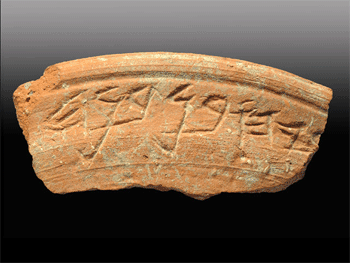
2,700 Year Old Inscribed Pottery Shard Found in Jerusalem (August 2013)

We discussed a few topics on this interesting story.

2- Question of Rashi in Makos 10a about the chronological order of the story:

דוד המלך purchased the plot of land (from ארוונה) where the בית המקדש was built (by שלמה המלך ) close to his פטירה. But אחיתופל was not alive at that time!

דוד המלך’s son אבשלום rebelled against him 3 years before that. אחיתופל, who sided with אבשלום, when he realized that אבשלום would lose against his father דוד המלך, ended his own life. So, asks Rashi, how do the years jive?

[We mentioned briefly from a previous Shiur (May 2012) that this rebellion actually caused דוד המלך to lose his status as a מלך!]

Rashi answers is that דוד המלך, knowing that eventually he would purchase the property and the בית המקדש will be built on it, dug this well/drain years prior to purchasing it.

The מהרש”א takes issue with this explanation by Rashi. No one knew, prior to דוד המלך purchasing the הר הבית, where the בית המקדש would eventually be built.

The מהרש”א suggests that דוד המלך actually thought that the בית המקדש will be built elsewhere. As the גמרא says in  זבחים,  נד ב he chose a place called עין עיטם until he was told that it should be built on a lower mountain top.

So  דוד המלך dug these holes years in עין עיטם before he purchased the הר הבית and indeed אחיתופל was still alive at the time.

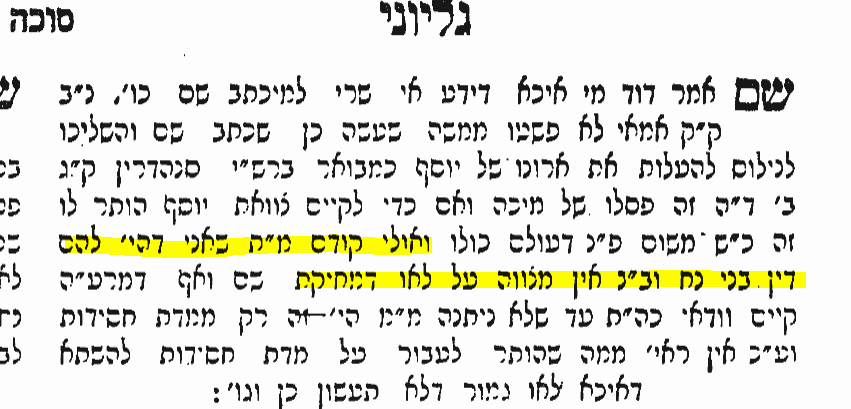
3- We mentioned the גליוני השס who asks why דוד didn’t mention the story of משה רבינו writing the שם השם and dropping it into the נילוס to cause the casket of יוסף הצדיק to raise?

His answer briefly is that it was before מתן תורה.

The brilliant works of Reb Yosef Engel

4- The question of the ערוך לנר. What was דוד המלך’s question if one would be allowed to cause the ‘שם ה to be erased. It was פיקוח נפש where everything (except for  גילוי עריות, שפיכת דמים and עבודה זרה) is allowed!

Tsunamis - WorldAtlas

He suggests that perhaps the erasing the  שם השם is considered חילול השם which is a branch of עבודה זרה.

5- Others suggest that דוד המלך’s question was if the erasing of the שם השם was a proven method to save lives. Just as using  non kosher medicine to save a life is not only permitted but an obligation to use. Had this erasure of the שם השם been ‘clinically’ proven to be effective, there would not have been any doubts.

Homeopathic Remedies for everyday uses - Homeopathic Remedies Blog

6- The above led us to touch and scratch the surface of a huge topic. What איסורים are we allowed to transgress to save someone’s life? For example, when and what type of non Kosher medication may be administered to a חולה ר”ל.

Briefly – there are many types of actions to heal sicknesses לא עלינו Administering medicines, remedies etc. Spiritual healings.

We can categorize them into 3 groups.

A- רפואה ידועה. Meaning a tested and verified medication or other action that we are sure that this can heal this particular sickness.

Even a pill that definitely works for others but on this particular patient it is a ספק is considered a רפואה ידועה.

Bottle of penicillin lozenges, England, 1949 | Science Museum Group Collection

Like antibiotics. Even if not kosher,  it must be taken if it will save a life.

See Alter Rebbe in OC 328, 2. And 306, 29 and the Kuntres Achron there.

B- רפואה שאינה ידועה. Meaning, a medication that has not been established yet; is still undergoing trials. The ingredients of this pill or method have the means of healing but as of now has not been 100% proven to be effective or we don’t yet understand the science of how it works.

Ivermectin: Unproven Covid Drug Use Tracked Along U.S. Party Lines, Study Says - Bloomberg


Perhaps: Heating a hot water bottle on Shabbos to place on an aching stomach. באנקעס? Acupuncture?

Cupping Therapy – Myths and Things You Should Know! - My Blog

“[T]he effectiveness of cupping has been demonstrated only as a treatment for pain, and even for this indication doubts remain.”

Journal of Acupuncture and Meridian Studies.

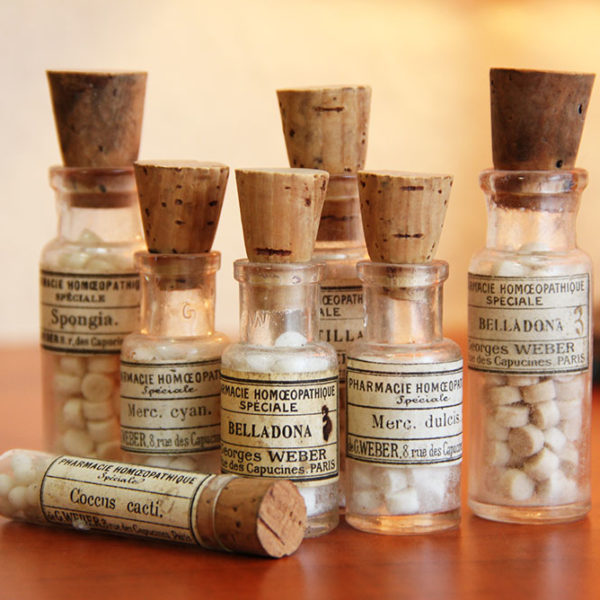
C- סגולה. A ‘medication’ that has no logical reason for it to work. Yet some people swear that it is effective for them while others claim it to be voodoo medicine and ineffective. It may very well be that it does work for some. But it is outside the world of science. There is no logic to its effectiveness. Homeopathy?

Homeopathic Remedies for everyday uses - Homeopathic Remedies Blog

7- Can non kosher pills that ‘heal’ only as a סגולה be used if not kosher? Can one be מחלל שבת to acquire these pills? Drive to a ‘healer’ on Shabbos?

אברהם יצחק שפרלינג טעמי המנהגים, ירושלים הוצאת אשכול 1957

אברהם יצחק שפרלינג טעמי המנהגים

Rock Pigeon Identification, All About Birds, Cornell Lab of Ornithology

Hepatitis Remedy?

We discussed the צמח צדק that says it is perhaps it is actually a מחלוקת in a Mishna!

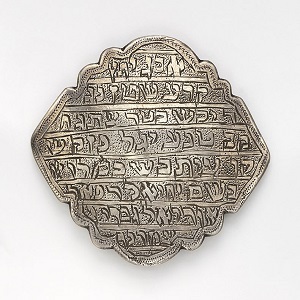
קמיע לשמירה לילד וליולדת כולו בכתב יד קדשו של גדול המקובלים בדור האחרון רבי יצחק כדורי - ווינרס מכירות פומביות

See  OC 38.

מילון אבניאון - מה זה קמיע – פירוש המילה קמיע ,פרוש, הסבר, משמעות והגדרה

8- Where does a קמיע fit in this discussion?

A, B or C.

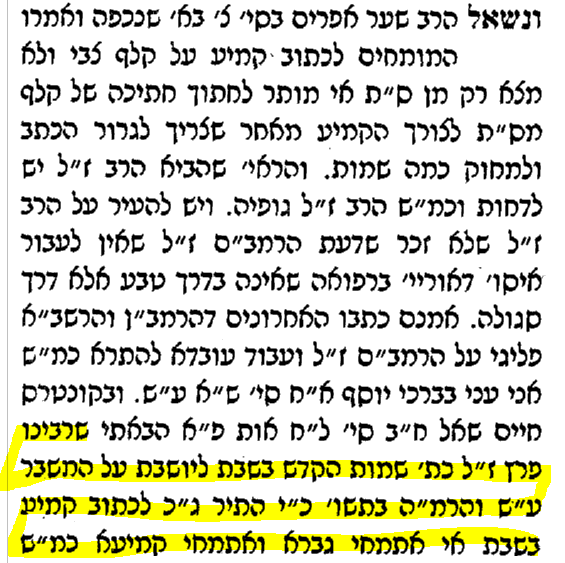
This is a topic on its own. We mentioned the ראשונים that allow an expert קמיע writer that has a proven record that his קמיעs are effective to write a קמיע on Shabbos!!!

9 – We discussed various scenarios but will mention here a most interesting one: Writing a פדיון נפש to a צדיק on Shabbos.

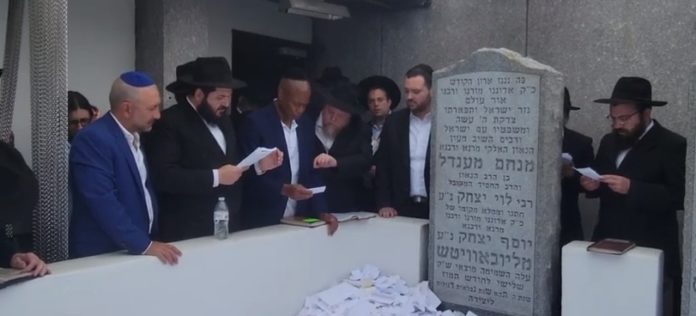
New York City Mayor Adams Pays Tribute to the Rebbe - Accompanied by Israeli Ambassador Gilad Erdan, the visit marked the Rebbe's 28th yahrtzeit - Chabad.org

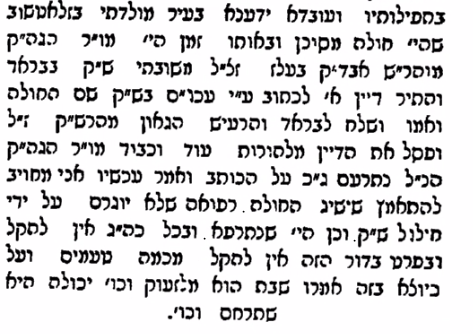
The מהרש”ם relates a story (3, 225) of a Rov in Zlotchov who allowed to instruct a goy to write a Pan that was sent to Brody to the שר שלום of Belz. The Rov of Brody, Reb Shlomo Kluger was very unhappy and banned this Rov and removed him from his position.

When the שר שלום of Belz heard about it, he too was displeased and said that ‘now I must Daven to ensure the patient will recover as otherwise the חילול שבת  would have been caused (indirectly) by me’.

And indeed, the חולה recovered!

See here for more on this topic.

Carillon Notes - September 2020 - Tufts University Chaplaincy

ומסיימין בטוב with a Brachah for a Refuah Shleima to all our friends in need.


Shiur Sukkah 53a 7/11/23

BSD


Suka 53a

Tamuz 22, 5783. July 11, 2023


תניא אמר ר’ יהושע בן חנניה כשהיינו שמחים שמחת בית השואבה לא ראינו שינה בעינינו כיצד שעה ראשונה תמיד של שחר משם לתפלה משם לקרבן מוסף משם לתפלת המוספין משם לבית המדרש משם לאכילה ושתיה משם לתפלת המנחה משם לתמיד של בין הערבים מכאן ואילך לשמחת בית השואבה איני והאמר רבי יוחנן אשבועה שלא אישן שלשה ימים מלקין אותו וישן לאלתר אלא הכי קאמר לא טעמנו טעם שינה דהוו מנמנמי אכתפא דהדדי:


We have learned in a Beraisa : Reb Joshua ben Reb Hananiah said: When we were engaged in rejoicing at the drawing of water, our eyes saw no sleep. How so?

No sleep icon in flat style. No bed symbol Stock Vector ...

The first hour for the morning daily sacrifice; afterwards for praying, and from that to the מוספים; after that the מוסף prayer; afterwards we went to the house of learning; from there we went to eat and drink at home, and afterwards the Mincha prayer; and from the Mincha prayer to the daily evening sacrifices, and from that time we rejoiced at the drawing of the water till the morning.

Sitting on the Floor. Thinking about Jerusalem's ashes of yesterday and tomorrow. But please not tomorrow. | Stacy Gittleman

They did not sleep for seven days?

Did not Reb Yochanan say: If one says: ‘I swear I will not sleep three days’, he gets מלקות for a false oath, and can go to sleep immediately?

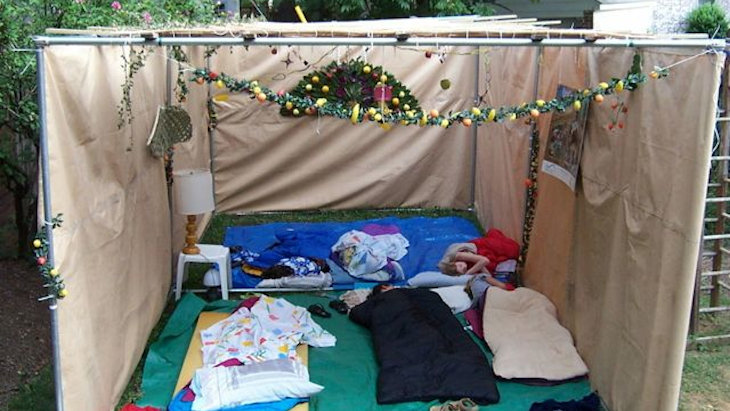
How to Sleep in the Sukkah - Aish.com

He meant to say: We have not tasted any sleep, but we napped each on the other’s shoulders.

We touched upon a few topics of this ברייתא.

1- Sleeping outside of a Suka.

Our eyes saw no sleep.

We have not tasted any sleep, for we slept on each  other’s shoulders.

Image

How did these חסידים ואנשי מעשה take a nap outside a Sukkah?

The Halachah is that sleeping in a Sukkah is a requirement and unlike eating, where a snack is permitted to be eaten outside a Suka, sleeping out of a the Sukkah is prohibited  – even a שינת ארעי.

How to Sleep in the Sukkah - Aish.com

The תשבץ discusses  (א, ק) the issue of the חסידים ואנשי מעשה  that participated in שמחת בית השואבה and took a quick nap ‘on the shoulder’ of others. It seems that this nap was not in a Suka.

The תשבץ suggests that perhaps the reason for the איסור for a short nap outside a Suka is only a חשש, as one may sleep for a long time.

So according to the  תשב”ץ, a שינת ארעי would be permitted, at least מן התורה.

[Perhaps he also meant  that these חסידים ואנשי מעשה had no fear to sleep for a long time since there were napping while on their feet].

Guy Shows Off Amazing Costume On Train | This drunk guy costume is incredible! 😂😂 | By LADbible | Facebook

Others apply the rule of  העוסק במצוה פטור מן המצוה. This would answer the question on these  חסידים ואנשי מעשה that took a nap outside the Sukkah.

The Rebbe writes about this ברייתא that ‘perhaps this is the source for Chasidim not sleeping in a Sukkah’.  See here: LS 19, 272. Footnote 48.


We also discussed the lengthy שיחה of the Rebbe explaining the מנהג חב”ד not to sleep in the Sukkah based on the above story that occurred at שמחת בית השואבה. See here. LS 29 page 211 and on.

2- Davening בזמן הבית.

 The first hour for the morning daily sacrifice; afterwards for praying,

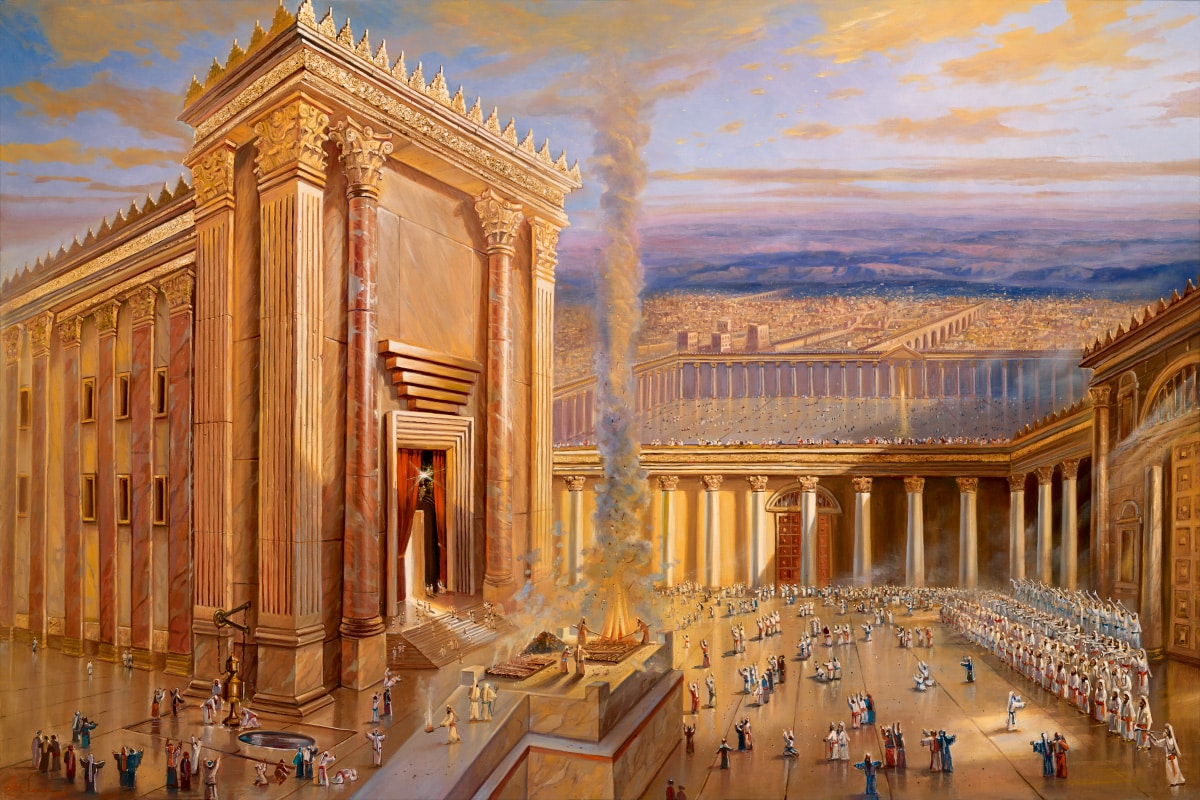
Jerusalem Temple First Temple Beis Hamikdash Solomon Temple

Praying in the בית המקדש? Don’t we always say: תפילות במקום קרבנות תקנום?

So we discussed another תשב”ץ. This one is in 2, 161.

He derives from our גמרא that indeed, there was תפילה in the בית המקדש. Undoubtedly, he adds, their נוסח  was different that ours. Surely they didn’t say ותחזינה עינינו בשובך לציון ברחמים or

שיבנה בית המקדש …

See there more details and the ירושלמי he quotes.

3 – Women davening Musaf

 And from that to the מוספים; after that the מוסף prayer

 Mentioned the famous Reb Akiva Eiger (9) that women are not obligated to daven Musaf.

Separation: The Origin of the Women's Section in the Synagogue

Whereas שחרית and מנחה (or any short תפילה) they are obligated to daven daily, (either because it’s not a  מצות עשה שהזמן גרמא or because they are asking for רחמי.  See below from the Alter Rebbe’s Shulchan Aruch)  davening Musaf on the other hand, is only a commemoration of the קרבן מוסף.

This Korban, being a קרבן ציבור was acquired from the מחצית השקל that was collected yearly. Now, since women are פטור from מחצית השקל they have no obligation to Daven מוסף.

[Others disagree with Reb Akiva Eiger’s Psak].

The question asked by many is from the above story where R. Joshua ben R. Hananiah says that they went to daven Musaf. But R. Joshua was a Levi and Leviim didn’t need to give מחצית השקל as well. So why did he daven Musaf?

The Millennial Temple: Levitical Caretakers and Zadokite Priests – Part 6

[It’s a ‘weak’ question. Maybe he was referring to the others. Additionally, while there is no obligation, it does not mean one cannot daven Musaf].

4 – Not sleeping for 3 days.

 If one says: I swear I will not sleep three days, he gets מלקות for a false oath, and can go to sleep immediately

 The simple reason he gets מלקות is that a human cannot control his lack of sleep and will surely fall asleep.

What about eating? A person can control his eating and refrain from earring until he ‘expires’ from hunger. See here in Rambam and Kesef Mishna.

How long can one last?

MrBeast FAILED, so I Didn't Eat Food For 30 Days - YouTube

In מגילת אסתר it says that Esther requested that מרדכי to declare a 3 day fast.

לֵךְ כְּנוֹס אֶת כָּל הַיְּהוּדִים הַנִּמְצְאִים בְּשׁוּשָׁן וְצוּמוּ עָלַי וְאַל תֹּאכְלוּ וְאַל תִּשְׁתּוּ שְׁלֹשֶׁת יָמִים לַיְלָה וָיוֹם גַּם אֲנִי וְנַעֲרֹתַי אָצוּם כֵּן וּבְכֵן אָבוֹא אֶל הַמֶּלֶךְ אֲשֶׁר לֹא כַדָּת וְכַאֲשֶׁר אָבַדְתִּי אָבָדְתִּי.

We discussed that in Yevamos 121b It says explicitly that they fasted 3 days with no breaks.

On the other hand , in מדרש רבה and other places it says that they did break their fast every night. They explain the פסוק  as follows:

לֵךְ כְּנוֹס אֶת כָּל הַיְּהוּדִים הַנִּמְצְאִים בְּשׁוּשָׁן – to daven.

וְצוּמוּ עָלַי וְאַל תֹּאכְלוּ וְאַל תִּשְׁתּוּ שְׁלֹשֶׁת יָמִים – meaning to fast just 3 days. Not the nights.

And we should pray – לַיְלָה וָיוֹם

———————————–

Shiur Sukkah 52b(2) July 4th, 2023

BSD

 Suka 52b (2)

Tamuz 15, 5783. July 4, 2023

Why do we celebrate the 4th of July? Independence Day facts, history - al.com

1- We continued with the Agadata where the Gemara describes the 4 ‘craftsmen’ that constructed or will construct projects.

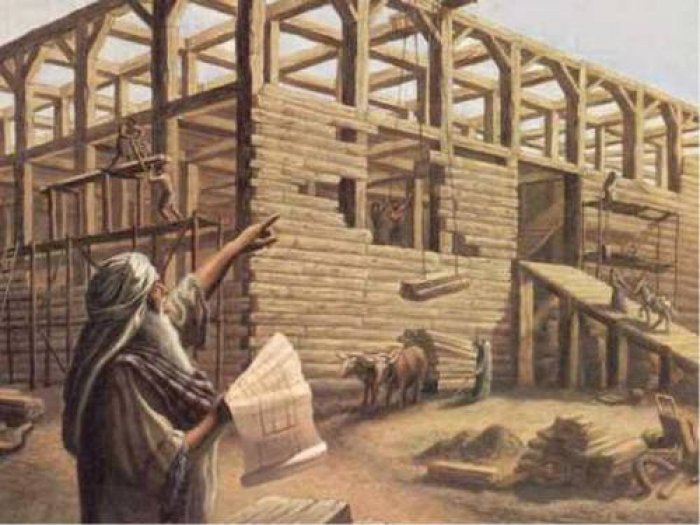
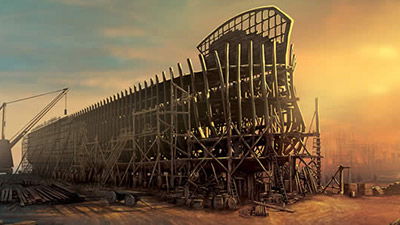
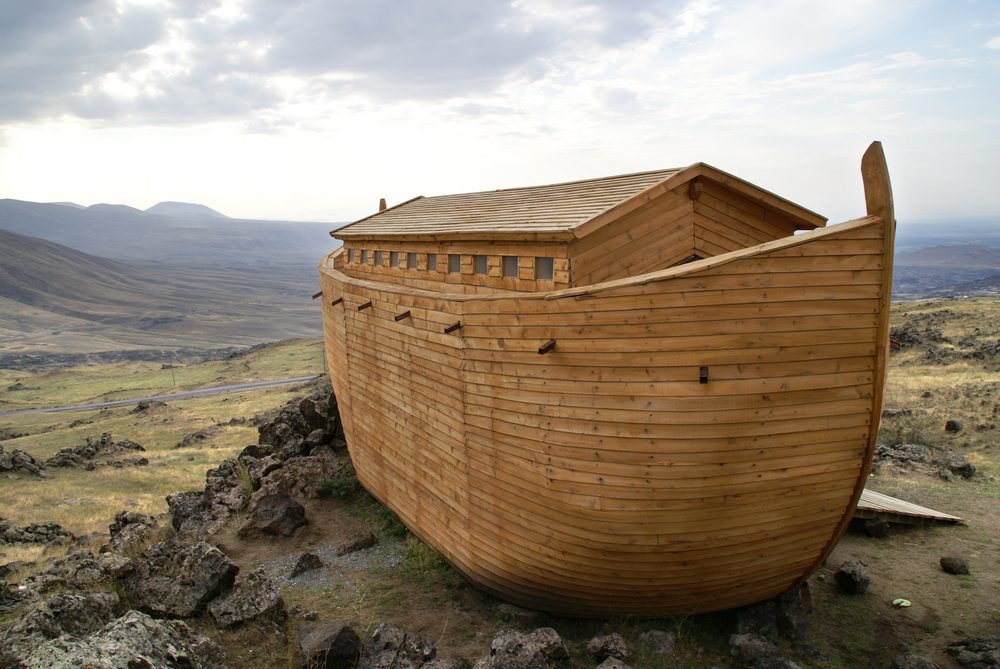
Who helped Noah build the ark?

משיח בן דוד and משיח בן יוסף, the 2 משיחים who will rebuild the 3rd בית המקדש.

אליהו הנביא who built the מזבח on הר הכרמל and Shem, the son of נח assisted his father with the building of the תיבה.

Noah's Ark | Answers in Genesis

Mentioned briefly the שיחה of the Rebbe about the building of the תיבה. Since נח was instructed עשה לך תבת עצי גפר, the issue is- if  the לך meant to exclude any assistance from others?

In פשוטו של מקרא it is indeed so, which explains why Rashi does not need to explain why it took 120 years for  נח to construct it!

Building your Ark | FDCC

We find a similar expression to the building of a סוכה:

. חג הסוכות תעשה לך. And yet, there is no obligation for one to build his own Suka.

See here in LS 15, page 34 and on.

Building a Sukkah - Ritualwell

2- The גמרא continues to describe the great strength of the young כהנים that carried up the 30 לוג of oil to the top of the lamps for שמחת בית השואבה.

It compares their strength with the son on מרתא בת בייתוס, who was a very muscular כהן .

Beef relief -- Argentina stops butchers carrying half a cow

He was able to carry two sides of an ox. To show his strength he did this while walking  עקב בצד   גודל –  heel near the toe – meaning very slowly.

Antarctic, Penguins, Marching Photograph by George Theodore - Pixels

3- We discussed that it seems from Rashi that in general, the כהנים when carrying heavy loads in the Beis Hamikdash would run.

Mentioned the תוספות ישנים in Yoma 22a who say that all the movements of any עבודה  inside the בית המקדש would be עקב בצד גודל. Perhaps it’s a sign of respect not to rush or run.

שהזהיר הקב”ה את הכהנים שלא יהו פוסעין פסיעות גסות על גבי המזבח אלא יהו מהלכין עקב בצד גודל

4- One the chants of the חסידים ואנשי מעשה, was “We’re lucky that our conduct, when we were young, is not embarrassing us now, in our senior years”.

Old Jew Images: Browse 54,593 Stock Photos & Vectors Free Download with Trial | Shutterstock

Their singing seems to be boasting about their status. Isn’t that contrary to being a חסיד?

5 – Spoke a bit of history about the Kotzker Rebbe, Reb Menachem Mendel Morgensztern. For a time perspective, he was 25 years old when the Alter Rebbe passed away in 1812.

Menachem Mendel from Kock grave.jpg


His grandson, Reb Yisroel Morgensztern from Pilov, the 3rd Kotzker Rebbe, was known as an active proponent for Jews to move to Israel.

Reb Manachem Mendel’s daughter married Reb Avrohom Borenstein who was known as the Sochotchover Rebbe and author of the אבני נזר.

Dovid Bornsztain.jpg

His son was Reb Shmuel is known by his epic book called שם משמואל.

Shmuel_Bornsztain%2C_Shem_Mishmuel.jpg

In the Avnei Neizer CM 95. Page 125 Reb Shmuel (per the instruction of his father) writes to his cousin, Reb Yisroel the Rov of Pilov about the above question. How can a צדיק boast of his status and level of piety?

See here.

His point is that knowing one’s greatness is not a contradiction to being humble.

He begins with our גמרא where the חסידים would chant that ‘we have not done anything in our young years to be embarrassed about’.

Yet, they were very humble and חסידים.

He quotes a מדרש that משה רבינו considered the ‘lepers of ירושלים’ more worthy of him!


He continues about the oath administered to all prior to being born:

“משביעים אותו, תהי צדיק, ואל תהי רשע, ואפילו כל העולם כולו אומרים לך צדיק אתה, היה בעיניך כרשע”.

Meaning that one needs to strive to be a צדיק, but it’s important to remember that even if you reach such a level, and the entire world thinks you have become a a צדיק , consider yourself a רשע.

So knowing one’s own greatness is compatible with being truly humble.

Humility is Greatness Text Quote, Concept Background Stock Illustration - Illustration of concept, quote: 239296918


We mentioned the expression of the שם משמואל, that the explanation of the above ‘has been explained by the Rav OBM [The Alter Rebbe] in the Tanya, and since the book is easily available there is no need for me to copy it’.


6- We concluded with the many explanations of the chant by Hillel:

אם אני כאן הכל כאן.

To be continued BL”N next week.


ר’ ישראל מורגנשטרן הרב מפילוב

https://he.wikipedia.org/wiki/%D7%97%D7%99%D7%99%D7%9D_%D7%99%D7%A9%D7%A8%D7%90%D7%9C_%D7%9E%D7%95%D7%A8%D7%92%D7%A0%D7%A9%D7%98%D7%A8%D7%9F

Shiur Sukkah 52b – 6/28/23

BS”D

Sukkah 52b

Tamuz 8, 5783. June 28, 2023

1- We began with the interesting news about South Korea!

Years ago, at the beginning of ראש השנה מסכתא we learnt that the years of kings were counted in a very unusual way.

ארבעה ראשי שנים הם: באחד בניסן ר”ה למלכים

רש”י: רגילים היו למנות זמן שטרותיהם לשנות המלך משנה שעמד בה המלך כדאמרינן במסכת גיטין (ד’ פ.) משום שלום מלכות וקבעו חכמים אחד בניסן לתחלת שנתו, ואפילו עמד בשבט או באדר כלתה שנתו משהגיע ניסן ויתחילו למנות לו שנה שניה:

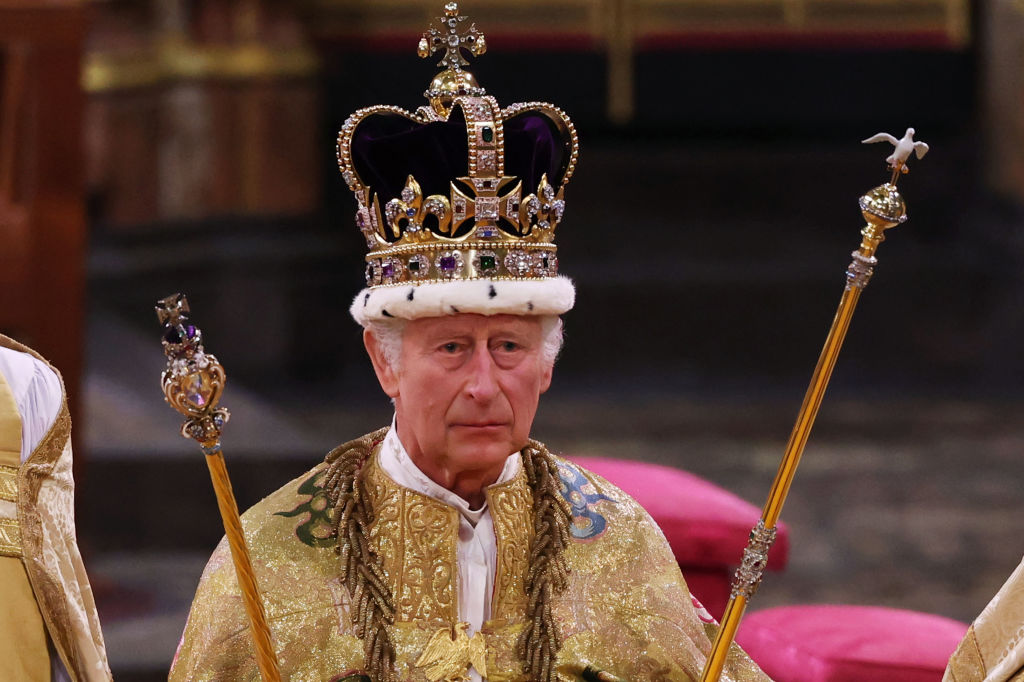
On day 1 of a coronation, in the timeline of the king, it  was considered that we are in ‘year one’ of this particular king. When the next ראש חודש ניסן arrived, it was year two. So if one was coronated on the last day of Adar, the next day,  ראש חודש ניסן,  it would be considered ‘year two of the king’.

King Charles is officially crowned. How it happened - National | Globalnews.ca


להבדיל, in S Korea, until today, 06/28/2023 the common person used such a system! Everyone has the same birthday on January 1st. Say you were born on April 1st, you are 1 year old!

On the next January 1st you are officially 2 years old.

Korean baby at first birthday hi-res stock photography and images - Alamy

“Under the age system most commonly used in South Koreans’ everyday life, people are deemed to be a year old at birth and a year is added every Jan. 1.”

See here, here.

2 – Our גמרא spends many lines analyzing the idea of the  יצר הרע.

We explained the one that says:

יצרו של אדם מתגבר עליו בכל יום ומבקש להמיתו שנאמר (תהלים לז, לב) צופה רשע לצדיק ומבקש להמיתו ואלמלא הקב”ה שעוזר לו אינו יכול לו

Western Animation / Good Angel Bad Angel - TV Tropes

‘If not for the help and assistance of ה’ one would not be able to overcome the  יצר הרע.’

As the Alter Rebbe says in תניא Chapter 13, the יצר טוב and the יצר הרע are like two opposing opinions expressed at a דין תורה.

They are just ‘opinions’, meaning that no action is resulted by the דיין expression his own thoughts. The הלכה is like the 3rd דיין.

That is a בינוני. Despite not being a צדיק, he never sins. He cannot transform his core being but is in complete control of what he thinks, speaks and does. But on the other hand, in his head, in theory, there are ‘opinions’ that are holy and also not holy. Two ‘opinions’ attempting to grab the attention of the בינוני.

The הלכה is like the 3rd דיין. That 3rd opinion is the deciding one, since he has one of the דיינים siding with him. ואלמלא הקב”ה שעוזר לו אינו יכול לו

A Responsum Regarding the Annulment of Conversions - The Schechter Institutes

3- Another interesting passage:

תנא דבי רבי ישמעאל אם פגע בך מנוול זה משכהו לבית המדרש

If one is being overpowered by the מנוול, the יצר הרע, drag him into the Beis Medrash.

Mentioned the quip of the Kotzker- מנוול זה. This particular יצר הרע.

The גמרא’s suggestion is not a global solution. Dragging oneself into the Beis Medrash will only take care of this particular יצר הרע. Not ‘all’ יצר הרעs will disappear by entering a בית מדרש.

Why?

Some יצר הרעs  reside in the Beis Medrash itself…..

The Birth of Lakewood's BMG - The Yeshiva World

Vort of Reb Itche Masmid. הי”ד.

אם פגע בך מנוול זה משכהו לבית המדרש

The word פגע means a pinpoint or bull’s eye. The יצר הרע , wrote Reb Itche, is sly and will never approach and entice a person with a general suggestion of פריקת עול. Like ‘throw everything out the window’ ח”ו.

Tips for Better Thinking: Shooting First, Drawing the Bullseye Later | Office for Science and Society - McGill University

The way he works is by targeting a particular מצוה or מנהג with the usual justification of ‘not important’ or it’s only a small deviation.

That is the meaning of פגע בך מנוול זה.

The antidote is משכהו לבית המדרש. Not simply ‘sit down to learn’. Rather the way to control the יצר הרע is by joining a group of learners. Join a frum society/group  and mingle amongst יראי שמים.

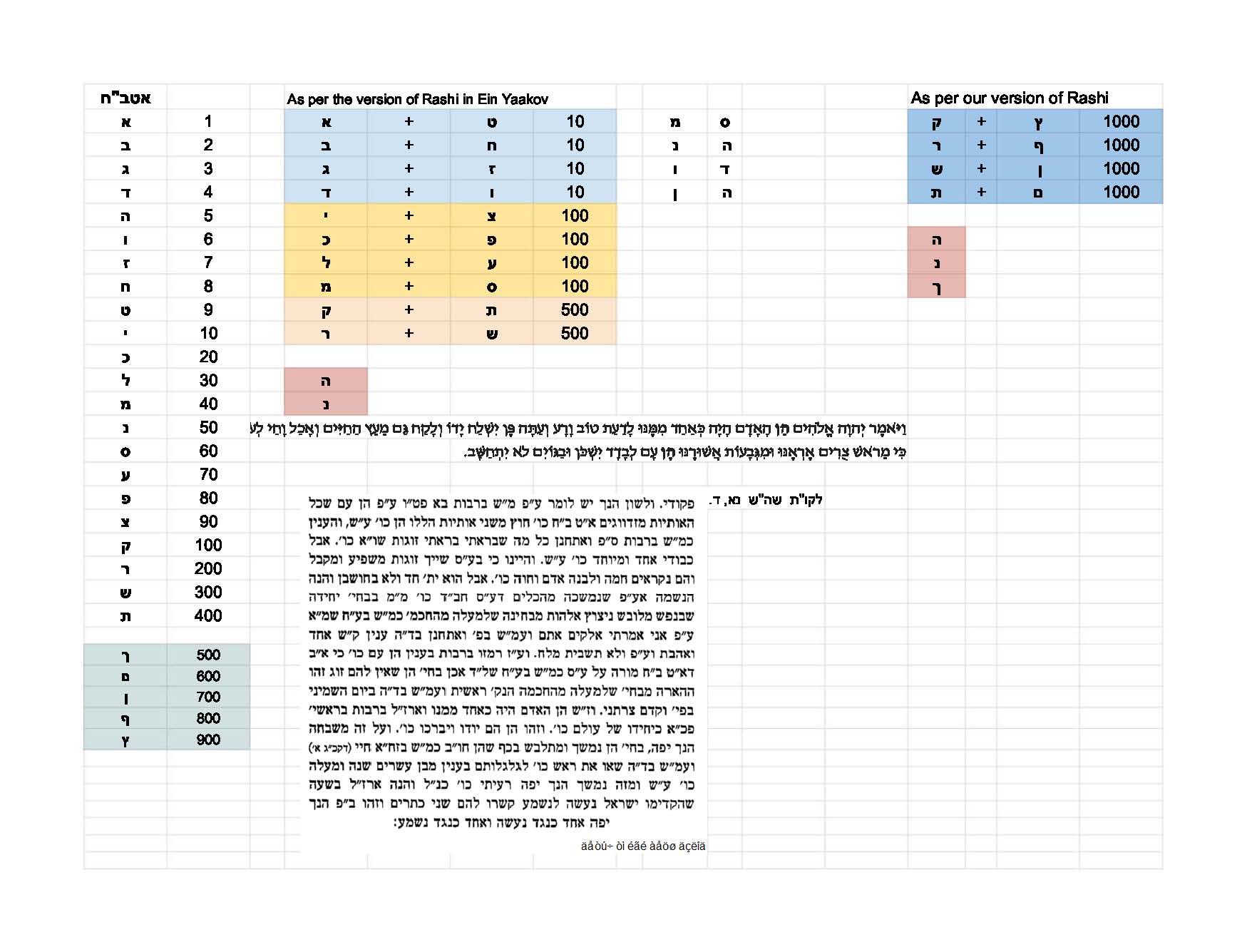
4 – The גמרא mentions the אטב”ח of Reb Chiya.

Gimatria ב-App Store

The 22 letters of the אלף בית are interchangeable. Meaning that one letter can be substituted with another one.

It’s not that any letter can be changed with another. Rather, each letter can be exchanged only to another corresponding letter. There needs to be a relationship between 2 letters in order to allow a substitution.

Now there are many rules and ‘systems’ as to which letters correspond to others allowing a substitution. .

One system is the אטב”ח system of Reb Chiya.

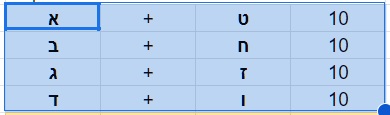
For example: every two letters that equal to 10 can be interchanged.

Thus, אלף and טית, which equal 10 can be substituted. Similarly, בית and חית, also equaling 10, can be changed. That’s the אטב”ח system.

There is a lot more on this and we just barely scratched the surface.

See here. Here.

https://docs.google.com/spreadsheets/d/1N80qsGFURLhNIy976JRgjQNTdmEJG233EEtBedie94M/edit#gid=0


Shiur Sukkah 52a 6/6/23

BSD

Suka 52a

Sivan 17, 5783. June 6, 2023

1- Previously, our גמרא dealt with the issue of the women’s gallery that was built for שמחת בית השואבה. Since the בית המקדש was built as per instructions of the נביאים, no addition were allowed.

We mentioned the question asked by the Tchebiner Rav  דובב משרים נב, ג. as to why גמרא does not ask this question  concerning the בימה that was set up for the מלך during הקהל.

רמב”ם חגיגה פרק ג

כיצד הוא קורא? תוקעין בחצוצרות בכל ירושלים כדי להקהיל את העם. ומביאין בימה גדולה ושל עץ היתה,  ומעמידין אותה באמצע עזרת נשים, והמלך עולה ויושב עליה כדי שישמעו קריאתו וכל ישראל העולים לחג מתקבצין סביביו.

Hakhel – Then and Now | JEWISH HOME LA

We discussed the question; the עזרת נשים was a built-in structure, as opposed to the הקהל בימה which may just have been temporarily rolled in and out as the Rambam writes: they brought a בימה.

But see the ראב”ד AZ 6, 10 that does compare them.

The Chebiner Rob suggests that the structure for שמחת בית השואבה was for 7 days whereas the בימה for הקהל, for one night only.
We find that in regards to tying  a knot on Shabbos, if it lasts for 7 days it is considered a קשר של קיימא. A permanent knot.

2- Speaking of הקהל, we mentioned that the Rebbe always referred to the year that הקהל occurred as שנת הקהל. Meaning that although the הקהל event was only on one night of the 8th year, the entire year is different because of it.
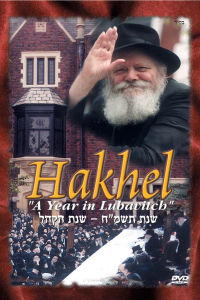
Hakhel -Year in Lubavitch 5748

3- We find that according to one opinion in גמרא, (BB 14a-b) the ספר תורה that was written by משה רבינו, was placed inside the ארון.
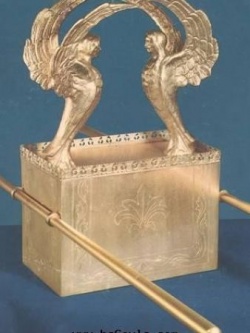
ארון הברית – חב"דפדיה

The גמרא says that the ארון in the קודש הקדשים had enough room to allow to take out the ספר תורה with ease. 

Tosfos asks a great question. When did they take this ספר תורה out of the קודש הקדשים? How can one enter the קודש הקדשים?

Obviously, it was also not removed on יום כיפור to be read by the כהן גדול, as we do not find this mentioned at all in the very detailed עבודה of the Kohen Godol on that day.

Torah scribe. It takes a scribe about 1 year to write a whole Torah scroll by hand! Whew.

Tosfos answers that they removed the ספר תורה every once in a while to make sure it is כשר. And that entry is indeed allowed, just as entering the קודש הקדשים is permitted for repairs.

Rashi, on the other hand, says that this ספר תורה was actually removed for the reading by the כהן גדול on Yom Kippur and also for the reading by the מלך at the once in 7 year הקהל gathering.

See Shiur of June 02 2020 on this topic.

4 – A few years ago someone found a ראשון, the ראבי”ה – that seems to say as follows:

HebrewBooks.org Sefer Detail: ספר ראבי"ה - חלק א -- אליעזר ...

The ספר תורה was removed and returned every יום כיפור.
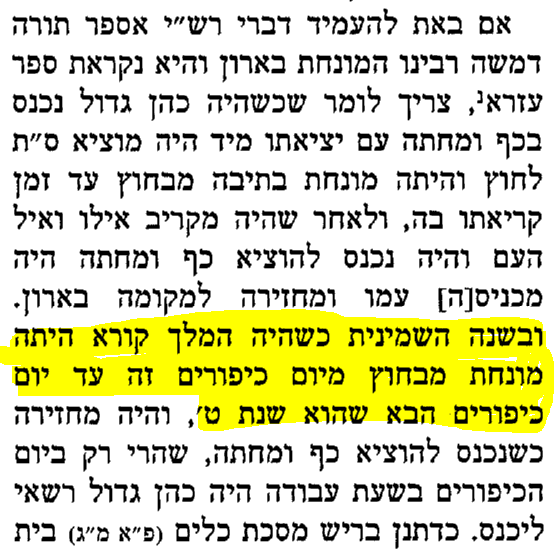
And he adds another crucial point- on the year of הקהל, the ספר תורה used by the Kohen Godol on Yom Kippur was not returned to the קודש הקדשים! It was kept out for the הקהל event that occurred 6 days later.

Hakhel Videos - Chabad.org

And, being that they could not return it to the קודש הקדשים, it was kept out all year!!!

So indeed, the entire year of הקהל, this rarely seen ספר תורה, was out to (perhaps) be seen by all, all year.

It was only returned to the קודש הקדשים, next יום כיפור.

So this הקהל point extended all year.

5- The crying of the צדיקים. We discussed this interesting גמרא regarding the future when the יצר הרע will be ‘killed’.

Why will the צדיקים cry?

Rashi and מהרש״א.

6- We tried to explain the story of Abaye and his following of a man and woman. More on this BL”N at the next shiur.

Taba Border Crossing - Wikipedia

7- In conclusion, regarding the story of the Great Shul in Alexandria, we mentioned some points of a previous shiur, about the prohibition to return to live in מצרים and the fact that the Rambam and other did live there.

————————————————————————————-


Here are the points of the shiur from PESACH READING APRIL 11, 2014

B”H

Yud Alef  Nissan 5774

April 11, 2014

Please enjoy some points of the last shiur accompanied by links to interesting reading material.

Chag Kosher ve’Sameach to all!

Ari

—————–

While discussing the prohibition to rebuild Yericho (Jericho), Sanhedrin 113a, we mentioned the prohibition to live in Egypt – Mitzrayim.

כתב הרמב”ם:

“ומותר לשכון בכל העולם חוץ מארץ מצרים מן הים הגדול ועד המערב ארבע מאות פרסה על ארבע מאות פרסה כנגד כוש וכנגד המדבר, הכל אסור להתישב בה. בשלושה מקומות הזהירה תורה שלא לשוב מצרים שנאמר ‘לא תוסיפון לשוב בדרך הזה עוד’, ‘לא תוסיף עוד לראותה’, ‘לא תוסיפו לראותם עד עולם’, ואלכסנדריאה בכלל האיסור”

(משנה תורה, הלכות מלכים פרק ה’ הלכה ז’).

It is a topic that much has been written about – primarily as to why historically, despite the prohibition, one finds Jews – amongst them the Rambam no less – that did indeed live in Egypt.

Many explanations are offered. Here are some:

1- The prohibition was only temporary. G-D didn’t want Jews, soon after the exodus, returning to the awful place they had left from.
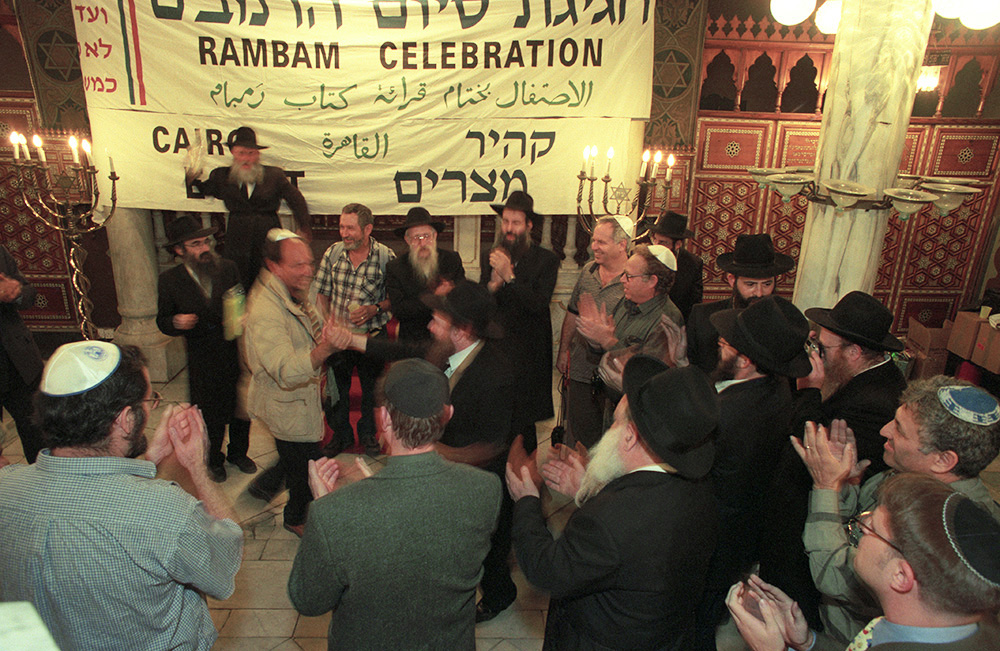
Remembering the Jewish Festival of Light in Egypt - Photorientalist

2- Only if one travels to Egypt using the exact route the Jews took at yetzias Mitzrayim. Not if one arrives via the sea for example.

3- One is allowed to live there temporarily for the sake of earning a living.

4- Assyrian King Sancheriv, upon conquering many lands, exiled every homogenous population and relocated them to another country. He did so to the Jews too – “the exile of the ten tribes.” The intention  of the Biblical prohibition not to return to Mitzrayim was so as not to mingle and learn from the abominable original Egyptians. The Egyptian population since the reign of Sancheriv are newcomers. Thus the prohibition is null and void.

See לקו”ש יט. שופטים ב. ע 171.

5- The Halacha only applies in a time when Jew are שרויין על אדמתם” (See Ritva, Yuma 38A) (If so, if you are a real Zionist there might be a problem specifically today to live in Egypt. See Tzitz Eliezer Chelek 14 Siman 87 Seif 7 )

6- Where the Rambam lived is not מצרים proper.

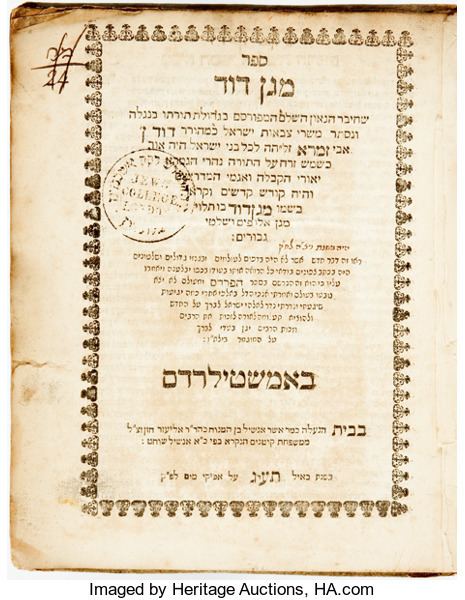
7- Radvaz- Prohibition is only if upon entry to מצרים the intention was to stay forever. It does not apply if the original purpose was only for a visit.
David ben Solomon ibn Abi Zimra - Alchetron, the free social encyclopedia

—————————

We mentioned the famous quote from the ancient Jewish traveler  Rabbi Ishtori Haparchi.

No – he was not Oriental…..

See his bio here: http://en.wikipedia.org/wiki/Ishtori_Haparchi

In Hebrew: http://he.wikipedia.org/wiki/%D7%90%D7%A9%D7%AA%D7%95%D7%A8%D7%99_%D7%94%D7%A4%D7%A8%D7%97%D7%99

His book: Kaftor vo’Ferach is a travelogue of Eretz Yisroel composed in the 13th century!

One printing: http://www.hebrewbooks.org/15272

It is indeed a very interesting read.

In any case, Reb Ishtori (or Ish Tori), writes that upon his visit to Cairo he met a great grandson of the Rambam. The descendant tells him his great grandfather would alway sign his letters:

“Moshe son of Maimon – he who daily transgresses three Lavim (prohibitions)”

Wow!

The problem is that many say the Rambam never penned such words. Why?

Firstly, it does not make sense that the Rambam, who clearly states in his Yad that the prohibition still exists, would write that on himself. Surely the Rambam had a valid Halachic reason for remaining in Mitzrayim and would therefore not be transgressing these Lavin.

The Rambam in the Yad only writes exception # 3 above. Perhaps he felt that, after being exiled from Spain,  Egypt was the only place to survive as a Jew make a living.

Secondly, and recent finds of manuscripts support this, we have in our possession some actual letters written by the Rambam and this “alleged” subscript is nowhere to be found.

וראה שדי חמד ג, מ”ע י, מו

——————-

We mentioned a Kabbalistic answer. Here it goes:

The world was created with holy sparks sprinkled over the entire globe. The goal of Yiden is to find these lost sparks and elevate them by transforming each one with deeds of Torah and Mitzvos.

Divine Sparks | Royal Road

Creation began with 288 sparks. Moshiach will come when we find and elevate 100% of these wandering sparks.

When Jews left Mitzrayim they “emptied” that land of all “spark of Kedusha”. Thus, there was no need to be in Egypt any longer. Therefore a prohibition existed for Jews to return there as there was nothing for him to accomplish in Mitzrayim.

This idea is dealt at length in several of the Arizal’s works. See here from the Pri Etz Chaim written by Reb Chaim Vital:

http://beta.hebrewbooks.org/pdfpager.aspx?req=49521&st=&pgnum=67

Actually, that generation elevated 202 sparks out of the 288.

The words “and also the eirev rav exited with them (Jews)” וגם ערב רב עלה עמהם  allude to the 202 (rav) that were purified.

This concept is mentioned by the Alter Rebbe in Torah Or, Parshas Bo. 120.

See also

כנפי יונה ח”ג סנ”ו. הובא במגלה עמוקות אופן נח. תו”א בא ס, ג. סה”מ תרפ”ט ע’ 205. וש”נ.

תו”ח בא ח”א קטו, סע”ב.

——————

Parenthetically, we have been trying hard to wrap up the measly balance of just 86 sparks…..

Question of the Alter Rebbe in Torah Or. וישב כז, ד.

Man Pushes Mustang Across Finish Line at Spa 24 Hours - MustangForums

There is an explanation from the Rebbe as to why millions of Jews since 2448 can’t seem to accomplish in over 3,000 years what 600,000 did in a mere 210 years…… But that’s another topic for the future. Bl”n.

———————–

Now the Arizal adds the clincher.

Unfortunately Jews transgressed  this prohibition and returned to live in Mitzrayim. By doing this they “brought (back) unfiltered sparks”.  ניצוצות שעדיין לא נתבררו

Egypt received new ‘lost sparks’ waiting to be transformed into Kedusha.

Consequently there currently is no prohibition to go back to Mitzrayim as there are lost sparks that need to be elevated.

This latter point is mentioned in the name of the Ariza”l by the Chida on Yuma 39,a.
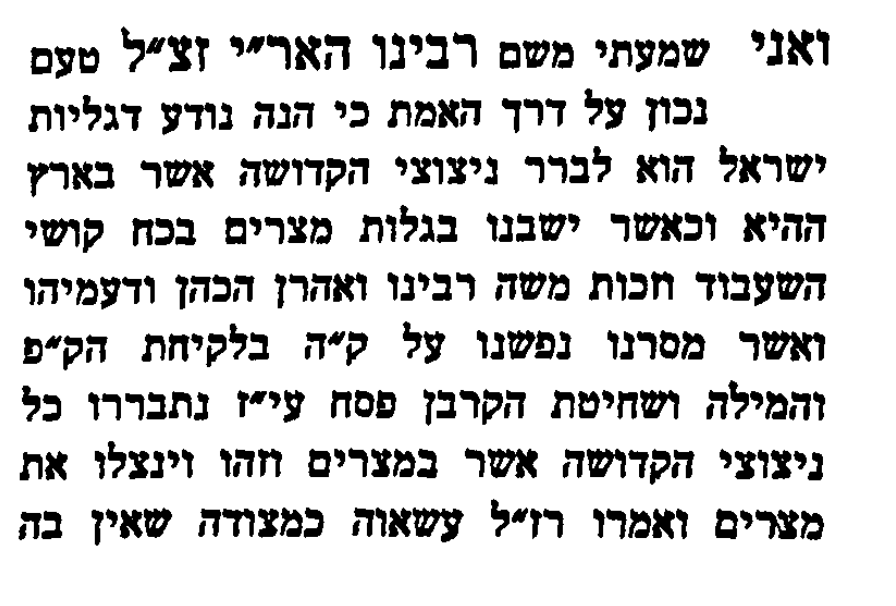
See here:.

http://beta.hebrewbooks.org/pdfpager.aspx?req=40654&st=&pgnum=281

We have a Kabalistic answer concerning the Rambam and others who lived in Egypt.

[See here vort of the Besh”t that any Jew even when he arrives somewhere due to being lost! “clears the air” of Chutz Lo’Oretz. And he adds that this cleansing is accomplished via a Jew’s simple faith. Emuna Peshuta and even if this Emuna is currently asleep within him.

http://beta.hebrewbooks.org/pdfpager.aspx?req=14963&st=&pgnum=669]

——————

Today is Yud Alef Nissan so what follows is quite appropriate. The Rebbe mentioned the above explanation (why the Rambam et al did live in Egypt) in 1954 and again in 1974. (See both links below)

But all he said in 1954  was “as we find written” and in 1974 he added as it is in the “the writings of the Arizal”.

When they wrote the Sicha the world was turned over to find the exact location in the vast writings of the Arizal. (The Arizal didn’t write anything on his own. It was his students, primarily Reb Chaim Vital, who wrote what we know today as ‘Kabolas ho’Arizal”).

But alas! It was nowhere to be found. The Sicho in 1974 was printed without a footnote.

http://chabadlibrarybooks.com/pdfpager.aspx?req=4610&st=&pgnum=453&hilite

Enter the computer age….it was only in the last decade when searches were developed that it was located in the Chida’s writings in the name of the Arizal. A footnote was subsequently added.

דבש לפי מערכת ב, י. פתח עיניים יומא לח, א. ברכ”י אה”ע ד. 

העו”ב תתצד ע’ 17.

———————-

Here is a spooky related item.

The previous Rebbe said in 1933 that the Maggid of Mezritch gave his students particular “Yechudim” for every country except for Germany! No explanation was offered.

http://www.lahak.org/pdf2/Reshimos/162.pdf

In 1954, the Rebbe recounted that 1933 Sicha. He added that for years people wondered “what is wrong with  Germany?…..until after WWII it was unclear as to the German exception.150 years have passed since the Magid… it is finally understood…… 

Elections 1933 – The Holocaust Explained: Designed for schools

He continued saying that nowadays one can say that even in Germany there is ‘work’ to do. The Rebbe paralleled this change to the prohibition concerning the return to Mitzrayim. That rule has changed  due to the fact that Jews were exiled there and brought with them Nitzozos that need to be found and elevated. Etc.

See here the 1954 Sicha – lost sparks in Egypt and Germany. Pages 256-257:

http://www.chabadlibrary.org/books/default.aspx?furl=/admur/tm/10/27/257

See here (again) the 1974 Sicha for a slightly different idea.

http://chabadlibrarybooks.com/pdfpager.aspx?req=4610&st=&pgnum=453&hilite

Here the Rebbe says that it was gentiles that brought back these spark.

In Likutei Sichos Vol. 19, footnotes on page 171 there are references to several ‘Nigle’ ideas about these topic. See above #1-4.

http://beta.hebrewbooks.org/pdfpager.aspx?req=14942&st=&pgnum=184

See here a general overview in Hebrew. The Chido is mentioned on Page 9:

http://download.swdaf.com/DafDocs/succah/succah051_Living_in_Mitzrayim.pdf
 

Shiur Sukkah 51b (2) 05/30/23

BS”D

Suka 51b (2)

Sivan 10, 5783. May 30, 2023

1- The Gemara continues to explain the Mishnah:

במוצאי יום טוב הראשון של חג ירדו לעזרת נשים ומתקנין שם תיקון גדול

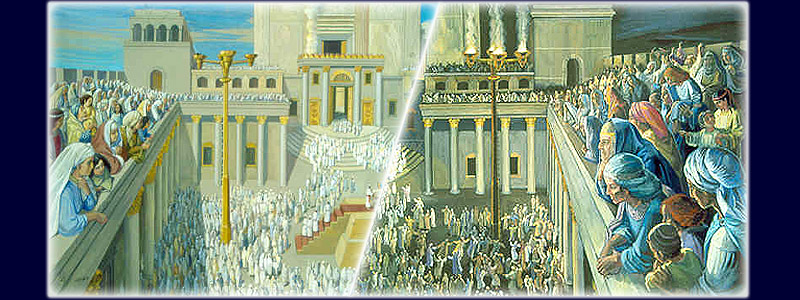
What exactly was this תיקון גדול? The גמרא describes the historical process of the effort to create a separation between the men and the women at the בית השואבה
Festive Water Offering on Sukkot: the Greatest Celebration Ever | United with Israel

After different arrangements were tried, they finally built a balcony overlooking the עזרת ישראל.

The Growing Problem at Simchas Beis Hashoeva

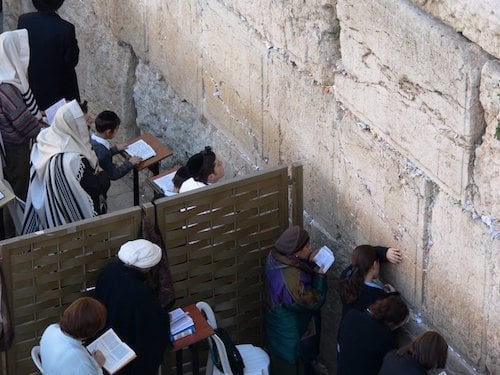
2 – We touched briefly on the controversy about the height of the מחיצה in a Shul.

On the one hand we have Reb Moshe Feinstein who claimed that the מחיצה is not intended to block the men’s view of the women. The sole purpose is to avoid the mingling and talking. He derives this primarily from the Rambam who writes in Beis Habechirah 5, 9:

עזרת הנשים היתה מוקפת גזוזטרא כדי שיהיו הנשים רואות מלמעלן והאנשים מלמטן

כדי שלא יהיו מעורבבין.

My Beloved Mechitzah | Why

To avoid mingling one needs only shoulder height, or 18 טפחים. If the עזרת נשים is elevated and no mingling is possible, there is no need for a מחיצה.

Earlier this month, I visited the Synagogue of Trieste, Italy. I've never seen a shul with a mechitza and an organ before. : r/Judaism

See here. Here.

We need to point out that Reb Moshe’s היתר for a low מחיצה is only as to the laws of בית הכנסת and as it pertains to תפילה based on what occurred on the בית המקדש. He is מחמיר to say that his minimum מחיצה is מן התורה!

However, as he write in his responsa, the prohibition to gaze at women is universal and outside a Shul as well.

Bursting at Its seams, Central 770 Yeshiva Overflows to Ezras Nashim

View from the Ezras Nashim, 770.

On the other side of this topic are most Orthodox Rabbanim. Beginning with the מהר”ם שיק to Reb Yoelish of Satmar.

ווינרס מכירות פומביות

They base their opinion on the פירוש המשניות of the Rambam on our Mishnah, where he states that the purpose of the מחיצה is for men not to gaze at the women. Thus, the מחיצה needs to go above the heads of the tallest מתפלל.

The Mechitzah: Partition - Chabad.org

3- We mentioned the quip of when Reb Moshe and Reb Yoelish met in a בית האבל, or as Reb Yoelish stated, they were in different houses…

Satmar Headquarters på Twitter: "Rabbi Hertz Frankel OBM was appointed by Satmar Grand Rebbe Joel Teitelbaum OBM to run the Satmar girls' schools in 1959, over the years he became the informal

Reb Moshe at microphone, R Yoel at the right side of the table

We spoke of the admission of a reform rabbi in 1965 that the orthodox warriors against their movement, at its inception, were correct in saying that the reformers were, deep in their hearts, אפיקורסים.

The reform leaders expounding excuses about their changing Halacha, that it was supposedly ‘based’ on Chazal, was just a front to their total lack of belief ….even in the ריבונו של עולם. R”L

A Point of View: Does atheism have to be anti-religious? - BBC News

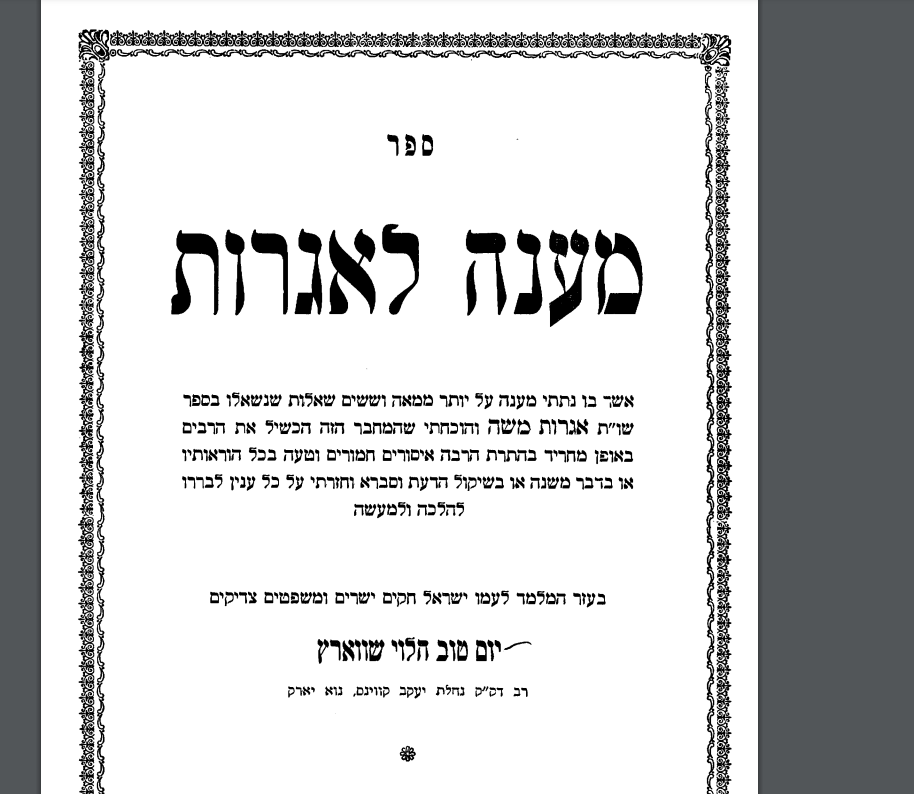
Also discussed the famous (or infamous) book מענה לאגרות by Reb Yom Tov Schwarts who contested many of Reb Moshe’s rulings.

See here.

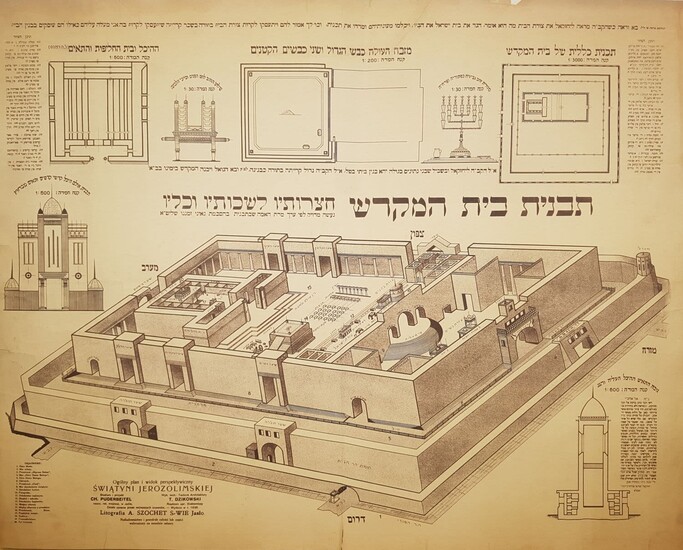
4- The גמרא has an issue with the building of this מחיצה structure as it changes the configuration of the בית המקדש which is very problematic. The exact measurements and layout were described by the נביאים. Any deviation is forbidden.

Large Poster, Diagram of the Beit HaMikdash and its Vessels, Poland, 1938. at auction | LOT-ART

5 – The source for a מחיצה in general – The ‘Great funeral and eulogy’ for משיח בן יוסף which will occur right before משיח בן דוד  arrives. Our גמרא  says that even at this somber occasion men and women will sit separately. How much more so in a time of joy, such as שמחת בית השואבה, there needs to be a separation via a מחיצה.  And from there to the מחיצות in a Shul.


6 – We discussed briefly what חז”ל say about משיח בן יוסף. While mentioned in גמרא once, right here on our Daf, the Zohar writes much about him.

Here is a good synopsis and sources. Hebrew. English.

We mentioned the Tosfos in Eiruvin (43, b) that places his revelation right before the appearance of משיח בן דוד.

כשהחמור יצעק משיח: למה התורה אוהבת חמורים? - שיעור לפרשת שמות - BeitChabad.com - בית חבד

7- The topic of the above Sugya in Eiruvin is the discussion as to what days of the week משיח and אליהו הנביא can reappear in this world.

The issue is their arrival on Shabbos being that משיח will need to arrive from חוץ לתחום.

8- We concluded with an interesting letter of the Rebbe to Reb Avrohom Hecht in 1947. Igros 2. #288.

Rabbi Abraham D. Hecht and the Rebbe - Chabad.org

From the letter it seems Reb Avrohom asked the Rebbe how we say on Shabbos

אני מאמין בביאת המשיח ואע”פ שיתמהמה עם כל זה אחכה לו בכל יום שיבוא

when the גמרא above says that משיח will not arrive on Shabbos!

The letter touches on many points. In the last 2 paragraphs, the Rebbe suggests that when we say בביאת  המשיח, we are referring not only to משיח בן דוד, who will not arrive on שבת, as above.

The belief of imminent daily גאולה encompasses the entire גאולה process that also includes the arrival of משיח בן יוסף – who can indeed arrive on Shabbos since he will surely be a human living amongst us and not have the limitations of חוץ לתחום.

So when we say אחכה לו בכל יום שיבוא it also means משיח בן יוסף.

9- In a post script the Rebbe writes that ‘Rabbi Quint just told me that some have the מנהג of not saying the above passage on Shabbos because of the above issue’.

We spent a few minutes talking about this interesting non Chabad secretary that worked in מרכז for many years,

(and his son Emmanuel).

The Outsider On The Inside - Anash.org

Emanuel, son of R’ Eli Quint

His signature is found on many letters the Rebbe wrote as ‘A Quint, Secretary’.

Here is the letter

Shiur Sukkah 51b – 5/16/23

BS”D

Suka 51b

Iyor 25, 5783. May 16, 2023

1- The גמרא relates a fascinating story, albeit with a tragic ending ר”ל.

This ‘fully loaded story’ is a basis for many Halachik and historical topics.

We touched on a few of them.

Here is the first part, Sukkah 51b followed by some topics we discussed.

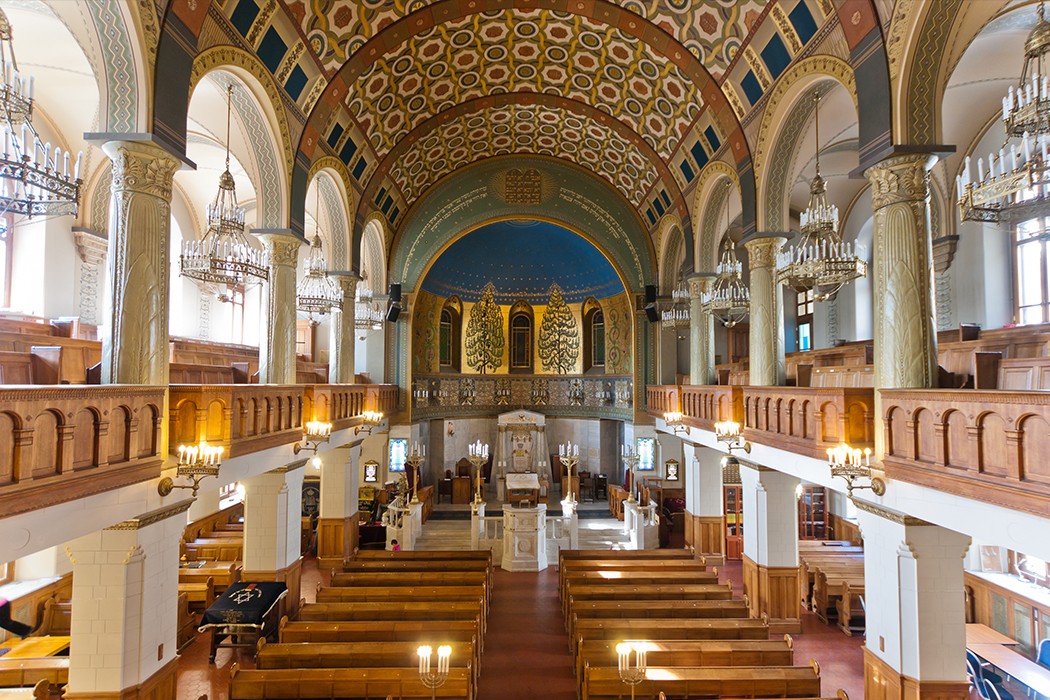
The Great Shul of Alexandria 

It is taught in a baraita that Rabbi Yehuda says: One who did not see the great synagogue [deyofloston] of Alexandria of Egypt never saw the glory of Israel. They said that its structure was like a large basilica [basileki], with a colonnade within a colonnade. At times there were six hundred thousand men and another six hundred thousand men in it, twice the number of those who left Egypt. In it there were seventy-one golden chairs [katedraot], corresponding to the 71 members of the סנהדרין, each of which consisted of no less than 21,000 talents of gold. And there was a wooden platform at the center. The שמש\חזן of the synagogue would stand on it, with the flags in his hand. And because the synagogue was so large and the people could not hear the communal prayer, when the חזן  reached the conclusion of a blessing requiring the people to answer amen, the חזן הכנסת waved the scarf and all the people would answer אמן.

Image

2–  In it there were seventy-one golden chairs, corresponding to the 71  members of the Great  סנהדרין.

70 or 71?

Image

We discussed Tosfos’s question about the number 71. In גמרא סנהדרין,  there is the opinion of Reb Yehuda that the סנהדרין consisted of just 70 (not 71). This story, about the Shul in Alexandria and the 71 chairs, is told by Reb Yehuda! So how does he reconcile his opinion of 70 (in the סנהדרין)  with the 71 (chairs)  in the story?

They answer that according to Reb Yehuda, in addition to the 70 there was also a מופלא שבסנהדרין. He was a person that stood above the 70 and thus not counted as one of the 70. So the סנהדרין was 70 plus 1.

In the Shul of Alexandria they set up 70 chairs corresponding to the 70 members of the Sanhedrin. Additionally, they added another chair for the מופלא שבסנהדרין.

We mentioned the anecdote of the גר”א, that explains the last few words of Tosfos. This concerns the way people express numbers. How does one say the number 21?

Twenty seven  or seven twenty. זיבען און צוואנציק or צוואנציק זיבען?

Random Numbers Stock Photo - Download Image Now - Number, Number Magnet, Child - iStock

 3- And there was a wooden platform at the center.

Does this mean that a בימה must be in the center of the Shul?

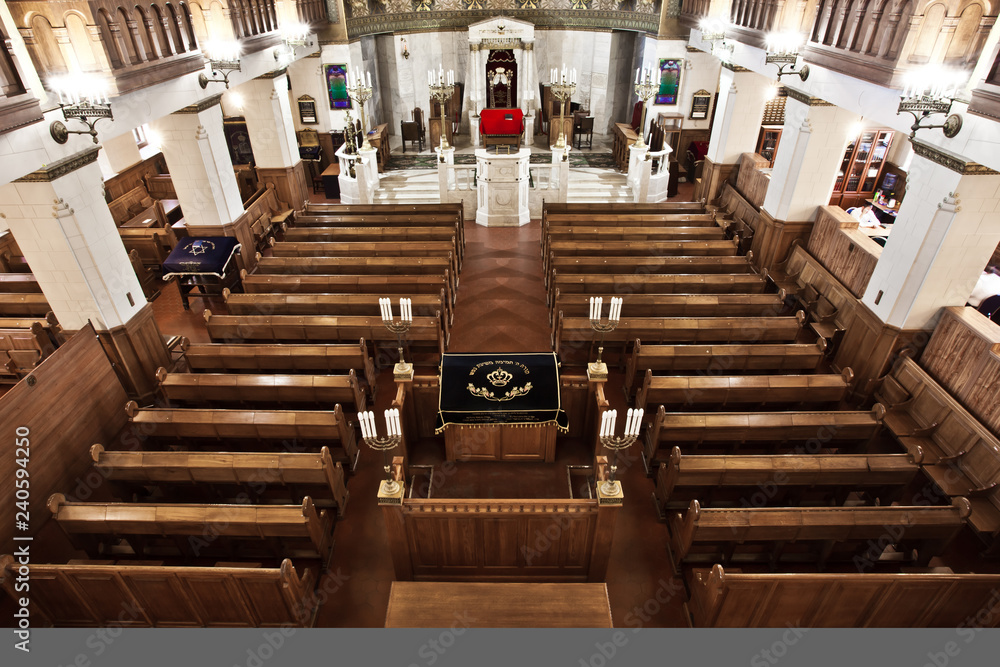
The device of the synagogue, the top view, the benches, the bima, the holy of holies

This seemingly ‘unimportant’ mention of the location of the בימה in the Shul of Alexandria  was a much contested topic 200 years ago. One of the first deviations introduced by the reform/משכילים was to move the בימה towards the front of the Shul. It eventually evolved into creating a one-platform system, where the ארון הקודש, בימה  and עמוד were all at the מזרח of their temples.

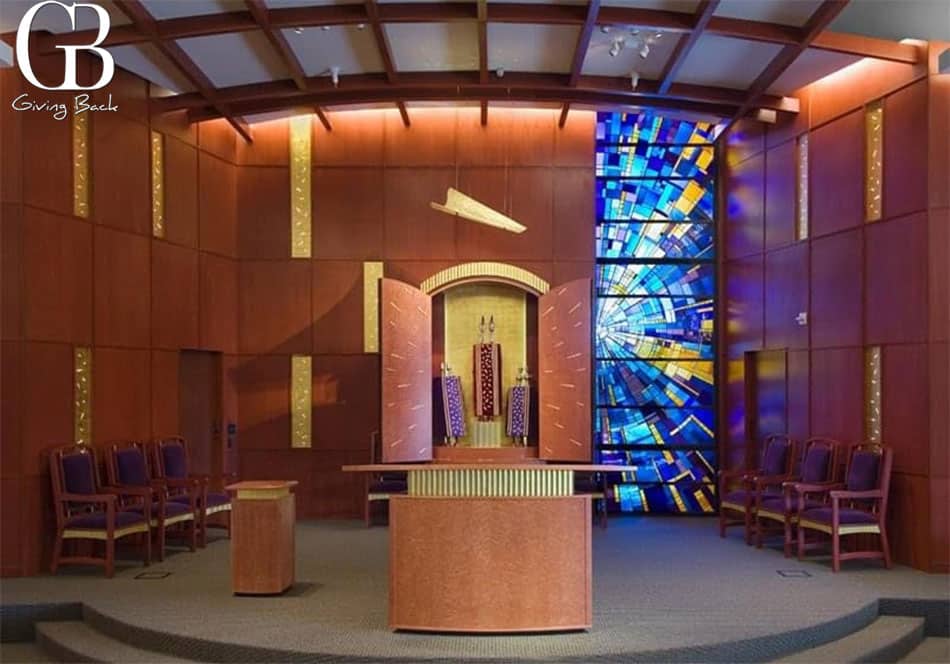
Finding your Jewish Temple or Synagogue in San Diego - Giving Back

There was only one rationale for this change: to copy the set up of the churches ר”ל.

We mentioned the famous תשובה of the חתם סופר (OC 28) where he discusses this issue. He quotes our Gemara where the placement of the בימה in the great Shul of Alexandria is mentioned. Additionally he suggests that our בימה is like the מזבח that was in the center of the בית המקדש and for this reason we make הקפות around it on Sukkos זכר למקדש. Thus the location of the בימה should not be changed.

Solomon Alexander Hart - The Feast of the Rejoicing of the Law at the Synagogue in Leghorn, Italy - Google Art Project.jpg

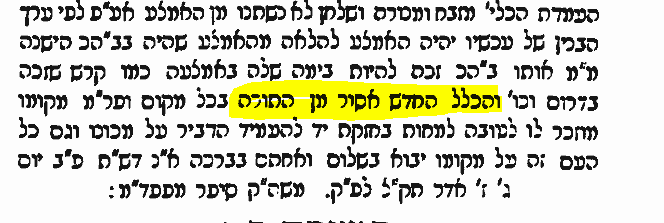
He concludes with a line that has been a mantra for Orthodoxy for many years-  not to introduce any new ideas –

והכלל – חדש אסור מן התורה בכל מקום.


4- The שמש\חזן of the synagogue would stand on the בימה, with flags in his hand to advise the people when to answer amen.

Can one answer אמן when he has not heard the ברכה?

 The general rule is that one should not say a אמן יתומה – an ‘orphaned אמן’. Brechos 47,a.

תָּנוּ רַבָּנַן: אֵין עוֹנִין לֹא ״אָמֵן״ חֲטוּפָה, וְלֹא ״אָמֵן״ קְטוּפָה, וְלֹא ״אָמֵן״ יְתוֹמָה, וְלֹא יִזְרוֹק בְּרָכָה מִפִּיו.

Simple meaning is that one should not answer אמן on a ברכה that he has not heard. This also includes when one is in a Shul and doesn’t hear the חזן but he hears the crowd saying אמן.

Rashi and Tosfos ask from our גמרא  that in Shul in Alexandria, due to its huge size, a flag was waved for the crowd to know when to say אמן. So they did answer אמן despite not hearing the חזן.

Image

They answer that it was not considered an אמן יתומה since the crowd kept track as to which ברכה was being said by the חזן. They actually knew what ברכה they were saying אמן to.

This implies that the opinion of Rashi and Tosfos is:

  1. As long as one knows which ברכה it is, one can be יוצא even if it is a ברכה that one is מחוייב to make (as opposed to say חזרת הש”ץ).
  2. If one does (hear the חזן and does) not know know what ברכה it is one should not answer אמן.

Practically this means that, say someone is by the כותל or in 770, and is far from the חזן and is not keeping track as to what ברכה he is up to, he should not answer אמן.

770 Packed for Selichos - Chabadinfo.com

On the other hand, if for example, one is aware that the בעל תוקע is making the ברכה on the Shofar,  he can be יוצא even if he does not hear him say it.

Other ראשונים namely the ערוך, argue and say that:

  1. One needs to hear and know what ברכה to be יוצא, like שופ
  2. If he does not need to be יוצא, like חזרת הש”ץ, even if one does not hear the חזן and does not know know what ברכה it is one should answer אמן.

The Alter Rebbe (OC 124, 11)  rules that one should follow both opinions לחומרא.

So for שופר, one needs to know and hear it from the בעל תוקע. For חזרת הש”ץ one should not answer if he doesn’t keep track as to what ברכה it is.

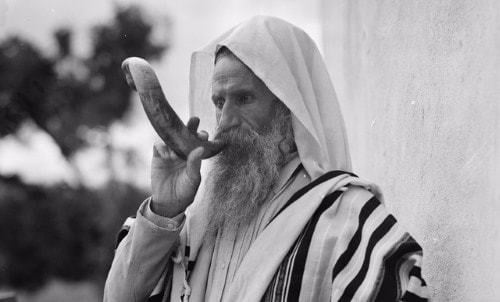
A very religious Jewish Rabbi blowing a shofar - ram's horn - at morning services before the New Year. In Brooklyn, New York Stock Photo - Alamy

See there for more details and opinions.

The story and topics continue. Next Shiur IY”H.


Ari Chitrik Shiur Points