All posts by daf

Shiur Sukkah 11a (2) 9/29/20

BS”D

Sukkah 11a (2) 

Tishrei 11, 5781. September 29, 2020

A few brief notes. 

1- 

תעשה ולא מן העשוי

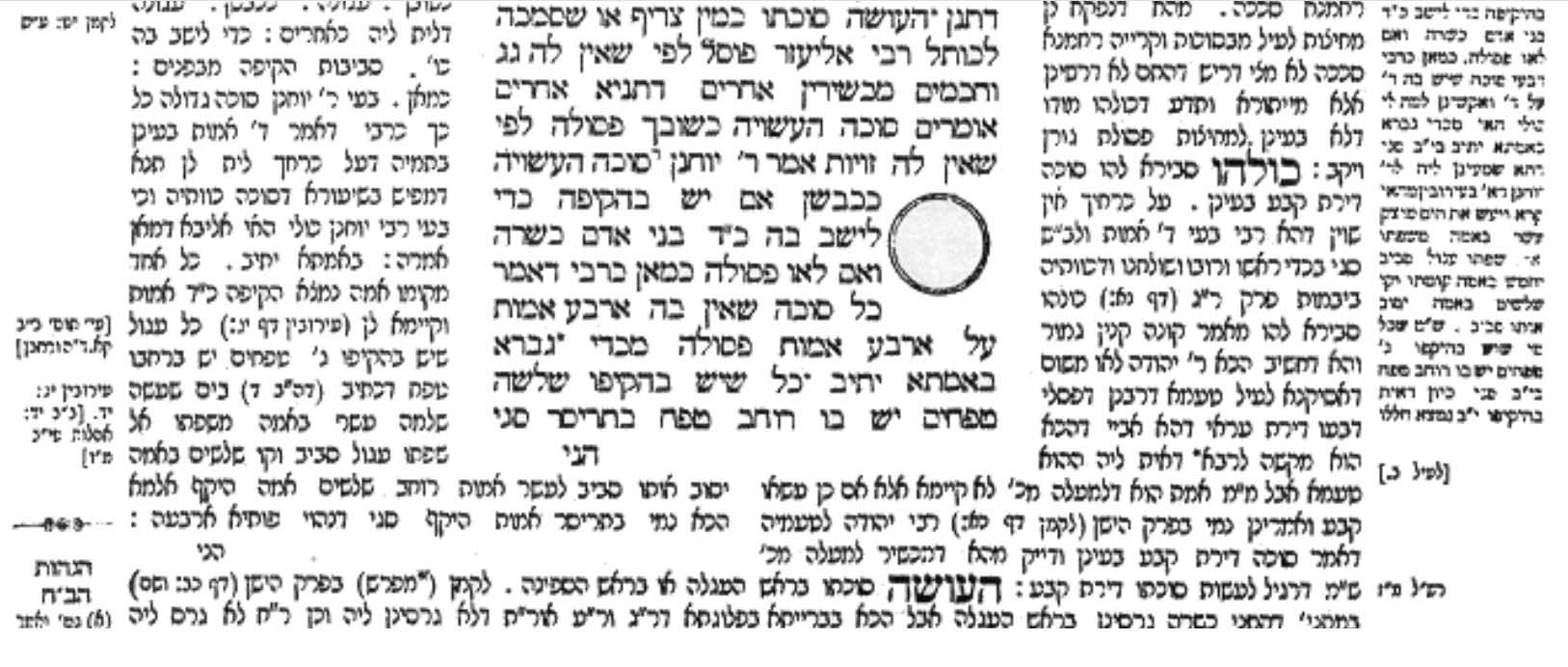
This is a general principle that when performing a Mitzvah (or the preparation to a Mitzvah) the Mitzvah must be performed at that time. One cannot perform a Mitzvah in an improper way, correct it and it becomes valid indirectly. 

The classic example is our Mishna where one covers the Sukkah with branches still attached to the tree or with ivy attached to the ground. This is invalid because it is מחובר. 

Now, if one cuts the branches after they are on the Sukkah, that would not be Kosher due to תעשה ולא מן העשוי. His last action, cutting the branches, is not considered ‘placing the סכך on the Sukkah’. The סכך has already been placed. The cutting, ‘Kosherizes’ the,סכך. Not ‘applying the סכך’. 

2- The Gemara discusses this topic in relation to ציצית as well. If one were to insert one long string into the בגד and tie the knots it would be invalid since there are no four individual strings. However if he snips the ends, thus creating four individual strings, it would seem to be Kosher.

However, due to the concept of תעשה ולא מן העשוי it would be פסול. Why? As explained above, when he cuts them he is not performing the ועשו להם ציצית as that was done when he strung the long string. True, the cutting creates 4 individual strings, but that is not the ‘application’ ועשו that the Torah requires.   
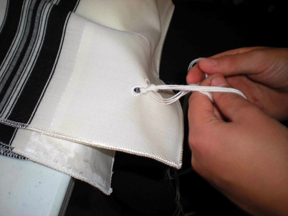
Jewish Children.com

3- We mentioned other examples of the concept of תעשה ולא מן העשוי. 

Here is one. רע”א OC 280, 1. 

He quotes, the ספר גן המלך  that  writes an interesting Halacha. 

If there is a hole R”L in a Sefer Torah, making the ס”ת pasul, the proper way to repair it  is by attaching a patch of parchment to cover the hole. Once attached, the missing letters are then written on the parchment patch. 

However, writes the גן המלך, if one were to first write the letters on the patch and only then glue or sew the patch to the ספר תורה, that would be considered תעשה ולא מן העשוי  !!!. 

We discussed this at length. 

4- We mentioned the famous אבני נזר. He writes that תעשה ולא מן העשוי is only when the improper performance was done 100%, and then corrected. 

For example, one covered the entire Sukkah with connected branches. Cutting them would be תעשה ולא מן העשוי. 

However, if one only covered 49% of the Sukkah with connected branches and then added 2% of Kosher and then cut the 49% it would not be considered תעשה ולא מן העשוי.

Or simpler yet: If one covered a Sukka with vines up to 50% and then cut them it would not be considered תעשה ולא מן העשוי  !!! 
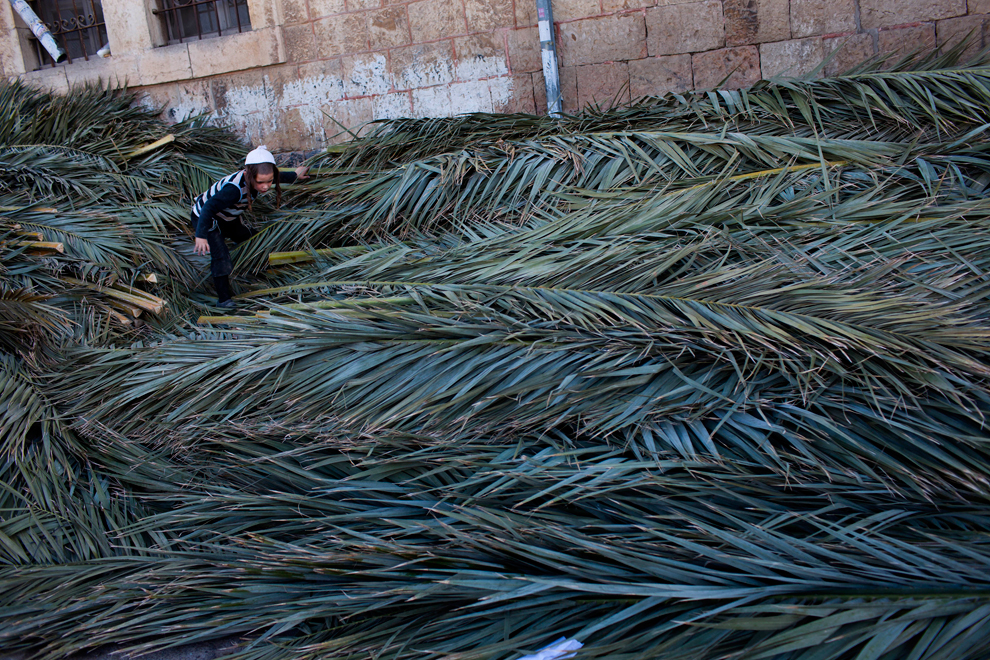
Sukkot: A celebration - Photos - The Big Picture - Boston.com

His reasoning is that the 49% is not considered סכך פסול since it would theoretically never create a proper Sukkah. 

If however the attached סכך פסול would cover 51% of the Sukkah, meaning that there is sufficient (Pasul)  סכך,  then the cutting them is considered תעשה ולא מן העשוי. 

His proof was discussed as well. More after Yom Tov. 

5- There is a story told of Reb Akiva Eiger. A Sefer Torah was found an its origins were unknown. The question was whether this scroll was written as a legitimate Sefer Torah by a pious סופר. Or perhaps it came from a dubious source.
Rumor had it that perhaps it was written by a scribe who was not a ירא שמים at the very best or perhaps by a non-Jew. Some  claimed that it was a Torah used in the past in various Shuls. The doubters claimed that this unknown ‘scribe’ was proficient and would write many Torah’s quickly but with no קדושה etc. and offer them for sale . 

The Living Torah Museum

In short,  Reb Akiva Eiger was asked to rule on its Kashrus. 

He opened the Sefer Torah, rolled it to the very end and declared it as Kosher. 

If you look at the last few words, he said, you will see that they are written unlike much like the rest of the Sefer. 

Man Writing A Sefer Torah Stock Photo, Picture And Royalty Free Image. Image 95675152.

All Kosher Sefer Torahs are finished with great fanfare. Members of the community are invited to fill in the last few words. Inevitably, some letters while Kosher, are a bit smudged or out of proportion. This is a sign of Kashrus.

This Sefer Torah, he concluded, indeed had a Siyum. It was written for non commercial purposes by an proper scribe! 

No photo description available.

After a bit of investigation it was indeed verified to be so.

When asked how he came up with this idea, Reb Akiva Eiger responded that we know the saying מנהג ישראל תורה היא.  The custom followed by Yiden is part and parcel of the Torah itself. 

So the Minhog to complete a Sefer Torah with pomp and letter writing is the proof that it is indeed a properly written Torah.

So מנהג ישראל is the proof that תורה היא – a proper Torah.

.והנה לפי הדברים המתבארים לעיל דחזינן דבל אחד מישראל יש לו אחיזה באות אחת בתורה הקדושה יש לבאר בס”ד את ענין המנהג שנוהגים לתת לציבור הנאספים לכבודה של תורה בהכנסת הספר תורה בעת כתיבת סיום האותיות לתת לכל אהד מהם לכתוב אות בספר תורה ואכן ענין מנהג זה יסודתו בהררי קודש וכמבואר נמי בס’ שירה חדשה ריש פרק ח עמוד סח שהביא שם מהרב אבני בית היוצר מעשה פלא דהוה בזמנו של הגאון רבי עקיבא איגר ומזה יש ללמוד שענין כתיבת האותיות על ידי הציבור בסיום כתיבת הספר תורה מנהג ישראל קדוש הוא דההוה עובדא בזמן הגאון רבי עקיבא איגר שמצאו ספר תורה בשדה ונספקו בו אם כתבו גוי או מין שדינו מבואר בשו”ע יו”ד סי’ רפא דיגנז או ישרף והציעו את השאלה הזאת לפני הגאון רבי עקיבא איגר זצ”ל והשיב להם הגאון דבאשר מנהגן של ישראל תורה וכשבאים לכתוב את השורות האחרונות של פרשת וזאת הברכה נהגו שכל אחד כותב אות לפי שמו בספר תורה כגון אם שמו משה כתוב מ’ ומכיון שאותיות שנכתבו על ידי הרבה בעלי בתים אינן דומים זה לזה והנה אם היה הכותב ישראל בלי ספק היה עושה כמנהגן של ישראל הזה ולכן אם יש בהם שינוי סימן שישראל כתבו אבל אם לא ימצאו כן אלא גם סופי השורות של פר’ וזאת הברכה הם דומים ואין בהם שום שינוי מזה הוכחה שגוי כתבו ועל כן יגנז וכמבואר בשו”ע יו”ד הנ”ל ע”כ עובדא דהוה 


Shiur Sukkah 10 b (2)-11 a 9/23/20

BS”D

Suka 10 b (2) 11 a

Tishrei 5, 5781. Sept 23, 2020

A few short notes on the past 2 Shiurim. 

Rebbe Greeting Cards | Fine Art America

1-. In continuation of the last shiur concerning the ‘greeting ones Rebbe on Yom Tov,  חייב אדם לקבל פני רבו ברגל, and therefore the two Chachamim were עוסק במצווה פטור מן המצווה we mentioned the Noda Biyehuda (OC1, 94). His question is as to why the Rambam does state that it is a Mitzvah but the Shulchan Aruch omits it. 

Briefly, this Mitzvah flows from the the Mitzvah of עליה לרגל. One need to perform this pilgrimage since there is an added קדושה at that time in the בית המקדש. It also has an effect on one’s Rebbe. Thus the obligation to greet him. 

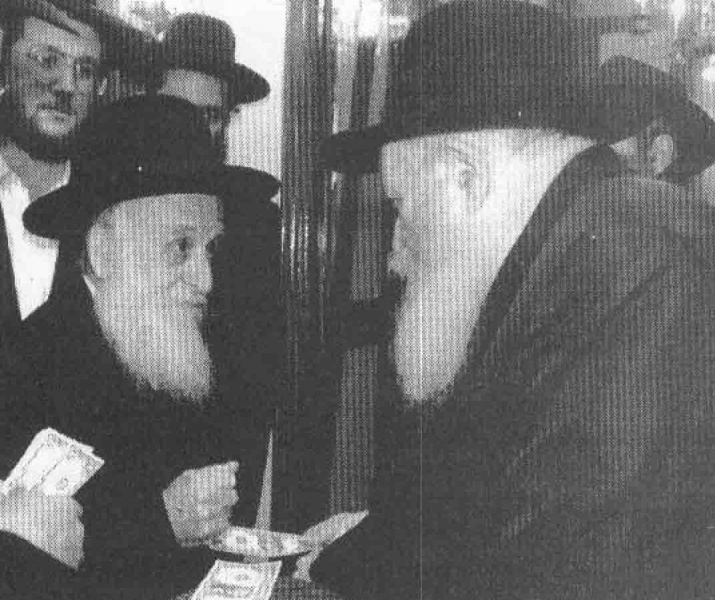
Picture of the Day! - The Rebbe and Mayor of Kiryat Malachi • CrownHeights.info – Chabad News, Crown Heights News, Lubavitch NewsCrownHeights.info – Chabad News, Crown Heights News, Lubavitch News

Sadly, when there is no בית המקדש and one cannot go to Yerusholayim, it would be improper to accord more respect to his Rebbe than he accords to Hashem. So this Mitzvah does not apply today. (in its fullest form at least). 

ומעתה גם לקבל פני רבו אי אפשר לחייב בכל שבת ור”ח דא”כ יהיה כבוד רבו גדול מכבוד השכינה

The Rambam lists all mitzvos, including ones not applicable today.

הביא הרמב”ם הא דר’ יצחק שכן דרכו להביא כל הנוהג בזמן המקדש

On the other had the Shulchan Aruch only wrote Mitzvos and Minhagim relevant to our time in גלות. 

2- We mentioned the well known Reb Chaim concerning the Mitzvah of Tefilla. The Rambam seems to contradict himself in regard to the minimum כוונה  one needs to have during davening. 

Basics of Emunah #22: "I Hate Davening" -- Part 1 - TheYeshiva.net

In one place he writes that the entire שמונה עשרה needs to be said with כוונה, and one needs to repeat it if said while not concentrating. In another Halacha the Rambam writes that if one had כוונה  just in the first three ברכות , there is no need to repeat it. 

[Parenthetically we mentioned the interesting דין, as per the רמ”א (OC 101, 1) that if someone does not have כוונה in the first three ברכות he is not יוצא, and in reality would need to say the entire שמונה עשרה again. 

The reason he should not repeat it ‘since he will (probably) not have כוונה  when repeating it again and it will be ברכות לבטלה!!!

[והאידנא אין חוזרין בשביל חסרון כוונה שאף בחזרה קרוב הוא שלא יכוון אם כן למה יחזור

Here is Reb Chaim’s answer: 

The Rambam presents his view in a more perplexing way. Initially, he identifies that one must have Kavana throughout his Tefilla while later on, he returns to the understanding that one can merely have Kavana in the first Beracha of Shmoneh Esrai and still fulfill his prayer obligations. How can the Rambam take two diametrically opposed positions within his understanding of the laws of Kavana?

Earliest Recording of the Rebbe Davening - Chabadinfo.com

 Rav Chaim Soloveitchik (Grach al HaRambam Hil. Tefillah 4:1) notes that the Rambam identifies two forms of Kavana. In the first, one must understand all the words that he recites during the Tefilla. The second type of kavana is an awareness that one is in the presence of Hashem. The former can be cumbersome and difficult and therefore, if one merely understands the meaning of the words in Avos, s/he has fulfilled the obligation of Shmoneh Esrai’s Kavana. However, one who lacks the awareness that s/he is standing in front of Hashem, has ruined the concept of tefillah and as such, at any point,, must return and re-recite the Tefilla

3- We mentioned the Halachah of a ‘gartel’, and why today it is only a Minhag. 

Left Gartel at home? No Problem! : Judaism

Quoted the Tzemach Tzedek that explains the concept of a Gartel in a unique perspective. 

The cloak or overcoat represents the wishes a person has of things that he wants to accomplish. These goals are ideas floating around him much as a robe flows around a person’s body. Occasionally these goals and wishes never materialize. They remain in a ‘floating’ stage. Not grounded. 

Gartel Size 18 | Eichlers

The Gartel, which gathers the flowing robe and adheres it tight to the body, symbolizes the realization of these floating ideas. It ‘ties’ these lofty goals to the real world. Causes them to ‘land’ and actually happen. 

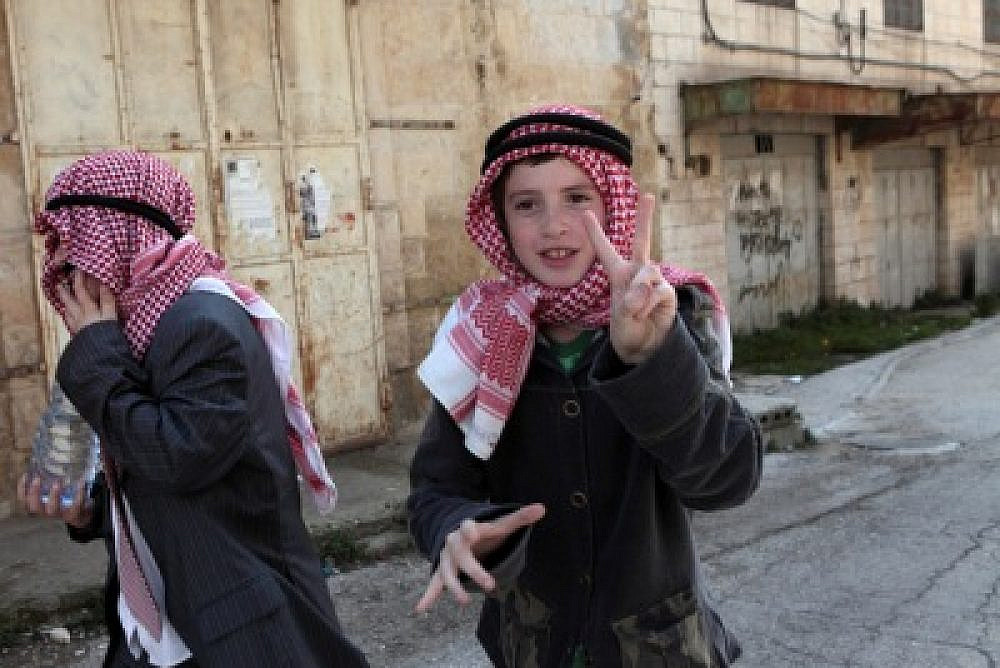
PHOTO: Settlers dress as Arabs for Purim in apartheid Hebron - +972 Magazine

Purim – Gartel on the head in Yerushalayim

4- We began the Sugya of Schach. TO be continued. 

A G’Mar Chasima Tova to all. 


Shiur Sukkah 10 a-b  09/09/20

BS”D

Suka 10 a-b 

Elul 19, 5780. September 9, 2020

A few short notes. 

1- The Mishnah discusses a proper Sukkah that has two types of issues:

1 –

a) A protective cover on  סכך to block the sun.

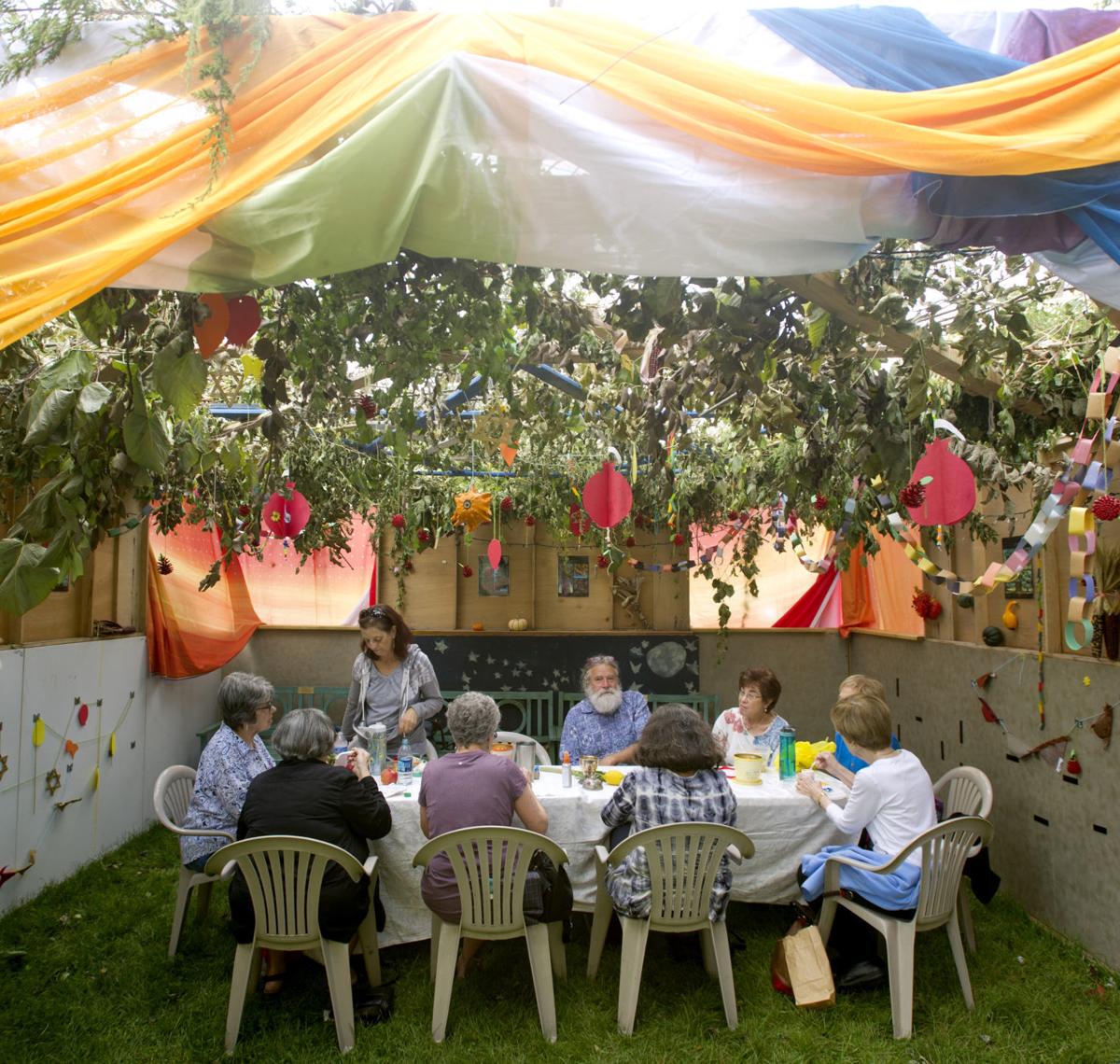
Autumn festival: Sukkot celebrates Jews' flight from Egypt | Faith | kenoshanews.com

b)  A sheet that is under the סכך to protect the people sitting in the Suka from the leaves flowing down from the סכך. 

Pin on God's Holy Feast Days

2- A cover over a canopy bed. That is not סכך. And it does not ‘protect’. 

Houses | Jungleroom

We discussed the difference between סכך – protection from sun etc. and אהל – cover. 

Golden Bamboo

Bamboo

סכך needs to be something grown from the ground and be in its simplest/original form, meaning not a כלי. So wood is fine for סכך, but not if the wood was made into a כלי- pot. It must not be מקבל טומאה. 

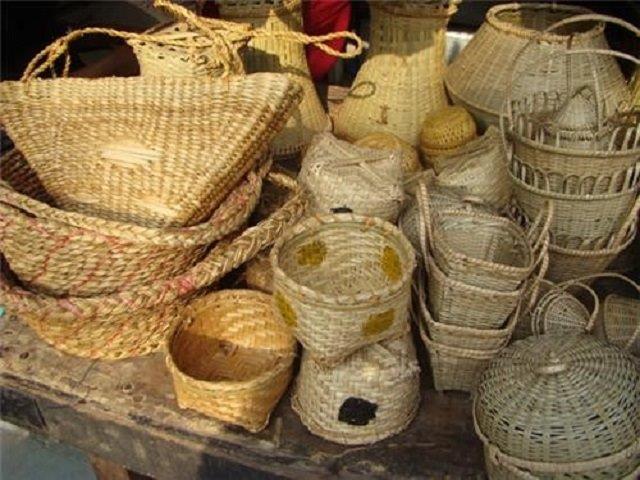
Special Report | Cane & Bamboo crafts of Northeast India | Green Gold Bamboo

Bamboo Pots

The issue with a אהל – cover, on the other hand, is that one sitting under a canopy bed is sitting under a ‘cover’ that is not the סכך. Similar to סוכה על גבי סוכה. 

45 Superb Bed Ideas and Designs — RenoGuide - Australian Renovation Ideas and Inspiration

2- The Gemore discusses different types of נוי סוכה.

If one covered the sukka in accordance with its halakhic requirements, and then decorated it with colorful curtains and sheets, and hung in it ornamental nuts, peaches, almonds, and pomegranates, grape branches [parkilei], and wreaths of stalks of grain, wines, oils, and vessels full of flour, it is prohibited to derive benefit and use them until the conclusion of the last day of the Festival.

Boaz pointed out that the  שומרונים  actually adorn their Sukka with these items!

צילום: רון פלד

See here.


Here is one with bottles.


3- We discussed the story mentioned in the Gemore: 

The Gemare relates that Rav Chisda and Rabba bar Rav Huna happened to come to the house of the ריש גלותא

(One of the famous ones: Bustenai)

Rav Naḥman, who was the official Rov in charge of the ריש גלותא’s household, lodged them in a sukkah whose decorations were removed from the roofing four טפחים. They were silent and did not say anything to him, even though in their opinion the sukka was unfit. 

Tempura Battered Ahi Tuna Roll — The Boreka Diary | Sukkot decorations, Sukkot, Feast of tabernacles

Rav Naḥman said to them: Did the Sages retract their halakhic ruling? Does your silence indicate that you concede to my ruling? 

They said to him: No, we did not change our minds. The reason we slept there is that we are on the path to perform a mitzva and, therefore, we are exempt from the mitzva of sukka.  העוסק במצווה פטור מן המצווה.

Therefore, it is permitted for us to sleep in this sukka. In terms of the halakha, our ruling is unchanged.

Topics discussed: 

A- How did Reb Nachman lead them into a Sukkah knowing that his guests considered such a Sukkah as פסול? 

אבקת חלב נכרי | אתר ישיבה

Is one who eats חלב עכו”ם allowed to offer it to his guest that he knows does not eat it? That question applies to any חומרא  that one does not adhere to. Can he serve it to his unsuspecting guests? Can you serve Empire chicken to guests if you know your guests do not eat it?

We discussed the Ritv”a who poses these questions.  See below. 

B- What Mitzvah were they performing? Greeting their Rebbe on Yom Tov. 

But that is מדרבנן! So how did this absolve them from fulfilling sitting/sleepin in the Sukka which is מן התורה. 

To be continued. 

———————-

Here is the Ritv”a

 פירוש ואע”ג דאכתי לא ידע ר”נ דהדרו משמעתייהו או דהוו שלוחי מצוה אגנינהו לפום דעתיה.

 ולא חש דהוי חתיכא דאיסורא לדידיה ויתבי בסוכה פסולה ומברכי התם שלא כראוי והוה כנותן מכשול לפני פקח.

יש אומר דמהא שמעינן שהמאכיל לחברו מה שהוא מותר לו לפי דעתו ומאכילו אין בזה משום לפני עור לא תתן מכשול, ואע”פ שיודע בחברו שהוא אסור לו לפי דעתו וחברו בעל הוראה שהמאכיל היה ג”כ ראוי להוראה וסומך על דעתו להאכיל לעצמו ולאחרים לפי דעתו. 

ונ”ל דהכא דוקא מפני שהאיסור ניכר לחברו ואי לא ס”ל לא ליכול הא בשאינו ניכר לחבירו לא.

ואמרינן התם חס ליה לזרעיה דאבא בר אבא דליסופו ליה מידי דלא ס”ל בפרק כל הבשר וכן הור’ לי מורי הרב נר”ו.

מיהו הכא דאיפסיקא הלכתא דלא כותיה, בין לנפשיה בין לאחרים אסור וכדמוכח ממאי דכתיבנא בפ”ק דע”ז ובפ”ק דיבמות.


Shiur Sukkah 9b 8/25/20

BS”D

Sukkah 9a-b

Elul 5, 5780. August 25, 2020

1 The issue of a stolen Sukkah. 

We discussed the possible scenarios:

A- Moving into someone’s Suka. Issue- that’s not defined as stealing since ‘land’ cannot be stolen. קרקע אינה נגזלת. 

Foraging or stealing: Can you pick your neighbour's overhanging fruit? - ABC News

B- Stealing the סכך. Issue- That’s גזילה Min HaTorah, but the חכמים enacted that one does not need to return the actual סכך but only to pay for the monetary value of the theft. This was to enable תשובה for someone who stole a beam and built it into his house. Requiring him to destroy his home would hinder his תשובה.  (Suka 31a, Gittin 55a)

ועל המריש הגזול שבנאו: תנו רבנן גזל מריש ובנאו בבירה ב”ש אומרים מקעקע כל הבירה כולה ומחזיר מריש לבעליו

וב”ה אומרים אין לו אלא דמי מריש בלבד משום תקנת השבין

C- Stealing a Sukkah that is on a wagon. He would be required to return it since it does not ruin his house. Such a scenario would indeed be considered a סוכה גזולה. 

3

D- Someone builds a Sukkah on property that is not his. The owner comes along and ousts him. He then uses this Sukkah. This would also be considered a  סוכה גזולה.

2- A סוכה גזולה is not Kosher as our Gemara derives it from the פסוק.

חג הסוכות תעשה לך

Now comes the question of the ראשונים as to why is there a need for a פסוק  since it would be invalid regardless, due to the rule of מצוה הבאה בעבירה. 

This question is one of the famous ‘Gemara Trivia Questions’ for which a multitude of answers are offered. 

3- We mentioned the Minchas Chinuch (325) answer:

ונ”ל דהנה שני מינים יש במצות עשה א’ שהוא חיוב אקרקפתא דכל איש מישראל כמו תפילין ואתרוג ואכילת מצה.
. ומצוה כזו אם מקיים אותה עושה רצון הבורא ית’ ויתעלה כי כן צוה לו המלך ב”ה ואם מבטל המצוה ואינו מניח תפילין או שלא נטל לולב ביטל המצוה ועשה נגד רצונו ית’ וענוש יענש.

ויש מצות שאין חיוב לעשותם, כגון ציצית דהתורה לא חייבה אותו ללבוש בגד של ד’ כנפות, ואם רוצה הולך בלא בגד של ד’ כנפות ואינו נגד רצון הבורא ב”ה. אך אם מביא עצמו לידי חיוב שבכיון לובש ד’ כנפות לקיים מצות ציצית זה דרך הטוב וישר הכלל אם מקיים מצוה זו עושה רצון הבורא ב”ה אבל אם אינו מקיים מצוה אינו עובר על רצונו רק דאינו מקיים המצוה.

Mitzvos can be classified into two types:

A – Obligatory Mitzvos. Such as eating Matzah or hearing Shofar. 

Metal plate with matzah or matza, Kiddush Cup, Shofar horn on a light background presented as a Passover seder feast or meal with copy space. Jewish Stock Photo - Alamy

B – Non obligatory ones. Meaning that there is no requirement to perform the act of the Mitzvah. 

History of the Chabad Tallis | Ben's Tallit Shop

Such as wearing a four cornered garment with Tzitzit. The Mitzvah only kicks in if one wears a four cornered בגד he must then tie Tzitzit on all four corners. Another example is מעקה. 

Sitting in a Sukkah, has both types above. How? 

On the first night of Yom Tov one must sit and eat in the Sukkah. Type A above. 

Other than the first night of Yom Tov, one is not obligated to sit in a Sukkah. It is only if one wants to eat he then must do so while inside a Sukkah. Type B above. 

So, posits the Minchas Chinuch, on the first night, if one were to use a stolen Sukkah, since it is an obligatory Mitzvah, meaning that he is commanded to do so, being that he is using a stolen Sukkha, contrary to the will of Hashem, it’s as if he is not sitting in a Sukkah. 

Conversely, during the rest of the Yom Tov, since there is no commandment to sit in a Sukkah, one who is sitting in a stolen Sukkah only because he wants to eat, so while we say that he didn’t perform a Mitzvah (since it’s stolen) we cannot say that he ate outside a Sukkah! 

אבל במצות שאינם חיובית כגון ציצית וסוכה בשאר ימי החג אם הם באים בעבירה אמת דלא קיים רצון הבורא ב”ה כי אין זה רצונו ית’ אבל מכל מקום לא ביטל המצוה רק דלא קיים וה”ל כמי שאינו לובש בגד כלל או לא אכל כלל

In other words: When the Torah wants one to do something and he does it with a stolen object it is contrary to the idea of the Mitzvah and he basically did nothing

On the other hand, if there is no commandment to do it, then doing it with a stolen object is considered ‘doing it’ but incorrectly. 

So it follows,  on the days when sitting in a Sukkah is not obligatory, the Mitzvah is the שלילה of not eating outside the Sukkah. So even if he eats in a stolen Sukkah, being his action is not directly contrary to the will of Hashem, he does not do the Mitzvah but neither is he eating outside the Sukkah!

כי באמת הוא לובש ציצית ואוכל בסוכה אך שאינו לרצון לפניו ית’ ה”ל כאילו לא קיים המצוה אבל לא נוכל לדון אותו כאלו ביטל המצוה כיון דמ”מ עושה המצוה –  עיין ותבין

So, concludes the Minchas Chinuch, if not for the פסוק, using a stolen Sukkah on Yom Tov, other than the first night, we would think that he (didn’t perform a the Mitzvah, he) nevertheless  didn’t eat outside a Sukkah. 

We also mentioned the example of the לקח טוב based on the מנחת חינוך. 

see Klal 12, page 58

Google Street View Helps MIT Rank City Tree Canopies – MeriTalk State & Local

4- We went on to the Mishna of 9b, concerning a Sukkah that is under a tree. 

There is much to discuss here and we will bl”n continue. 

We concentrated on Rashi’s opinion on the following scenario:

One builds a Suka that is 10’ x 10’. By covering 51% of such a Sukkah with סכך it is Kosher. צלתא מרובה מחמתה. 

He then covers only 40% of the Sukkah with leaves. 

He then adds 20% of ivy that is still attached to the ground. סכך פסול. 

Lush climbing plants in a pergola, in a ... | Stock image | Colourbox

He mixes the two leaf types and they are not discernible/distinguishable.

So now, using this combination, the Sukkah is covered 60%.  צלתא מרובה מחמתה. 

According to Rashi, such a Sukkah is Kosher. 

In other words the non Kosher סכך, being that its ratio to the Kosher סכך is 20% vs 40%, we apply the rule of ביטול ברוב.

One is even allowed to do this לכתחילה (because there is no Issur here)!

בהגה”ה

 ולפיכך מותר לערב ולבטל סכך פסול בכשר לכתחילה, משא”כ בשאר איסורין שאין מבטלין איסור לכתחילה, לפי שאין שם איסור כלל על המיעוט הפסול המעורב בכשר.

See here Alter Rebbe’s SO. OC 626, 9. 

Shiur Sukkah 8b (2)- 9a 8/18/20

BS”D

Suka 8b (2)- 9a

Menachem Av 28, 5780. August 18, 2020

1- We continued to learn about a Sukkah that was made by individuals that are not obligated to sit in a Sukkah.  

גנב”ך

גוים

נשים

בהמות 

כותים

The third one is בהמות? Was it built by humans for the purpose of בהמות?

The Very Crowded Sukkah - Kindle edition by Kimmelman, Leslie ...

We mentioned that the ערוך לנר comments that all these four seem to have in common in that they were built by non obligated individuals.  So perhaps it was built by animals. Such as by monkeys.

1959 MONKEY HUMOR Chimpanzee PLUMBER Tools Plunger Handyman Animal Photo Art

2- We moved on to 9a. To recap from last week: 

The Machlokes between Beis Shammai and Beis Hillel if the construction of a Sukakh needs to be לשמה.  According to Beis Shammai a focused attempt needs to be present when building a Sukkah. If this מחשבה is not present, the Sukkah is invalid for use. 

Conversely, Beis Hillel’s opinion is that no intent is needed. So if one buy a house from a non-Jew and he finds a gazebo that has walls and is covered with branches -סכך – it is good for Suka use. The הלכה is like Beis Hillel. The Yerushalmi writes that even according to Beis Hillel ones need some ‘input’, a חידוש to Kosherize such a Suka. Such as rearranging a bit of the Schach. 

Pergola - Wikipedia


8' x 14' Cedar 2-Beam Pergola sukkah | Pergola, Patio design ...

3- We discussed the novel question from the Avnei Nezer. The Gemara seems to imply that Beis Hillel needs a special Posuk to teach us that לשמה is not required for the building of a Sukkah. Without this Posuk even Beis Hillel would agree that לשמה is required? 

But why asks the אבני נזר. Oc 13, 33. The building of a Sukkah must occur before Yom Tov. Prior to any obligation of the Mitzvah.

He compares this to one writing a Get for a woman before he marries her.  Such a Get is invalid because it’s not לשמה. Why? ‘Something that is done prior to it being possible to be utilized is not considered לשמה’. 

Are we putting the cart before the horse? Are the traditional ...


To be discussed further bl”n.

5- The Gemara brings up the topic of the prohibition of using the  Sukkah during Yom Tov for personal use. 

We mentioned the machlokes if this איסור applies to the סכך or the walls as well. רמב״ם והרא״ש.

6- We spoke about this קדושה that disappears as soon as Yom Tov is over. 

Havdalah Painting - Havdalah by Mordechai Edel

7- Discussed why sitting in a Sukkah during a rain, when one is not obligated to do so (הדיוט), is not considered to be ‘using’ the Sukkah for ‘personal’ use.
Additionally why isn’t it בל תוסיף??

Let it Rain (in the Sukkah) - YouTube

8- Story of Reb Yonasan ben Uzziel. Suka 29a.

The great and famous sage Hillel had eighty most distinguished disciples; thirty of them were said to be worthy to enjoy the Divine Presence as Moses did; another thirty were said to be great enough to have stopped the sun in its path as Yehoshua did; the remaining twenty were “in the middle.” The greatest of all of Hillel’s disciples was Jonathan ben Uzziel; the smallest among them was Rabban Yochanan ben Zakkai, who was familiar with all the hidden secrets of the holy Torah.

Thus our Sages described the greatness of Hillel and his disciples. And from the greatness of Hillel’s smallest disciple Rabban Yochanan ben Zakkai, we can imagine the greatness of Hillel’s greatest disciple Rabbi Jonathan ben Uzziel!

The Sages related that when Rabbi Jonathan ben Uzziel was busy studying the holy Torah, a bird flying over him at that moment would be burned!

Holy Spirit & Fire – wiserthansolomon


So the famous question is, what happened when Hillel himself, the Rebbe of Reb Yonatan, was busy studying? 

Some say that everything around him would be burned!

Nuclear Explosion | Ready.gov

We mentioned the vort of the Kotzker Rebbe:

His answer: Nothing! 

Greatness is peaceful and tranquil!


Shiur Sukkah 8b 8/10/20

BS”D

Suka 8b

Menachen Av 21, 5780. August 10, 2020


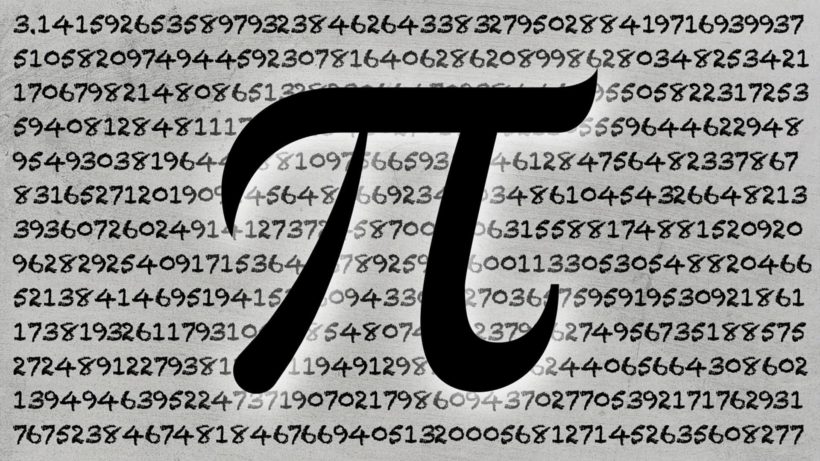
1- Having concluded the mathematical page of Suka we mentioned the suggestion repeated in the name of the GR”A or others regarding the number of Pi. π. 

Triple Berry Pi Day Pie Recipe by Pillsbury

See here. And here. Interesting stuff. 

הגאון מוילנא מסביר שרמז ליחס בין הקבוע פאי ובין המספר 3 המובא בפסוק – יחס השווה בקירוב למספר 1.0472 (1.0472=3:3.14), נרמז בקרי וכתיב של המילה וקוה שנכתבת וקוה ונקראת וקו, אם נבדוק את היחס בין הגימטריה של המילה קוה (111) למילה קו (106) נקבל שוב את המספר 1.0472 בקירוב, הדבר הנרמז כאן הוא שעל אף שלמעשה היה ראוי לכתוב את המספר המלא של הקבוע פאי, לצורך נוחות הקריאה נכתב רק העיגול של המספר.

2- We jumped ahead a bit to 9a to get an understanding of the parameters that create a Kosher Sukkah. 

Firstly, there is the Machlokes between Beis Shamai and Beis Hillel if the construction of a Sukkah needs to be לשמה.  According to Beis Shamai a  focused attempt needs to be present when building a Sukkah. If this מחשבה is not present, the Sukkah is invalid for use. 

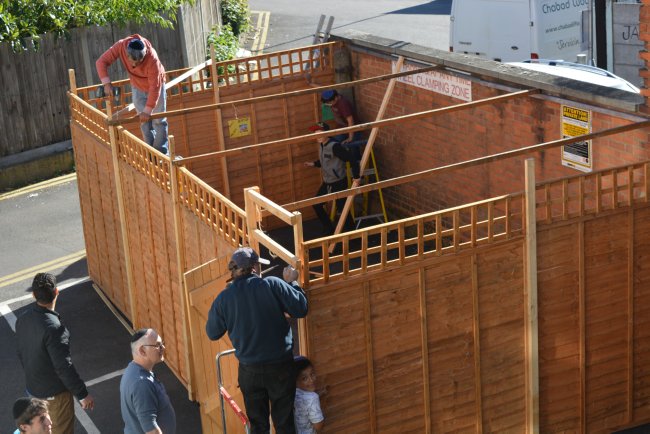
Building The Sukkah | Chabad Ilford

Conversely, Beis Hillel’s opinion is that no intent is needed. So if one buy a house from a non-Jew and he finds a gazebo that has walls and is covered with branches -סכך – it is good for Suka use. The הלכה is like Beis Hillel. 

Gazebo made from branches and vines. Simply Beautiful! #Padgram

3- The Yerushalmi quoted by Tosfos. Despite Beis Hillel stating that the building of the Sukkah does not require לשמה, nevertheless ones need some ‘input’ a חידוש to Kosherize such a Sukkah. Such as rearranging a bit of the Schach. Such is indeed the Halachah. See here

See מגן אברהם and ט”ז there that discuss other topics we touched upon; if this Chiddush need to be in the walls in addition to the סכך and more.

Potters Hut (con immagini)

Potters Hut

4- We reverted back to 8b where the Gemara discusses a hut that leads into another hut. The topic is regarding a person that lives in a Kosher Sukkah all year if he can use this structure on Sukkos.
Why not? It’s not ‘noticeable’ that his sitting there is for the Yom Tov of Sukos. מינכרא מילתא.

Harry Potter Gingerbread House | Gingerbread house, Gingerbread ...

5- These two huts, the inner one and the outside one are labeled in our Gemara as פנימיות וחיצוניות. It’s a good trivia question for בחורים as to where in Sha”s do we find these expressions from Chassidus mentioned in Sha”s. 

[In a previous Shiur we asked as to where the words עשר ספירות are mentioned in the Alter Rebbe’s Shulchan Aruch]. 

6- Being that the Shiur took place on the 21st of Av, we mentioned an interesting observation of Reb Levik on Tanya chapter 37.   See here #22.

Though it is indeed a great descent, a veritable exile for the soul;

כי גם שיהיה צדיק גמור, עובד ה׳ ביראה ואהבה רבה בתענוגים

for even if it become, in this world, a perfect tzaddik, serving G‑d with fear and abundant love of delights,

לא יגיע למעלות דביקותו בה׳ בדחילו ורחימו בטרם ירידתו לעולם הזה החומרי, לא מינה ולא מקצתה 

it will not attain to the quality of its attachment to G‑d with fear and love that the soul experienced prior to its descent into this corporeal world, nor even [to] a fraction of [its earlier fear and love].

ואין ערך ודמיון ביניהם כלל, כנודע לכל משכיל, שהגוף אינו יכול לסבול כו׳

In fact, there is no comparison or similarity whatever between them — between the love and fear of G‑d experienced by a soul on earth, and that of the soul above; [for] as is obvious to every intelligent man, the body could not bear etc. a love and fear of such intensity as the soul experienced above, in the spiritual realms.

The KGB's Belated Apology for the Persecution and Death of the ...

Reb Levik explains the change of languages the Alter Rebbe uses to describe the difference between the אהבה ויראה of a living Tzadik and the דחילו ורחימו  of this same Tzadik prior to him being born. 

The Alter Rebbe begins with לשון הקודש – אהבה ויראה, and concludes with דחילו ורחימו  which is Aramaic. 

In short – Aramaic is translating the Hebrew. So in a sense the לשון קודש is the פנימיות.  The Aramaic is חיצוניות. 

So the Alter Rebbe is saying that even the best a living Tzadik can attain, the highest level of love and fear בפנימיות is less than the love and fear that he had prior to being born. Less even that the חיצוניות level of his love and fear before descending to this world. 


shiur Suka 7b- 8a 8/4/20

 BS”D 

Suka 7b- 8a. 

14 of Menachem Av, 5780 – August 4th 2020

Some short notes on the past 3 Shiurim. 

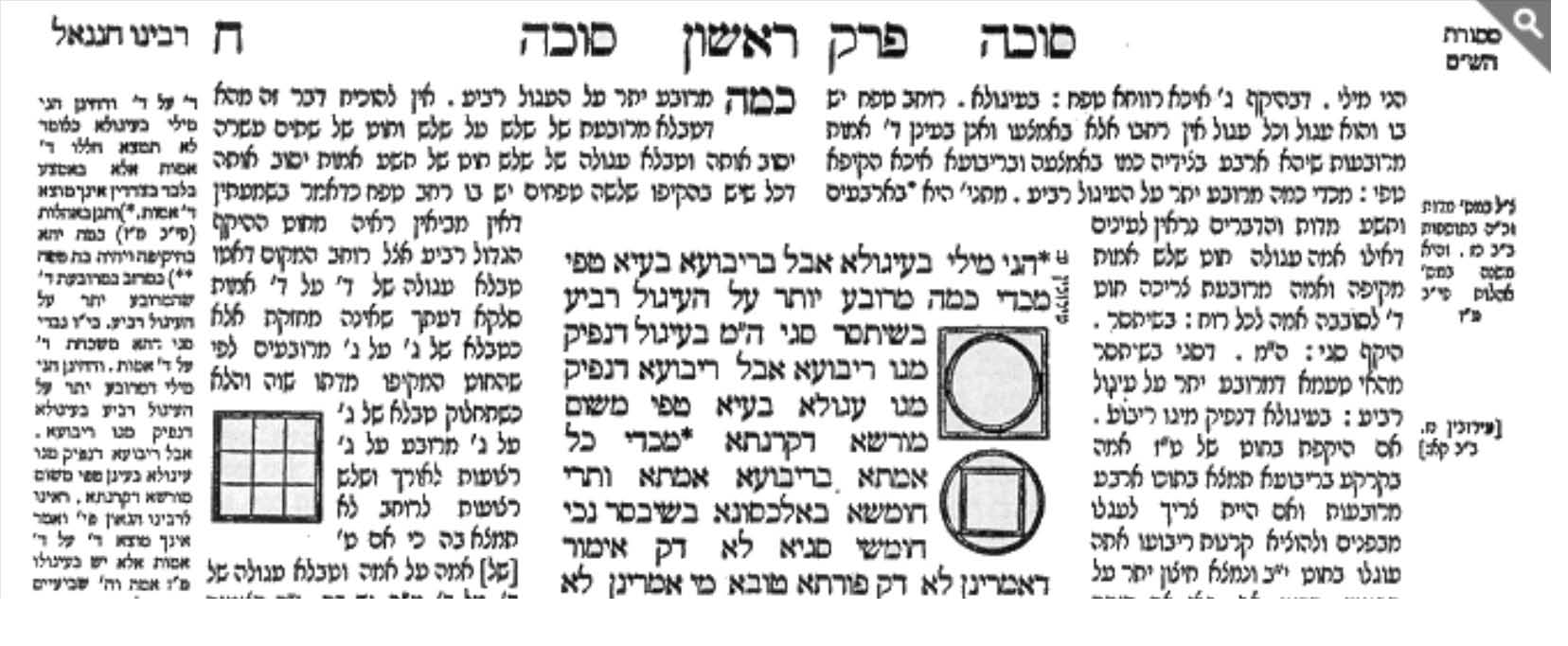
We covered the famous ‘page of math’ that frightens many from learning Meseches Suka. 

ב”ה נכנסנו בשלום ויצאנו בשלום…..

1- The topic is a round Suka and the calculation of its minimum square area. 

Reb Yochanon said that it is the circumference of ‘24 people’. 

Business People Sitting In Circle Of Office Chairs In Field Stock ...

Assumption that he meant 24 Amos. Meaning 8 Amos in diameter. Based on the principle (rounded off) of Pi. π

Explore the Mysterious Number Pi (π) | STEM Little Explorers

2- We discussed the minimum of a  round Sukkah wall, what percent of the circle needs to be enclosed. Meaning how much of the circle does it need to be an actual wall versus the opening. An adobe structure.

Whereas in a Sukkah with straight walls we have two opinions – 2 full walls and a Tefach, or three full walls and a Tefach- with a round circular Suka what percent of this wall needs to be enclosed. 


The Sefas Emes writes that he is unsure. Perhaps it needs to be at least half enclosed plus a tefach. On the other hand it may be that since it is a ‘single wall’, it needs to be 100% enclosed, minus an opening for entrance. 

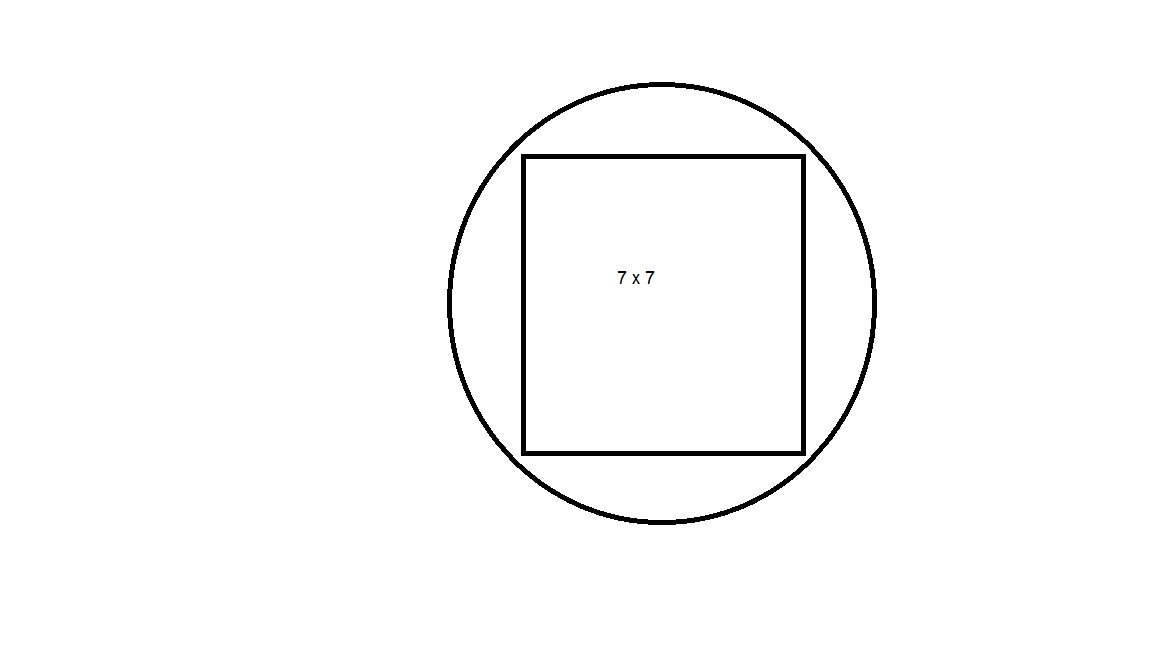
3- We discussed the Mogen Avrohom’s opinion (OC, 634, 1) that since a round Suka must be large enough to fit a Kosher sized square Suka, (7×7 Tefachim) thus a corner in any Suka that doesn’t have a 7×7 space is problematic and one should not eat there! 

We continued with the opinion of the Bikurei Yakov from the Aruch La’Ner that takes this a step further and says that in the above picture of a round Suka that has a 7×7 square in the middle one cannot sit in the area outside the square. But the Mishnah Brura disagrees. 

4- Speaking of Pi and its approximation of 3 by the Gemara in many places, we mentioned the Chinuch 258 that the Chachomim were obviously aware that the number 3 is just a rounded figure to the nearest whole number. Therefore, in  the world of business, one needs to be exact. 

כל אמתא ברבועא אמתא ותרי חמשי באלכסונא, וכן כל שיש בהקפו שלושה טפחים יש בו רחב טפח, וכן כמה מרובע יתר על העגול, רביע, וכיוצא בכללים אלו, שלא אמרו זכרונם לברכה על הכוון הגמור כי אם בקרוב, ולכן אל תסמך בזה בחלוקת הדברים בין בני אדם.

Here it is in it’s entirety:

ספר החינוך רנ”ח

ועוד הרבה עניינים המתבארים בספרי חכמת החשבון וגימטריאות שיחלקו בין זוית נצבה לזוית נרוחת וזוית חדה, ואלו שלוש צורותיהן (זוית נצבה, זוית נרוחת, וזוית חדה) ובין משולש שוה הצלעות והמשולש אשר שתי הצלעות בלבד שוות, והוא נקרא משולש שוה השוקיים ובין משולש שאין צלע מכל צלעותיו שוות הנקרא המתחלף הצלעות, ובין מרובע ריבוע שוה למרובע אורך, ומרובע מעויין מרובע דומה למעויין, וכמה צדדין באלו לא יכיל קלף גדול לרוב הצורות שעשו בזה בעלי חכמת התשברת והשיעורין הנקראין אלהנדסה בעניינים אלה.

ומכל צד צריכין אנו להזהר הרבה במדידת הקרקעות.


ותזכור עם זה כי הכללים שכללו חכמים זכרונם לברכה בעניני החשבון, כגון מה שאמרו עירובין נז, א)

כל אמתא ברבועא אמתא ותרי חמשי באלכסונא, וכן כל שיש בהקפו שלושה טפחים יש בו רחב טפח, וכן כמה מרובע יתר על העגול, רביע, וכיוצא בכללים אלו, שלא אמרו זכרונם לברכה על הכוון הגמור כי אם בקרוב, ולכן אל תסמך בזה בחלוקת הדברים בין בני אדם.


ואל תתמה איך יכתבו דבר בלתי מכוון והם אנשי אמת, אשר אלקים נצב בעדתם, כי הם לא נצרכו אל החשבונות כי אם בחשבון תחומי שבת או בזריעת הכלאים ונטיעתם וכיוצא באלו הדברים, ובזה מה שלא כוונו בו מביא אותנו לידי חומרא ואינו מזיק לשום אדם בממונו, ואף על פי כן העידו ברוב מקומות אלו, שאין החשבון מדוקדק שם, שאמרו בכל מקום ומקום כפי הראוי בו, היינו דלא דק ולחומרא לא דק, וכיוצא בזה שהודיעונו בכל מקום, שלא נתלה בהם מיעוט השגחה וידיעה בדבר מכל הדברים.

ויתר פרטי המצוה בבתרא ובמקומות אחרים ח”מ סימן רל


5- We mentioned the Mamor of the Tzemach Tzedek (previous shiur??) that the reason Pi is an infinite number is to symbolize the infiniteness of G-D.  

6- Before Tisha b’Av we spoke about the perplexing topic of the concerning the second Beis Hamikdosh. 

The Second Temple Jerusalem Beach Towel for Sale by Aryeh Weiss

As the Rambam writes, the builders used the plans of the first Mikdash but added some items as per the prophecy of Yechzkel. 

The question is as follows: The prophecy, detailing how the next Beis Hamikdosh should be built, was said during the 70 years of exile. So it must have meant the second one. So why didn’t they follow it? Was it because it was cryptic? Not decipherable? So it was not meant for the second and implied that there  would be a third? 

 If so, it means that while building it, they were fully aware that eventually it will be destroyed….again?? 

We spoke about the solution of the Tosfes Yom Tov

התוספות יום טוב מסביר שנבואת יחזקאל נאמרה על בית המקדש השלישי, ולא על בית המקדש השני. משום כך שבי הגולה בנו את בית המקדש השני על בסיס תבנית בית המקדש הראשון, ורק בדברים מסוימים הסתייעו בנבואת יחזקאל.

בהמשך דבריו מסביר התוספות יום טוב מדוע בית המקדש השני לא נבנה על פי נבואת יחזקאל, אלא על פי התבנית של בית המקדש הראשון, ורק כמה דברים נעשו על פי נבואת יחזקאל:

לכך אני אומר שלפי שלא הייתה תשובתם הוגנת, לא יוכלו למלאותו בכל חלקי הבניין כמות שהוא, לפי שאותו בניין מיועד לגאולת עולם, שתהא הכבוד חונה לעולם, כעניין שנאמר שם: “ושכנתי בתוכם לעולם” (יחזקאל מג,ט). ומכל מקום, הואיל והיה ראוי להם – ראו כי טוב לבנות מעין אותו הבניין במקצת מן הדברים…

See also here what is found on line. 

Shiur Sukkah 7a 07/14/20

Sukkah 7a. Tamuz 22, 5780. July 14, 2020

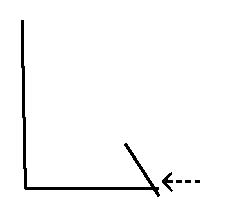
A- We continued the topic of the ‘one טפח’ that needs to be added to the two or three walls to create a kosher סוכה. 

Only two and bit walls remaining as this old home is slowly being taken over by the trees and weeds. Stock Photo - 79491060

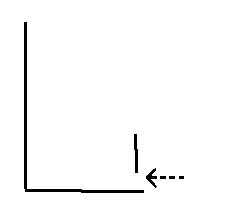
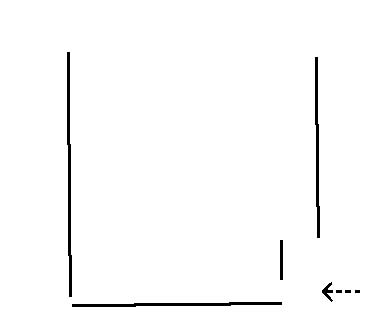
There are 4 explanations as to where and how this טפח needs to be placed.

1- Rav- at the edge of the wall. At a 90° angle.

乚⇠ טפח 

2- Rav Kahana and Rav Asi – at the edge of the wall but at an angle tuned into the סוכה. 


                                                                                                              טפח 


3- Reb Yehoshua ben Levi – 

                                                                                                                טפח


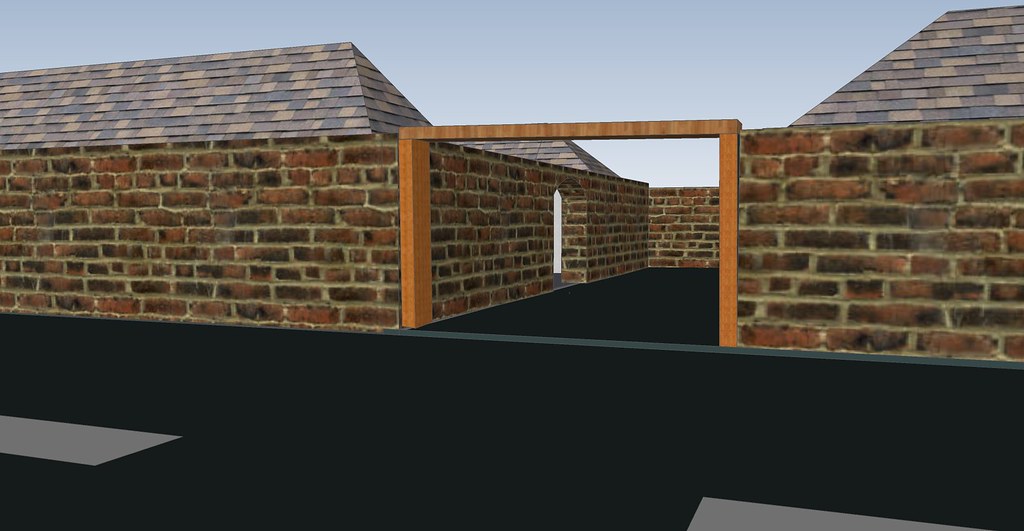
4- Rava- The wall to the right needs to be a צורת הפתח. 


 טפח 


צורת הפתח בכניסה למבוי | צורת הפתח בכניסה למבוי | Flickr

צורת הפתח

B- We discussed the expression the Gemara uses as to Rav’s (#1) reaction when he heard the opinion of  Rav Kahana and Rav Asi (#2). 

“He was silent’. 

We discussed the meaning of this several years ago

From Shiur Beitza 6a 

“We read the text of a note the Rebbe wrote and printed in a few Ma’amorim. The Rebbe Rashab and the Freidiker Rebbe explain that occasionally one comprehends something with clarity and conviction. It is as if he ‘sees the concept’.

And yet, despite being convinced of its truth, he cannot explain it.

His ability to rationalize his understanding to others is not yet developed. ‘Chochma that has not descended to Bina’.

As an example they quote our Gemara where Rav simply did not answer the question posed on his opinion.”

See there for the continuation.

שתיק רב


Shiur Sukkah 6b, 7/7/20

Suka 6b

Tamuz 15, 5780. July 7, 2020

Some points from the Shiur, in brief: 

1- The Beraisa with the opinions of the חכמים and Reb Shimon about the minimum amount of walls a Sukkah requires:

File:3D Sukkah Model.jpg

 חכמים – two full walls and one טפח.

רבי שמעון – three full walls and one טפח. 

2- Our Gemare presents 5 explanations as to the logic of this argument. 

3- We discussed at length the concept of 

יש אם למקרא  and  יש אם למסורה

There are many words written in the תורה  that are pronounced slightly different than the way they are actually spelled.  That is the מסורה (written) versus the  מקרא (reading). 

With most of these occurrences, the meaning does not change whether one follows the written text or the way it’s pronounced. 

To use an example from this week’s Parsha – Pinchos.

Now Pinchos can be written as פנחס or with an added Yud- פינחס. 

פרשת פינחס פותחת בדברי ה' "פִּינְחָס... - האקדמיה ללשון העברית ...


In the Torah we find it written both ways. Regardless, it all sounds and means the same. The name of the person called פנחס. 

Occasionally, the way it is written has a different, and opposite, meaning to the way it is pronounced. Sukkah is one of them. 

The Posuk concerning the building of a Sukkah has the word Sukkah three times. But twice it is written as סכה and once סוכות. 

בַּסֻּכֹּת תֵּשְׁבוּ שִׁבְעַת יָמִים כָּל הָאֶזְרָח בְּיִשְׂרָאֵל יֵשְׁבוּ בַּסֻּכֹּת.

לְמַעַן יֵדְעוּ דֹרֹתֵיכֶם כִּי בַסֻּכּוֹת הוֹשַׁבְתִּי אֶת בְּנֵי יִשְׂרָאֵל בְּהוֹצִיאִי אוֹתָם מֵאֶרֶץ מִצְרָיִם אֲנִי יְהוָה אֱלֹהֵיכֶם.

If we follow the written word, סכת, סכת, סכות, we arrive at a total of 4 mentions of the Sukkah. 

However, if we are to follow the way it’s pronounced סוכות ,סוכות ,סוכות we have a total of six! 

As the Gemare explains, using the two methods, מסורה או מקרא, one comes to different conclusion of the minimum amount of walls required when one builds a Kosher Sukkah. 

4- We quoted the RI”F who explains the feminine expression אם למקרא  as opposed to the masculine expression used by בנין אב.
Also discussed the thought of the
שערים מצוינים בהלכה. Written by the grandfather of Rabbi Braun, of the Crown Heights Beis Din.

קובץ:שז ברוין אצל הרבי.jpg

הרב שלמה זלמן ברוין אצל הרבי

5- We briefly discussed the issue of the Mitzvah of writing a Sefer Torah today. 

Jerusalem Kosher News » The Sta”m Chronicle (7)

The Gemore says that already in its time סופרים were unsure as to all the חסרים ויתרות.

A Sefer Torah that is missing a single letter is not Kosher.

Sha’agas Arye concludes that today, we simply cannot be מקיים this Mitzva because we are unsure how to write every word! 

Minchas Chinuch (613) disagrees. True he says, a Sefer Torah that is missing a single letter is not Kosher. But that is only with words that create a practical difference based upon the way it is spelled. Writing פנחס או פינחס makes no Halachik difference. Whichever  way one writes it, it is Kosher בדיעבד.  

When is a Sefer Torah invalid if written incorrectly, concludes the מנחת חינוך, only when the error would create a practical difference. As an example he uses סכת  and סכות

Whenever there is a מחלוקת  of יש אם למקרא or יש אם למסורה there was never an argument as to the way it was written or pronounced. They argued as to which one we should follow. 

If one would spell it differently it would indeed make the ספר תורה not Kosher. 

And in such places throughout our entire history there never was a doubt on how exactly we should write it. 

Therefore, even today there is a valid Mitzvah to write a ספר תורה. 

See here where the Rebbe brings both the שאגת אריה and the מנחת חינוך. Footnote 19. 

Short notes in Hebrew:

אם למסורה. 

שו”ת הרי”ף. איני יודע. אולי- כי מבנין אב למידין לענין אחר. משא”כ אם למסורה רק לנידן דידן. 

שערים המצויינים בהלכה – אם עקרת הבית – נשארת במקומה. 

אלישב. בנין אב- רק מדמין ויכול להיות שאין דמיון. כמו אב שלאו דווקא הוא האב. משא”כ האמא היא מאה אחוז. 

שאגת אריה שהיום א”א לקיים מ”ע של כתיבת ס”ת. כי אין אנו בקיאין.

מנ”ח- ח”ו לומר כן, מדלא כתבו  הראשונים. חסר ויתר שאינו נוגע להלכה לא פסול. רק במקומות כמו: יש אם למקרא. 

על כללות החיוב של כתיבת ס”ת היום, דעת הרא”ש וכו’, לקו”ש כג, 17.


Shiur Suka 6a (2) 6/30/20

Suka 6a (2)

1We continued the Sugya of Shiurim. 

From the seven word in the Pasuk  כִּי ה’ אֱלֹהֶיךָ, מְבִיאֲךָ אֶל-אֶרֶץ טוֹבָה: אֶרֶץ, נַחֲלֵי מָיִם–עֲיָנֹת וּתְהֹמֹת, יֹצְאִים בַּבִּקְעָה וּבָהָר. אֶרֶץ חִטָּה וּשְׂעֹרָה, וְגֶפֶן וּתְאֵנָה וְרִמּוֹן; אֶרֶץ-זֵית שֶׁמֶן, וּדְבָשׁ. We derive 7 שיעורים .

Last week we covered חִטָּה וּשְׂעֹרָה. 

2גֶפֶן. From this we know that the שיעור for wine, grapes, grape skins, pits and grape leaves tht is prohibited to a נזיר is a רביעית. 

Grapevines on Pergolas Arbours Carports

We discussed the perplexing question as to why our Gemara does not say that all prohibited liquids are the שיעור of a רביעית. 

לוג

So far we found two people that discuss this issue. The גולת עליות, written by הרב דובער ב”ר שמעון ליפשיץ מווייעטקע בספרו גולת עליות על מס’ מקואות  ווארשא, תרמ”ו

He was a grandson the Reb מרדכי, the Alter Rebbe’s brother. 

This interesting ספר is a fundamental explanation on Mishnayos מקוואות. We mentioned him a few times when studying מקוואות. He quotes numerous times the Alter Rebbe and צמח צדק. See here footnote 33. 

The other one is the אבן האזל.  

3רמון . We will discuss this bl”n next week as it pertains to מקוואות. 

Pomegranates Information, Recipes and Facts

4חציצה

As the Gemara phrases it, there are 3 types of חציצות. 

1- One that:

a- covers the majority of the body, and 

b- one cares to remove it. רובו ומקפיד. 

Such as a painter that has most of his body covered with paint but he does not appear in public until he removes the paint. 

Children's Art Wanted for Exhibition | Childrens art, Hand art, Art

Such a חציצה is prohibited מן התורה. 

2- Only one of the above. (Not both): 

a- covers the majority of the body and b- one does not care to remove it.

Such as a mechanic that is almost totally covered in grease but he does not clean himself since it will get dirty again tomorrow…. רובו ואינו מקפיד . 

How to clean grease from your hands click here right now to see for yourself how to clean grease from your hands #stepbystep

Or

a- covers only part of his body and b- he does care to remove it.

Such as a bit of nail polish on a finger. Small part of the body is covered but no one walks around without removing it. מיעוטו ומקפיד. 

Your nail polish might be toxic. Here's how you can tell

Such a חציצה is prohibited only מדרבנן. 

3- Only part of his body is covered and one is not particular to remove it. 

Like a pen mark on a man’s hand.  מיעוטו ואינו מקפיד. 

How to Get Ink Off Hands

Such a חציצה is מותר מדרבנן. 

Nevertheless the מנהג is not to use the מקוה even in such a case. 

6- We discussed the question asked to Reb Chaim and his answer. 

In case 2a above: 

a- covers the majority of the body and b- one does not care to remove it.

We say that it is כשר מן התורה but not a good טבילה מדרבנן 

Once the חכמים prohibited to have any חציצה , meaning that even a bit of nail polish is prohibited, that would automatically cause the person to be מקפיד! 

Therefore it would be like case 1 above: רובו ומקפיד. And in invalid טבילה מן התורה.