BS’D
Sukkah 21a-b
Sivan 14, 5781
May 25, 2021
1- We reviewed the גמרא of last shiur concerning the extraordinary measures enacted in the preparation of the ashes of the פרה אדומה.

Courtyards were built in Jerusalem over rock, and beneath them there was a hollow which served as a protection against a grave in the depths. And they used to bring there pregnant women, and there they gave birth to their children and there they raised them. And they brought oxen, upon whose backs were placed doors, and the children sat upon them with stone cups in their hands. When they reached the Shiloah spring they got down and filled the cups with water and then they ascended and sat again on the doors. Rabbi Yose said: each child used to let down his cup and fill it from his place

As a result of the fierce argument with the צדוקים, the Kohen who prepared the ashes was intentionally made טמא! This was to show that the מסורה of the חכמים was the true one, contrary to the opinion of the צדוקים.
To counter this leniency, many practices were enacted to publicize that the process is very serious and needs to be made in a way that will preclude any chance that any טומאה was encountered.
One of them was the camping out of the children in a secluded area until the next פרה אדומה was processed.
2- We discussed that these extreme measures (above and also the building of a suspended ramp from the הר הבית to the הר המשחה see פרה 3, 6 ) caused others to go even more extreme to the point of Reb Akiva and Reb Yosi said “enough – you are causing the צדוקים to mock you!”

3- Further along the גמרא brings a ברייתא concerning what the above Mishna says:
And they brought oxen, upon whose backs were placed doors, and the children sat upon them with stone cups in their hands.
Reb Yehuda says that the children sat right on the oxen- not on top of the doors placed on the oxen. The reason being that a child on a ox will be afraid and not lean over the ox or stick his foot or hand over the side.
If, however, he is sitting on a wide door, then “a child is restless” and (not being afraid of falling off) will play around and stick his hand out.
4- We mentioned the story related by Reb Yoel Kahn of the young Lubavitcher בחורים in Tel Aviv, in the early 40s, who talked a newcomer בחור into performing תיקון חצות by conning him that it was מנהג חב”ד and the resulting rebuke they received from their מנהל Reb חיים שאול ברוק.
In passing we spoke about Reb Chaim Shaul’s Brook quip about the nature of בחורים.

There is a old Yiddish saying אִם לֹא יוֹעִיל, לֹא יַזִּיק . Meaning there’s nothing to lose; even if doesn’t help, it can’t do any harm.
Reb Chaim Shaul would reverse the saying and say: אם לא יזיק, לא יועיל. If a בחור does not have at least a mild wild side to him, ( שטיפען ) he’s not a מזיק, then לא יועיל, when he grows up he will not amount to much……
5- Our גמרא says concerning a bed that since its primary purpose is for sleeping on the top, the underside of the bed cannot be considered an אהל.
The גמרא continues to ask since it is quite normal for people to place their shoes or sandals under the bed.
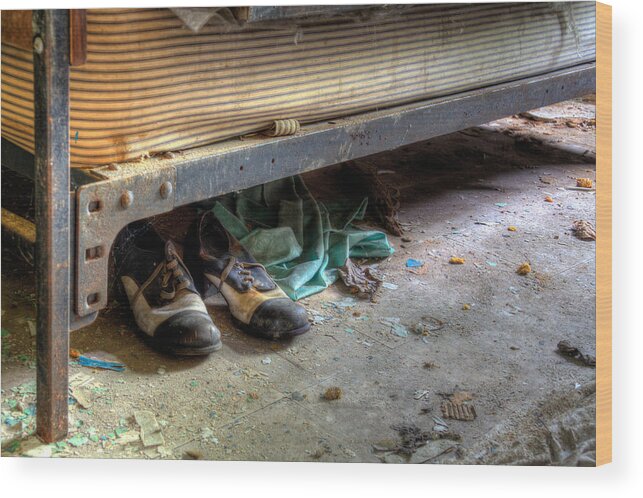
We discussed the prohibition of placing food or drinks under a bed.

See here from the Alter Rebbe in his שלחן ערוך
6- We corrected something mentioned in the last shiur concerning the ספר רוקח written by Reb Elozor of גרמיזא.
The taking 3 steps when concluding שמונה עשרה is mentioned in the Gemara.
תלמוד בבלי מסכת יומא דף נג עמוד ב
אמר רבי אלכסנדרי אמר רבי יהושע בן לוי: המתפלל צריך שיפסיע שלש פסיעות לאחוריו, ואחר כך יתן שלום. אמר ליה רב מרדכי: כיון שפסע שלש פסיעות לאחוריו – התם איבעיא ליה למיקם, משל לתלמיד הנפטר מרבו, אם חוזר לאלתר – דומה לכלב ששב על קיאו.
However the taking 3 steps before שמונה עשרה is from the תקנות of the רוקח. The reason as the Alter Rebbe writes is to ‘make an approach’ prior to davning.
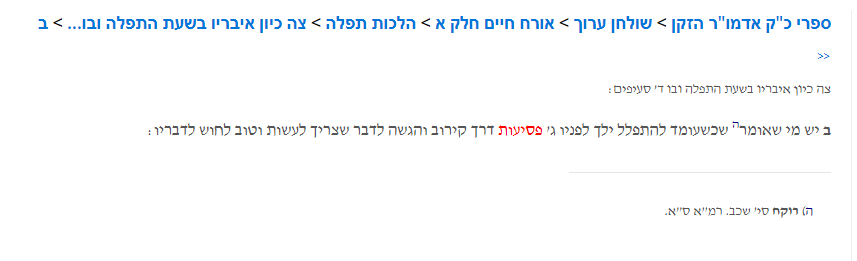
We tried to figure out as to why before davening we take three steps backwards to then take three steps forward.
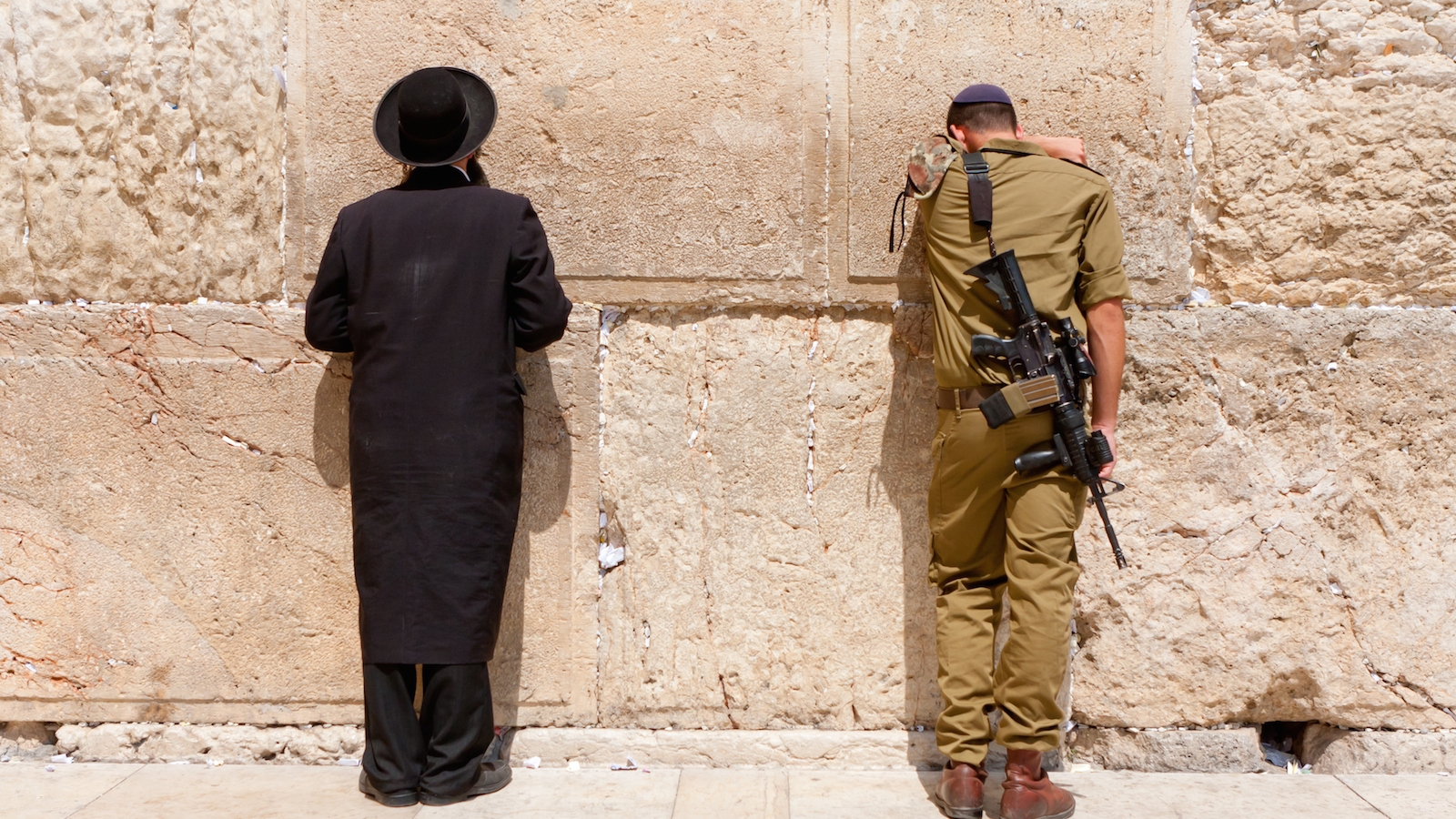
If one is standing in from of a wall or a table it makes sense. But if one standing in middle of the shul….why not just take three step forward?
Good question.
כן כותב מפורש באליה רבה סימן צ”ה.
וכן משמע לכאורה דעת אדה”ז שם.
See here
When completing שמונה עשרה, we take three steps back, as above גמרא , as a sign of respect when departing from the presence of a King.
One needs to stay there a bit to complete this show of respect and then go back to his original position.
Why? To be continued.