Makos 23b
1- The Gemara deliberates the case of one who transgresses a sin that results in both Kares and Makos, whether or not the Kares is forgiven after he received Makos.
Now, Kares is something between a man and his Maker. So whether or not he is forgiven is something not to be decided by humans!

Humans can discuss and argue the logic of either way but a decision must be made by G-D himself. There is no Bais Din decision involved.
Nevertheless at the conclusion Rav says: “The Halacha is that he is forgiven”.
So Rav Yosef asks a very interesting question to Rav. “Who has ascended to heaven and returned with the decision”.

2- We spoke about the numerous places in Sha”s where a ruling is issued about something that has no relevance today and the Gemara asks “Hilchiso le’Meshicha?!” Meaning, why rule and decide in a machlokes as to who is right when the practical application will only come into play when Moshiach arrives.
Tosfos take issue as to why the Gemara does occasionally ask this and sometime not.
3- We discussed the concept of “Tora lo Bashomayim”.
that prophecy, dreams and even the appearance of Eliyahu Hanavi are inadmissible to the Halachic process.
Here is the famous case of Rabba Bar Nachmeini (B”M 86a.)
| The story concerns a question of tzara’at judged by Rabba bar Nachmeini:
In the Heavenly Academy
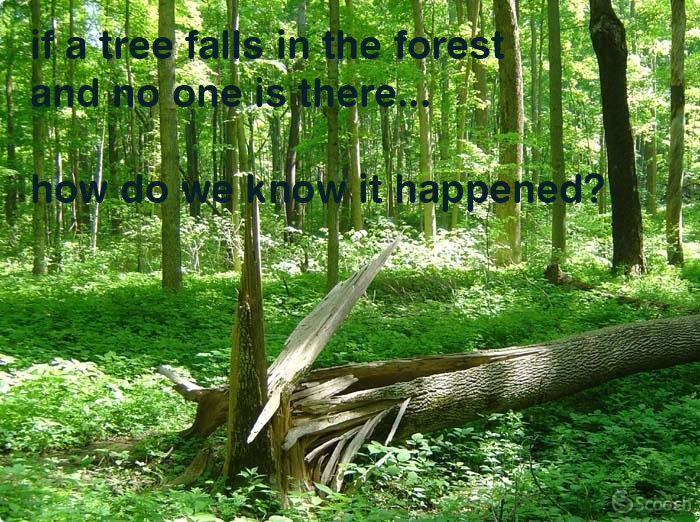
they were arguing: If the bright spot precedes the white hair, it is tamei; and if the white hair precedes the bright spot, it is tahor. If it is doubtful [which came first], the Holy One Blessed be He says it is tahor, and the entire Heavenly Academy says it is tamei. They asked, “Who shall decide? – Let Rabbah bar Nachmeini decide, who said, ‘I am peerless in the laws of Plagues and Tent-tumah.’” They sent a messenger out for him, but the angel of death could not touch him, because his mouth never ceased from its learning. Meanwhile, the wind blew among the reeds, and Rabbah bar Nachmeini thought it was a legion of mounted soldiers looking for him [he was a fugitive from the government]. He said, “Let me die at the hands of the angel of death rather than be delivered into the hand of the government.” At the time of his death he said, “Tahor, tahor!” A divine voice went forth and said, “Fortunate are you, Rabbah bar-Nachmani, for your body is tahor and your soul departed with ‘tahor.’” See here a lengthy Mamor of the Alter Rebbe on this topic. The reasoning for the Rambam’s ruling is at the end. 4-We discussed one of the answer of the Kesef Mishna as to why the Rambam sides not with G-D…. and rules against “Him” and Raba bar Nachmeini. His answer: This story occurred in a forest with no one present. So how do we know it happened?
The only way we have a record of this ruling is that somehow this fascinating story and the conclusion of Rabba Bar Nachmani ruling in G-D’s favor was revealed to us via Ruach Hakodesh or through Eliyahu Hanavi. So the actual ruling of Raba Bar Nachmeini is known not through normal channels of Halacha but rather through a spiritual or miraculous method. We therefore cannot rely on this story.
5- We mentioned the Chasam Sofer who disagrees with the Kesef Mishna on this point. In short: If there was deliberation in the Sanhedrin about a vexing Halachik problem and a conclusion was reached in Yerushalayim but we in the USA have yet to hear about is. But in walks in Eliyahu Hanavi and tells us about the decision reached in Yerushalayim. Can we rely on him? Is accepting his testimony contrary to the concept of Torah Lo Bashmayim – since he is not a human bona fide witness? Absolutely says the Chasam Sofer. Why? Because we are not deciding the actually Halacha as a result of a prophecy. We are using Eliyahu as a mere informer as to what was decided by humans in the Sanhedrin! Therefore the fact that the entire episode of the ruling by Raba Bar Nachmeini reached us in an unnatural way does not preclude us from following it.
So the question remains as to why the Halacha does not follow RB”N’s ruling. 5- As an example of an issue that can in theory be decided by the Sanhedrin we chose the Zebu. Some have not yet heard about this issue so here it is short with some links. A Zebu is a South American humpbacked cow that made its appearance just a few decades ago. Can we eat this newly found “cow”? It is Ma’ale Geira and has split hooves. But Jews never came across it until recently.
In any case…Bon Appetit! http://traditionarchive.org/news/_pdfs/Bleich%2086-106.pdf
|