All posts by daf

Shiur 10/23/18 – Beitza 38b

BS”D

Beitza 38b

1- We continued the complicated Sugya about the nature of Techumin.

Image result for ‫תחום עירוב‬‎

The crux of the discussion: Is תחומין defined as a monetary issue or does it fall into the category of issur?

The answer to this question would also clarify as to why when one takes water or salt from her friend on Yom Tov and uses it to create a dough, the Mishna says that this dough or bread can be moved only up to the Techum of both; the flour and water, owners.

The question is why the small amount of water is not בטל to the flour?

Now, if Techumin is a pure monetary issue (meaning that it is predicated on the ownership of the item at the onset of Yom Tov), then the Mishnah is understood: The dough is owned by two people: The provide of the flour guy (majority) and the  water (minority) is owned by another person. And since this is a money case  (non issur)   the even the minute water amount is still ‘money’ and it cannot be בטל inside the dough. (Pardon the pun).

On the other hand if Techumin is only an issur issue, then we need to understand why the there is no ביטול in such a case. Why should the minute amount and value of the water not be בטל , and thus the dough should have only one ‘owner’?

2- The difficulty in understanding the dialogue of Reb Abba, the Israeli אמוראים mocking of his response, the explanation…

3- We mentioned the great Rabbi of Salonika, Reb Shmuel Di Medina. See here and here. Also known as the  מהרשד”ם -Maharashda”m.

Image result for ‫מהרשד"ם‬‎

From the library of the son of the Ksav Sofer in Pressburg

His response (YD # 117)  was to a question concerning a group of Jews in the ‘shmatte’ industry. To acquire wool to weave into material they would go out to the farms and purchase bales of wool from non-Jewish shepherds. To avoid increasing the price by bidding against each other they agreed to a maximum price they would offer to the farmers.
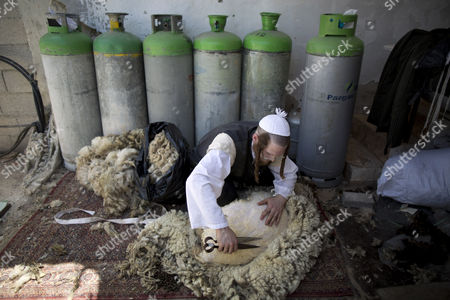
Image result for jew shearing

Occasionally, one fellow would make a מחאה that he is unhappy with this arrangement as he would be willing to pay above the agreed price.
Image result for ‫מחאה‬‎

The question was, if his opinion, being the minority one among this group of shmatte dealers, is בטל!!

See here where he writes that although we generally follow the rule of אחרי רבים להטות, meaning that we always follow the majority, and an item is בטל ברוב, in monetary issue we do not follow this rule. [There is a lot more in this תשובה].

4- The Gemore says that one אמורא  told his friend משה! and then states his opinion. Rashi says it is like saying “I swear by משה רבינו  that I am right”.
We mentioned Rambam that writes that it is the custom among Jews to swear in such a manner.

Sefer Hamitzvot, Positive 7

Therefore, one may not swear in the name of any other creation, such as angels or stars. An exception is where the subject [i.e. G‑d] is obviously omitted, such as one who swears in “the truth of the sun,” but means “the true G‑d of [i.e. Who created] the sun.” It is in this manner that our nation swears in the name of Moshe — in order to gain honor through [mentioning] his name. It is as if the person uttered the oath, “in the G‑d of Moshe,” or “in the One Who sent Moshe.


 

Shiur 10/16/18 – Beitza 38a

BS”D

Beitza 38a

1- We concluded the topic of Breira with two humorous stories.

According to the doctrine of Breira, subsequent decisions can under certain circumstances be retroactively applied to change or clarify the nature and Jewish-law consequences of prior events.

The busy Australian photographer who said “I am so busy that I’m losing my mind. As a matter of fact I’m just coming back from a wedding that I have tomorrow”…..

The Crown Heights yungerman that attends all LeChaims and weddings etc and perhaps partakes to excess. The next morning, having no recollection of what transpired, he checks COL to find out where he was the night before…..

Image result for collive

2- We discussed the case of the Chacham scheduled to give a speech but it is unknown as to where he will actually deliver it.

3- The Gemara discussed the case of the “Patom”. A farmer that feeds animals to their max and then sells them. The question is if he sells an animal on Yom Tov can it be moved out of the Techum of the Patom.

Related image

We discussed briefly the controversy regarding animal force feeding and foie gras.

Image result for fattening geese

See here a recent article on the Halachik aspect of this practice. Search this blog for an October 2018 post. [Please note: not everything in this blog is Kodesh Kodoshim].

4- We began to learn an interesting and unique Sugya.

Unique in the sense that the great commentaries express a perplexity on how to understand the simple meaning of the words!

P’nei Yehoshua: The Gemara is a ‘sealed book’.

Image result for locked book

Chasam Sofer: This is a tough piece of Gemara. He who can explain it will be designated an ‘expert’.

5- For starters we presented the following 2 questions:

A- Mr. Chaim has a piece of non-Kosher meat that he purchased for $2 a lb. He enters a friend’s house and the treif piece of meat falls into a pot full of Kosher meat.

Image result for meat in a pot

Now, there is enough Kosher meat to be מבטל the non-Kosher piece. So eating the entire pot would be permitted. (not at one time and not by one person etc). Y”D 109 ,1.

Chaim, now demands that his friend pay him for his lost non-Kosher meat. His friend agrees to pay him, but only $2, which is the amount Chaim paid for it.  

Chaim claims that his non-Kosher meat has been ‘Kosherized’, and Kosher meat is valued at, say, $8 a lb.

Who is right?

B- Chaim loses a $10 bill. His friend finds it and places it into his wallet where he has many $10 of his own.

Image result for lost money

When Chaim demands to get his $10 back his friend innocently says “your $10 was בטל in my wad of $10 bills”……

Image result for wad of $10 bills

The answer to the second question is that obviously, the rules of ביטול do not apply to monetary cases.

The first question is a bit tougher. Chaim will definitely get his pound of meat – the question is at what price. See Pri Megodim 109. MZ 1.

6- Story of the fellow that purchased and  paid for 3 הדסים. When he came home he realized that he got 4. When binding his Lulav he chose 3 of the four and he used the Lulav.

Image result for lulav

Was he יוצא? If we apply ביטול, then the one Hadas, that did not belong to him, was בטל in the three.  

But if there no ביטול  is such cases, perhaps he was not יוצא !

7 – Now what about Techumin in a case of the flour belonging to one person and the water to another?

Related image

The Mishna says that a dough made from ingredients of these two people is deemed, in regard to Techumin,  to be ‘owned’ by both. Like partners.

The question is why? The water is בטל to the flour! So the supplier of the water should not be a partner.

Or maybe yes, since in regards to monetary issues we do not say ביטול?

To be continued…


Shiur 10/09/18 Beitza 37b (3)

BSD


Beitza 37b (3)

1- We discussed the case of 2 partners that jointly owned a bottle of wine. Yom Tov morning they decided to split the wine.

Image result for 2 guys and barrel of wine

Now, each partner made an Eiruv that allows him to carry an additional 2,000 Amos outside the city limits. The issue is that each partner made his own Eiruv in a different direction.

Until the bottle was divided, meaning prior to their partnership dissolving, the bottle could only be carried to the Techumin limits that they both have.

But now that the bottle was split, each wants to carry his share to his limit.

Image result for wine barrel half full

The question is a fundamental one concerning B’riera. See here.

When partners split up do we say that the share each received was always “his”.

Or one can say that until the breakup, each owned 50% and this 50% is mixed with his partner’s 50%.  Thus, when splitting we do not know if he really received his ‘own’ 50%.

See previous shiur Beitza 37b (2).  

2- Our Gemara discusses the topic of סוף הטומאה לצאת. We discussed it at length on Daf 10a.

The case of Breira quoted by our Gemara concerning ‘sof ha’tumah lotzeis’. The path of a deceased body on the way to burial is considered ‘tamei’ rendering all overhead rooms, halls, arches and doors to be tamei. If Breira applies here then by choosing a particular path after the person has dies this choice is valid retroactively and all other paths are tahor.

3- We had a heated discussion concerning the opinion of Rav Yochanan that brothers that inherit property (or anything else) it is considered as if they “purchased their portion” from each other.

Related image

The reason for this is, as above, we do not apply Breira. So one does not really know if the portion he received is ‘really’ his. It’s just that there is no other way to split an inheritance other than each taking 50%.

So, being that we don’t know what the true split is, we assume that it is considered as if they “purchased their portion” from each other.

Now, in general, when Yovel approaches, all purchased fields return to the seller.

Image result for jubilee year

The ‘seller’ in our case of two brothers splitting an estate is….each brother. So the entire estate goes back to the ‘estate’.

We were unsure exactly how that works. Need to research it.

4- We mentioned the Gemara in Gitin 48a, where it questions the result of this logic.

א”ר יוסף אי לאו דא”ר יוחנן קנין פירות כקנין הגוף דמי לא מצא ידיו ורגליו בבית המדרש דא”ר אסי א”ר יוחנן האחין שחלקו לקוחות הן ומחזירין זה לזה ביובל

Bikurim need to be brought from a field that belongs to you, excluding fruits from fields that have been purchased, since the field will need to be returned at Yovel.

Image result for first fruits in basket


So Bikurim can only be brought from fields that have been inherited.

According to Reb Yochanan, only a בן יחיד the son of a בן יחיד (going up all the way to the ראש השבט) can bring bikurim!


Shiur Beitza 37b (2)

BS”D

Beitza 37b (2)

1- We continued discussing the Techumin issue.

2- Breira-

“Breira or Bererah (translation: “clarification” or “choice”) is a doctrine in Talmudic law serving as a development of the law of joint property, and its validity is the subject of dispute among Talmudic authorities.

According to the doctrine of breira, subsequent decisions can under certain circumstances be retroactively applied to change or clarify the nature and Jewish-law consequences of prior events. English law has the same concept, known as “relation back”. The concept was known to the later Babylonian Amoraim.”

Our Gemara discusses a case of partners splitting up their assets. Do we consider that each to have owned jointly 100% until their break up. Now that they are splitting each receives 50%.

Image result for partners dividing

Or, if we assume Breira, at the time of the split we consider the 50% each one ends up with to have been originally his to begin with.

3- We brought up Reb Shimon Shkopf. He was a Litvisher Rosh Yeshiva of Telz.

Image result for reb shimon shkop

A classic question of his was concerning the above case. If, as the Gemara assumes, that  Breira retroactively designates that what each partner receives was his from day one of this partnership, then logic would follow that there never was a legal partnership to begin with!

That is impossible to say since there are numerous Halachos that pertain to partnerships.

4- The perplexing opinion of Rav.

Rav and Shmuel disagree regarding a case of partners that own an animal or barrel of wine. They decide to divide it on Yom Tov.

According to Rav the barrel can be carried where the owner may travel whereas the animal can only be carried within the techum shared by the two owners. Shmuel places the same restriction on the barrel.

The Gemara explains that Rav accepts the principle of Breira, but the case of the animal is different because it is a living creature.

We discussed the various explanations given as to why the animal is different that the barrel.

5- We discussed the question posed by Rabbi S.Z. Garelik, the Rov of Kfar Chabad.

Related image

It seems that in 1953, when the question was raised, there a designated driver, Safaria/Kefar Chabad, to take women on Shabbos to the hospital to give birth.

The question about what personal items the driver can take along with him are discussed by many.

But Rabbi Garelik raised another question based on our Gemara.

Taking items out of the Techum. The Gemara considers the wearing of clothing to be ‘carrying’. Thus, a borrowed coat (on Yom Tov) for example, can only be carried as far as the owner of the coat can walk.

[That itself is difficult to comprehend since on Shabbos one may wear as many shirts as one wishes and that it not considered carrying. We mentioned that Reb Elchanan Wasserman discusses this]

Image result for wearing many shirts

So this designated driver, who may be mechalel Shabbos of course, needs to ensure that only the מלאכות that he must do to fulfill his mission are done.

But everything else is strictly prohibited. He may not load his car/ambulance to make another delivery. He may even be required to empty the car with items that are not needed for for ride to the hospital.

Ambulance with all non-essentials removed

Now, the driver leaving the Techum, will also be obviously permitted.  

So asks Rabbi Garelik, the clothing one wears, on which there is a separate Halocha about leaving their Techum, should be minimized by the driver!

He posed this question to the Tshebiner Rov.


Shiur 08/28/18 Beitza 37b

BS”D


Beitza 37b


1- Our Mishna  discusses the detailed laws of תחומין. Meaning the limitation placed on the transportation of utensils based on who is considered the owner.

Image result for techum


We mentioned that the Gemara in Eiruvin discusses this topic at length. But there the issue is the person and his תחום.  In our Gemara, since one may carry on Yom Tov, the topic is the movement of items that are carried.


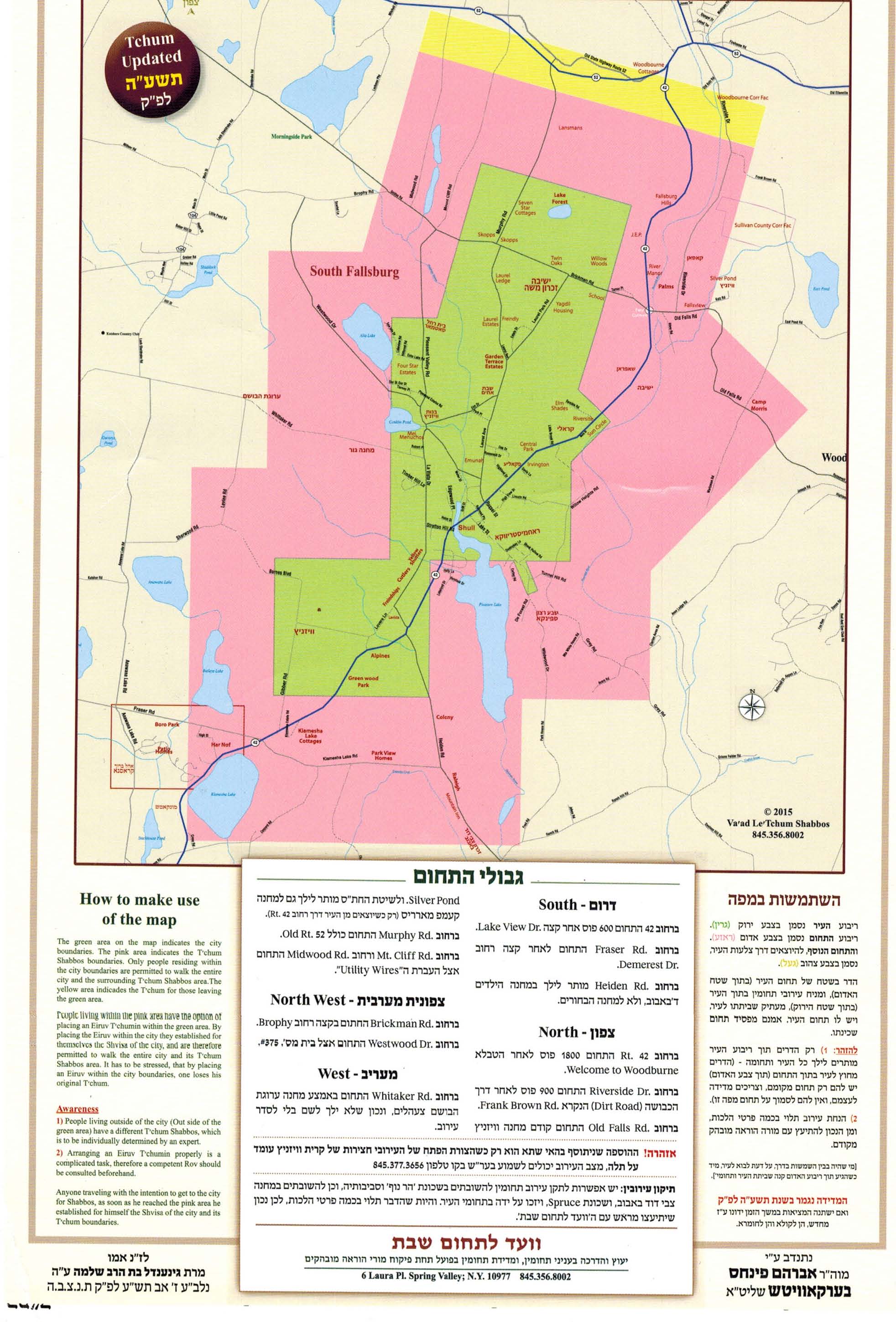
2 – We spoke about the maps prepared by an organization in Monsey delineating the Techum for many cities. The Rov that prepares these detailed maps is Reb  Yechezkel Weiss. He can be reached at 845-709-2181 or techumin@gmail.com


3 – The difference between Sephardim and Ashkenazim in regards to an Eiruv Techumin. See here in the Mechaber and Ramo.

 Image result for sephardim vs ashkenazim

This would be a classical case of someone who places an Eiruv at 2,000 Amos outside his city limits to the North. He then spends the night in the city.

Can he walk around in his city, where he spent the night, to the South?


Image result for city limits

4 – We spoke about need to actually be able to eat the food one places as an Eiruv Techumin. A can of sardines without a can opener may not work….


Image result for can without opener

5- Case of an item shared by two people with different תחומין.  The item is at the end of each one’s 2000 Amos.


It cannot be moved at all!

Image result for man pushing boulder

 6- We discussed the ‘squaring the area of a city” North to South based on a map.


Shiur 8/21/18 Beitza 37a

BS”D

Beitzah 37a

1- The Misha lists the prohibition to separate תרומה  and מעשר on Shabbos and Yom Tov.

The reason is that it resembles a ‘business transaction”. It also has the issue of מתקן מנא. Fixing an item that is not usable. The produce, in our case, is not edible until Truma is taken care of.  

2- We spoke about the question of Tosfos in Gitin 31a. DH Bemachshava. Truma can be given without any action at all. If one has produce that is in separate crates and wants give Terumah all he needs to do is to set aside in his mind a crate for Terumah.

Image result for crates of fruit

We mentioned ‘crates’ specifically. If the item is, say, wine, then although the Truma can still be done by designating the Truma to the last drops in the barrel, another issues arises.

That issue, as discussed at the shiur, is ברירה. The Truma in the barrel is mixed with the rest. Some opinions say that one may indeed drink from the barrel and the last remaining drops retroactively become Truma!

In Kidushin 26b a story is told about Rabban Gamliel who actually did this.

מעשה ברבן גמליאל וזקנים שהיו באים בספינה אמר להם רבן גמליאל לזקנים עישור שאני עתיד למוד נתון לו ליהושע ומקומו מושכר לו ועישור אחר שאני עתיד למוד נתון לו לעקיבא בן יוסף כדי שיזכה בו לעניים ומקומו מושכר לו

But the Halachah is as the other school of thought. Meaning that if someone does that, there is Terumah in the barrel but it is mixed (אין ברירה) and therefore one would not be allowed to drink any of it.  

Image result for bending spoon with mind

So, asks Tosfos, what labor is involved in such an action? So why it is prohibited to perform on Shabbos or Yom Tov? Tosfos answers that even though there is no action per se, nevertheless since he is now making the food edible, it is prohibited because of מתקן.

3- Discussed the two seperate part of Terumah and Ma’aser. The separating and the giving it to the Kohen or Levi.

Image result for tithe to the kohen

3- We discussed the Gemara about a cow and it’s calf that fell into a pit on Yom Tov. Hauling one out of the pit to shecht is very labor intensive but would be permitted on Yom Tov. On the other hand to take them both out creates an issue since both cannot be shechted on the same day because it is אותו ואת בנו.

Image result for ‫תחום‬‎

4- We began the Mishnah about moving one’s objects out of the תחום on Yom Tov and as an introduction established that any 3 houses is technically a city and all cities are Halachikaly by default a square. 

We spoke about the perplexing question as to why Reb Moshe Feinstein wrote extensively against making an Eiruv in Brooklyn but allowed it in Queens.

Shiur 8/14/18 Beitza 36b

B”H

Beitzah 36b

1- Our Mishnah categorizes different activities into three different groups and declares that the activities that are prohibited on Shabbos are prohibited on Yom Tov as well.

One of these activities is sitting down to a Din Torah. We mentioned the words of Reb Shrira Gaon that placing a suspect in a jail is prohibited on Shabbos. “And if as a result he escapes it is not our concern”. See here in the Alter Rebbe. 339, 3.

Image result for escape

2- The Mishnah enumerates other activities which are prohibited because they are similar to doing business. Doing business is prohibited because of two reason;

A- It may cause to write the business transactions.

Image result for writing

B- It is contrary to the spirit of Shabbos and Yom Tov.  ממצוא חפצך ודבר דבר.

3- We briefly touched upon the topic of selling on Shabbos when there is no involvement from the seller. Such as selling online.

Related image

The words of Reb Akiva Eiger (159) are the source of this dialogue. He quotes the תרומת הדשן about  a bechor whose 31st day occurs on Shabbos. The פדיון הבן is performed on Sunday. But how about  giving the כהן the money for a פדיון הבן with the condition that it only takes effect on Shabbos? The TH responds that there would be a problem of when to make the ברכה.

Thank you to Danny who pointed out that we rely on the שואל ומשיב and do the same for מכירת חמץ ערב שבת.

So RAE derives from this that other than the ברכה there is no issue! Thus such business transactions, when nothing is done on Shabbos, may indeed be permitted. RAE writes much more on this topic.

4- The Mishnah concludes by saying that “there is no difference between Shabbos and Yom Tov except “אוכל נפש.  

We mentioned the saying of Reb Zushia of Anipoli who quotes a Zohar that on inviting guests on Yom Tov is more important than on Shabbos.

Thus the words of the Mishah  “there is no difference between Shabbos and Yom Tov except  אוכל נפש.” Meaning the אוכל נפש of the guest…….

Image result for hasidic meal

5- Another activity is קידושין. The Gemora says that when one already has two children (boy and girl) it is not such a Mitzvah. The Gemora is referring to actual marriage.

What about just kiddushin? We mentioned the famous Rambam (IB 1,2) where he writes that קידושין is a Mitzvah. The source for this remains unknown.

Image result for marriage ring

The Rambam’s son writes that his father was asked this question and answered the his father meant the entire process of , קידושין ארוסין ונשואין.

6- We mentioned the רוקח that writes that the letter פ is not found in the Parsha of מעשה בראשית  signifying that on Shabbos one should not use one’s mouth to speak…

7- The Yerushalmi writes that “it is only with difficulty that the Chachomim allowed one to talk דברי תורה on Shabbos”!!!!


Shiur 07/24/18 – Beitza 36a(2)

BS”D

Beitza 36a (2)

1- We continued the Sugya of  אין כלי ניטל אלא לדבר הניטל. Meaning whether something that is not muktzeh and thus permitted to be moved around; can it be moved for the purpose of something that is muktzeh?

2- The opinion of Reb Yitzchok is that it is prohibited. The opinion of Ulla is that it is permitted, and such is the Halachah.

3- Another topic discussed is אין מבטלין כלי מהיכנו. Meaning that something that is permitted at the onset of Shabbos and Yom Tov to be moved around, such as a pot, one may not place something of Muktzeh into this pot. Doing so would make the pot Muktzeh and thus making the pot unusable.

4- We read the text of the Mishna Brura (B’H, אסור) where he poses an interesting question:

Related image

When we wash Negel Vasser in the morning, or מים אחרונים, into a shisel etc, we are basically making the shissel useless since the used water becomes non usable!

We retold the story of the Graf Potozki and the resulting ‘change’ in regard to רוח הטומאה.

La tragedia del Conde – La tragedia del Graf Valentin Potoski

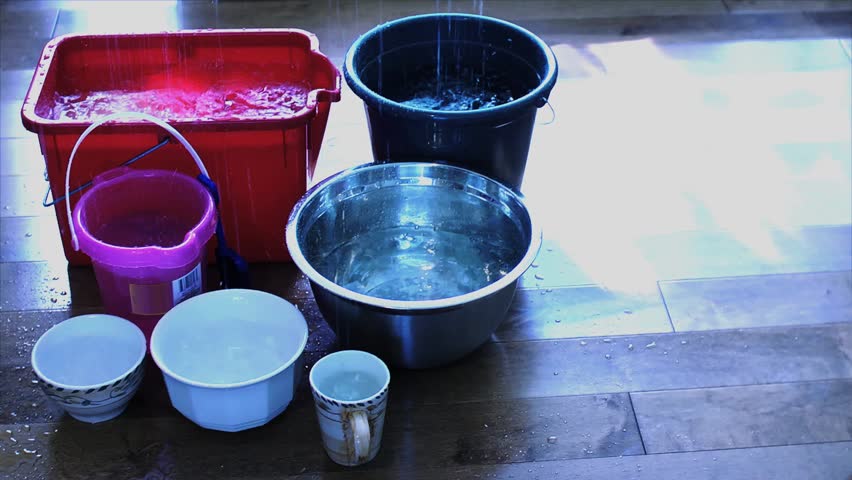
5- If a leak develops on Shabbos and one wants to collect the water by placing a pot under the flow, if the water is murky and not useable (Muktzeh), then placing the pot has two problems.

1-  אין כלי ניטל אלא לדבר הניטל. Moving a pot for water that is Muktzeh

Image result for catching leaking water into pot

2- אין מבטלין כלי מהיכנו. When water will collect in the pot it will render the pot Muktzeh.

6- See here on a topic mentioned in our Gemara.

7- We continued last’s weeks story of the young man who went to the market on Shabbos to collect his debt and the reaction of the Kehila.

The Yavet’z ruled that the only thing the Kehila has on the young man is that he should have asked a Rov prior to going.

Image result for going to market

As to the concern raised by the Kehila that the non-Jews would use the action of this fellow against the Jews, saying that ‘you really don’t observe your Sabbath’, The Yavet’z brings an interesting Gemore.

The famous convert Isser, once said “prior to my conversion I was of the opinion that Jews are not שומרי שבת! Why? Because when I walk in the Jewish neighborhoods on Shabbos I never see money on the streets. Now it’s inevitable that before Shabbos people dropped some change. So why don’t I see any change on the street?

Image result for money in the street

It must be that Jews, when they see money, they pick it up even on Shabbos!

The Gemara concludes that there is a היתר (unknown to Iser at the time) to carry less than ד’ אמות at a time.

So says the Yavet’z, despite hearing what Isser said about his opinion of the Jews, the Chachamim didn’t enact to disallow this היתר  of carrying less than ד’ אמות at a time.

8- He finishes off with a story about Jewish merchants in Amsterdam who heard rumors on Shabbos that a boat carrying merchandise they ordered from overseas may have sunk. Despite the rumors they were able to insure the cargo by verbally binding a policy on Shabbos!

Image result for ship in storm

They didn’t, and the Yavet’z praised them (despite others called them fools) since binding a policy is considered מקח וממכר.


Shiur 07/17/2018 Beitza 36a

BS”D

Beitza 36a

1- We continued the Sugya of טרחה בשבת ויום טוב. There are 3 scenarios where the Chachamim allowed one (with certain limitations) to perform heavy labor.  

1- Monetary loss. – הפסד

2- Expanding a place to learn. –  ביטול בית המדרש

Related image

3- The arrival of guest. – אורחים

2- We discussed the concept of הפסד מרובה.  Monetary loss.

We read the text of the שאילת יעב”ץ and the question posed to him by a Kehila. See here # 167.

The story in short:

A young man was owed money by a non-Jew. Being afraid that he will not be paid, he went on Shabbos! to the   בערש (market place) to find this debtor to secure his loan.

Image result for demand repayment

  • Thanks to Hillel Vogel for alerting us that בערש, is bourse. See here.

Image result for diamond bourse in antwerp

The Diamond Bourse in Antwerp Belgium


He was successful in securing his loan by finding a guarantor for this loan.

Image result for loan guarantee

Upon hearing what this בחור did, the Kehila wanted to punish him. Their rationale was that he did something against Halacha and also caused a חילול השם inasmuch the goyim became ‘aware that Jews can indeed work on Shabbos’.  This knowledge, claimed the Kehila, would bring about detrimental attitudes of these goyim against Jews of that town. Such as forcing Jews to come testify in court on Shabbos.

Image result for market

The young man’s response was simple: I did nothing wrong. Going to the bourse and talking about open debts in not prohibited.

The response of the Yavet’z was that he has a point. Collecting a debt is not ‘commerce’ – מקח וממכר – per se which is prohibited  מדרבנן.

He quotes that some קהילות had a Minhag to announce on Shabbos from the Bima  the list of all debtors that were lax in paying their debts.

Image result for rabbi at the pulpit

On top of this all, writes the Yavet”z, is the הפסד מרובה angle. Had this בחור  not gone to acquire a guarantee for this debt, the borrower may have defaulted causing a loss to the lender.

He quotes our Gemara where one is allowed to perform heavy lifting, such as dragging large boxes of fruit if they might get ruined due to rain. He mentions other places in Sha’s  where הפסד מרובה is used to be lenient such as in the case of a fire, or saying to a non-jew “you won’t lose if the fire is extinguished”.

So this fellow did nothing wrong.

Image result for kehila

But what about the potential damage to the Kehila? We discussed as to why he should be liable for this.

More interesting ideas from the Yavet”z to be continued next week, bli neder.

3- We began the Sugya of  אין כלי ניטל אלא לדבר הניטל. Meaning whether something that is not muktzeh and thus permitted to be moved around; can it be moved for the purpose of something that is muktzeh?

Image result for bike covered white tarp

As an example, a plastic tablecloth. Not a muktzeh article. Can one take this table cloth and cover an electric scooter (muktzeh) to protect it from rain?


Shiur Beitza 35b 07/10/18

BS”D

Beitza 35b

1- We reviewed the Mishnah at the beginning of  the 5th and final פרק of Beitza.

It discusses the type of tedious work permitted to be performed on Shabbos and Yom Tov.

Related image

‘Work’ does not mean  any of the 39 מלאכות that are prohibited on Shabbos and similarly, not the corresponding מלאכות that are prohibited on Yom Tov.

As an example, the Mishnah writes about ‘lowering fruits thru a skylight into the house’ when one is concerned that they will spoil by the falling rain.

2- The word for “lowering’ in our Mishna is Mashilin.  משילין

The Gemora relates that are four other variants  – נוסחאות – in the Mishna:

1- משחילין

2- משחירין

3- מנשירין  

4-משירין

We tried to understand the reason for this etymological discussion.

We discussed an animal which has one foot longer than the other, (the shachul), and falling olives from a tree – כי ישל זיתך. Also, a nazir may not rub clay into his hair to remove it – לא יחוף ראשו באדמה מפני שמשיר את השער – and השחור – which is a razor or scissors.

Image result for mcnattys clay for hair

4- Our Mishnah offers the reason for permitting working hard to ‘lower fruits thru a skylight into the house’ is due to the potential monetary loss.

The Gemara quotes a Mishnah in Shabbos where is states that ‘one may move four or five heavy boxes of produce to make room for guests and to expand the Beis Hamidrosh’.

Image result for moving heavy boxes

5- We discussed the concept of ‘monetary loss’.  הפסד מרובה.

This idea is used in some places, when there are different Halachic opinions, to allow one to rely on the lenient opinion when otherwise there would be a  ‘monetary loss’.

Image result for burning cash

6- We spoke about the famous book authored by the Ramo  תורת חטאת which  is a קיצור  of Halachos of יורה דעה.  In this ספר the Ramo relies on the concept of ‘monetary loss’   הפסד מרובה and also כיבוד אורחים.

When there are different opinions about a particular  הלכה, if there is a הפסד מרובה םר or  כיבוד אורחים involved one may rely on the lenient opinion.  

7- A contemporary of the Ramo, Reb Chaim, the brother of the Mahara”l of Prague, was upset by these leniencies. He published a book countering some of the rulings of the Ramo.

ויכוח מים רבים.

8- See here (12) where he is not pleased at the idea to be lenient using the the concept of the arrival of guests,  ‘honoring guests’, כיבוד אורחים  to rely on a lenient opinion or  פסק.

Image result for honoring guests

‘Firstly, most guest are such that are not worth being honored….second the host is not that happy to see them….thirdly perhaps  the host is ‘trembling’ upon their arrival…….

Image result for welcoming guests


9- See here the Alter Rebbe (333, 6) where he defines ‘guests’ for which one can be lenient,  for example, to move heavy boxes to make room for them.

In short, these guest are not one’s next door neighbors who come over for a Shabbos or Yom Tov meal.

כשם שהתירו כאן לצורך אורחים כמו לצורך דבר מצוה כך בכל מקום שהתירו איזה דבר לצורך מצוה מותר ג”כ לצורך אורחים

ואינן נקראים אורחים אלא שבאו מעיר אחרת בין שנתארחו אצלו בין שזימן אורחים שנתארחו אצל אחרים

אבל כשזימן חבירו שבאותה העיר שיסעוד אצלו אינו נקרא אורח וסעודת הרשות היא

אלא אם כן זימנו לבא אצלו לכבוד האורח שיש לו שאז גם חבירו בכלל אורח לענין זה