BS”D
Sukkah 49a
Shvat 23, 5783. February 14, 2023
1- We continued talking about the fascinating Yerushalmi that G-d didn’t create anything square. See last week’s notes. Here.

We added another tidbit to the Rebbe’s take on this. In 1962 an author sent to the Rebbe his ספר containing charts on מסכת יבמות וקנים . See here. באר יעקב על מס’ יבמות וקנים
The Rebbe responded to him with a letter thanking him for sending the ספר and added some comments on the ספר.
The author used symbols to explain the many scenarios of family relationships concerning marriages, יבום and חליצה.
This is his code page for his charts.

Sample page
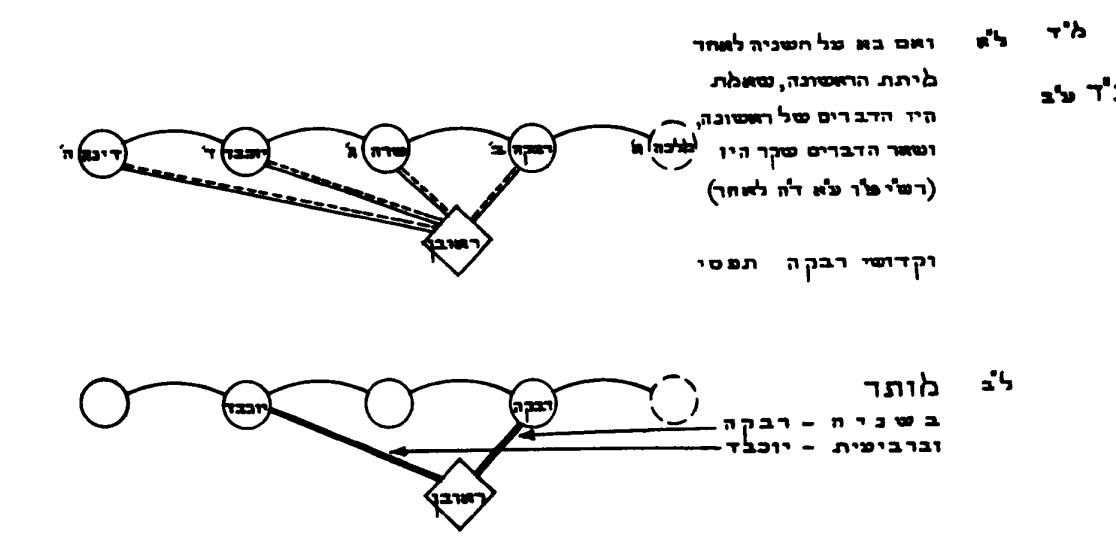
The last note of the Rebbe concerns the symbol of a square the author chose designating a זכר.
Since there are ‘no squares in מעשה בראשית’ using a square is not proper!

ועוד להעיר משטח אחר לגמרי, שלא נראה לי מרובע לסימן (זכר), שהרי אין מרובע מששת ימי בראשית.
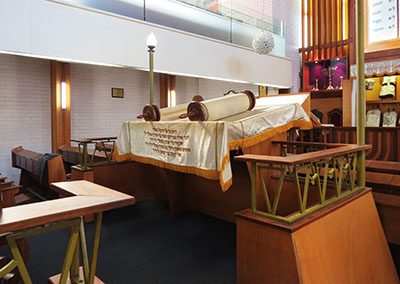
2 – We spoke about ‘always turning to the right’ when going up to the בימה. Here is the Shulchan Aruch OC, 141, 7.

Basically- when going up for an Aliya (or the חזן holding the ספר תורה) one takes the shortest way to the Bima and the reverse when leaving the Bima. If both routes are equal, one takes the path to his right.
3 – The Gemara expands on the story of the Mishna of the Esrogim that were thrown on the צדוקי. As Rashi explains they also threw rocks and that caused the מזבח to be damaged and lose its ‘perfect square’.
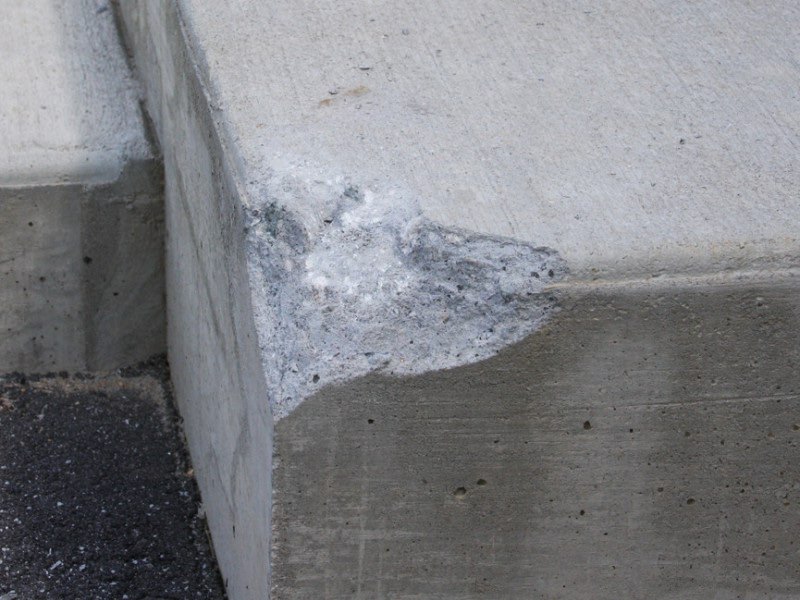
A not perfect square invalidates the כשרות of the מזבחץ
ושלשה נביאים עלו עמהם מן הגולה. אחד העיד להן על מקום המזבח. ואחד העיד להן על מדותיו. ואחד העיד להן שמקריבין על המזבח הזה כל הקרבנות אע”פ שאין שם בית:
We discussed the Tosfos about the smooth rocks and cement that was used to build the מזבח and whether they used the שמיר for the second בית המקדש.
Mentioned the interesting explanation of the אבני נזר on this גמרא. CM 70
Spoke about the salt that was sprinkled on the כבש to avoid slipping. Mishnah, Eiruvin 104
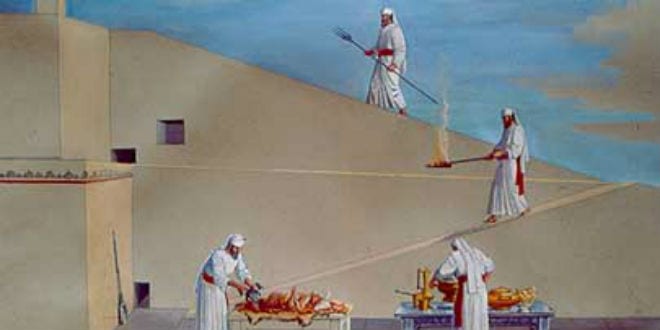
4- The שיתין.
Our Gemara quotes a פסוק from 7, 2 in שיר השירים and uses דרש to connect it to the שיתין.
חַמּוּקֵי יְרֵכַיִךְ כְּמוֹ חֲלָאִים מַעֲשֵׂה יְדֵי אׇמָּן
Your hidden thighs are like jewels,
The work of a master’s hand.
אָמַר רַבָּה בַּר בַּר חָנָה אָמַר רַבִּי יוֹחָנָן: שִׁיתִין, מִשֵּׁשֶׁת יְמֵי בְּרֵאשִׁית נִבְרְאוּ, שֶׁנֶּאֱמַר: ״חַמּוּקֵי יְרֵכַיִךְ כְּמוֹ חֲלָאִים מַעֲשֵׂה יְדֵי אׇמָּן״. ״חֲמוּקֵי יְרֵכַיִךְ״ — אֵלּוּ הַשִּׁיתִין. ״כְּמוֹ חֲלָאִים״ — שֶׁמְּחוֹלְלִין וְיוֹרְדִין עַד הַתְּהוֹם. ״מַעֲשֵׂה יְדֵי אׇמָּן״ — זוֹ מַעֲשֵׂה יְדֵי אוּמָּנוּתוֹ שֶׁל הַקָּדוֹשׁ בָּרוּךְ הוּא.
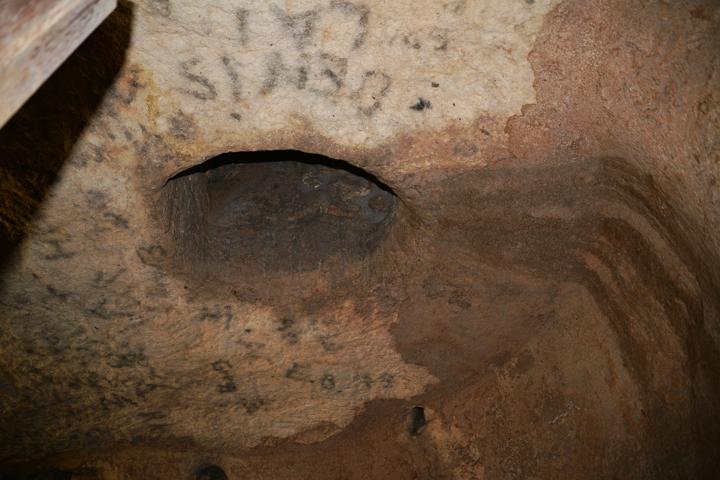
Drain to Shiloah…
Rabba bar bar Ḥana said that Rabbi Yoḥanan said: The drainpipes [shisin] built into the altar and extending beneath it were created during the six days of Creation, as it is stated: “The hidden of your thighs are like jewels, the handiwork of a skilled workman”
The Gemara interprets the verse homiletically:
“Your hidden thighs”; these are the drainpipes that are concealed within the altar;
“are like jewels [ḥala’im]”; they are hollow [meḥolalin] and descend to the depths; “the handiwork of a skilled workman”; this is the handiwork of the Holy One, Blessed be He.
The word חַמּוּקֵי literally means hidden. The גמרא says that it refers to the hidden drainpipes that were in the מזבח that extended to the תהום – groundwater flows.
5 – The topic of חסורי מחסרי והכי קתני. This is an expression mentioned many times in ש”ס
It applies to a discussion in גמרא where we are trying to decipher a cryptic and difficult statement in a particular Mishna.
The גמרא suggests an explanation, but the issue is – that is not what is stated in the משנה.
The גמרא then suggests that to understand the Mishna חסורי מחסרי והכי קתני.
We mentioned that there are 3 ways to understand this statement.
A – חסורי מחסרי – The version we have in our Mishnah is simply incorrect; it’s missing a few words.
והכי קתני – and it should say so and so. Why the text was not corrected is another topic. BL”N next week.
B – Prior to רבינו הקדוש there were many schools of תנאים, each with its particular version of the myriad of הלכות that eventually were compiled into the משניות. Each school had its tradition as to what the text and the הלכה is.
Now Rebi chose the ‘Reb Meir Edition’. He decided that this version is the correct one.
Sanhedrin 86 …לא ס”ד דאמר ר’ יוחנן סתם מתני’ ר’ מאיר
Generations later when the אמוראים tried to decipher the משניות, as codified by Rebi, they encountered difficulties. It caused them to state that חסורי מחסרי והכי קתני, meaning that the הלכה is, not as Rebi wrote. Rather the correct version is the Mishna edition of another school and their tradition.
C – The explanation offered is indeed correct. The reason it does not fit into the words of the משנה as we see it, is for the following reason:
רבינו הקדוש who wrote or compiled the Misnayos chose to write it using very few words. בדרך קצרה.

Nevertheless, the words he did write were carefully chosen in a way that future generations, when trying to understand the Mishna, by analyzing these short words, would see that Rebi hinted to the suggested explanation thereby solving the problems that would arise.
So חסורי מחסרי means that the meaning of the words of the משנה lack ones understanding at first. By applying oneself diligently to the Mishna, by spending time to grasp its true meaning then והכי קתני , one will see that Rebi actually meant to say this very explanation.
6 – Mentioned the פנים יפות (BO) who ties the above, the application to Torah study, to the פסוק our גמרא quotes regarding the ‘hidden drain pipes’ inside the מזבח.
חַמּוּקֵי יְרֵכַיִךְ hidden thighs or pipes, refers to what is hidden in the words of תורה.
תורה has its simple meaning. However, the hidden aspect of תורה needs to be ‘dug’ in order to understand their deeper meaning. A person should not become depressed when encountering difficulty in understanding תורה. On the contrary, his lack of understanding is a sign that G-d wants him to work hard until he figures out the פשט.
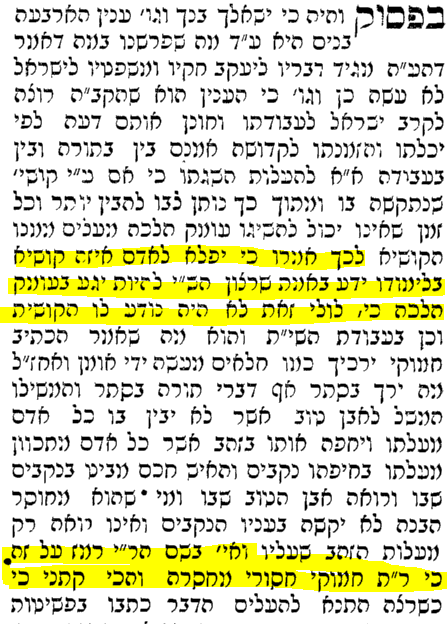
As the רמ”ע מפאנו writes: חַמּוּקֵי is the ראשי תיבות of חסורי מחסרי והכי קתני!

—————————-