BSD
Brochos 2b
Tamuz 26, 5785. 07/22/2025
Short notes:
1- We continued with the 3 levels of טהרה.
Mikvah – allows one to eat מעשר
Nightfall – (after Mikvah) allows one to eat תרומה, as stated in our Mishna.
Morning – allows one to bring קרבנות which will allow him to eat קדשים.
2 – We mentioned the Chasidisher vort from the אבני נזר – the reason ש”ס connects the first מצווה with the idea of eating תרומה after צאת הכוכבים is to emphasize the constant revitalization of a human.
The כהן has already gone to the מקוה before nightfall, but is still not 100% טהור due to the ‘residue’ of טומאה. When night arrives, a new day appears and that residue disappears.
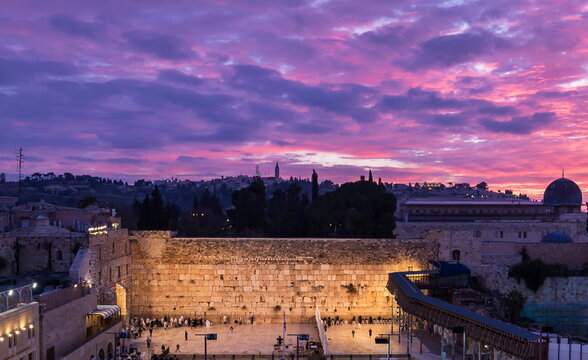
Sunset – a new day
And that indeed is the idea of קריאת שמע in the evening. We say שמע in the morning and much transpires during the day but one still has a רשימה of the morning קריאת שמע. When the sun sets and night begins, we need a new ‘injection’ and say קריאת שמע again.
הטובל לטהרה מטומאתו, אינו טהור לגמרי עד
שיעריב שמשו, מפני שגם לאחר הטבילה נותר
עליו רושם כל שהוא מן הטומאה. זאת, עד הלילה.
משבא הלילה, יממה חדשה באה לעולם, ואותו
רושם של טומאה נמוג ונעלם
זה הוא גם טעמה של קריאת שמע של ערבית
אף על פי שקראנוה בשחרית, מיני אז אנו עוסקים
בענייני חול ומסיחים דעתנו הימנה. אך במשך
היום רושמה עלינו ואין אנו זקוקים לקוראה שנית
ברם, משבאה השמש ומתחיל הלילה, יש צורך
לקרוא שנית קריאת שמע…
בנוגע לכך הוא מביא, כי מפורש בספרי הקבלה, שזהו)
(הטעם לכך, שאין קוראים קריאת שמע בשעת המנחה.
3 – The גמרא brings a ברייתא, that adds another ‘time’ for the saying of קריאת שמע של ערבית.
“From when a poor person enters to eat his bread with salt”.
מִשֶּׁהֶעָנִי נִכְנָס לֶאֱכוֹל פִּתּוֹ בְּמֶלַח
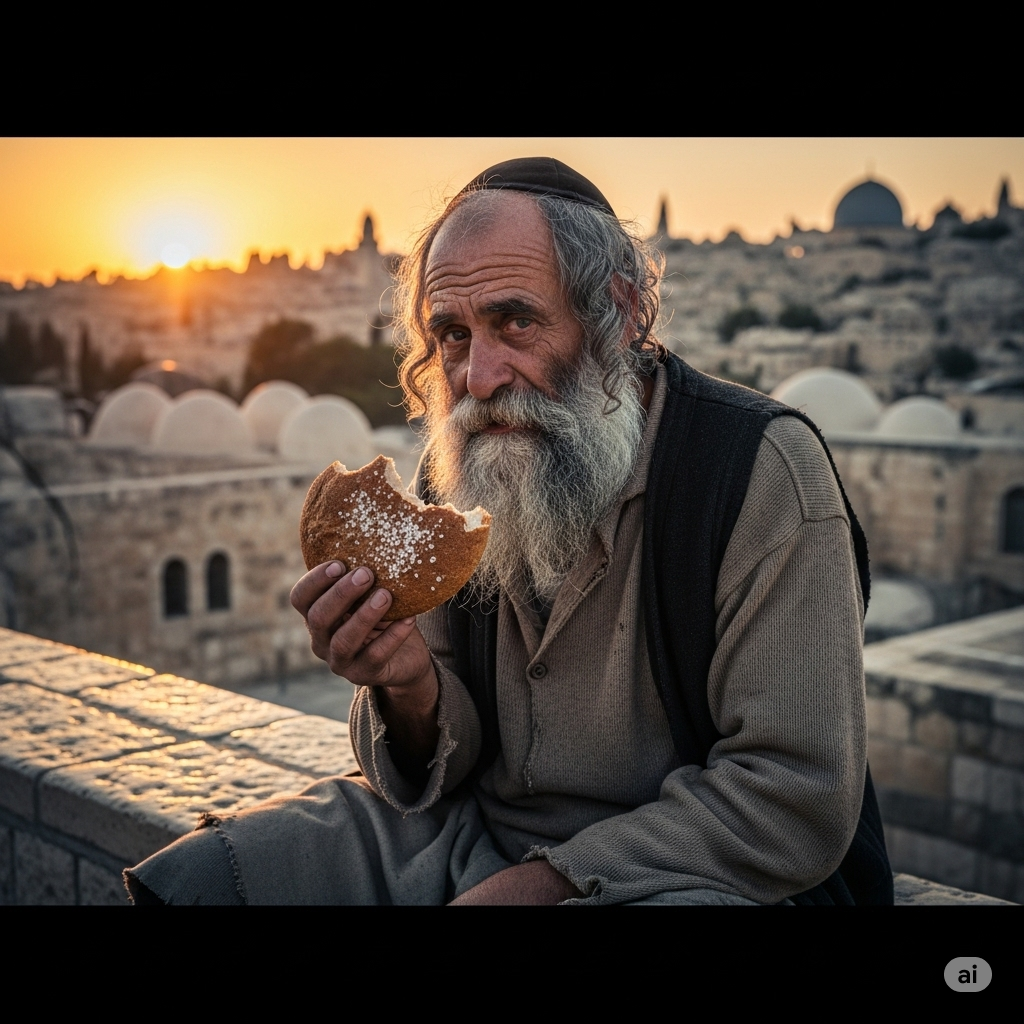
The גמרא discusses if that is the same time as צאת הכוכבים or perhaps earlier.
Earlier would mean when there is still a bit of light. Why ‘a poor person’? Is his meal time different from the average person?
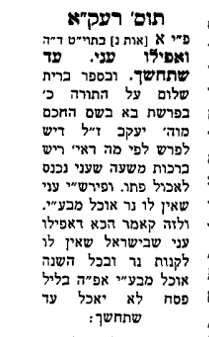
See the Reb Akiva Eiger in Psochim. He quotes from the ברית שלום, that a poor person cannot afford a candle and therefore eats a bit before darkness.
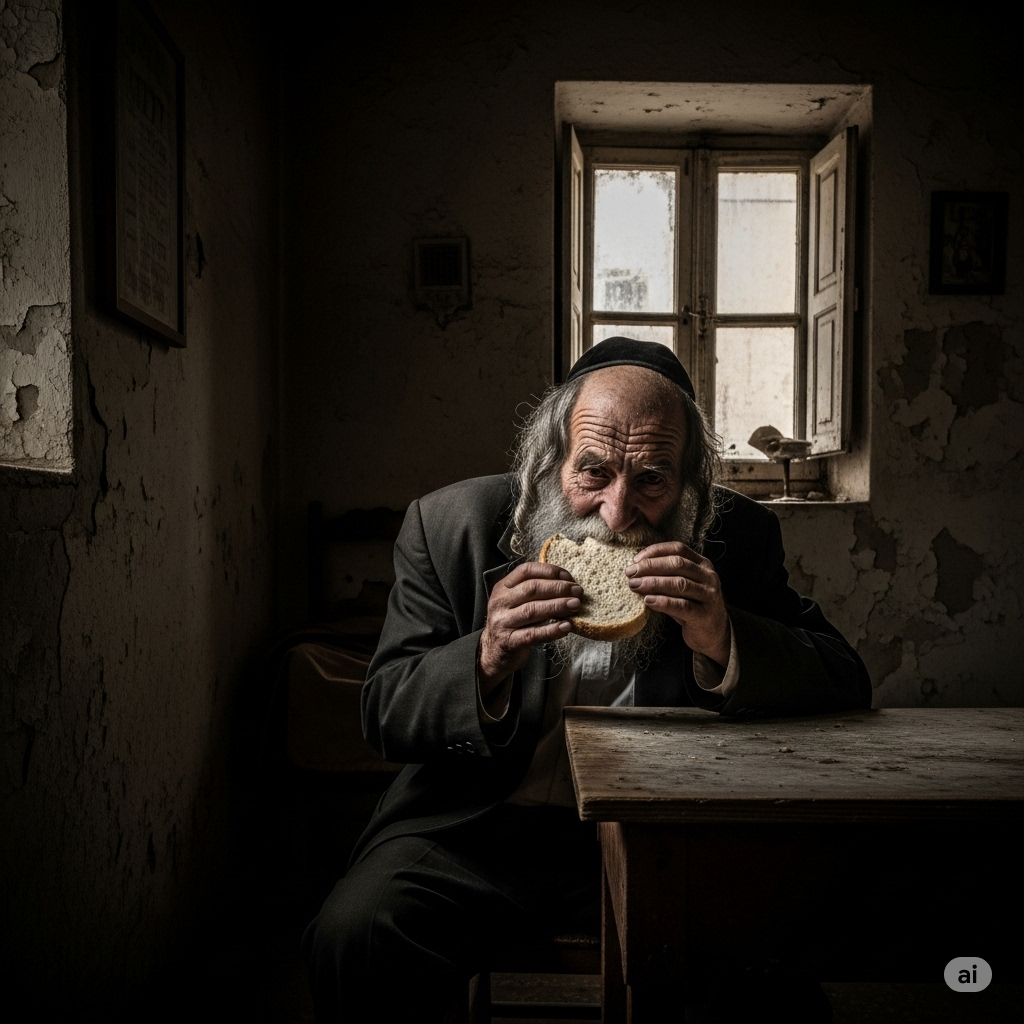
The גר”א adds that the גמרא יומא says that blind people who cannot see their food do not enjoy their meals.
יומא עד, ב סומים אוכלים ואינם שבעים.

We mentioned the vort of the חידושי הרי”ם regarding the צדקה of the rich to the poor when all had the same מן? What could the גביר offer to the needy if all had whatever food one could think off?
His answer – the גביר when eating the מן would think of foie gras, steaks and other delicacies. What could the עני come up with? Herring and bread? Better herring?
So the צדקה of the גביר was to introduce the poor man to fancy food he never experienced!
4 – Another ‘time’ for קריאת שמע, mentioned in another ברייתא is
מִשָּׁעָה שֶׁבְּנֵי אָדָם נִכְנָסִין לֶאֱכוֹל פִּתָּן בְּעַרְבֵי שַׁבָּתוֹת, דִּבְרֵי רִבִּי מֵאִיר.
From the time when people enter to eat their bread on Shabbat eve.
As Rashi explains, this time is before צאת הכוכבים since the Friday night meal is already to eat as it was prepared on Erev Shabbos.
We mentioned the letter of the Rebbe where he writes that the רביים would eat the Friday night meal late in the evening.
5- See here from the Alter Rebbe’s שולחן ערוך. Here.
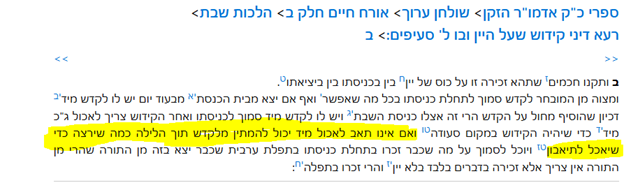
However, see here from the רמ”ע מפאנו
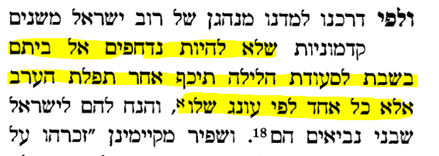
שו”ת רמ”ע מפאנו סי’ ב.
6 – We discussed a topic on הלכות בית הבחירה – the שמירה around the בית המקדש.
- Was it only at night?
- Were the guards up all night?
- Is there a חיוב of שמירה today?
- The fascinating story of Reb Moshe Meshil Gelbshtein and his attempt to set up שמירה in 1880! In english (and below).

https://www.chabad.org.il/Magazines/Article.asp?ArticleID=4403&CategoryID=1093
https://toladot.blogspot.com/2009/12/blog-post_04.html
next time you’re in Lakewood…

his descendants
שמירת המקדש לקו”ש יג, קרח ב. 56.
בזמן הזה. ר’ מ”מ גלבשטיין. ספר השיחות תש”נ חלק א’ עמוד 404 ואילך,
לשרוף בגדו. בל תשחית חי”ח 463.