Shiur Points 03/15/16 – Beitza 6a

Beitzah 6a.

1- The Gemara  now focuses on the case of an ‘efroach’ [chick] that emerged from its egg on Yom Tov.
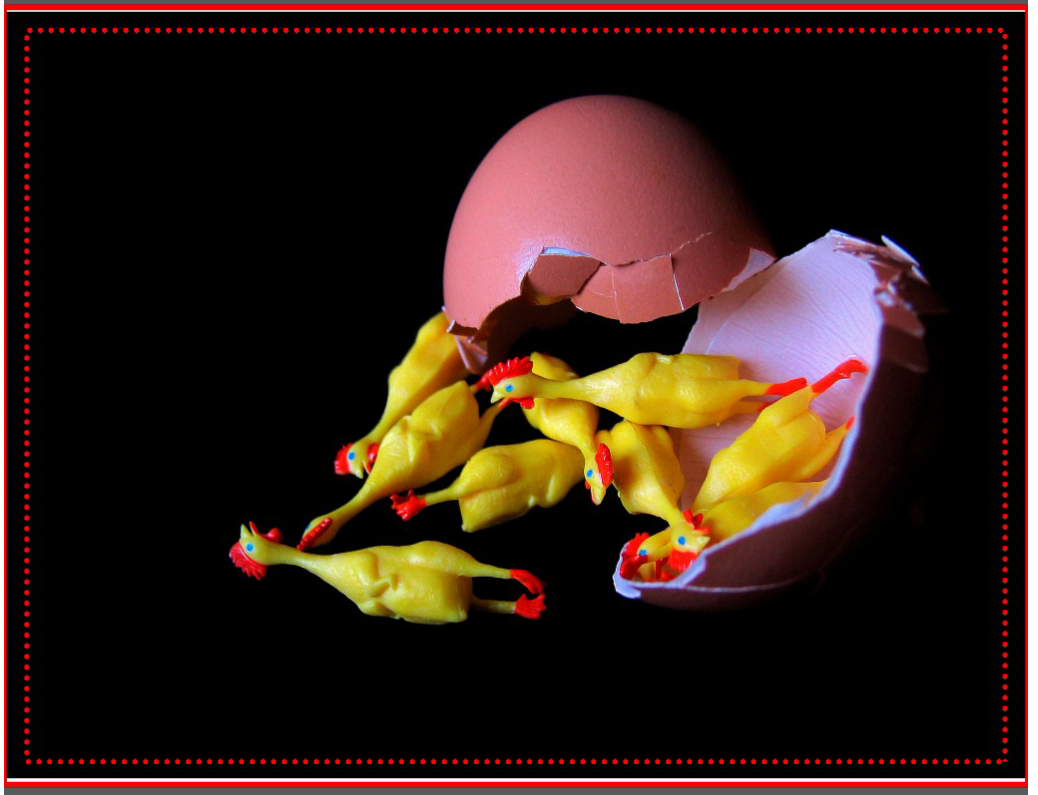
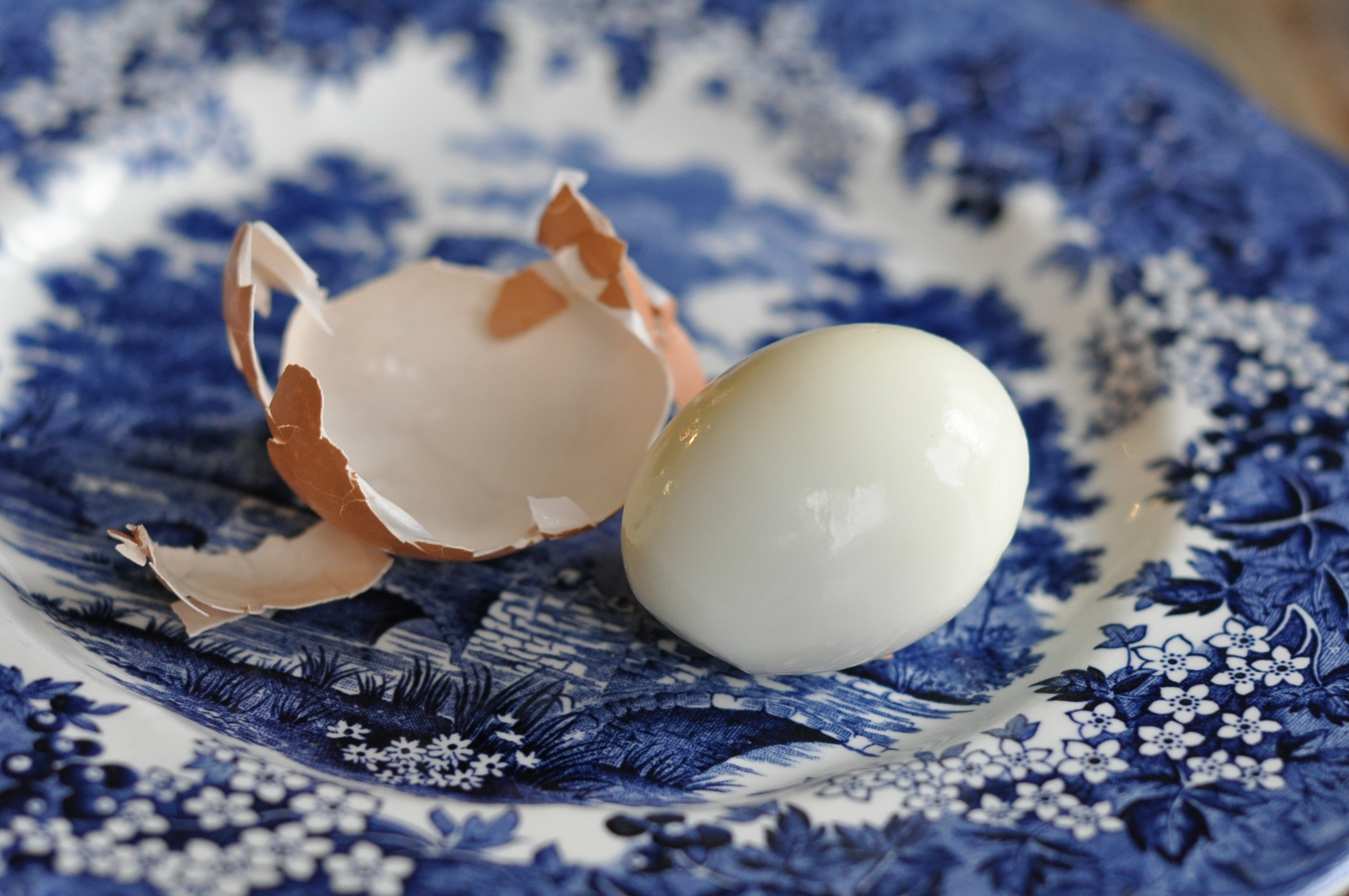
hatchling

Rav prohibits it from being eaten whereas Shmuel and/or Reb Yochanon permit it.

The reason for Rav’s ruling is simply that it is Muktza. Shmuel and/or Reb Yochanon rationale is based on an interesting concept:

Ho’il” [since]. Meaning  the egg, by hatching,  causes itself to become permitted to be eaten after Shechita, whereas before it was hatched, it was forbidden, and of course Shechita would not help.
And since it has been rectified regarding Shechita is also effectively removes the Muktza aspect.

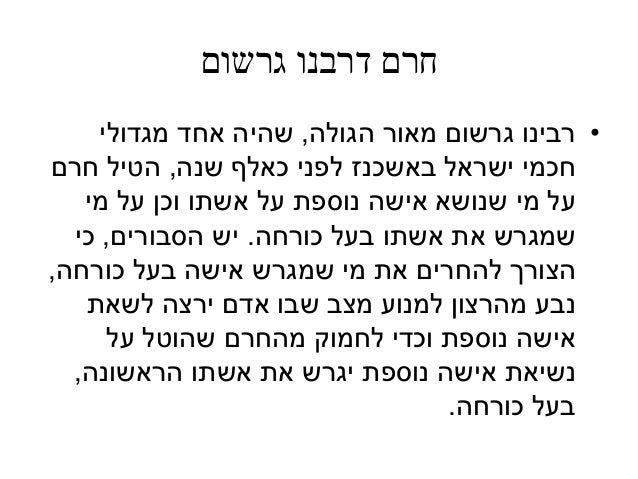
2- We spoke about the famous Reb Shmuel Strashun and his prolific notes on the entire Sha”s! (And Berel’s family would not allow his pirush to be learned in their home).

We mentioned that today one would certainly label him as Modern Orthodox……

On our topic he finds a similar Gemara in Yevamos 7a where this concept of when an item has two prohibitions and one is removed it affects the removal of the second one as well. (Kohen, Azara, Shaar Nikanor, blood and thumbs).

3- Shasik Rav – “שתיק רב”.

Rav was asked as to why he prohibits shechting an efroach that was hatched on Yom Tov and yet permits the shechting of a newborn calf. Why are both not Muktza?

He answered that the calf was ‘edible’ prior to its own birth and its own shechita by the shechting of its mother prior to its birth. Whereas the egg was not edible in any way prior to it being hatched.

He was then asked by his colleagues as to why one may shecht a newborn calf that was born to a cow that was not edible – such as a ‘ tereifa’ ?

And here we find an expression (as in a few other places in Sha”s); Shosik Rav’. Rav did not answer. He remained silent.

Does this mean that he agreed with them? Or did he not? If he kept his ground then why did he not respond?

We read the text of a note the Rebbe wrote and printed in a few Ma’amorim. The Rebbe Rashab and the Freidiker Rebbe explain that occasionally one comprehends something with clarity and conviction. It is as if he ‘see the concept’.

And yet, despite being convinced of its truth, he cannot explain it. His ability to rationalize his understanding to others is not developed. ‘Chochma that has not descended to Bina’. As an example they quote our Gemara where Rav simply did not answer the question.

This was not out of a lack of substance to respond. As the Rebbe notes the Halacha, according to many is indeed like Rav, despite him being ‘apparently checkmated’ by his colleagues. So the the truth is indeed with Rav’s ruling despite his silence and our lack of understanding the rationale behind it.

He then quotes the Rama of Fanu  who writes that Rav’s silence was due to totally different reason. Rav was a Kabbalist and he knew the Halacha and its reasoning also based on ‘Pnimiyus Hatorah – Sod’. He thus refrained from revealing the secret reasoning as was the custom in those days to keep such matters under wraps.

דיוקן המיוחס לרמ”ע מפאנו

[The Seder Hadoros writes that Rav was a ‘talmid muvhak’ of Reb Shimon Bar Yochai!]

4- Speaking of newborn calves we mentioned the Alter Rebbe pointing to certain Halachos that are probably never going to be encountered in a practical situation.

One is “ve’karkoso”. What does “ve’karkoso” mean?

Briefly, a child (human or animal) that passed thru the birth canal without touching the uterus! Is this child/calve a ‘bechor’?

Here is from chabad.org Tanya with Rabbi Wineberg’s O”H explanation.

וכרכתו כו׳, פרק ד׳ דחולין

and [detailed queries such as] “If she wrapped him…,” in ch. 4 ofChullin.9

The question discussed there is whether a firstborn animal can be considered to have directly “opened the womb” (and hence be sanctified) in either of two hypothetical cases. According to Rashi, it is a question of what happens if the person assisting in the birth entirely wraps up the animal as it is born. According to Rabbeinu Tam, the question involves a multiple birth, with a cow being born together with the firstborn bull, and wrapping itself completely around it — something extremely unlikely to ever occur.

Nevertheless, all these detailed queries were given to Moses at Sinai.

————-

We spoke about the recent medical events where a complete uterus was transplanted and the recipient conceived and gave birth.

see baby born from grandmothers donated womb

Is this child a ‘bechor’? He did indeed pass thru and come in contact with the uterus but not his mother’s! Is he considered his mother’s first offspring?

Next- assuming he is considered his mother’s first offspring, if this uterus came from a donor that had given birth already? This child may be his mother’s first but the uterus’s second…

Funny stuff.


Shiur 03/08/16 Beitzah 6a

1- Gemara discusses the few leniencies of the second day of Yom Tov as opposed to the first day. 
 
Burials. If the body is in danger of decomposing one may use non-Jews to perform the burial on the first day. But on the second day, despite the Takanah of ‘Yom Tov Sheini Shel Goluyos’ we allow the burial to be performed by the regular Jewish Chevrah Kadisha. 
 
2- We discussed the Gemara’s ruling that at a certain point in history they retracted this leniency. The reason being that Jews had government jobs and were given days off for Yom Tov. If the government would find out that a full fledged Jewish burial was performed on the second day Yom Tov they would withdraw the vacation day in the future. 
 
3- We mentioned the Gemara in Shabbos 139b that also prohibited the burial on the second day Yom Tov in the city of Bashkar since they, the  inhabitants are not Bnei Torah! The reason given is that this may lead to other leniencies. 
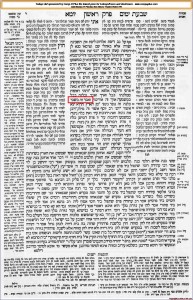
yuma 10a

“Bashkar is Akad” (Yuma 10a)

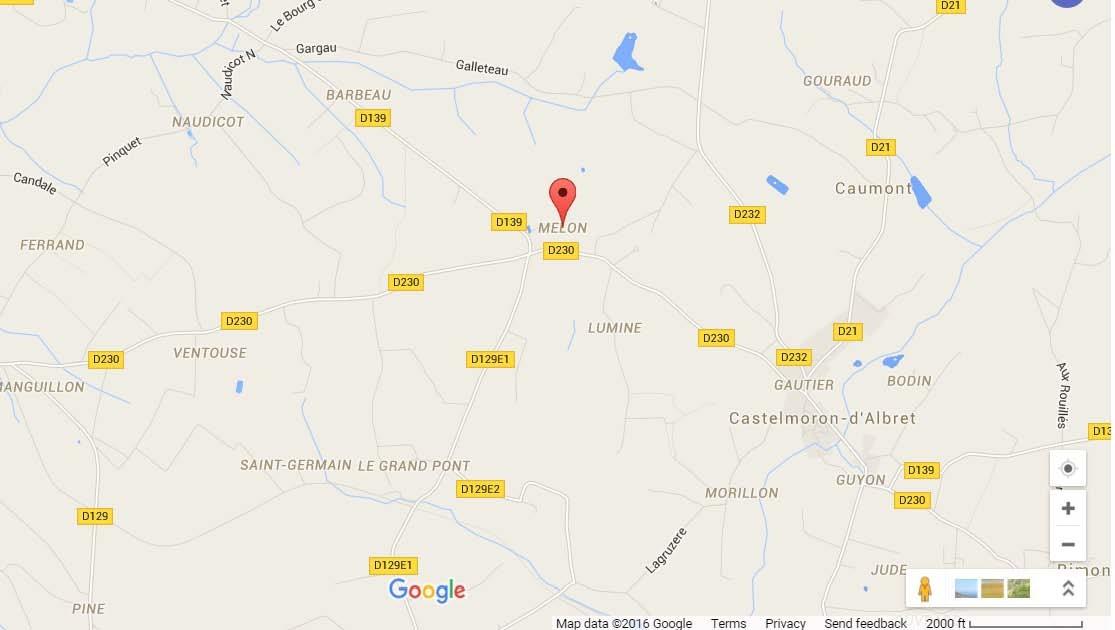
 Tosfos cites a story that occurred in the city of Melon, France where a man passed away on the second day Yom Tov and they planned to bury him. Rabbeinu Tam rebuked them saying “The Bashkar people are not Bnei Torah and and you are?!!”

   melon 3
 
4- Our Gemara speaks one who forgot to make an Eiruv Tavshilin prior to  two day Yom Tov of Thursday and Friday. Here we also see a leniency and the suggestion is to make it on Thursday (first day of Yom Tov) and make a ‘te’nai’ – condition:
 
“If today is Yom Tov then tomorrow is not and one can cook tomorrow for Shabbos regardless, if tomorrow is the real Yom Tov then today is not and there is no issue in making the Eiruv Tavshilin on the day before Yom Tov. “
 
We discussed on why one need and can make a Brocha. 
 
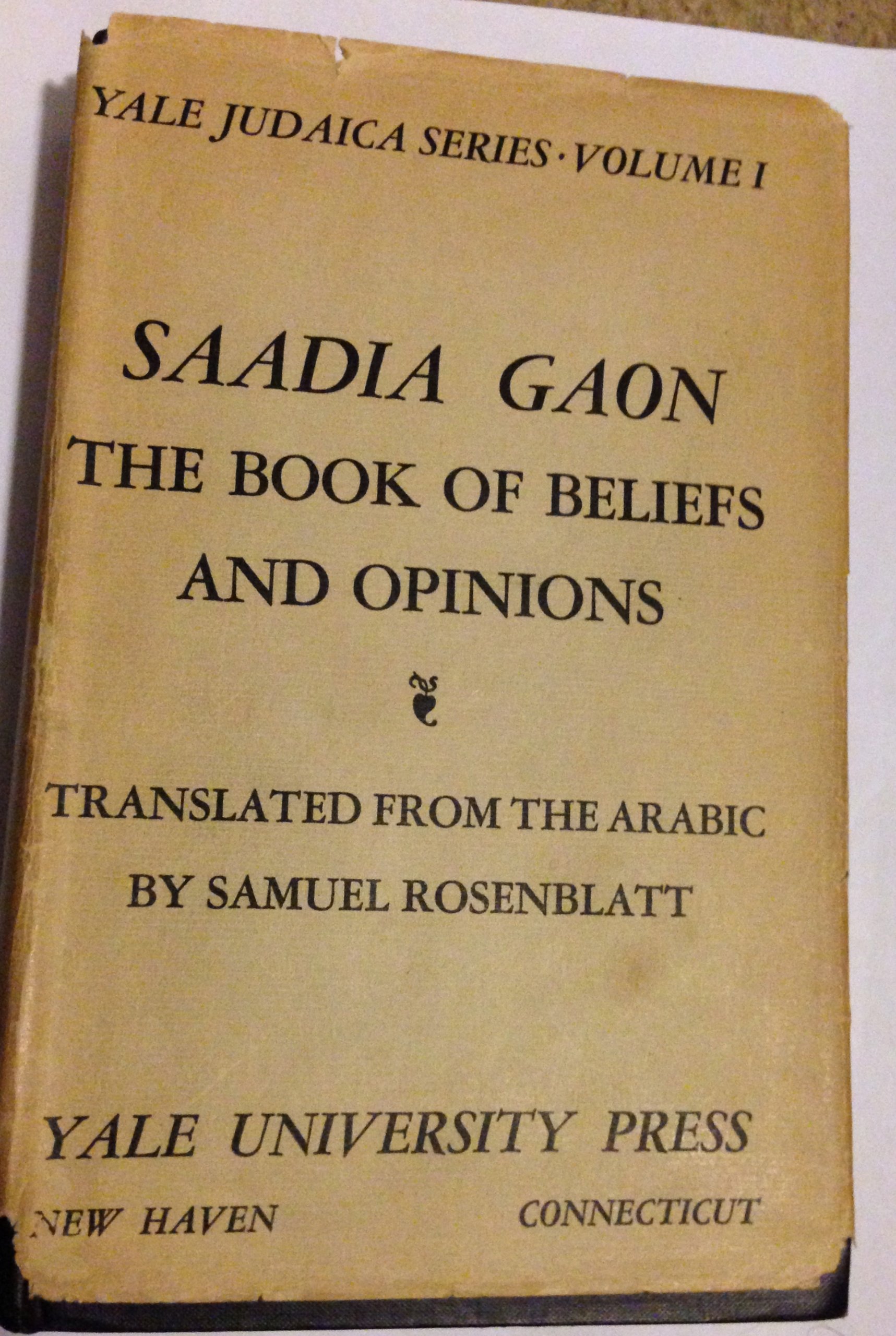
5- In conclusion to the Sugya of two days Yom Tov we discussed at length the famous and perplexing opinion of Reb Saadia Gaon and Rabbeinu Chananel regrading the calendar. 
 
We find that they both held the opinion that Jews always, from Matan Torah onwards, used a calendar to establish the days of the month. The sighting of the new moon was not used to establish when Rosh Chodesh was! 
 
This runs counter to whatever we find in the many Mishnayos and pages upon pages of Meseches Rosh Hashana. 
 
We read the text written by Rebeinu Bachya who answers the many questions on this mind-boggling opinion. 
 
 
His major point is that all the Gemaras, where it states unequivocally that the norm was for two witnesses to come and testify to Beis Din, applied only for a limited time when the Tzedukim disputed the calendar and the Chachamim wanted to show that the calendar will indeed jive with the moon sightings. 
 
We barely touched the surface of this topic and also discussed as to why, if we always used the calendar, did the people living far from Yerusholayim observe two days? Why not use the calendar and know exactly when Yom Tov occurs! 
 
We read the text of the Rambam who writes about the opinion of Reb Saadia Gaon that:
 
 “I wonder on how a person can dispute and say the the Jewish religion is not based on the moon sighting….. and I believe that he (Saadia Gaon)  himself did not believe in what he said….his intention was to use this statement against his opponents in any way available to him whether utilizing the truth or the opposite since he saw no way out of this dilemma while debating others….”  
 
See here Mishana 6. 
 
 
ואני תמיה מאדם יכחיש הראות ויאמר כי דת היהודים אינה בנויה על ראיית הלבנה אלא על החשבון בלבד והוא מאמין אלו הכתובים כולם ואני רואה שהרואה זה אינו מאמינו אבל היתה דעתו בזה המאמר להשיב אחור בעל דינו באי זה צד יזדמן לו בשקר או באמת כיון שלא מצא מציל לנפשו מהכרח הויכוח ומה שתאמין אתה המעיין כי העיקר דתנו בנוי על /הראייה אם לא תראה הלבנה נשלים שלשים יום לחדש שיצא ולשון המשנה והגמרא ומעשיות רבות ממה שאירעו בזה הענין באורך השנים כולם יעידו באמיתת זה הענין

Shiur 02/23/16 – Beitzah 5b

Beitzah 5b,

1- We studied the text of the Kesef Mishna regarding the opposing opinions of the Rambam and the Ra’avad regarding a 2nd Beis Din overturning a prior Beis Din’s Takanah – an enactment by a Beis Din based on a particular reason.

Now years later the reason is no longer valid:  All agree that the enactment – Takanah/Gezeira- does not simply disappear on its own. Another competent Beis Din needs to convene and take a vote to revoke the Takanah.

The question is whether the second Beis Din needs to be greater in “intelligence and count” גדול בחכמה ובמנין – than the original Beis Din that enacted the Takanah to begin with with.

The Rambam’s opinion is that it needs to surpass the previous Beis Din whereas the Ra’avad disagrees and rules that any Beis Din can reverse a previous ruling if the original reason and cause of the Takanah is no longer applicable.

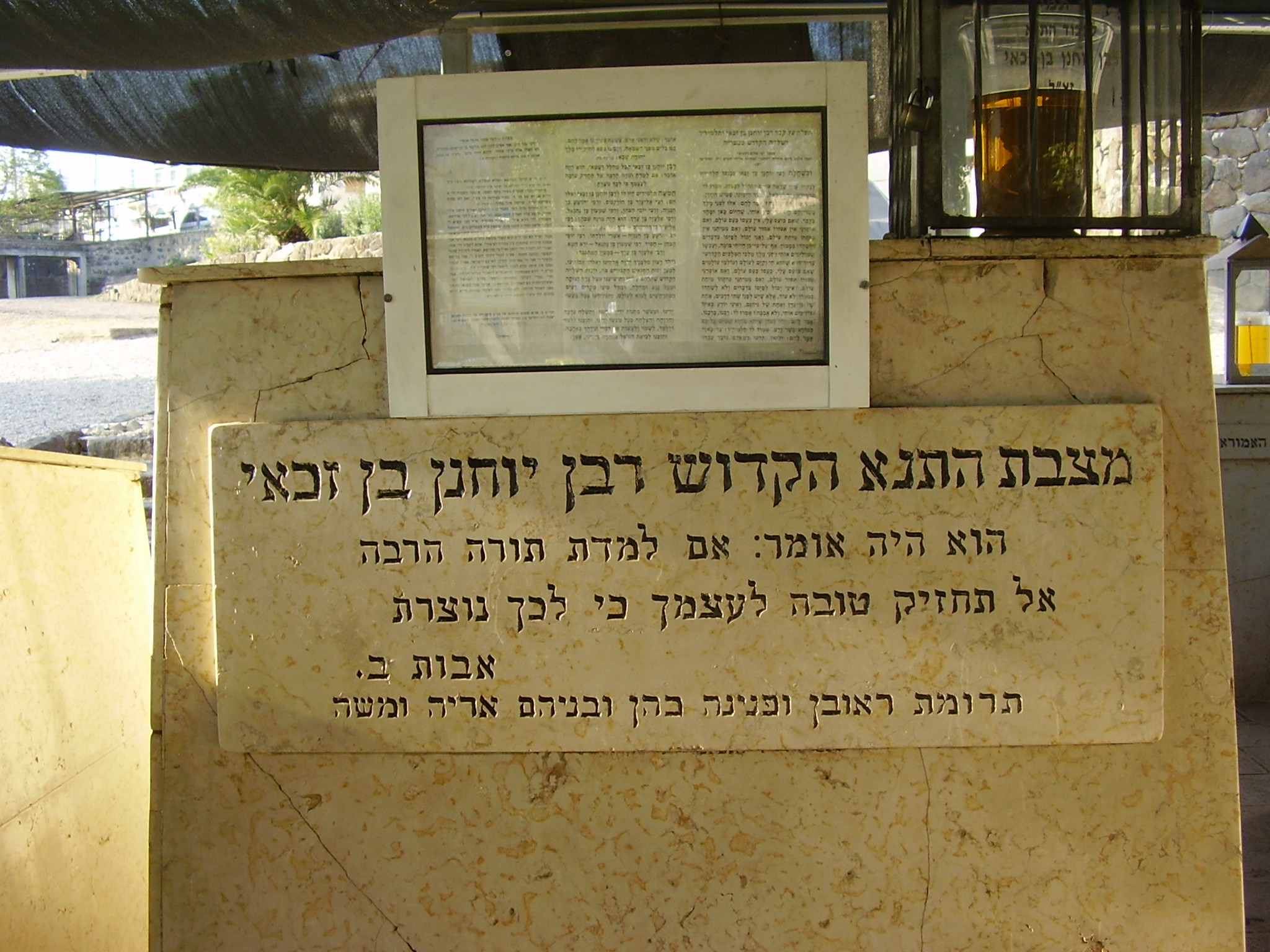
See previous Shiur where the students of Reb Eliezer make him aware of a Takanah that was reversed by Reb Yochanon ben Zakai. 

The Ra’avad’s point is that surely Reb Yochanon ben Zakai was not greater than the originators of this particular Takanah. And yet he did reverse his predecessor’s proving his point that when the reason no longer exists any Beis Din can rescind it.

2- Interestingly, the Kesef Mishna attempts to defend the Rambam’s position by saying “and who says that Reb Yochanon ben Zakai was not greater than the Beis Din that originally enacted this Takanah?”

He then goes into a lengthy historical themed argument based on the Gemara that Hillel had eighty students. The greatest was Reb Yonason ben Uziel and Reb Yochanon ben Zakai being the “smallest”!

So Reb Yochanon ben Zakai was indeed “smaller”… So is the Ra’avad correct?

But, he says, that  Reb Yochanon ben Zakai was also well versed in all areas of knowledge including the “conversations of demons…” etc.

So perhaps his knowledge in comparison to his colleagues was ‘small’ in areas not of Torah.

The fact is that from all 80 students of Hillel it was Reb Yochanon ben Zakai who succeeded Hilled as Nasi!

3- We discussed the Takanahs that had a set time limit on inception. Such as “do not drink the water from this well until Pesach”.

Pesach passes – do we need an Beis Din to recind this Takanah or is it self expired.

Rashi elsewhere is Shas seems to say that we do, whereas Tosfos in our Mesechta is in the opinion that we do not.

4- In passing we mentioned the connection of our Gemora to the religious Zionist Mizrachi movement. 

One of their basic points (as opposed to all others in the Chareidi camp) was that the Beis Hamikdosh can be built even before the coming of Moshiach. They based this belief on a Yerushalmi of which the first part is quoted in our Gemara.

The words of the Yerushalmi: Said Reb Acha “this means that the Temple will be rebuilt before the kingship of the house of David.”

See here from the Satmar site:

zionist fui

The Zionists, however, have found one source that seems to say that the Temple will be built before Moshiach. The Torah says that the fruits from the fourth year in the life of a fruit-bearing tree must be eaten in Jerusalem. But if the owner wishes, he may transfer the holiness of the fruits onto money, bring the money to Jerusalem, buy food and eat it there.

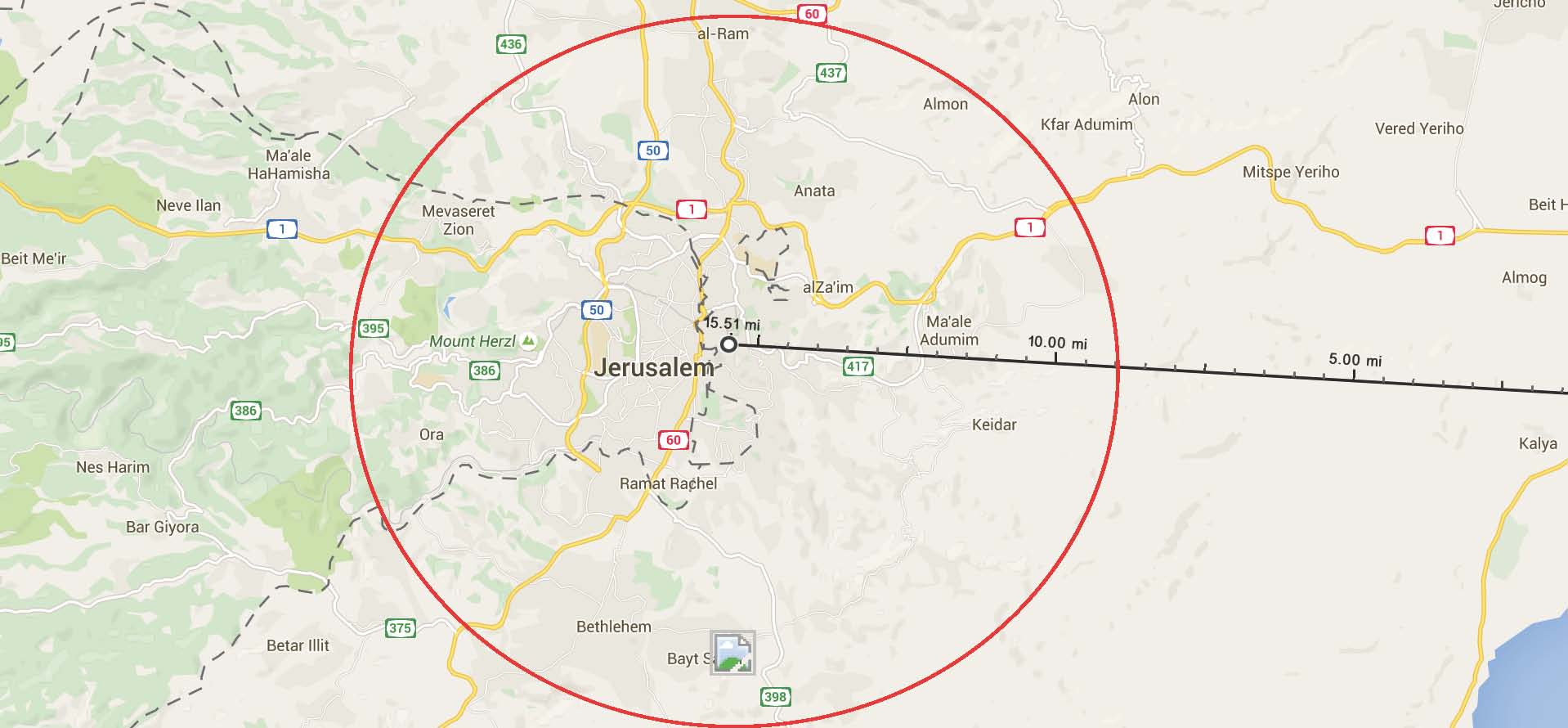
The Rabbis enacted that within a one-day radius of Jerusalem, the fruits themselves and not their monetary equivalent must be brought, so as to beautify the streets of Jerusalem with fruit.

Google Maps2

When the Temple was destroyed and Jerusalem fell into the hands of the Romans, there was no longer any need to beautify it, so the Rabbis suspended their decree and allowed the redemption of the fruits with money. However, they stipulated that whenever the Temple would be rebuilt, the decree would automatically come back into force (Mishnah Maaser Sheini 5:2). The Talmud Yerushalmi says, “This means that the Temple will be rebuilt before the kingship of the house of David.”

5- We spoke where the Rebbe mentions another Yerushalmi  that was also used as a basis for the outlook of religious Zionism.

The Rebbe points out that surely the Rambam was well aware of this Yerushalmi and yet he rules that Moshiach will come prior to the building of the Beis Hamikdosh’.

See here. Footnote 51,  3rd paragraph.


Shiur 02/16/16 Beitzah 5A

Beitzah 5a

1- We continue concerning the situation after the destruction of the Beis Hamikdash.

Being no longer concerned about wreaking havoc in the performance of rituals in the Beis Hamikdosh, witnesses were now accepted all day. Rosh Hashana was still occasionally observed 2 days but only because of ‘doubt’,  not by Takana or edict.

On the 30th day of Elul people would observe the day as a ‘potential’ Rosh Hashana because perhaps witnesses may yet come forth. They would wait until the end of the day. If no one came to testify then the next day would be Rosh Hashana by default.

Since these two days would both be observed because of doubt, not a Takana, they are two separate entities and not a Yoma Arichtah.

2- The issue is how the previous Takana of not accepting witnesses after Mincha was rescinded.

The Gemara states that a Takana enacted by Beis Din may be rescinded only by annulment of Beis Din (“Davar she’b’Minyan Tzarich Minyan Acher l’Hatiro”). Without the annulment, the enactment will not be canceled even when the cause for the enactment is no longer extant.

So the problem is that when this Takana was rescinded by Reb Yochanan Ben Zakai he only rescinded the practice of not accepting witnesses after Mincha,  but he did not rescind the prohibition of the egg born on the first day Rosh Hashana.

3- In general, the above rule needs clarification as to when does this principle apply, and to what extent does it apply?

The example the Gemara uses is from the Takana concerning Kerem Revai.

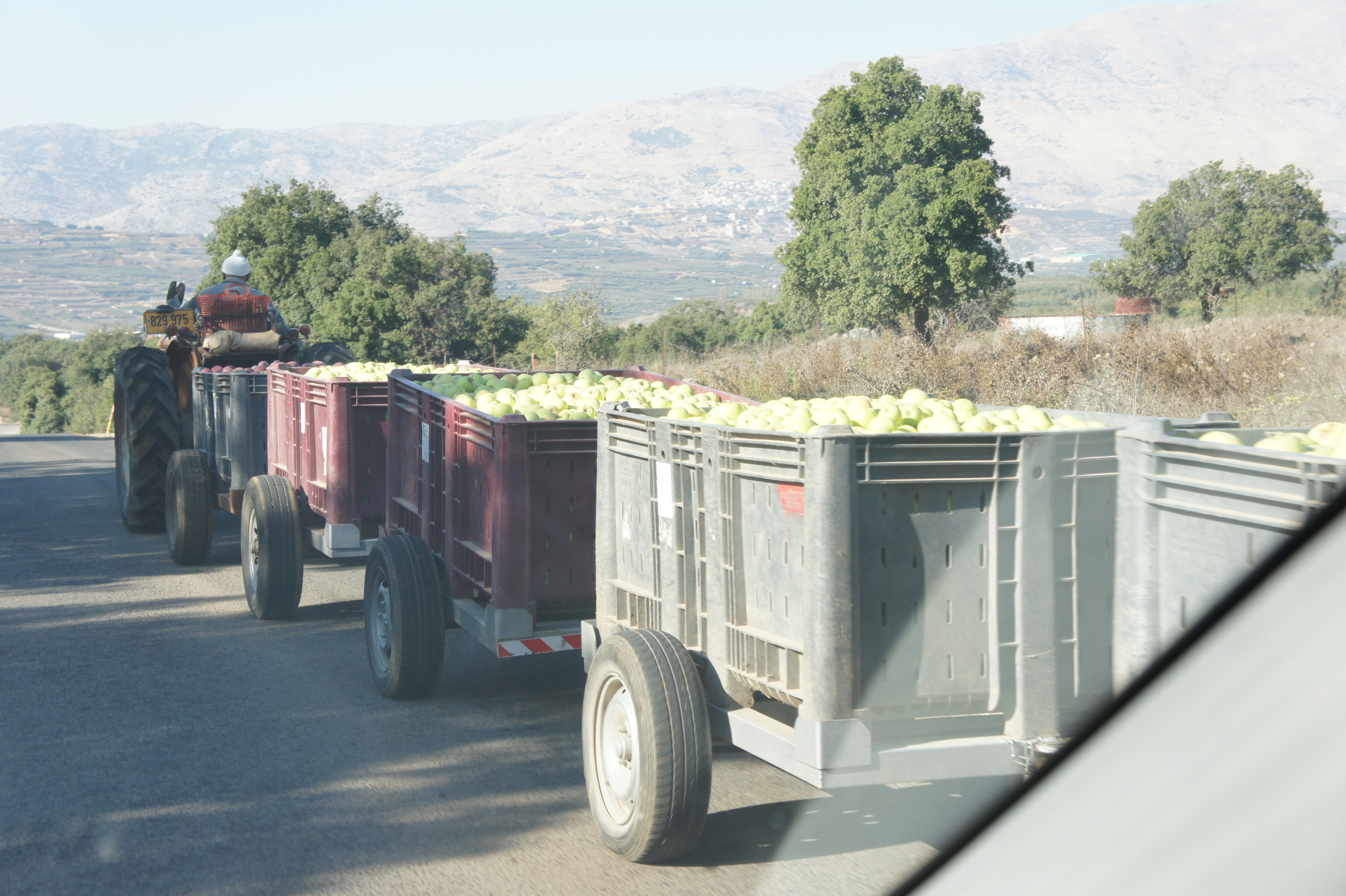
Fruit that grows in the fourth year, following the three years of Orlah, is called Reva’i. The Torah refers to these fruits as Kodesh .  They must be brought to Yerushalayim and eaten there while one is in a state of purity.

Harvesting Orla – tools of the trade

Alternatively, one may be Podeh (redeem) the fruits for money, in which case the money equal to their value gains the status of the original fruits of Reva’i. This money likewise must be brought to Yerushalayim and spent there to purchase food which must be eaten while one is in a state of purity.

A  Takana was enacted that all fruits of farms within a day’s walk from Yerushalayim cannot be redeemed. The reason was to ‘beautify the markets of Yerushalayim’ by having  bountiful produce displayed in the markets. Obviously, after the destruction of the Beis Hamikdosh with goyim controlling the city there would be no need to bring the fruit into Yerushalayim.

Rebbi Eliezer lived many years after the destruction of the Beis ha’Mikdash.  To avoid the bother of hauling his fruit to Yerushalayim he wanted to renounce (mafkir) his ownership of his fruit in favor of the poor and they would bring it to Yerushalayim to eat.

His students told him that hefker is not needed to avoid bringing the fruit to Yerushalayim.

Why? Because ‘your fellow friends have already gathered and ruled that it is not necessary to bring the actual produce to Yerushalayim after the churban’.

The fact that they mentioned “your fellow friends have already gathered and ruled” shows that the removal of the reason alone for the enactment of a Takana is insufficient to have it rescinded.

A Beis Din would need to convene and rule to rescind it.

4- We began to read the opinions of the Rambam and the Ra’avad on this. Interesting Kesef Mishna next week bl”n.


Shiur 02/09/16 – Beitzah 5a

Beitzah 4b-5a.

1- Now we turn to the topic of two days Rosh Hashanah.

Unlike all other Yomim Tovim, Rosh Hashana was occasionally observed as a two day Yom Tov not because of any doubt as to when the first day of Tishrei is.

Rather an enactment knowing full well that the first day of this Yom Tov was the 30th day of Elul and Rosh Hashanah is the following day! Nevertheless, despite it being not a ‘day of holiness’ it was observed.

Thus the two day Rosh Hashanah is considered as one long day.

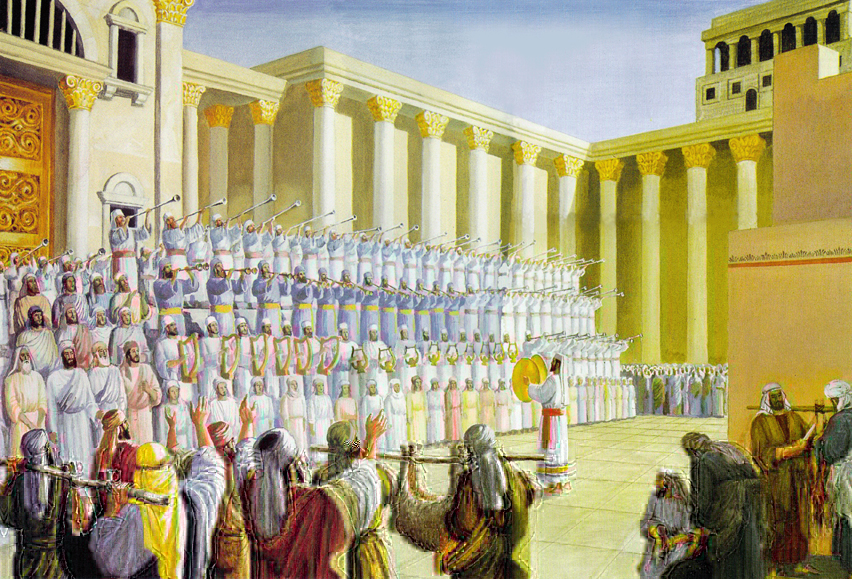
Such an occurrence happened when the witnesses came to testify about seeing the new moon after the afternoon Korban Tamid. To accept their testimony would cause havoc in the Beis Hamikdosh.

Tamid

[We discussed this ‘havoc’ stated in our Gemare of the Leviyim singing a non-Rosh Hashanah song and the famous question of Tosfos that why not the say a greater issue of not bringing the Rosh Hashanah Musaf.]


As a result, Beis Din would not accept their testimony until the following day. By doing that it followed that the time until the witnesses arrived (and of course following it)  the day was deemed a ‘yom chol’. And yet it was declared that it be declared a Yom Tov.

In such a scenario two days were observed as Yom Tov. The first, the 30th of Elul and the second 1st of Tishrei. [Unlike what we have today that the two days of Rosh Hashana are the 1st and 2nd day of Tishrei.]

So if in Yerushalayim two days were observed not because of doubt but as a ‘vadai’ then people living far away also observed two day of Rosh Hashana not only based on doubt but as a ‘vadai’.  Thus our Rosh Hashanah is a “Yoma Arichtah’.

2- We spoke as to why we have two days Rosh Chodesh. If we follow the calendar we know that the first day of the new month is on the second day of Rosh Chodesh. So what’s the purpose of the first day ‘Rosh’ Chodesh?

See here one answer quoted by the Chido.

Briefly- a new moon appears every 29 and 1/2 days.

In reality, should the new moon appear in the middle of the 30th day we should split the 30th day in half and allocate the first half to the previous month and the second to the next month. But that is obviously not practical.

So in a full month, when the moon appears in the middle of the 30th day we declare Rosh Chodesh to be the following day (the 31st) but still observe the 30th as Rosh Chodesh because the actual reappearance occurred on the 3oth day.

3- The Gemara says that after the destruction of the Beis Hamikdosh  Raban Yochanan ben Zakai’s reinstated the practice that witnesses who come to testify about the sighting of the new moon are accepted by Beis Din all day long, even after the time of Minchah.

The only time two days of Rosh Hashanah were observed now that the original enactment is no longer in effect is when the doubt which day is really the first of the month.

4- We spoke about the practice in Eretz Yisroel after the establishment of the calendar by Hllel II concerning Rosh Hashanah. We find that some Rishonim say that only one day was kept!


Shiur 02/02/16 – Beitzah 5b

Beitzah 5b.

1- Interesting Gemara giving one a glimpse into the life of Jews outside Eretz Yisroel after the Churban prior to the establishment and acceptance of a universal ‘Luach’ – calendar.

Here are the dates of our topic:

The calendar was established approximately(according to most opinions) in the year 4100 .

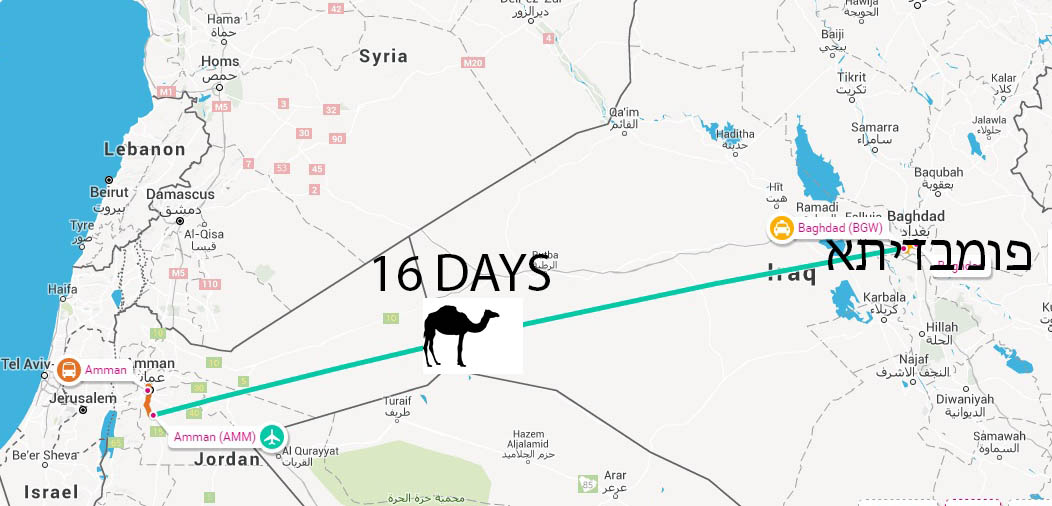
Our Gemara refers to an argument that occurred in Bavel 100 years or so before the acceptance of the calendar when it was common to observe two days of Yom Tov.

Living in Bavel meant that on a typical Rosh Chodesh one was unaware as to what day was established as Rosh Chodesh in Eretz Yisroel. Was it on the 30th day of the previous month or the 31st? Thus all observed two days of Yom Tov.

Remember the key: Historically all who lived far away from Yerusholayim observed two days of Yom Tov. Just as we, today, observe two day despite us following the calendar.


The question is if  these two days were originally observed because it was so enacted by the Beis Din (Takana) to keep two days (as one) or it was rather an ad-hoc Minhag by default due to the uncertainty (safek) of when Rosh Chodesh was established in Yerusholayim.

Is there a practical difference? Yes!

For example, if prior to the Luach being established, a town had astronomers with the knowledge to mathematically calculate when the new moon could be seen and therefore conclude when the Beis Din in Yerushalayim ‘sanctified’ Rosh Chodesh.

This particular town still needed to keep two days Yom Tov of course. But the second day was really a non Yom Tov according to their calculation and therefore Havdala needed to be made at the end of day one! 

Here is the logic:

If the two-day-Yom-Tov was a Takana by Beis Din then such calculations are cast aside. Regardless of the mathematics one must keep two days with no Havdala between them.  More so – both days are considered as one long Yom Tov day. 

On the other hand if the reason a two-day-Yom-Tov was practiced was only because that is what frum people do when in doubt (safek) ….. they go lechumra [without an edict from Beis Din] and in order to be certain that Matzah is eaten on Pesach proper they ate Matzah on both of the two days…

– so if Beis Din never ruled to keep two days, if they are not in doubt, such as an occurrence of a definitive calculation, the two-day-Yom-Tov practice is redundant and one day is kept as real Yom Tov and the second just observed as Yom Tov and as a consequence Havdala must to be made between the two days.

2- Reb Zeira offers proof to the opinion that all Jews in exile keep two day as a result of a non reversible Takana.

The fact is that today that we have an established calendar and thus we all are ‘groise chachomin’ and accomplished astronomers…. as to when Rosh Chodesh is.

So why do we keep two days? Obviously it is because a strict two day Yom Tov Takana was enacted [way back in history when Jews moved away from Yerusholayim to a distance of more than 15 days of travel]  and cannot be changed even when we accepted to follow the mathematical calendar.

jerusalem to baghdad

Therefore even before the establishment of the calendar one must keep two days (as one) as part of the Takana even if one knows when the real Rosh Chodesh is.

3- Abaye on the other hand brings proof from a Mishna, RH 2,1, that it was never a Takona. Two days were kept only as a sofek.


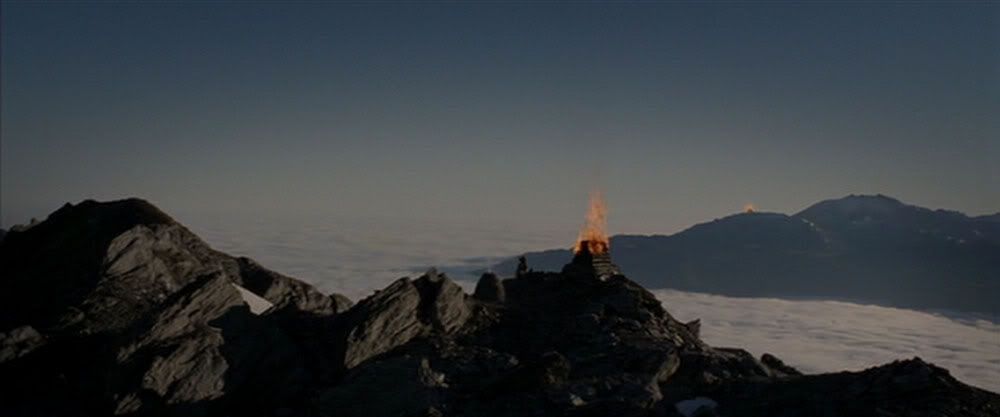
Originally [they had no need to send out messengers to inform the people of the new moon, rather,] they used to light a series of torches [which, when sighted, was a sign of the new moon] but when the heretics [Kusim]  perverted [justice and tried to mislead the people by lighting their own torches] they enacted that messengers should go forth [to announce the new moon].

Had the Kusim stopped causing this problem and the torches would be seen all the way into Bovel then it would have reverted back to keeping only one day. This is proof that there never was a Takana two keep two days. It was only kept as a sofek.

If, according to Abaye,  no Takana was ever enacted, and it all was because of a sofek which can be reversed once the situation changes, so why today, when we follow the calendar do we keep two days?

The Gemore explains that it is because ‘Minhag Avoiseihem’ for a reason that we will learn next week.

4- We mentioned two Seforim that were written as an encyclopedia enumerating what Mitzvah is min Hatorah or mid’Derabonon.

Here they are:

http://beta.hebrewbooks.org/41926


http://beta.hebrewbooks.org/31452


Shiur 01/26/16 – Beitza 4b

Beitzah 4b

1 We discussed the curious case of the fellow who planned a BBQ on Yom Tov. Prior to Yom Tov he prepared and placed firewood into the BBQ pit with the intention to fire them up before the meal.

On Yom Tov twigs and branches fell from a tree into the BBQ pit. The amount of the new and unprepared Muktze wood was more than the prepared firewood that was originally in the BBQ.

They only way the mixed pile of wood can be used is by adding stored logs that he had prepared before Yom Tov to the fire. By adding this permissible non-Muktze into the pit the majority of the firewood would now be non-Muktze!


The issue the Gemara discusses is the universal concept of Ein Mevatlin Issur Le’chatchila.

 אין מבטלין איסור לכתחילה

If the kosher food unintentionally falls into the non-kosher food then the rule of Bitul applies.

But, one may not intentionally  add Kosher permissible items into non-kosher food or into a kosher and non-kosher mixture (with the majority being non kosher) in order the raise the amount/volume of kosher to nullify (Mevatel) the non-kosher.

2- We discussed the wide ranging ramifications of this rule.

a- if the adding was done not with the intention of Bitul. See a previous shiur on the baby food company that after manufacturing trief food makes a ‘run’ of kosher food. A hechsher is granted  (amongst other reason) because when this run is completed the treif food imbedded in the machinery is nullified. But that is not the intention of Beech Nut.

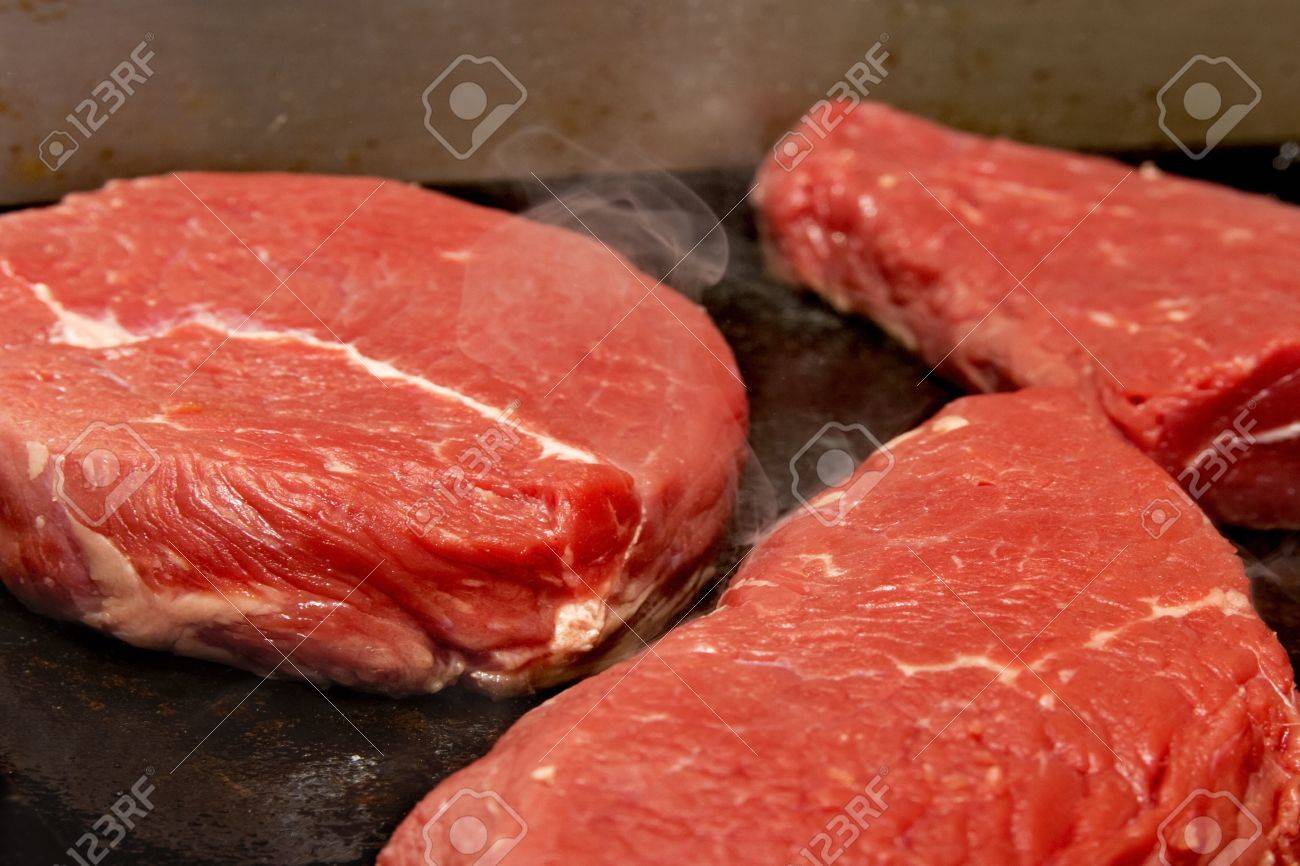
b- One has a treifa piece of meat and wants to give it to his non-Jewish neighbor. In order to make this gift more substantial can he add two more glatt kosher steaks and wrap them all together?

Let’s think; if the pieces of meat are indistinguishable… in theory the gift of the three steaks are now all kosher!!  (2 kosher vs 1 trief). Not that all can be eaten simultaneously and/or by one person. See here. See here. He was Mevatel an Issur Lechatchilo, created a kosher gift but not with the intention to be consumed. Is this permitted?

c-  adding to the mixture to nullify prior to the non-kosher food becoming non-kosher. How?

A product that has an ingredient of chometz. On Pesach it would be prohibited (Bitul is ineffective on Pesach) but one can be Mevatel this chometz before Pesach because chometz is not considered ‘prohibited’/ assur prior to Pesach. (As Berel points out, that’s why people boil their sugar before Pesach).

d- Ein Mevatlin Issur Le’chatchila – Min Hatora or MideRabonon?

e- Adding kosher schach onto a sukka that has pasul schach (for example, it has branches hanging down).

See here – schach  הגהה בסעיף ט.

.4- We spoke about the logic of this halacha. Some suggest that if one would be permitted  to add more and more kosher volume into a non kosher food until the majority becomes kosher, then we would be in effect nullifying the entire idea of non-kosher food.

Imagine every cholent to be made with one part bacon and sixty parts kishke…….or adding two rolls of tuna sushi to every roll of (identical looking) crab fish sushi……

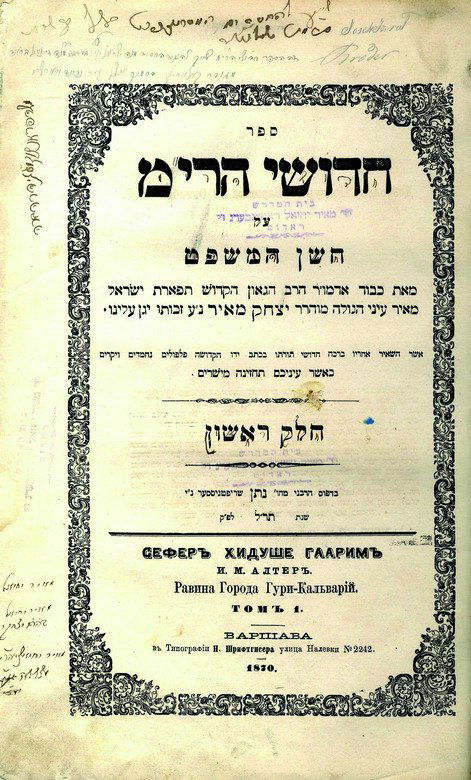
3- We discussed  at length the brilliant idea of the Chidushei Hari”m.

The author was the founder of the Gerer dynasty.

chidushei harim

His reasoning for  Ein Mevatlin Issur Le’chatchila goes as follows:

There is a general prohibition in dealing with non kosher food. Treifa food business is prohibited unless it is ‘Nizdamnu‘ – meaning that the treifa food ‘happened‘ to come into the Jew’s possession. Only then can one sell this non kosher food.

This is the Heter of the kosher abattoirs (shlacht houses) to sell the animals that are found to be trief. (over 75% of the animal including the hindquarter) This is a real case of ‘Nizdamnu‘ – נזדמנו.

We discussed the various aspects of this rule:

  • We see  frum people drive a Boar’s Head route.
  • Jewish fur trappers selling the flesh of the skinned beavers and foxes.
  • Related the story of my father when he imported once, as part of his pearl business, cans of oysters that contained a pearl.

So, concludes the Chidushei Hari”m, when one has non-kosher food (in a mixture or as stand alone) by permitting the practice of adding more kosher food to make it entirely kosher you are basically allowing him to make a ‘gesheft’ with non-kosher food!

One can gift the non-kosher food to a goy of course. But to allow intentional Bitul on an ongoing basis is allowing him to benefit in a business-like manner.

Hillel creator of the fixed Calendar

4- We began the sugya of two days of YomTov and the establishment of calendar we use to this date.


Shiur 01/19/2016 Beitzah 4a

Beitza 4a-b

1- Gemara quotes the opinions of Rav and Reb Yochanan concerning an egg born on Shabbos preceding a Yom Tov or a Yom Tov preceding a Shabbos.

To eat it on the day it was born is prohibited as we have learned previously.

The argument is if one may eat it on the following day. Reb Yochanan permits it whereas Rav prohibits it.

The Gemara relates a story of the host (who took Reb Yochanan’s position) who came to Rav Ada, his guest, asking if he can cook an egg born on Yom Tov in order to eat it the next day on Shabbos.

Rav Ada told him that although Reb Yochanan permits to eat the egg the next day however on the day it was born – today- it is Muktze.

We discussed how this host thought that he may cook the egg born on Yom Tov to eat it on Shabbos.

He would obviously need to rely on an Eiruv Tavshilin. The problem is that the underlying principle of Eiruv Tavshilin (as we will see at the beginning of the next Perek) is that cooking on Yom Tov for Shabbos day is permitted only because guests may arrive and consume all that was cooked on Yom Tov prior to  Shabbos.

all gone…

In our case however this egg cannot be eaten on Yom Tov because it was born today!

2- We discussed this topic as it is relevant to us: We don’t eat ‘gebroks’ on Pesach. On the last day we insist on eating ‘gebroks’ in the form of kneidlach aka matzo balls.

But what if the last day of Pesach occurs on a Shabbos? Can we cook the kneidlach on Friday, ‘Shvii shel Pesach’?

In theory we can use the ‘ Eiruv Tavshilin’ for this just as we can cook fish on Yom Tov for Shabbos.

But as mentioned, cooking  fish on Yom Tov for Shabbos is permissible only  because if a hoard of guests crash. they can consume it all today. So in a sense it was indeed cooked for Yom Tov.

But these guest cannot or will not eat the ‘kneidlach’ today! They need to wait until it is Achron shel Pesach. So we are cooking explicitly for Shabbos which is not permissible.

3- We discussed the famous father and son-in-law duo…… Reb Akiva Eiger and his son-in-law the Chasam Soffer. Their custom was not to eat dried fruit such as raisins during Pesach except on the last day.

The latter writes that his father-in-law asked him if one can prepare/cook raisins on Shvii shel Pesach for consumption the following day that occurred on Shabbos. Since no one will it it on Shvii shel Pesach the ‘Eiruv Tavshilin’ may be invalid for these raisins.

Chasam Soffer OC 79. 

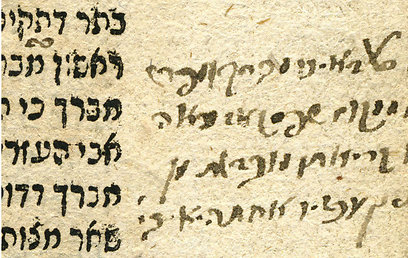
4- We spoke about alcohol use on Pesach. Reb Akiva Eiger once wrote that “I forbid its use for a reason that I will not divulge!”.

אזהרות בענין שתיית יין שרף

We mentioned that the Rebbe the Tzemach Tzedek writes that had Reb Akiva Eiger written  a reason then perhaps we could argue and permit it……(that would be nice to wash down the four ke’zeisim with some kosher le’Pesach Glenlivet or Zeks un Neitziker….)

Ttzemach Tzedek end of 51 

However since he did not divulge his reasoning one cannot rule differently.


5- We continued our discussion re the identity of Reb Eliezer Hakalir.


Shiur 01/12/2016 – Beitza 4a

Beitza 4a.

A unique expression in Shas. 

1- The Gemara has an interesting answer on the question we encountered last week.

Actually, such an answer is rather rare in Shas!

hand written annotations by the Vilna Gaon

Reb Eliezer states:

‘An egg that is born (laid be’la”z) on Yom Tov can be eaten and also the chicken”. 

The Gemara had difficulty understanding the “chicken” clause which seems redundant: If there is no issue of Nolad and Muktza then either the chicken or egg can be eaten. So why state both?

The Gemara answers this by introducing another Beraisa where Reb Eliezer states the same Halacha but words it differently:

‘An egg that is born on Yom Tov can be eaten and also the chicken, and also the chick, and also its shell“! 

“its shell?” Wow! Who eats egg shells?

Obviously, the “shell” was added as a figure of speech – an exaggeration to emphasize the point that there is nothing wrong in eating this Yom Tov-born egg.

Like saying:

Go ahead, eat the egg… and its shell too.

Similarly, when Reb Eliezer said ‘An egg that is born on Yom Tov can be eaten and also the chicken” he meant to emphasize his point by saying that not only the egg permitted but also the mother-chicken.

In the words of our Gemore such sayings are a “guzma”.

Yom Tov- Shabbos-Yom Tov

2- We entered the next stage discussing eggs born on Shabbos and the first day of Yom Tov.

Whereas until now we were dealing with an egg born on the second day – meaning a Yom Tov occurring on a Sunday or Friday.

Now we begin discussing if an egg was born on Friday which is a Yom Tov or on Shabbos which is followed by a Yom Tov on Sunday.

One cannot eat the egg on the day it was born as discussed at length in our Gemara up to this point. The question is whether or not it can be eaten on the following day.

Hachana Machine

We discussed the Tosfos which explains that the ‘birthing’ of the egg is also a ‘Hachana’.

Reb Elazar Hakalir 

3- The Gemore discusses the argument if a Shabbos followed by a Yom Tov, or vice versa, is considered as one entity or two.

As an introduction to the upcoming Gemara about two days of Yom Tov as we have it (Yom Tov Sheini Shel Goliyos) and also about the two days of Rosh Hashana if they are considered as one entity or two we ventured off to an interesting topic.

We just scratched the surface of the centuries old dispute concerning the identification of Reb Elazar Ha’Kalir. He is the famous poet that wrote numerous ‘Piyutim’ and Kinos. [In Nusach Ari we encounter just a few of them]. Hebrew English

But when did he live? the times of the Tannaim? Amoraim? The Geonim era or perhaps even later. His time has been set at different dates, from the second century, to the tenth or eleventh century. Some say he was none other than the famed Reb Elazar, Rashbi’s son!!

The name HaKalir is interesting and perhaps a hint to his biography.

Reb Noson of Rome, one of the first Rishonim, wrote what is considered the first ‘Hebrew/Aramaic’ dictionary. The Sefer Ho’Oruch is a book often quoted by many Rishonim and an invaluable source of history and philology (study of languages).

Under the entry ‘Kalir’ he writes that the word means….. cake.


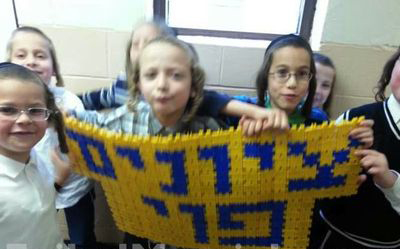
“And that is why Reb Eliezer (sic) is called HaKalir because he ate a cake that had a ‘Ka’meah’ written on it and thus became enlightened!

See here 3rd entry for Kalir

See here in the back of the machzor, a teshuva  about piyutim all the opinions of the identity of R Eliezer Hakalir and why he is sometimes called “Beribi”.

[This phenomenal historical tidbit is perhaps a source of writing words of Torah on cookies when bringing in a child to Cheder for the first time. Or perhaps the source of ‘eating the cake and having it too’…..]

Anyway, one of the proofs by the Rosh that he lived in the times of the Tanoyim is from the fact he did not write any Piyut for the second day of any Yom Tov. This must mean that he lived at a time that only one day Yom Tov was prevalent.

The Alter Rebbe. 68,2 accepts this proof.

But what about Rosh Hashana that was/is always two days even in Israel? More to follow in the next few weeks  בעזה”י.

Shiur 01/05/16 – Beitzah 3B-4A

Beitzah 3b-4a.

1- We discussed the following concept: An item that we can eat because of bitul vs an item that we can eat because of ‘safek mi’deRabanan‘.

A- An egg which was born on Shabbos and Yom Tov cannot be eaten today.

Now this egg got mixed up with other permissible eggs. In theory it is batul and can be eaten today.

‘Davar Sheyesh Lo Matirin’ kicks in and we are told to wait until tomorrow, – for tomorrow it can be eaten without having to resort to bitul.

As Moshe pointed out – bitul is 99.99% but not 100%

Can we use the same logic  – [why eat it today utilizing bitul when tomorrow it can be eaten without the need for bitul] – when the issue is not bitul but ‘safek?

Why eat it today utilizing the leniency of ‘safek mi’deRabanan‘ when tomorrow there is no need for such leniency? For example:

B -An egg which is in doubt whether it was born on Shabbos or Yom Tov.

In theory it can be eaten today. (Assuming the reason for the prohibition of eating such eggs is only mi’deRabanan)

True – today it is a ‘safek‘ and not a problem [again- 99.99% or 100%]

But tomorrow it may be eaten without any issue.

It seems that the Gemara has two opinions on this query.

2- We spoke about the prohibition of ‘ein mevatlin issur lechatchila’. One is not allowed to add a large quantity of kosher food into treife food in order to be mevatel the treifa food.

This is an issue in Starbucks flavor pumps that are connected to various large bottles containing flavors.  Some flavors are not Kosher. The Kosher flavors end up occasionally in the bottles that previously contained non-Kosher flavors. But the residue of the non-Kosher flavor are batel to the large amount of Kosher syrup.


On the other hand it is performed unintentionally – and many times – by a goy.

3- Also discussed the common practice of food manufacturing companies which use actual food to kasher their production lines. After a run of non-Kosher food, a batch of Kosher food is run through the machines. This particular batch does not receive a Kosher stamp but the process itself Kashers the treif machinery! Subsequent product is certified “kosher”

Charmaine Dingman inspects applesauce along the production line at the ...

4- We concluded with the piece of the Gemara that discusses the case of a chicken that is purchased ‘stam‘ – not particularly for the purpose of eating it (not muktzeh on Yom Tov) and also not for the purpose of using it for laying eggs (rendering it muktzeh on Yom Tov.)

Stam a chicken.

Now it lays an egg on Yom Tov. The Gemara suggests that the action of the the owner with the chicken will decide the fate of the egg, utilizing the unique principal of breirah: If he decides to eat the chicken then the egg will be permitted as well. If he decides to have the chicken lay eggs then she is muktzeh and so is the egg.


Ari Chitrik Shiur Points