Makos 8b  Shiur 10/28/14

Thanks to Eli Chitrik

Makos 8b

  1. Although we were used to the train of thought that a person no matter what he does he can never lose his status as a Jew, in Halacha it is not so simple:

For example if a Jew became an apostate can one eat from his Shchitah?

Are you allowed to lend him money with interest etc.?

(It is interesting to note that according to all opinions a Jew who became an apostate, on the day he does Teshuvah, he does not have to go through the process of conversion. He can just wake up one morning, and become a full Jew once more, meaning he was never really an apostate.)

We noted an interesting story regarding this question.

If a man dies without having any children, Halacha says that the woman must marry his brother- Yibum. If he  refuses he must get Chalitza from the widow.


What happens if the brother is a meshumad (apostate/converted ר״ל to another religion)?

There are two opinions:

According to the Geonim, because the brother is an apostate it is as if the there is no brother and the woman is permitted to marry anyone without even doing the Chalitzah process.

However, according to R”ashi even though the brother is a apostate, he is still a Jew and the woman is obligated to to marry him. Therefore,  without doing Chlitzah she is not permitted to marry another man.

The Shluchan Aruch halachically rules like Rashi,  however the B”Y and the Rama both dictate that you also have to take into consideration the opinion of the Geonim and therefore if there are two brothers you should only get Chalitzah from the Kosher one.

Getting Chlitzah from the apostate brother does not permit you to marry out.


  1. Around 80 years ago there was a man in Germany who died without children and he had two brothers. One brother was an apostate lived locally in Germany, the other brother who was “Kosher”  lived in Russia after the Bolshevik Revolution and it was very difficult to get in touch with him.


According the the ruling of the Shluchan Aruch  even though it may have been hard, the correct thing would have been to get in touch with the “Kosher” brother because according to the Geonim the brother in Germany is deemed “worthless” and would not free the woman to marry.

This story happened to have occurred with the Rogatchover Gaon’s son in law and daughter  Rochel. His son-in-law lived in Petach tikah and passed away as a young man.


The Rogatchover wrote to the Beis Din of Berlin telling them that they can go directly to the Apostate brother and ask him to do the Chalitzah and that they do not have to take into account that he has another “Kosher” brother. In other words, totally disregarding what the Shluchan Aruch  says that you must take into consideration the opinion of the Geonim.


One of the members of the Beis Din in Berlin at the time was Reb Yechiel Yaakov Weinberg (The Seridei Aish (see here in English Hebrew)  he tried to argue with Rogatchover but to no avail. The Rogatchover was adamant that he go directly to the apostate brother and not to take into the consideration the opinion of the Geonim.


Being that they had the Psak of the Rogatchover, they went directly to the apostate brother to ask him to give Chalitzah to the woman. The apostate brother upon hearing the story was very stubborn and refused to give the woman Chalitzah thereby leaving the woman an Agunah.

It is said that the Rogatchover considered the fact that the apostate brother refused to give Chalitzah as a sign that he should have not been so lenient with the opinion of the Geonim!


Tragically, Rochel was killed by the Germans YM”S. It is thanks to her that many of the Ragatchover’s manuscripts survived the war.

See here. http://en.wikipedia.org/wiki/Rogatchover_Gaon


An interesting piece of Gemore

(As we learned in Sanhedrin:)

We spoke about a defendant that has two capital punishments hanging over him that is given the harsher penalty.

#1- Skila

#2- Sreifa

#3- Hereg –Sayef

#4- Chenek

Thus a son who fatally attacks his parents has two punishments coming his way. One for wounding his parents – for which the punishment is Chenek, (which #4 on the list). The other one is for the killing – for which the punishment is Hereg, (#3 on the list).

This son therefore he gets the harsher one – Hereg.

Reb Shimon however, who has a different order:

#1- Sreifa

#2 – Skila

#3 – Chenek

#4- Hereg –Sayef

According to Reb Shimon the son would receive #3, Chenek.

Now all of this is only if the action of the son were done b’maizid. If he did it b’shogeg then it becomes interesting:

According Reb Shimon the son would get #3 – Chenek – but if he did it be’shogeg then he does not go to Golus!

The reason being that the concept of Golus is only for simple murder which carries the punishment of Hereg not Chenek. Think.

So the consequence of this logic brings us to a weird scenario. Someone who kills on Shabbos is chayev Skila for Shabbos and Hereg for the murder. He thus would get Skila. But if he did the above be’shogeg then he would not be obligated to go to Golus since there is no Golus for Skila!

Also discussed the obligation of a father to teach his child Torah, a profession and how to swim. Teaching him a second profession is not considered a Mitzvah.

Makos 8a (2) .Shiur 10/13/14

Makos 8a (2) 

Shogeg – Hechsher Mitzvah


1-      We spoke about the narrative in the Chumash describing a case of ‘shogeg’ – causing an unintentional death that results in Golus. Devorim 19.

And this is the case of the killer who will flee there, so that he may live: Whoever strikes his fellow [to death] unintentionally, whom he did not hate in times past.

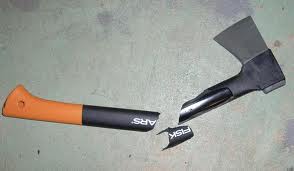
As when a man goes with his fellow into the forest to chop wood, and his hand swings the ax to cut down the tree, and the iron flies off the handle, and it reaches his fellow, and he dies he shall flee to one of these cities, and live.”

 stock-footage-slow-motion-man-with-an-axe-walking-in-forest

It begins with two points:

1- walking into a forest.

2- while chopping wood the axe malfunctions and results in an accidental killing.


axe

The Mishnah and Rava derive from one of these points – walking into a forest and chopping wood – both mundane actions, that a ‘shogeg’ is only when not doing a Mitzvah.

The Gemora discusses if there is a possibility of chopping wood for Mitzva, such as for a Sukah or for firewood for the Mizbeach. It concludes that the chopping for these two Mitzvas is considered only a ‘hechsher Mitzvah’ i.e. preparation for the Mitzvah and not the Mitzvah itself.

Yisrolik Motchkin pointed out that in addition the what we wrote last week (Shiur Points 10/07/14 #3) there is more from the Rebbe on this topic in Likutei Sichos vol 29 page 496.

http://beta.hebrewbooks.org/pdfpager.aspx?req=16024&st=&pgnum=511


Kaporah for a Shliach

2- Repeated the story of the maid that fainted and inadvertently was given poison that caused her to die and the ruling of the Chasam Soifer that no ‘Kaporah’ is needed.

Story of the Shliach who was on a panel discussing Zionism. While the Shliach presented the Chabad view on this touchy subject an agitated old man (ardent Zionist) began to argue and R”L died of a heart attack!

The Shliach wrote to the Rebbe what transpired in detail, describing the points he presented as to the Chabad position etc. and asked if he needs a Kaporah.  The Rebbe told him (while adding some points to his presentation!) that he should ‘do something’ for his causing this tragic incident. What exactly I don’t know.

Incidentally, the family of the deceased told the Shliach during Shiva, that he should not blame himself as the old man had a very weak heart to begin with. (Perhaps he was a diehard Zionist…)

Obligation to work

3-      Spoke about the obligation to “work” as it says in the Posuk “Shai’shes Yomin Ta’avod, Ubashvi Tishbos”.


It’s not counted as one the 613 – Taryag Mitzvos perhaps because it is a Mitzvah K’lolis ……

One or two Shabossim for Moshiach to come?

4- Famous contradiction between two Medroshim: One states that “if Jews would keep just one Shabbos they would be redeemed”, whereas another states the need for two Shabossim to be observed.

The Alter Rebbe answers according to Chassidus that it means the two levels of Shabbos that need to be experienced every Shabbos.

See here :  http://beta.hebrewbooks.org/pdfpager.aspx?req=16093&st=&pgnum=110

Suggested that perhaps it means as follows: In order to keep a Shabbos properly one must work only six days before the Shabbos arrives. Shabbos needs to be “the seventh day”.

If one becomes a Ba’al Teshuva on a Tuesday, for example, and decides to keep the next Shabbos then this next Shabbos will not be “the seventh day” for him. Since he has not kept Shabbos prior to this one, then the Shabbos he decides to observe comes after (not six days of work, but) perhaps hundreds of days of work.

He therefore needs to keep one Shabbos, work for six days, and only then will the second Shabbos be for him a real “seventh day”.

Thus the two Medroshim do not contradict. For Moshiach to come we need everybody to “keep one Shabbos” but that will be realized only after they observe “two Shabossim”.


Makos 8a Shiur 10/07/14

Makos 8a

Thanks to Eli Chitrik

  1. The Mishna states the following:

The Torah gives an example of killing someone inadvertently as “chopping wood in the forest and the axe slips and kills a bystander”. The example is to teach that just as chopping wood is voluntary, not a Mitzvah, so too, any act causing death in order for the law of exile to apply must be an non-Mitzvah action. This excludes for example a Shliach Beis Din (agent of the court) who inadvertently kills someone, since they killed while engaged in a Mitzvah.

What is the definition of the “Shliach Beis Din” who killed someone?  It cannot mean giving extra lashes (39 plus)   because on Daf 22b it states that if extra lashes are given and the person dies it is a case of Golus if given unintentional, or Mayzid if done intentionally.

Rashi here learns that it is someone who was assigned the Task of giving Malkus to someone and inadvertently killed him. Meaning within the amount of lashes he was appraised to be able to receive.

The Raava”d however objects, being that before the court administers Malkus, it medically evaluates the offender and determines how may lashes he can sustain without dying, thus if the agent killed the offender by applying this precise number of Lashes, he should be exempt from exile because the death was not his fault (it was an Oines). Thus, there is no need for the Posuk to exclude him from Golus.

To resolve this problem, the Raava”d explains that the agent inadvertently killed the victim by mistakenly losing count and applying an extra lash.

Therefore it is would be a true Shogeg and without the exemption of the Torah he would be be exiled.

The Ramaba”m explains the Mishnah totally different. According to him the agent mentioned here was serving as a marshal, which entitles him to use force to compel people summoned by the court to appear.

  1. ​In light of this Machlokes the Chasam Sofer has a very interesting Teshuvah.

He was asked the following question:

A Jewish cleaning lady was prank’d on, and because of the shock of the prank she passed out. Her employer, the wife of the house, reached for some alcohol (A kapitchke) to give her in order to wake her up. Those were the days….

Accidentally she reached for the petrol, which she gave to the Jewish cleaning lady, resulting in her immediate death r”l.

The Chasam Soifer was asked if the poor housewife would need Kaparah and be obligated to go to Galus?

​Very methodically he goes through all 3 Shitos and concludes that we must say the right interpretation is the Raava”d’s.

​And he makes a Kal Vochemer to our case:

In the case of the Mishna, the Shliach Beis Din finished administrating all the necessary Malkus and the Mitzvah was finished. Nevertheless if he gave him one extra hit he is not obligated to exile because it was ‘part of the Mitzvah’. How much more so in our case where the Jewish lady was involved in the Mitzvah of bringing someone back to life, of course she does not need Kapara and would not be be Chayav Galus.

​And he goes a step further:

Even according to those opinions that any time your actions causes death, (see Shiur Points of 9/10/14. Item #3) despite it being indirect (Like the Story with Dovid and Doeg) you need Kaparah,

in our case since this lady was employing poor Jewish workers which is a great Mitzvah, even that small Kaparah is not necessary for her.

Interesting to note his opinion on the importance of hiring Jewish workers-  especially needy ones!

See here the Teshuvah at length.

  1. The Gemora discusses the possibility of chopping wood for a mitzvah and offers two examples. 1- Wood for the Mizbeach  .2 Wood to build a Sukkah. It then states that chopping wood for the above examples is not a Mitzvah for itself but rather a Hechsher Mitzvah as opposed to the actual building of the Sukkah which is a Mitzvah in itself.

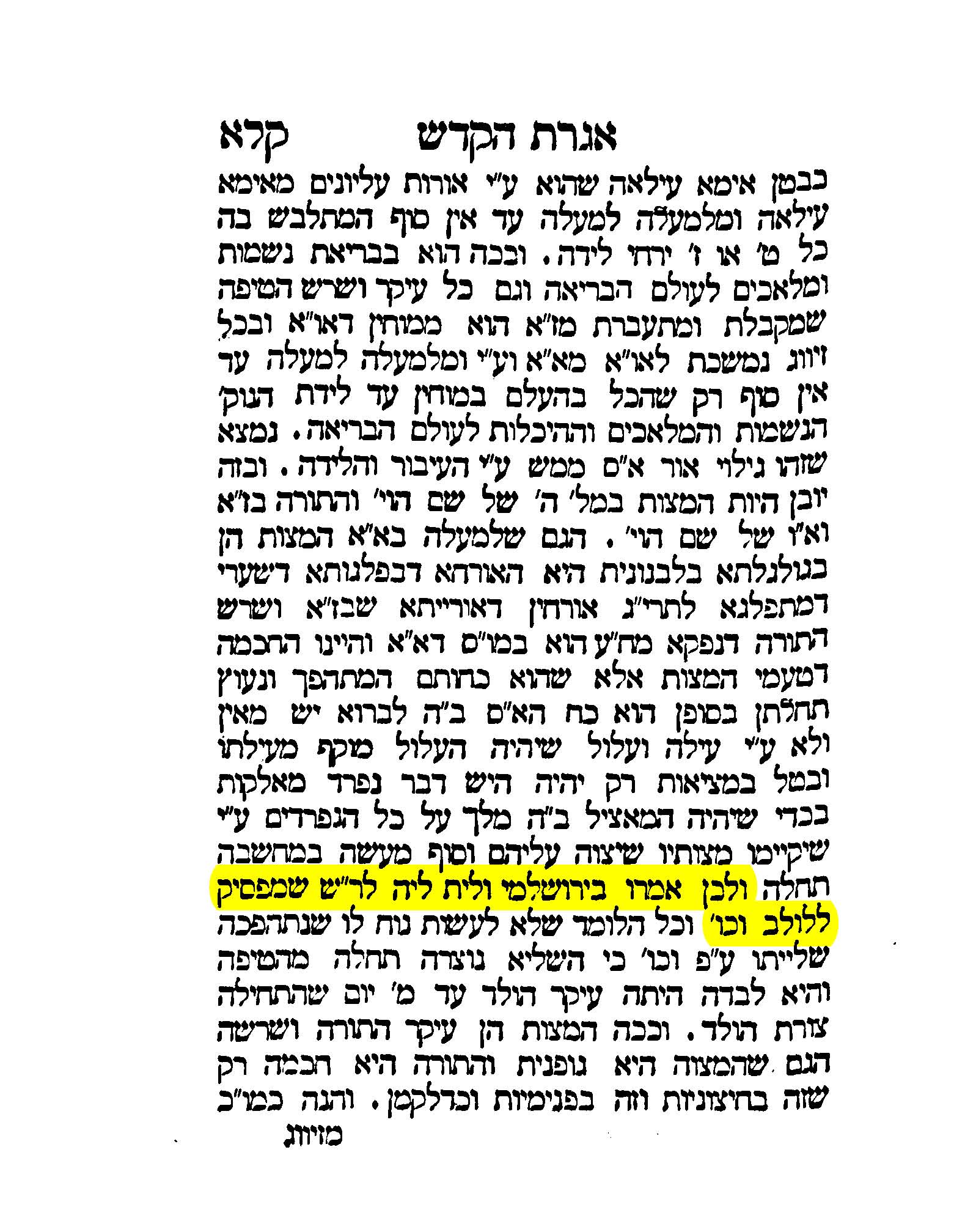
In Tanya IGH”K 20 the Alter  Rebbe explains the importance of Mitzvos and how it is the ultimate purpose of creation. He adds quoting the Yerushalmi that even Reb Shimon bar Yochai, who due to his intense Torah study, would not interrupt his studies for prayer, nevertheless he would most ‘definitely stop for Lulov’.

seferid_49432_page_263


What is the meaning ‘stopping for Lulav’? Binding the Lulav together or shaking it?

See here the Rebbe’s comments.

Makos 7b (2). Shiur 9/30/14

Makos 7b (2).

Thanks to Eli Chitrik

1- We discussed payments for monetary damages caused to others. Generally, in Halocho there are no loopholes or excuses not to pay. “I was sleeping or I was drunk” gets one nowhere. “Shogeg or  oi’nes” are treated the same way – chayev.  Even totally unintentional or accidental harm caused by you to the assets of others must be paid.

Humorous story of the S. Francisco drunk who woke up the morning after the great earthquake and asked “how in the world will I pay for this…”

uh oh…


There is Yerushalmi that states that “if one while sleeping turned over and broke crystals dishes that were placed next to him after he fell asleep then he is not obligated to pay”. Did the Yerushalmi mean to say that there is a level of oi’nes that does not obligate one to pay. Is there a  “pure and totally unintentional” harm?

Tosfos takes the Yerushalmi  to mean that cases where one is totally not at fault – oi’nes- one is potur to pay. The Ramban argues. He says that all cases of oi’nes is chayev. The case of the Yerushalmi, says the Ramban, is not an oi’nes. The sleeper did nothing! The one who placed the crystal dishes is completely at fault.

2- Speaking of the meaning of the word “Min Ha’etz” we mentioned the Vort from the Baal Haturim (See here in EnglishHebrew) from Parshas Bereishis.

Hashem asks Adam why he ate from the Eitz haddas? Adam Replied  “The woman whom You gave [to be] with me she gave me “Min Haetz” (of the tree) so I ate.


The Baal Haturim explains that “Min Haetz” means Chava physically hit him with a stick from the “tree” until he ate.

Berel pointed out that this phenomena started from day one!

Aber amol farkert……

3-We mentioned the concept of Koach Kocho – an action that is twice removed from the person.

It is a wide ranging topic.

Laws of:

‘momunos’ – Smashing into a car and cause the car to smash into another.

‘nefoshos’  – Someone killed by a ball – on the rebound!

Shabbos’ – Can one bowl on Shabbos? The force of the ball is transferred to the pin that in turn starts the score mechanism and clear the alley etc. etc.

Here is a question I found on the Internet:

“In the movie the Big Lebowski, Walter explains that he is shomer shabbos and that he can’t “roll” (meaning bowl) on shabbos. My question is, if he were able to get to the alley without violating shabbos and if he were allowed to bowl for free, other than possibly uv’din d’chol, is there any reason he can’t bowl on shabbos?

The rolling ball is the “koach” of the original person, analogous to a thrown rock. When the ball then hits the pins/sensors/etc that action is “koach kocho” of the original person, meaning it is twice removed from the person himself (for the definition see the Rambam Hilchos Rotzeach 6:15). “

You have to see this site:

http://judaism.stackexchange.com/questions/17307/can-you-bowl-on-shabbos

Makos 7b Shiur 9/16/2014

Makos 7b

אונס          שוגג קרוב לאונס       שוגג      שוגג קרוב למזיד      מזיד

1. General introduction.

The obligation to run into the ‘orei miklot’, when causing an accidental death is only when it is a ‘Shogeg’-  (center of the speedometer).

What is the meaning of  Shogeg?

Unintentional 

Now there are many levels of Unintentional .  See speedometer above.
In cases of murder, a Shogeg is only a middle level ‘unintentional’.
Why?
If a death was caused by simple  negligence (and therefore closer to  מזיד),  then it is not considered a Shogeg and ‘orei miklot’ will not help.

On the other hand if it purely accidental then it is closer to   אונס and again,  it is not a true Shogeig and there in no need to run to ‘orei Miklo’t.

See more on this below.

neg·li·gence

negləjəns / noun

failure to take proper care in doing something.

“some of these accidents are due to negligence”

2. We discussed the ‘action’ that caused the death. The Torah uses examples of actions:  upwards motion – (potur) or downward motion  – (chayev). It does not talk about any other method.

Obviously, any action that causes death is considered a Shogeg. Such as a straight movement- shooting with a gun or drowning. Also no movement at all such as poisoning  the victim (accidentally).

How to reconcile the Torah’s limited motions (upwards (potur)  or downward (chayev)) versus the other methods is a tough topic which we touched upon.

3. Our Mishna:

כל שבדרך ירידתו גולה

ושלא בדרך ירידתו אינו גולה

Whoever killed inadvertently while he was engaged in a downward motion is exiled;

But if he killed while he was engaged in a motion that was not downward, he is not exiled.


Most Rishonim explain that there is no logic to this. It is a Gezeiras Hakasuv.

The Rambam however applies some logic to this:

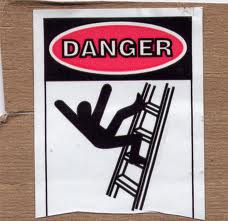
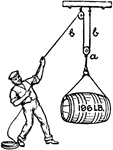
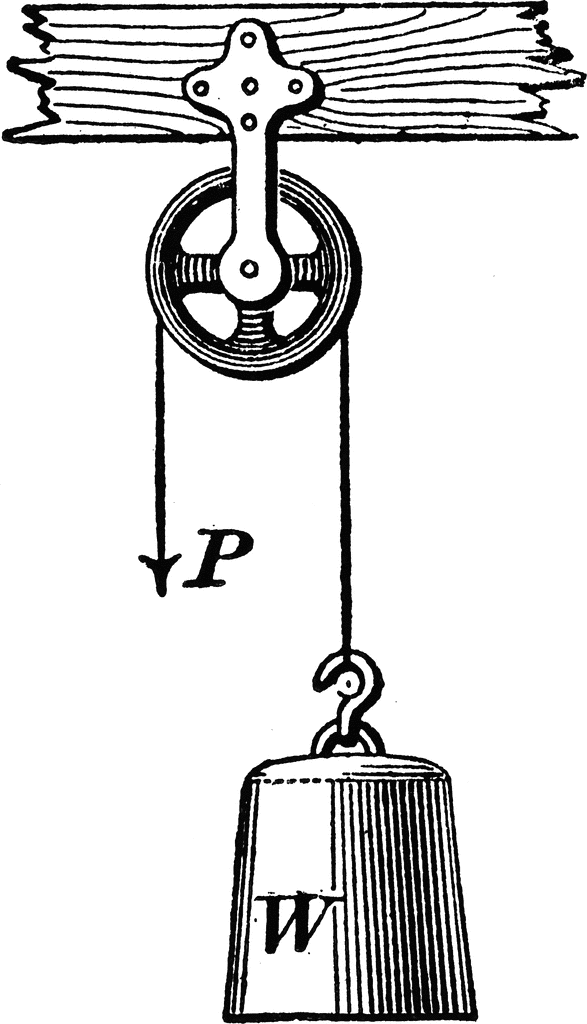
“When a person was lifting a barrel with a pulley to bring it up to a roof, and the the rope broke, causing it to fall on a colleague, or a person was climbing up a ladder and fell on a colleague and killed him, the person who caused the death is not liable to be exiled. This is considered to be something beyond his control. For this is not something that is likely to happen, but is rather an extraordinary occurrence.

If, by contrast, a person was lowering a barrel with a rope and it fell on a colleague and killed him, or he was descending on a ladder and fell on a colleague, or he was shining with a polisher and it fell on a colleague and killed him, the person responsible should be exiled.

This is derived from Numbers 35:23, which states: “And it fell upon him, and he died,” implying that the article must descend in an ordinary manner. “An object that descends frequently causes damage. Indeed, it is likely that this will happen, for the nature of a heavy object is to descend downward speedily. Therefore, if the person did not hurry and act appropriately and properly while the object descended, he is responsible and should be exiled. The same applies in other analogous situations.”. 


We discussed this logical explanation and perhaps why others reject it.

4. Moshe Rosenfeld has this insightful comment:

So when pulling a rope up (or climbing up), it is less likely to tear or break, (“peleh hu”) as opposed to lowering a rope where it apparently is more likely to tear.

Doesn’t it make more logical sense to say that as you pull a rope from above, you are exerting more force on the rope and it is therefore more likely to tear, than when lowering the rope?

Furthermore, at the end of 12:

 שהרי דרך נפילה מצוי ברוב העתים להזיק ודבר קרוב הוא להיות. שהרי טבע הכבד לירד למטה במהרה

 So at first glance, it seems the Rambam is saying that heavier items fall faster.

This brings to mind the well-established theory that heavier items do not fall faster (see the famous experiment by Galileo (1590) at the tower of Pisa, [which may have never actually happened, but doesn’t make much difference] http://en.wikipedia.org/wiki/Galileo’s_Leaning_Tower_of_Pisa_experiment), this theory was ultimately clarified by Einstein’s general theory of relativity, (1916) and is more or less ​still regarded as fact today.


(Getting into the nitty gritty, based on the science referenced above – a heavier stone and a lighter-weight stone dropped from the same height would hit the ground at the same time, because they both have the same rate of acceleration, however, the gravity exerts a stronger force on the heavier stone. Perhaps that is what the Rambam meant by teva hakoveid…b’meheira; heavy items fall fast (because they have more force of gravity). I don’t know.

Shuv matzasi a different understanding of what the Rambam meant:

http://www.ybm.org.il/hebrew/LessonArticle.aspx?item=3484

if you have time to read it, he also sees more stress on the rope on the way up:

 נמצא שהרגע בו המתיחות היא הגבוהה ביותר זה רגע העלייה של החבית ולכן דרך עלייה זוהי הדרך בה הסיכוי שיקרע החבל הוא הגבוה ביותר. כיוון שבדרך עלייה הסיכוי שיקרע החבל הוא הגבוה ביותר

 רבא סובר שעלינו לבדוק את מידת הזהירות הנדרשת מאדם המעלה חבית לעומת מידת הזהירות הנדרשת מאדם שמורידה. כאשר אדם מעלה חבית הוא מתנגד לכח המשיכה ואם יעזוב את החבית היא תיפול, לכן אם הוא לא רוצה לעשות עבודה כפולה הוא ימשוך את החבל בלי להרפות אפילו לרגע. אולם בשעת הורדה יכול המוריד להרשות לעצמו להרפות מהחבל שתרד החבית בכח המשיכה ונמצא שיש יותר סיכוי שתרד החבית בלי שליטתו.

 And then at the end: 

 שהרי טבע הכבד לירד למטה במהרה והואיל ולא זירז עצמו ותיקן מעשיו יפה בשעת ירידה יגלה.” הרמב”ם לא נימק את סיבת החיוב של המוריד בכך שהיה לו לחשוב שיקרע החבל, אלא הטעם שנתן הוא שמאחר ודרך הכבד לירד במהרה צריך המוריד להפנות תשומת לב יתרה ולתקן מעשיו יפה. ואמנם יכולנו לחשוב שהמוריד הוא כפושע מאחר ועליו לשים לב, אך הרמב”ם מדייק ואומר שכל אשמתו היא שלא “זירז עצמו ותיקן מעשיו יפה”, כלומר שעליו לעשות מעבר למה שרגילים העולם להיזהר, זו דרישתה של התורה, ומי שלא נהג כך ציוותה התורה שיגלה.

Thank you Moshe.

5.  We discussed the concept of “Omer Mutar” – someone who does a certain action believing that it is permitted.

In our Gemara we have a Machlokes if someone killed someone thinking that it is permitted. (don’t try this defense in court….)


Rava holds that it is close to being deliberate – the left side of the speedometer.

Abaye holds it is close to being an accident – the right side of the speedometer.


We explained that although Abaye and Rava agree that killer who although murdered does not go into exile, there is a practical difference between their views. If the exemption from exile is due to the act’s being close to deliberate, the killer is still subject to the vengeance of the goel hadam.    If however, the exclusion from exile is because the death was completely accidental or close to that, the killer is not subject to the goel hadam vengeance.

The bottom line is that both Rava and Abaye’s are of the opinion that being  ignorant does not constitute the definition of Shogeg.

Tosfos comments that there is a difference between murder and other sins. Regarding prohibitions (other than murder; for example Shabbos) believing that it is permitted, his act is indeed classified as an “Inadvertent” (Shogeg) one.


But if one committed murder under the belief that it is permitted, his crime is not regarded as “Inadvertent” and cannot receive atonement by going to Galus. Tosofos learns this from the fact that the Torah mentions the word “inadvertent” twice  when discussing murder. Thus, not knowing the prohibition of murder cannot  be considred a true Shogeg.

Some mentioned in the shiur that in modern society a defendant claiming that “I was not aware that killing is prohibited” is basically pleading insanity….

Umesaimim beTOV!

Ksiva Vachasima tova.


Makos 7a. (2) Shiur 09/10/14

Shiur 9/10/14

Makos 7a. (2)

1- The opinion of Rabbi Akiva and Rabbi Tarfon is that “had we been  present in the times of the Sanhedrin, we would have surely invalidated any sentence for execution”.

They would propose that ‘perhaps the murder victim was for all practical purposes already technically “dead” due to a wound (such as a hole in his throat)’.  By bringing up this ‘possibility’ in Beis Din, a verdict to execute a murderer would never occur.

We mentioned the famous question by Rabbeinu Tam based on Meseches Chulin where there is a discussion as to the source that ‘the Torah instructs to rule based on “majority”’.

Obviously the simple source is the fact that the Torah states that in a case of different opinions within the Sanhedrin it needs to follow the majority of votes.

But the Gemara is looking for a source on “statistical majority”, e.g. “most cars are purchased to drive and not for scrap”.

Many suggestions of proof are offered. One is a case similar to Rabbi Akiva’s and Rabbi Tarfon’s reasoning to invalidate all capital punishments.

Namely – how can the Torah state that a murderer is to be put to death when there is a (slight) chance that his victim was about to die anyway due to a hole in his throat? One must conclude that the Torah is of the opinion that we must follow statistics and can assume (even if it leads to putting someone to death) that most people do not have holes in their throats!

Therefore asks Rabbeinu Tam, how could this suggestion (that perhaps the victim was a treifa prior to being killed) invalidate the verdict?

See Tosfos for his answer.

2- The Gemara in Chulin continues that perhaps we can perform an autopsy to determine if indeed the victim was healthy prior to his murder. The Gemara asks that autopsies are prohibited and replies that to perform a needless autopsy is indeed prohibited but this may save the alleged murderer’s life!

Saving a life outweighs everything.

We discussed the 18th century story where doctors performed an autopsy on a Jewish patient to determine the cause of his death. Despite the specific Halachik prohibition on autopsies, this particular Rabbi allowed it basing himself on this Gemara- that ‘savings lives’ (pikuach nefesh)  overrules everything- even autopsies.

He then wrote to the famous Rabbi of Prague, Reb Yechezkel Landau asking his opinion. The response in the letter penned by Reb Yechezkel and published in his famous magnum opus “Noda BiYehuda”, is the basis for all the resulting discussions to date pertaining to autopsies.

He writes that, true, even a ‘sofek’ pikuach nefesh  stands above all (but 3 Mitzvos) and if there was indeed a ‘patient right in front of us’ that would benefit from this particular autopsy then not only would it be permitted – it would me mandatory to go ahead and do it.

The problem, Reb Yechezkel writes, is that there was/is no ‘patient right in front of us’. Autopsies for the study of science are not considered a ‘sofek’ pikuach nefesh.

We spoke about the situation today where one can travel across the globe within hours.

Are all sick people technically a ‘patient right in front of us’?

Should autopsies to be permitted today?

There is a lot more to this.

Stay healthy. Say Lechaim.


3- We spoke about Reb Yakov Weil, known as the Mahariv. He writes about a tragic case of a person that sent his messengers on an errand and unfortunately the messenger was killed on the way. The sender asked Reb Yaakov if he needs to go to ‘golus’. Surely it does not mean “orei miklot’ which do not exist today. The question was about going into ‘golus’ as a penitence/teshuva – kapora.

His opinion was that the sender does indeed need kapora and he should go to ‘golus’.

This is brought down in the Mogen Avrohom end of Laws of Rosh Hashanah, http://beta.hebrewbooks.org/tursa.aspx?a=oc_x2965

Many others argue on his ruling, including the ‘original’ Tzemach Tzedek.  (Not the 3rd Rebbe.)

Who is the original and who is the latter Tzemach Tzedek?

See here. http://he.wikipedia.org/wiki/%D7%9E%D7%A0%D7%97%D7%9D_%D7%9E%D7%A0%D7%93%D7%9C_%D7%A7%D7%A8%D7%95%D7%9B%D7%9E%D7%9C

In English http://en.wikipedia.org/wiki/Menachem_Mendel_Krochmal

His name was also Reb Menachem Mendel.  Family name was Krochmal. He named his Sefer Tzemach Tzedek since the numerical value of his name is the same as Tzemach Tzedek.

In Halocho seforim he is referred to as “the old Tzemach Tzedek”. As opposed to the Rebbe the Tzemach Tzedek who is referred to as the “new Tzemach Tzedek”.


Makos 7a Shiur 9/2/14

Thanks to Eli Chitrik

Makos 7a

1. In regard to the discussion of whether or not a guarantor on a loan can be a witness on the loan which he guaranteed – if he is considered to have a conflict of interest or not; we mentioned a famous argument ​among the Rishonim. Namely the Ra’vad, the Raza”h and the Ramban.

​ ​The Ri”f (See here in English Hebrew) was considered the foremost Posek of his generation and it was inconceivable for a time anyone to argue with his way of learning.

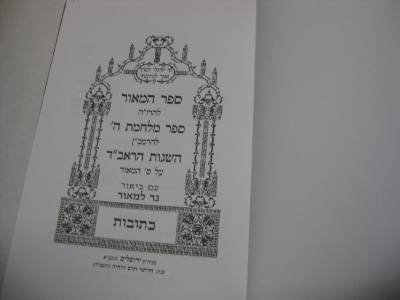
That all changed until the Raza”h, R Zerachiah halevi, (See here in English Hebrew) wrote his book The Maor

(Maor Hakotton on Berachos and Seder Moed, and Maor Hagodal on Seder Nashim and Nizikin. He is commonly known as the Baal Hamoer) which is basically a book of objections, consistently raising issues to the way the Rif decides Halocho.

This book cause a major uproar in the Jewish world, some even say that he was forced to leave the city of which he was a Rav at the time.

In order to defend the Rif, the Ramba”n wrote a Sefer called Milcahmos Hashem “The war of Hashem” in which he defends the Rif from the objections of the Rza”h. Just a quick read through the Mlichamos and you will notice one of the sharpest use of language in Rabbinic literature.

2. The Misnah mentioned that R Akiva and R’ Tarfon say “If we were in the time of the Sanhedrin we would have never put anyone to death” this is because they would ask so many questions (more of this next week) that it would be impossible to conclude with a conviction.

R’ Shimon Ben Gamliel objected to this logic saying that it negates the deterrence factor.

We mentioned that  R’ Akiva and R’ Tarfon were indeed in the times and members of the Sanhedrin. What they meant was if they were in the times that the Sanhedrin were still applying the death penalty. As we learned in Sanhedrin they stopped putting people to death 40 years before the Churban Bayis.

On a more humorous note we mentioned that  R’ Akiva and R Tarfon were academics and perhaps had more of a ‘liberal’ view. Therefore they were of the opinion that the death penalty was unnecessary.

R’ Shimon Ben Gamliel, is of the opinion that if we were to follow R Akiva and R’ Tarfon’s of not applying the death sentence it would increase the murder rate.  Why?  Being the Nasie Hador (the president) he was the one who was responsible for ‘keeping the order in town’. Society needs rules and regulation. He thus had more of a conservative view. The death penalty, even if rarely used, was needed for the purpose of maintaining a cohesive and law abiding society.

3. The Gemara states that there is a difference between the commandment for setting up courts in E”Y and in all other places. In E”Y you establish courts in every single province and in every city. However outside of E”Y  you only need to establish courts in every province but not in every city.

Reb Yaakov Emdin (The Yavetz) notes something very funny. From this Gemara comes out that the ​Jews living outside of  E”Y are worse than Goyim which need to set up a בית דין in every city and the Jews need to set up only in every province. Comes out the Goyim have more Chiyuvim?!

(He does note that the Ramaba”m had a different Girsa which would explain this distinction)

​ Conversely this can also be seen as a Ma’le that the Jews need less courts because there is less crime in their areas

More on this next week.


Makos 6b Shiur 08/26/14

Thanks to Eli Chitrik

Makos 6b

1. We mentioned that if two groups of witnesses who are able to see each other,  they are then considered one group, and therefore cannot become “Muzum” unless you are “Mazim” all of them.

The Rishonim ask, for one of these groups to have been found Zomemin, it means that witnesses must have come forward and testified that they saw them elsewhere at the time the crime was committed. But this presents a problem. For in our case, the members of the second group – whose testimony was not discredited – say that they saw the members of the first group standing at a window overlooking the scene of the crime!

There is thus a “Hakchoshah” contradiction, between the Hazamah witnesses and the second group of witnesses whether the members of the first group were, or were not, at the scene of the crime. Since the Hazamah testimony itself has been contradicted, we cannot know whether to believe it. Hence, the members of the first group could not be punished as Zomemmin regardless of whether we considered the two groups one set of witnesses or two! How then can the Mishnah make their punishment dependent on this issue?

The Ritva answers that the Mishnah must therefore speak of a case in which only one member of each group saw someone in the other group. In such a case, there is only a single witness contradicting the testimony of Hazamah witnesses and the Hazamah witnesses would therefore be believed.

2. We spoke about “Eidus M’yuchedes” or isolated witnesses:

What is an “Eidus M’yuchedes”?


A set composed of two witnesses, one of whom watched from one window and the other from another window, without them seeing each other.

Are such witnesses valid?

The Gemara clarifies that in cases of Dinei Nefoshos – Life and Death – they are not considered valid witnesses, however regarding monetary cases ‘isolated witnesses’ are indeed valid.

What is the logical explanation for this?

3- We spoke about the two Rabbonim of Dvinsk. (Formerly Dinaburg דענעבורג  – and now Daugavpils). One,  R’ Meir Simcha Hakohen was the Misnagdisher Rov. (See here in English Hebrew)

The other, the Ragatchover was the Chasidisher Rov.

The Ohr Sameach, written by R’ Meir Simcha Hakohen present some logic to the above ruling:

He first asks: monetary cases and life and death cases are always compared to each another.

The Torah says “Mishpat Echod Yeeyeh Lahem”. Why in this case of ‘isolated witnesses’ should their laws be different?

(see original here, perek 4, halacha 1, ohr samayach eidus makos 6

He explains, that when someone kills someone and there are no witnesses Torah says that this man may not be put to death. When does he get the death penalty, when there are two witnesses who saw him in action.

If no valid witnesses witnessed the murder then even if he comes on his own to Beis Din and admits to the crime, he is considered a murderer and forfeits his place in Mizrach…… but he cannot be put to death.

Error Message Generator __ WARNING2

In other words, what makes a person “Chayav Misah” is not only the fact that two people saw the action of him killing. They need to come to Beis Din and testify that he is chayev miso because he killed someone and that two witnesses (themselves) saw the crime and therefore they are testifying against him.

Therefore you need proper witnesses and not isolated ones. If one saw the crime without knowing and seeing the other witness then he cannot come and testify that “two witnesses saw the act and therefore his is chayov miso”!

In simpler words: Two witnesses that see an act together create the chiyuv.

However, regarding monetary cases, when someone borrows money from someone whether he has witnesses or not he will always be obligated to pay back, it is just that if he does not have witnesses, Beis Din cannot force the other person to pay back.

In other words, Torah did not say; “only when you have witnesses does a person has to pay back”.  Absolutely not!  A person always has to pay back, but if he does not have witnesses, than Beis Din cannot enforce it. Therefore in this case, monetary – witnesses are not as essential and therefore isolated witnesses work.

Here you can read it from his most famous book on the Ramaba”m ‘Ohr Sameach’.


Makos 6a – Shiur 8/19/2014

Makos 6a

Shiur 8/19/2014 With Thanks to Eli Chitrik

1.  We continued to discuss the question of last week of the Rov of Vilna, Reb Chaim Oizer Grodzinsky regarding the concept of ‘toch ke’dai dibur’.

Either it takes effect immediately (at the beginning of the three second period) but it can reversed within three second .Or – it only takes effect at the conclusion of the three seconds. Before the end of the three second period nothing has been affected.

Reb Chaim Oizer brings a simple proof that it is the latter. Case of the fellow that tore ‘kriah’ before his relative actually passed away. But within 3 seconds of him tearing ‘kriah’ the relative did actually pass on. The Gemora states clearly that he is ‘yotze’ the chiyuv of ‘kriah’.

Now if we were to say that it takes effect right when he did it, then he tore ‘kriah’ prior to the chiyuv!

On the other hand, if we say that it only takes effect at the conclusion of the 3 second period, so at the time it actually took effect his relative has already passed on and he was obligated to do tear ‘kriah’ and therefore he is yotze.

There is more to it but that’s enough for today.

2. The Mishnah/Gemora discusses the Gezeiras Hakosuv that if a group of witnesses ‘join together’ they form one entity. Therefore if even a single member of this group is found to be a relative (to the plaintiff or defendant) or unqualified to be a witness (e.g. a gambler) the entire group is disqualified.


The Gemora initially thought that anyone witnessing the act becomes part of the ‘witnessing group’.

So it asks a simple (funny) question: A group of people witness a murder. The poor victim who was murdered also saw himself being murdered. He thus belongs to the ‘group’ of witnesses. And he is obviously disqualified to testify for himself (see further as to why).  If this logic holds true, then we can never convict a murder since the ‘group of witnesses’ is disqualified because of the victim who by witnessing is part of the group!

Can you please tell us who murdered you?

The Gemorah answers that this Torah rule applies only to the people seeing/witnessing the act, but not to actual players, such as the murderer or murdered.

Back to the original question: The Gemora assumed that the victim is disqualified to testify against his murderer. Rashi explains that since a person is his own relative and relatives are disqualified to testify (for their relatives). Tosfos adds another answer: The victim is obviously not a friend of his killer. He therefore is disqualified because of the rule that a hater or enemy cannot testify against his enemy.

We mentioned the opinion of the famous Rishon, Reb Mordechai ben Hillel 1250–1298. (See here in English Hebrew)  Known simply as the Mordechai his writings served as one of the basic Halocho seforim which the Bais Yosef wrote his Shulchan Oruch. He had a tragic life, dying as a martyr when he and his entire family were killed in a pogrom.


See more information about the series of massacres here and here. Ed.

His original Pesak is that the relatives of someone who was murdered are not considered “Kerovim” relatives and they are permitted to give testimony against the murderer.

If a murder victim is not considered his own relative then why did the Gemorah want to disqualify the entire group of witnesses due to the murdered seeing his own execution?

The Mordechai answers (and it is indeed fascinating) that the Gemora was talking in a case where the victim was killed….but didn’t die yet…. He is a ‘treifa…and he comes to Beis Din to testify against his killer. He is disqualified to testify because a ‘treifa’ cannot be a witness and thereby he disqualifies the entire group!

3. Tosfos raises an interesting question: A divorce is not valid unless it takes place before qualified witnesses. Since relatives are often present and therefore are witnesses to the proceeding, why do these relatives not invalidate all the other witnesses? By being present they become part of ‘the witness group’. See above #2.
This is especially problematic according to R’ Yossi who automatically considers everyone who sees an event part of the set of witnesses. However, it is a problem even according to Rebbi, since it is possible that one of the relatives will unwittingly intend to view the proceedings as witness, which would make them part of the set and disqualify all the witnesses.

We discussed the custom in many communities that avoid this issue by announcing at a Chupa that the selected witnesses are “to the exclusion of all others”.

Tosfos answers that a disqualified witness invalidates the rest of the testimony only if he actually testifies in court.  The mere presence of relatives at a divorce would not disqualify the set of witnesses even if the relatives intended to serve as witnesses.

The Ketzos Hachosen (See here in English Hebrew) comes up with a unique explanation. Unlike all other cases where the witnesses are just present for verification, at a wedding or divorce they are not only witnesses but part of the process.

 He writes that at a wedding or divorce due to the importance of the witnesses, the man and woman have in mind particular witnesses to observe the ceremony and become part of the ceremony. It is thus obvious they are designating only people who are permitted to testify. They automatically exclude relatives.

The Ketzos does conclude that it is best to designate specific witnesses so that there be no question about the validity of the divorce or marriage proceeding.


Makos 5b (3) Shiur 8/12/14

Makos 5b (3)

1-      We spoke about the concept that the Torah gives equal validity to a set of two witnesses as much as to  one hundred witnesses.   The source of this idea is from the verse “two or three witnesses”.  Meaning to say that two is equal to three or more. Both are equally valid.

R Chaim Soloveitchik (Brisker)

R Chaim Brisker asks a simple question: The above verse talks about ‘zomemim’, where the entire concept of believing the latter set is not logical – ‘gezeiras hakosuv’.  Thus one can say that (the second set of) two are just as powerful as one hundred (of the first set).

Where is the source of  the Rambam extrapolating this idea (that two equals one hundred) also by ‘hakchasha’?

His answer: The rule  the Torah establishes is (not directed at the concept of numbers – that they don’t apply in regard to witnesses, but rather) that the fundamental idea of believing 2 witnesses is that two and one hundred (100) have the same validity.


In other words: It’s not that the posuk is telling us that despite logic telling us that 100 testifiers are to be believed more than two , nevertheless  it is a ‘gezeiras hakosuv’ to believe the latter pair despite their lesser numbers.


That is not what the Torah is trying to tell us:

Rather the posuk is telling us this: When it comes to the idea of witnesses two and one hundred have the same ‘ne’emonus’ or credibility; larger numbers add nothing to the witness verification process. Thus two is as powerful as 100.

Therefore, once this concept is established, we can apply it to hakchosho as well.


2- We touched upon an interesting logical and mind twisting trivia.

This question is discussed (among others) by the last great Rov of Vilna, Reb Chaim Oizer Grodzinky.

It is his book called Achiezer. See attached PDF.

seferid_14671_page_272

First a few fundamental points:

a-      In most Halachos that involve talking, one can utter something and then change his mind, retract or change it, provided he does so within 3 seconds (approximately).


For example- when on Rosh Chodesh while saying Ya’le Veyovo one mistakenly says “Byom Chag Ha’matzos, he can correct himself within 3 seconds and say “Byom Rosh Chodesh Ha’ze”.


Another example: You pledge at an appeal $360 but then immediately change it to $180.  $180 is all you need to give.

b-      There are  a few  exceptions  to this rule of retraction. Such as if a Choson immediately after putting on the ring and saying “Ha’rei At Mekudeshes Li”   will say “I changed my mind” ….. this rule does not apply.


the happy Chosson and Kallah under the Chuppah with Rabbi Shaul Dovid Borstein

There is no reverse on Kidushin. There is a logic to this exception but we will leave this for another time.

Berel  Malachovsky can explain this better….. a pogrom is a …..

c-       Once witnesses utter their testimony they can change their minds within three seconds. It cannot  be retracted after 3 seconds. This is based on the Halocho of  “kivan shehigid, shuv eino choizer umaggid” .  Once recorded in Beis Din a testimony  can’t be retracted or even changed.

Testimony cannot be retracted.

d-      Now here comes the twist: When does the testimony take effect? One can say that it takes effect immediately (at the beginning of the three second period) but they can reverse within three second.
Or – it only takes effect at the conclusion of the three seconds. Before the end of the three second period nothing has been affected.

e-      Trivia? Or is there a practical difference, albeit in rare cases.

f-       Here is one: two witnesses come and testify on Shabbos that they witnessed a loan from Mr. A to Mr. B.  Within three seconds of their testimony they (C”V) light up a cigarette! Chilul Shabbos. They become “posul le’edus”.

g-      If we assume that their testimony takes effect immediately (they can reverse within three second- which they didn’t) then we can accept their testimony because the disqualification (due to the Chilul Shabbos)  came after the fact.

h-      On the other hand, if it does not take effect until after the three second period then the testimony is invalid since at that time they were disqualified!

i-        There are other cases where this puzzle would come into play. Next week bl”n.

Stay tuned…


Ari Chitrik Shiur Points